
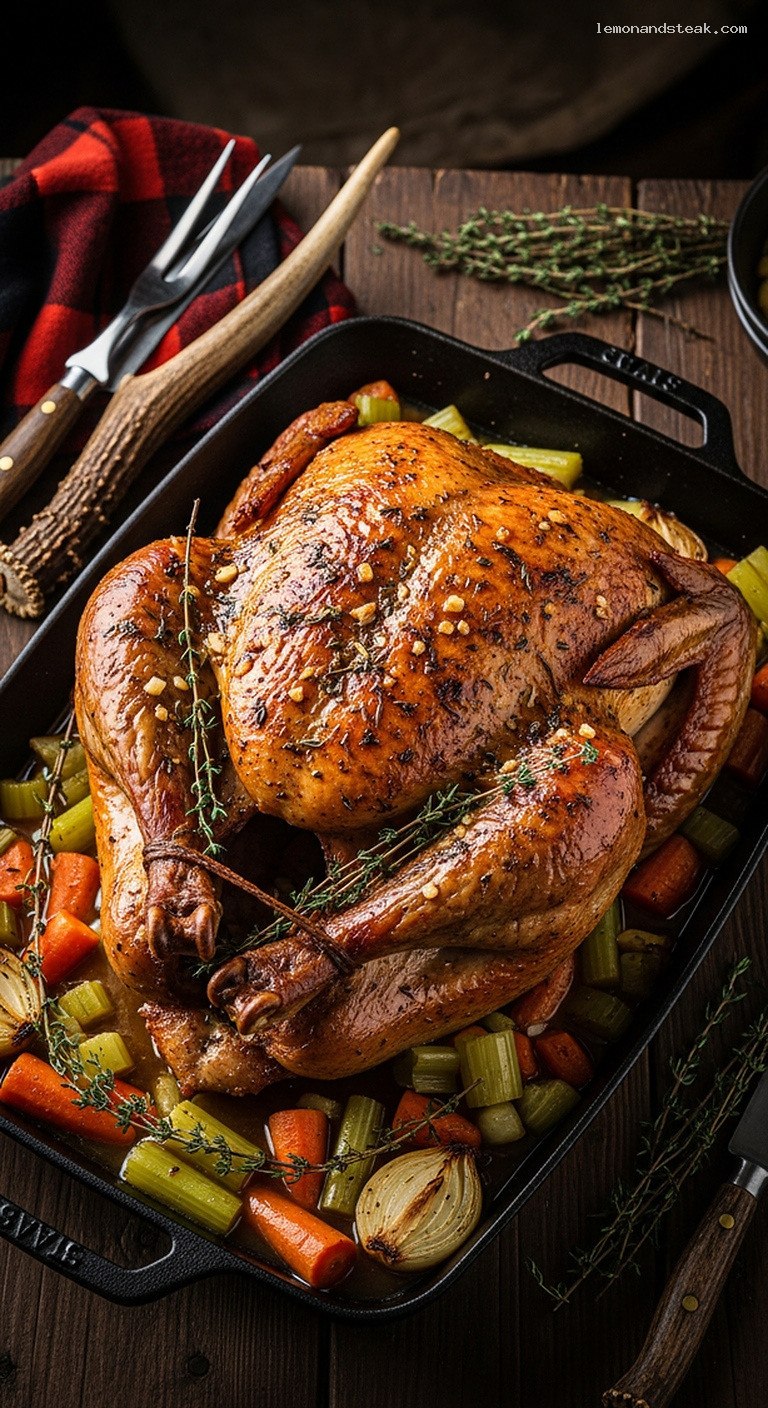
Quick Recipe Version (TL;DR)
Quick Ingredients
- 1 whole turkey (about 12 lb), thawed
- 3 tsp kosher salt, divided
- 2 tsp freshly ground black pepper, divided
- 3 tsp celery powder, divided
- 1 cup (2 sticks) unsalted butter
- 8 cloves garlic, minced
- 2 Tbsp fresh thyme leaves (or 2 tsp dried thyme)
- 1 tsp onion powder
- 2 medium yellow onions, quartered
- 3 carrots + 3 ribs celery, cut into large chunks
- 1 lemon, halved
- 2 cups low-sodium chicken or turkey broth
- 1 Tbsp olive oil
Do This
- 1. Pat turkey dry, remove giblets, and let sit at room temperature for 45–60 minutes. Preheat oven to 425°F (220°C).
- 2. Brown butter in a saucepan until nutty and golden. Remove from heat; stir in garlic, thyme, 1 tsp celery powder, 1 tsp salt, 1/2 tsp pepper, and onion powder. Cool until spreadable.
- 3. Season turkey all over with remaining salt, pepper, and 2 tsp celery powder. Squeeze lemon inside cavity, then tuck lemon halves inside.
- 4. Spread half the garlic thyme brown butter under the breast skin, and the rest over legs, thighs, and all exposed skin.
- 5. In a roasting pan, toss onions, carrots, and celery with olive oil; pour in broth. Place turkey on a rack over vegetables.
- 6. Roast 20 minutes at 425°F, then reduce to 325°F (165°C) and roast 2 1/2–3 hours more, basting every 45 minutes, until the thickest breast reaches 160°F (71°C) and thigh 175°F (79°C). Rest 30 minutes before carving.
Why You’ll Love This Recipe
- Carries the deep, cozy flavor of classic homemade turkey broth right into the meat and pan drippings.
- Browned garlic thyme butter creates crispy, golden skin and incredibly juicy meat.
- Simple, supermarket ingredients with clear steps that any home cook can follow.
- The drippings and vegetables turn into an instant, rich “brothy” gravy base.
Grocery List
- Produce: 1 whole turkey, garlic, fresh thyme, 2 yellow onions, carrots, celery, 1 lemon
- Dairy: Unsalted butter
- Pantry: Kosher salt, black pepper, celery powder, onion powder, olive oil, low-sodium chicken or turkey broth, all-purpose flour (optional, for gravy)
Full Ingredients
For the turkey
- 1 whole turkey (about 12 lb / 5.4 kg), thawed if frozen
- 2 tsp kosher salt (use less if using table salt)
- 1 1/2 tsp freshly ground black pepper
- 2 tsp celery powder
- 1 lemon, halved
For the browned garlic thyme butter
- 1 cup (2 sticks / 226 g) unsalted butter
- 8 cloves garlic, finely minced
- 2 Tbsp fresh thyme leaves, finely chopped (or 2 tsp dried thyme)
- 1 tsp celery powder
- 1 tsp onion powder
- 1 tsp kosher salt
- 1/2 tsp freshly ground black pepper
For the roasting pan and “broth” base
- 2 medium yellow onions, peeled and quartered
- 3 medium carrots, cut into 2-inch chunks
- 3 ribs celery, cut into 2-inch chunks
- 2 cups (480 ml) low-sodium chicken or turkey broth
- 1 Tbsp olive oil (or another neutral oil)
- Optional: 2 Tbsp all-purpose flour, for thickening pan juices into gravy
Step-by-Step Instructions
Step 1: Thaw, dry, and bring the turkey toward room temperature
If your turkey is frozen, thaw it in the refrigerator several days ahead of time (about 24 hours for every 4–5 lb / 1.8–2.3 kg). On roasting day, remove the turkey from the fridge 45–60 minutes before cooking so it loses its chill slightly; this helps it cook more evenly.
Remove any packaging, neck, and giblet packet from the cavity (check both the main cavity and neck cavity). Pat the turkey very dry with paper towels, inside and out. Dry skin is key to crisp, browned skin later.
Step 2: Season the turkey with “brothy” flavors
In a small bowl, combine 2 tsp kosher salt, 1 1/2 tsp black pepper, and 2 tsp celery powder. This mix echoes the seasonings you would find in a classic homemade broth.
Place the turkey on a rack set inside a roasting pan (or on a rack over a large rimmed baking sheet). Sprinkle the seasoning mixture evenly all over the turkey, including lightly inside the cavity. Gently press to help it adhere. Squeeze the lemon halves all over the turkey, then tuck both squeezed halves inside the main cavity.
If you have extra time, you can place the seasoned turkey uncovered in the fridge for 12–24 hours. This “dry brine” step deepens flavor and improves skin crispness, but the recipe is still excellent if you skip it.
Step 3: Make the browned garlic thyme butter
About 30–40 minutes before roasting, make the flavored butter. In a small saucepan, melt the 1 cup (226 g) unsalted butter over medium heat. Continue cooking, swirling the pan occasionally, until the butter foams, then the milk solids turn a deep golden brown and smell nutty, about 5–8 minutes. Watch closely so it does not burn.
Remove from heat. Immediately stir in the minced garlic, chopped thyme, 1 tsp celery powder, 1 tsp onion powder, 1 tsp kosher salt, and 1/2 tsp black pepper. The residual heat will gently bloom the garlic and spices without burning them.
Pour the butter into a heatproof bowl and let it sit for 10–15 minutes, stirring occasionally, until it thickens slightly and is spreadable rather than totally liquid.
Step 4: Butter under the skin and set up the roasting pan
Preheat your oven to 425°F (220°C) with a rack in the lower third. While it heats, gently loosen the skin over each turkey breast: slide clean fingers under the edge of the skin at the cavity end and carefully separate it from the meat, being careful not to tear the skin.
Scoop up some of the cooled garlic thyme butter and massage it under the skin over each breast, using about half of the butter in total for this. Smooth the skin back into place. Spread the remaining butter all over the outside of the turkey, focusing on the breasts, thighs, and drumsticks.
In the bottom of the roasting pan, toss the onion quarters, carrot chunks, and celery chunks with 1 Tbsp olive oil and a pinch of salt. Spread them into an even layer. Pour the 2 cups broth around the vegetables. This bed of vegetables and broth will collect drippings and create a rich, broth-like base.
Step 5: Roast hot, then low and slow
Place the buttered turkey breast-side up on the rack over the vegetables. If the legs are splayed widely, you can loosely tie them together with kitchen twine to help the bird cook more evenly, but it is not mandatory.
Roast at 425°F (220°C) for 20 minutes to set and lightly brown the skin. Then reduce the oven temperature to 325°F (165°C) without opening the oven door.
Continue roasting at 325°F for about 2 1/2–3 hours more, basting the turkey every 45 minutes with the buttery pan juices. To baste, use a spoon or baster to drizzle the juices over the breasts and legs, then return the pan quickly to the oven so the temperature stays steady.
Tent loosely with foil if the skin is getting very dark before the turkey is cooked through.
Step 6: Check for doneness and rest
Begin checking the internal temperature after about 2 1/4 hours at 325°F (roughly 2 1/2 hours total roasting time). Insert an instant-read thermometer into the thickest part of the breast (but not touching bone) and into the inner thigh.
The turkey is done when the breast registers 160°F (71°C) and the thigh registers around 175°F (79°C). If some parts are done earlier, you can tent them with foil while the rest finishes.
Transfer the turkey to a carving board and tent it loosely with foil. Let it rest for at least 30 minutes (up to 45). Resting allows the juices to redistribute, keeping the meat moist.
Step 7: Make a quick “brothy” gravy and serve
While the turkey rests, tilt the roasting pan and spoon off some of the excess fat from the surface of the pan juices, leaving the flavorful browned bits and vegetables behind. You should have a fragrant mixture that smells like concentrated turkey broth with thyme, celery, and garlic.
To make a simple gravy, place the pan over medium heat (or pour the juices and vegetables into a saucepan). Sprinkle 2 Tbsp flour over the vegetables and drippings, stirring and cooking for 1–2 minutes. Slowly whisk in 1–2 additional cups of broth, as needed, until you reach your desired thickness. Simmer for 3–5 minutes to cook out the flour taste, then strain if you prefer a smooth gravy. Adjust seasoning with salt, pepper, and a pinch more celery powder or thyme if desired.
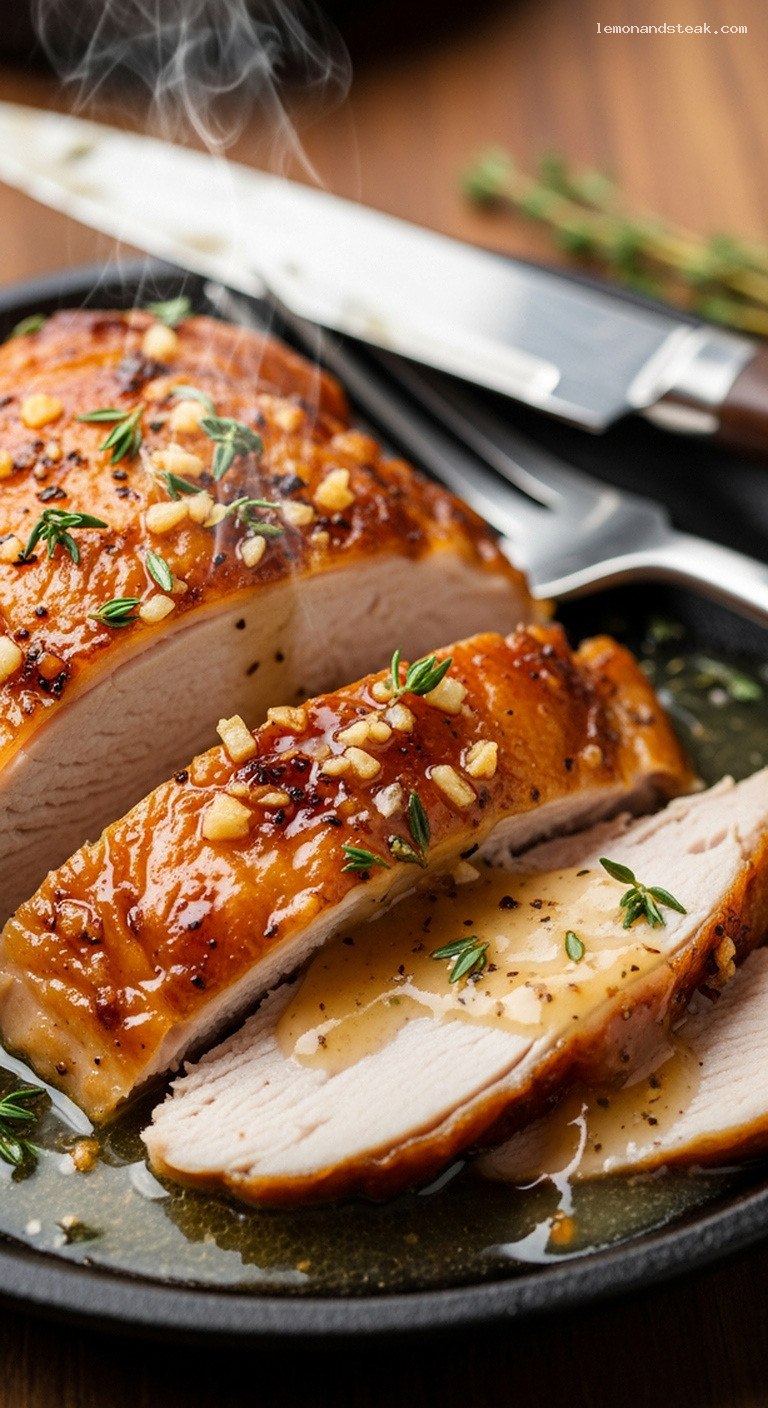
Carve the turkey, arranging slices of breast, thigh, and drumstick on a warm platter. Spoon some of the “brothy” pan juices or gravy over the meat and garnish with a few extra thyme sprigs if you like. Serve hot.
Pro Tips
- Dry the turkey very well. Excess moisture on the skin will steam instead of crisp. Patting thoroughly dry is one of the most important steps for golden, crackly skin.
- Do not rush the resting time. A 30-minute rest may feel long, but it is crucial for juicy meat, especially the breasts.
- Use low-sodium broth. Because the turkey is seasoned and celery powder has a strong flavor, low-sodium broth prevents the drippings and gravy from becoming too salty.
- Adjust celery powder to taste. If you love that classic broth flavor, you can add a pinch more to the butter or final gravy. If you are sensitive to it, start with the listed amount and taste before adding more.
- Check in more than one spot. When checking doneness, test both the thickest part of the breast and the inner thigh for accurate results.
Variations
- Citrus herb twist: Add the zest of 1 lemon and 1 orange to the browned garlic thyme butter for a brighter, more aromatic flavor while keeping the broth-like base intact.
- Roasted garlic version: Instead of raw minced garlic, roast a whole bulb of garlic until soft, squeeze out the cloves, and mash them into the browned butter for a sweeter, milder garlic note.
- Herb blend swap: Replace half the thyme with a mix of dried parsley and marjoram to mimic the flavor of classic poultry seasoning while still highlighting celery powder.
Storage & Make-Ahead
Leftover turkey should be cooled, then stored in airtight containers in the refrigerator for up to 4 days. For best results, slice or pull the meat from the bones before chilling, and store it with some of the pan juices or gravy to keep it moist. Reheat gently in a covered dish with a splash of broth at 300°F (150°C) until warmed through.
You can freeze leftover turkey for up to 3 months. Wrap portions tightly in foil, then place in freezer bags or containers. Thaw overnight in the refrigerator and reheat with broth or gravy. The gravy itself can also be frozen in small portions and used later as a base for soups that echo that same homemade broth flavor.
Nutrition (per serving)
Approximate values for one serving (about 6 oz cooked turkey with skin plus a small amount of gravy): 420 calories, 44 g protein, 25 g fat, 3 g carbohydrates, 0 g fiber, 1 g sugar, 940 mg sodium. Actual nutrition will vary based on the exact size of your turkey, how much skin and gravy you serve, and the sodium level of your broth.
Leave a Reply