
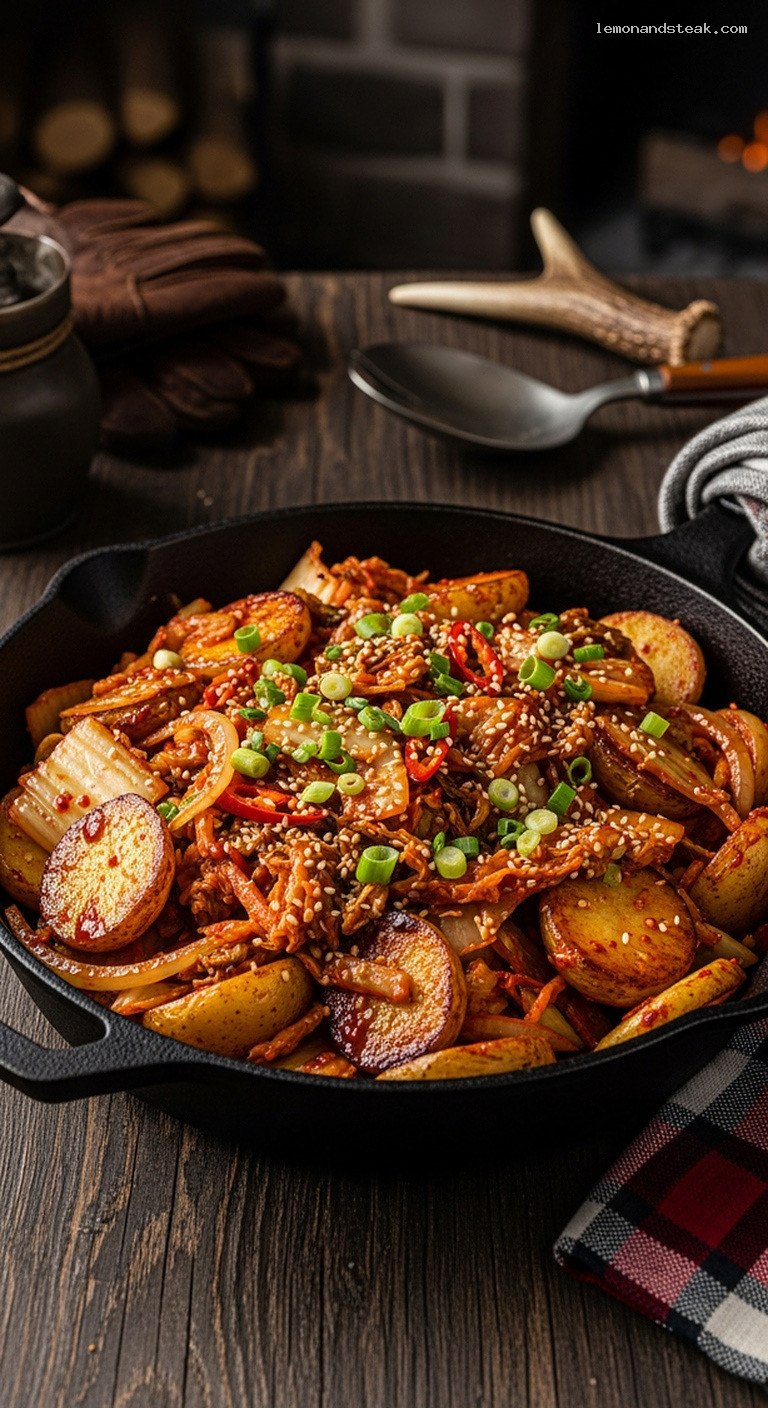
Bold Potato and Kimchi Stir-Fry
Quick Recipe Version (TL;DR)
Quick Ingredients
- 1 1/2 lb Yukon Gold potatoes, cut into 1/2-inch cubes
- 2 tbsp neutral oil (canola, vegetable, or avocado), plus more as needed
- 1 tbsp unsalted butter (optional, for richness)
- 1 1/2 cups napa cabbage kimchi, chopped, plus 2 tbsp kimchi brine
- 1 small yellow onion, thinly sliced
- 3 cloves garlic, minced
- 1 tsp grated fresh ginger
- 2 scallions, sliced (white and green parts separated)
- 1 tbsp gochujang (Korean red pepper paste)
- 1 tbsp soy sauce
- 2 tsp sugar or honey
- 1/4 cup water
- 1 tsp toasted sesame oil
- 1 tbsp toasted sesame seeds
Do This
- 1) Par-cook potatoes in salted boiling water for 5–7 minutes until just tender; drain well and let steam-dry.
- 2) Whisk gochujang, soy sauce, sugar (or honey), water, and kimchi brine in a small bowl; set aside.
- 3) Heat oil (and butter, if using) in a large cast iron or heavy skillet over medium-high heat; pan-fry potatoes 8–10 minutes until golden and crisp at the edges. Season lightly with salt.
- 4) Push potatoes to one side; add onion, scallion whites, garlic, and ginger. Sauté 2–3 minutes until fragrant and slightly softened.
- 5) Add chopped kimchi and cook 2–3 minutes until hot and slightly caramelized.
- 6) Pour in sauce, toss everything together, and stir-fry 1–2 minutes until the potatoes are well coated and the sauce thickens and glazes.
- 7) Turn off heat; drizzle with sesame oil, sprinkle scallion greens and sesame seeds, then taste and adjust seasoning before serving hot.
Why You’ll Love This Recipe
- Big flavor with simple ingredients: crispy potatoes meet spicy, tangy kimchi in one skillet.
- Weeknight-friendly: ready in about 35 minutes with mostly pantry staples.
- Flexible: serve as a hearty main with fried eggs or as a bold side next to grilled meats or tofu.
- Perfect intro to Korean flavors: uses gochujang and kimchi in an accessible, familiar potato dish.
Grocery List
- Produce: Yukon Gold potatoes, yellow onion, garlic, fresh ginger, scallions
- Dairy: Unsalted butter (optional)
- Pantry: Napa cabbage kimchi, neutral oil, gochujang, soy sauce, sugar or honey, toasted sesame oil, toasted sesame seeds, salt, black pepper
Full Ingredients
Main Stir-Fry
- 1 1/2 lb Yukon Gold potatoes, scrubbed and cut into 1/2-inch cubes (about 4 medium potatoes)
- 2 tbsp neutral oil (canola, vegetable, or avocado), plus 1–2 tsp more if needed
- 1 tbsp unsalted butter (optional, for extra richness and browning)
- 1 small yellow onion, thinly sliced (about 3/4 cup)
- 3 cloves garlic, minced
- 1 tsp grated fresh ginger (about a 1/2-inch knob)
- 2 scallions, thinly sliced; whites and greens kept separate
- 1 1/2 cups napa cabbage kimchi, drained slightly and coarsely chopped
- 2 tbsp kimchi brine (liquid from the kimchi container)
- 1/4–1/2 tsp fine salt, to taste (kimchi and soy sauce are salty, so you may need very little)
- Freshly ground black pepper, to taste
Gochujang Sauce
- 1 tbsp gochujang (Korean red pepper paste)
- 1 tbsp soy sauce (regular or low-sodium)
- 2 tsp sugar or honey
- 1/4 cup water
- Optional: 1 tsp rice vinegar if your kimchi is mildly tangy and you want extra sharpness
Finishing & Garnish
- 1 tsp toasted sesame oil
- 1 tbsp toasted sesame seeds
- Extra sliced scallion greens, for serving
- Optional: Fried eggs, to serve on top (1 per person)
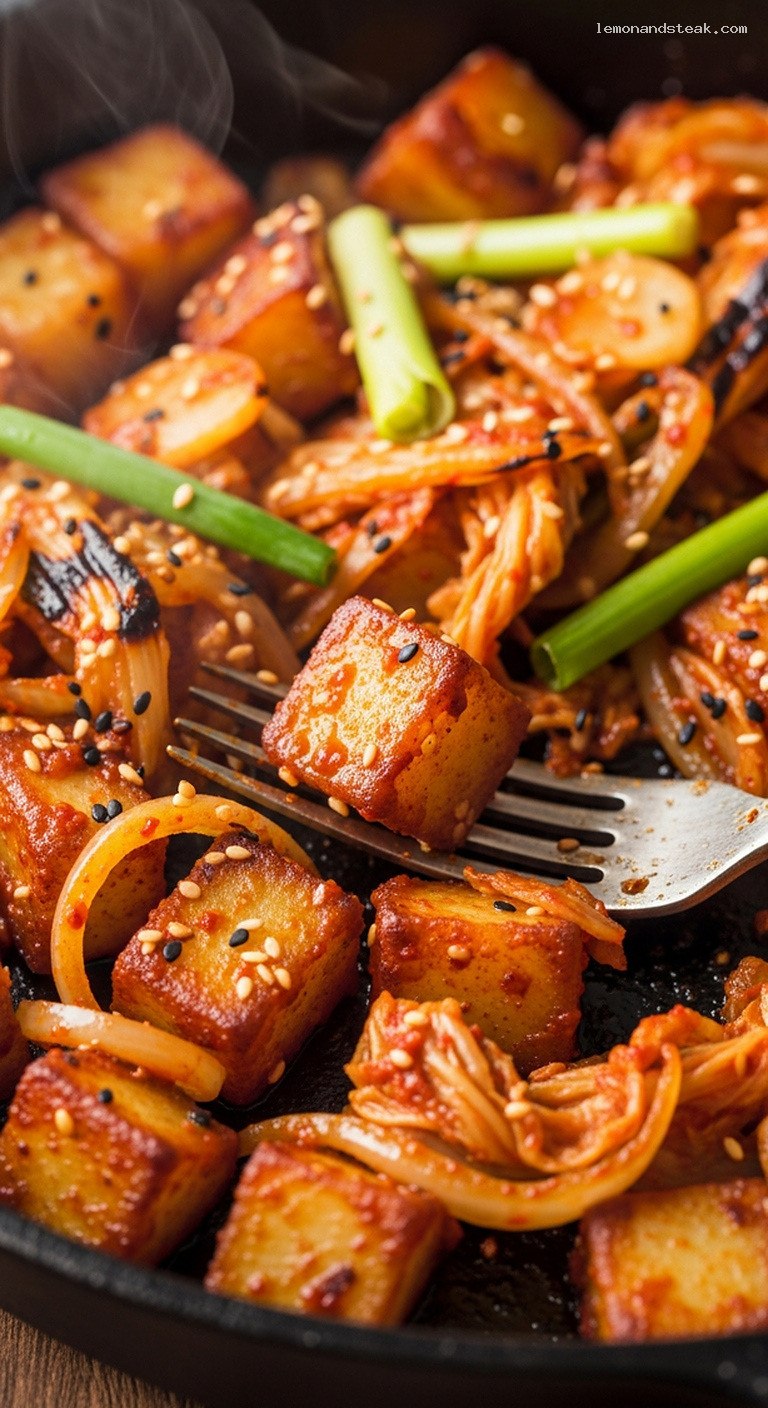
Step-by-Step Instructions
Step 1: Prep and par-cook the potatoes
Scrub the potatoes well and cut them into 1/2-inch cubes, keeping the pieces as even as possible so they cook uniformly. Bring a medium pot of well-salted water to a boil over high heat. Add the potato cubes and cook for 5–7 minutes, just until you can pierce a piece with the tip of a knife but it still feels firm in the center. This par-cooking jump-starts the interior so you can get a crisp exterior without burning. Drain thoroughly in a colander, then let the potatoes sit for 2–3 minutes so the excess steam escapes and the surfaces dry slightly. Dryer potatoes brown better in the pan.
Step 2: Make the gochujang-kimchi sauce
While the potatoes cook, prepare the sauce. In a small bowl, whisk together the gochujang, soy sauce, sugar (or honey), water, and kimchi brine until smooth. If your kimchi is on the milder side and you enjoy a sharper tang, whisk in the optional rice vinegar as well. Taste using a clean spoon: it should be salty, spicy, and just a bit sweet, with a pleasant funk from the kimchi brine. Adjust by adding a touch more sugar if it is too harsh, or a splash more soy sauce if it tastes flat. Set the sauce aside near the stove.
Step 3: Crisp the potatoes in a hot skillet
Heat a large cast iron or other heavy-bottomed skillet over medium-high heat. Add the neutral oil, and once it shimmers, add the butter (if using). Swirl until melted and foamy. Carefully add the drained potatoes in a single, mostly even layer. Let them cook undisturbed for 3–4 minutes so the bottoms develop a golden crust. Then begin to stir and flip occasionally, continuing to cook for another 5–6 minutes, until most sides are nicely browned and crisp at the edges. Season lightly with salt and a few grinds of black pepper. If the pan looks dry or the potatoes start to stick, add another teaspoon of oil.
Step 4: Soften the aromatics alongside the potatoes
Once the potatoes are well browned, push them to one side of the skillet, creating space on the other side. If the pan is very dry, add another teaspoon of oil to the empty side. Add the sliced onion and the white parts of the scallions to that space, along with the minced garlic and grated ginger. Reduce the heat to medium. Cook, stirring the aromatics frequently, for 2–3 minutes until the onion becomes translucent and the mixture smells fragrant. Try to keep the garlic from browning too deeply; you want it soft and golden, not dark and bitter. As the aromatics soften, you can gently fold a few potatoes through them so everything starts mingling.
Step 5: Add and caramelize the kimchi
Add the chopped kimchi to the skillet. Stir it into the onion, scallion whites, garlic, and ginger, then fold in the potatoes so everything is roughly combined. Cook for 2–3 minutes, stirring occasionally. You are looking for the kimchi to heat through, soften, and pick up some browned spots in contact with the hot pan. This light caramelization deepens its flavor and balances the acidity. The mixture should smell robust and savory, with a mix of tangy, spicy, and toasty notes. If anything begins to catch on the bottom, lower the heat slightly and stir more frequently.
Step 6: Coat with sauce and finish with sesame
Give the prepared gochujang sauce a quick stir and pour it evenly over the potato-kimchi mixture. Increase the heat back to medium-high. Toss everything together thoroughly so every potato and strand of kimchi is coated in the sauce. Stir-fry for 1–2 minutes, allowing the sauce to bubble, thicken slightly, and glaze the ingredients. Turn off the heat. Immediately drizzle the toasted sesame oil over the top and sprinkle in the scallion greens and toasted sesame seeds. Toss once more. Taste and adjust seasoning: add a pinch more salt or a splash of soy sauce if needed, or another teaspoon of kimchi brine for extra tang.
Step 7: Serve hot and enjoy
Transfer the stir-fry to a warm serving dish or bring the skillet straight to the table if it is suitable for serving. For a heartier main dish, top each portion with a freshly fried egg (sunny-side up or over-easy works beautifully—the runny yolk makes a rich sauce). Garnish with any remaining scallion greens and sesame seeds. Serve immediately while the potatoes are still crisp and the kimchi is sizzling, ideally with steamed rice on the side if you want a more complete meal. This dish is best enjoyed hot, with each bite combining crispy potato, chewy kimchi, and the punchy, spicy glaze.
Pro Tips
- Choose the right potatoes: Waxy or all-purpose potatoes like Yukon Gold hold their shape and get creamy inside, while still crisping well outside.
- Dry potatoes = better browning: After boiling, let the potatoes steam-dry in the colander. Moisture is the enemy of crisp edges.
- Use well-fermented kimchi: Kimchi that is at least a few weeks old (tangy and more sour) gives deeper flavor and stands up better to high heat.
- Control the heat: Keep the skillet hot enough to brown but not so high that garlic or sauce burns. Adjust between medium and medium-high as needed.
- Scale the spice level: For milder heat, use 2 tsp gochujang instead of 1 tbsp and choose a less spicy kimchi; for extra heat, add 1/2–1 tsp Korean red pepper flakes (gochugaru).
Variations
- Smoky bacon version: Render 3–4 slices of chopped bacon in the skillet first, remove and set aside, and use the fat (plus a little oil if needed) to crisp the potatoes. Stir the bacon back in when you add the kimchi.
- Vegetarian tofu boost: Add 1 cup of small cubed extra-firm tofu, patted dry, when you add the kimchi. Brown it lightly along with the kimchi before adding the sauce.
- Cheesy comfort twist: After the stir-fry is done, scatter 1/2–3/4 cup shredded mozzarella or mild melting cheese over the top, cover for 1–2 minutes off the heat until melted and stretchy, then serve immediately.
Storage & Make-Ahead
This stir-fry tastes best fresh, when the potatoes are still crisp-edged. However, leftovers can be stored in an airtight container in the refrigerator for up to 3 days. To reheat, warm a nonstick or cast iron skillet over medium heat with a teaspoon of oil and cook the leftovers for 4–6 minutes, stirring occasionally, until hot and slightly re-crisped. You can also microwave in 45-second bursts, stirring between each, though the texture will be softer. For make-ahead prep, you can par-cook the potatoes up to 1 day ahead: boil, drain, cool completely, and refrigerate in an airtight container. Chop the kimchi and slice the aromatics in advance as well. When ready to cook, have the sauce mixed, then crisp the chilled potatoes straight in the skillet and continue with the recipe.
Nutrition (per serving)
Approximate values for 1 of 3 servings (without fried egg or optional bacon, using butter): about 360–400 calories; 9–11 g fat; 60–65 g carbohydrates; 5–6 g fiber; 7–9 g protein; 900–1100 mg sodium (highly dependent on kimchi and soy sauce brands); 6–8 g sugars. Adding a fried egg will increase protein by about 6–7 g and add roughly 70–90 calories and 5–7 g fat.
Leave a Reply