
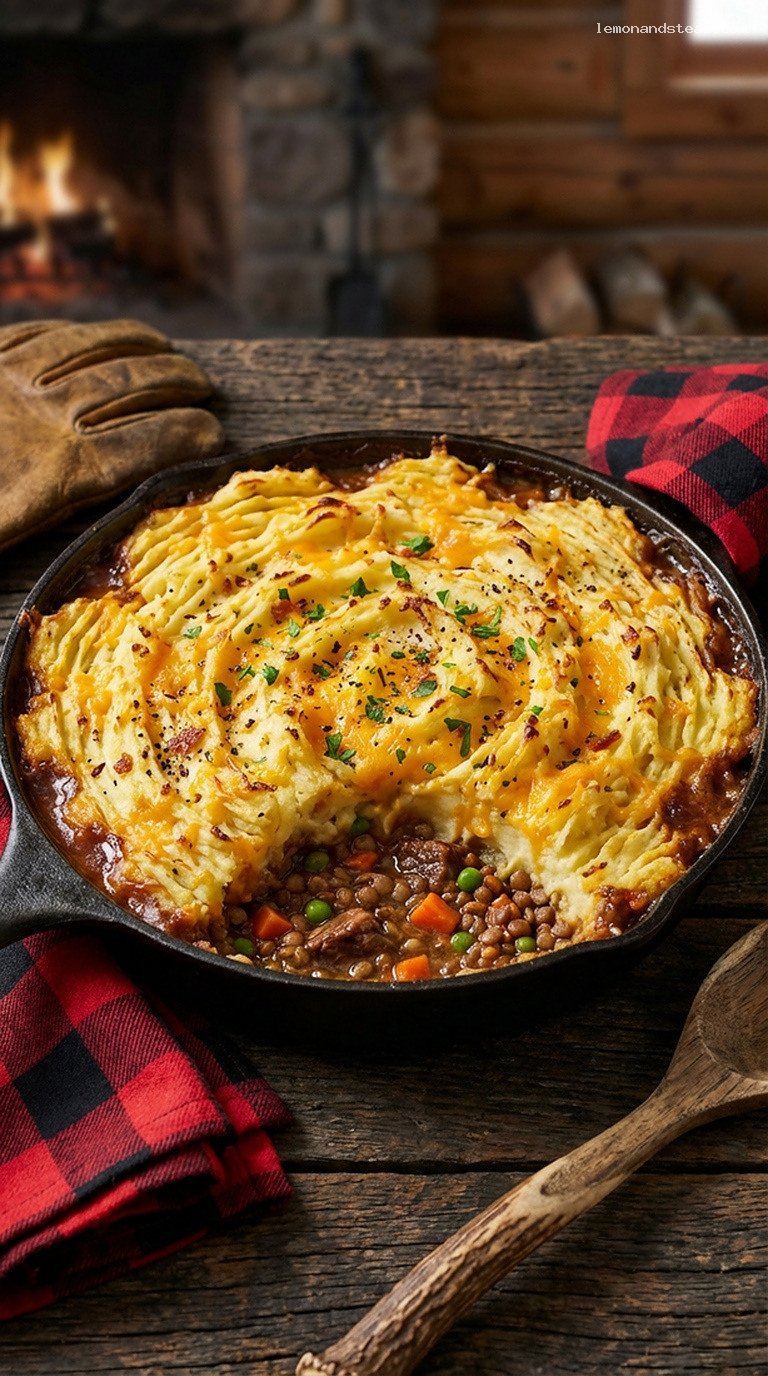
Quick Recipe Version (TL;DR)
Quick Ingredients
- 1.5 lb (680 g) ground beef
- 1 cup (200 g) dry brown or green lentils, rinsed
- 3 cups (720 ml) low-sodium beef broth
- 2 tbsp olive oil
- 1 large onion, 2 carrots, 2 celery stalks, 3 garlic cloves (all finely diced/minced)
- 2 tbsp tomato paste, 1 cup (240 ml) crushed tomatoes
- 1 tbsp Worcestershire sauce, 1 tsp Dijon mustard
- 1 tsp dried thyme, 1 tsp dried rosemary, 2 bay leaves, 1 tsp smoked paprika (optional)
- 1 tsp kosher salt + 1/2 tsp black pepper (plus more to taste)
- 1 tbsp all-purpose flour or cornstarch (optional, for thickening)
- 1 cup (140 g) frozen peas
- 3 lb (1.4 kg) potatoes (Russet or Yukon Gold), peeled and chunked
- 4 tbsp (60 g) unsalted butter
- 1/2 cup (120 ml) whole milk, warmed
- 1/4 cup (60 ml) sour cream or heavy cream
- 3/4 cup (75 g) grated sharp cheddar cheese, divided
- Salt and pepper for the mash
- Chopped fresh parsley for garnish (optional)
Do This
- 1) Preheat oven to 400°F (200°C). Grease a 9×13 in (23×33 cm) or similar 3-quart baking dish. Prep all vegetables and peel/chunk potatoes.
- 2) Simmer lentils in beef broth for 20–25 minutes until tender and most liquid is absorbed. Set aside.
- 3) Brown beef in olive oil, then add onion, carrot, and celery. Cook until softened. Stir in garlic and tomato paste.
- 4) Add crushed tomatoes, Worcestershire, Dijon, herbs, spices, and cooked lentils. Simmer 10–15 minutes until thick. Stir in peas and adjust seasoning. Spread in baking dish.
- 5) Boil potatoes in salted water 15–20 minutes until very tender. Drain, mash with butter, warm milk, sour cream, salt, pepper, and 1/2 cup cheddar until creamy.
- 6) Spoon mash over hot filling, seal edges, rough up the surface, and sprinkle remaining cheddar on top.
- 7) Bake 25–30 minutes at 400°F (200°C) until golden and bubbling. Rest 10–15 minutes, garnish with parsley, and serve.
Why You’ll Love This Recipe
- Hearty and comforting: rich beef and lentils under a thick blanket of creamy mashed potatoes.
- Budget-friendly and filling: lentils stretch the beef without sacrificing flavor.
- Make-ahead friendly: assemble in advance and bake when you are ready to eat.
- Family-pleasing: mild, savory flavors with plenty of veggies tucked inside.
Grocery List
- Produce: 1 large onion, 2 medium carrots, 2 celery stalks, 3 garlic cloves, 3 lb (1.4 kg) potatoes, fresh parsley (optional)
- Dairy: Unsalted butter, whole milk, sour cream or heavy cream, sharp cheddar cheese
- Pantry: Ground beef, dry brown or green lentils, low-sodium beef broth, olive oil, tomato paste, crushed tomatoes, Worcestershire sauce, Dijon mustard, dried thyme, dried rosemary, smoked paprika, bay leaves, all-purpose flour or cornstarch, frozen peas, kosher salt, black or white pepper
Full Ingredients
For the Beef & Lentil Filling
- 1 cup (200 g) dry brown or green lentils, rinsed
- 3 cups (720 ml) low-sodium beef broth, plus a splash of water if needed
- 2 tbsp olive oil
- 1.5 lb (680 g) ground beef (80–90% lean)
- 1 large yellow onion, finely diced
- 2 medium carrots, finely diced (about 1 cup)
- 2 celery stalks, finely diced (about 1 cup)
- 3 garlic cloves, minced
- 2 tbsp tomato paste
- 1 cup (240 ml) crushed tomatoes or tomato passata
- 1 tbsp Worcestershire sauce
- 1 tsp Dijon mustard
- 1 tsp dried thyme (or 2 tsp fresh, minced)
- 1 tsp dried rosemary, crumbled (or 2 tsp fresh, minced)
- 2 bay leaves
- 1 tsp smoked paprika (optional, for a subtle smokiness)
- 1 tsp kosher salt, plus more to taste
- 1/2 tsp freshly ground black pepper, plus more to taste
- 1 tbsp all-purpose flour or cornstarch (optional, to thicken)
- 1 cup (140 g) frozen peas (no need to thaw)
For the Creamy Mashed Potato Topping
- 3 lb (1.4 kg) floury potatoes such as Russet or Yukon Gold, peeled and cut into 1.5–2 in (4–5 cm) chunks
- 4 tbsp (60 g) unsalted butter
- 1/2 cup (120 ml) whole milk, warmed
- 1/4 cup (60 ml) sour cream or heavy cream
- 3/4 cup (75 g) grated sharp cheddar cheese, divided (1/2 cup in the mash, 1/4 cup on top)
- 1/2–3/4 tsp kosher salt (or to taste)
- 1/4 tsp white or black pepper (or to taste)
For Finishing & Serving
- Freshly ground black pepper, for topping (optional)
- 1–2 tbsp chopped fresh parsley, for garnish (optional)
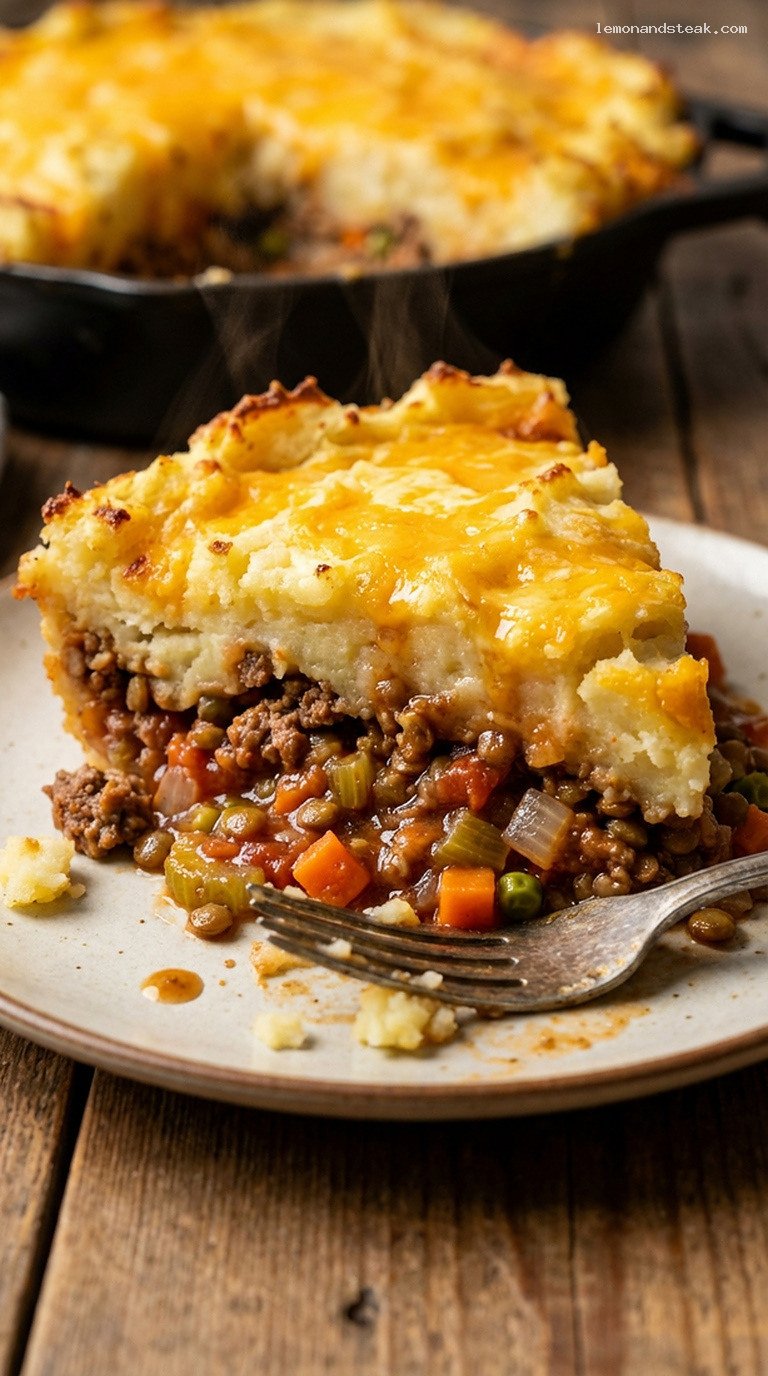
Step-by-Step Instructions
Step 1: Prep your ingredients and preheat the oven
Preheat your oven to 400°F (200°C). Lightly grease a 9×13 inch (23×33 cm) or similar 3-quart baking dish with a little butter or oil and set aside.
Rinse the lentils under cold running water and drain well. Peel the potatoes and cut them into even chunks about 1.5–2 inches (4–5 cm) across so they cook evenly.
Finely dice the onion, carrots, and celery, and mince the garlic. Grate the cheddar cheese and set it aside. Having everything prepped now makes the cooking process smooth and relaxed.
Step 2: Cook the lentils
In a medium saucepan, combine the rinsed lentils and 3 cups (720 ml) of low-sodium beef broth. Bring to a boil over high heat, then reduce the heat to low, cover, and simmer for 20–25 minutes, stirring occasionally, until the lentils are tender but still hold their shape.
Most of the liquid should be absorbed. If the pan looks dry before the lentils are tender, add a splash of water or extra broth. If there is a lot of liquid left at the end, simmer uncovered for a few minutes or drain off the excess. Set the cooked lentils aside and discard any bay leaves if you accidentally added them early.
Step 3: Brown the beef and sauté the aromatics
While the lentils cook, warm 2 tbsp olive oil in a large, deep skillet or Dutch oven over medium-high heat. Add the ground beef and cook, breaking it up with a wooden spoon, for 5–7 minutes until well browned and no pink remains.
If there is a lot of fat in the pan, carefully spoon off some, leaving about 1–2 tbsp behind for flavor. Add the diced onion, carrots, and celery. Cook, stirring often, for 5–7 minutes until the vegetables begin to soften and the onion turns translucent.
Stir in the minced garlic and tomato paste. Cook for 1–2 minutes, stirring constantly, until the tomato paste darkens slightly in color and smells sweet and rich. This step deepens the flavor of the filling.
Step 4: Build and simmer the beef & lentil filling
Add the crushed tomatoes, Worcestershire sauce, Dijon mustard, dried thyme, dried rosemary, bay leaves, smoked paprika (if using), 1 tsp kosher salt, and 1/2 tsp black pepper to the pan with the beef and vegetables. Stir well to combine.
Tip in the cooked lentils along with any remaining cooking liquid that is not excessive (a few tablespoons is fine; more than that can be discarded). Stir everything together. If the mixture looks very dry, add a splash of water or broth. You want a thick, saucy consistency, not soupy.
Bring to a gentle simmer, then reduce the heat to medium-low and cook, uncovered, for 10–15 minutes, stirring occasionally, until the flavors meld and the mixture is thick and hearty. If it still seems thin near the end, sprinkle in 1 tbsp flour or cornstarch and simmer for 2–3 more minutes to thicken.
Stir in the frozen peas and cook for another 2–3 minutes. Taste and adjust seasoning with more salt and pepper if needed. Remove the bay leaves, then transfer the hot filling to your prepared baking dish and spread it into an even layer.
Step 5: Make the creamy mashed potato topping
While the filling simmers, place the peeled, chunked potatoes in a large pot and cover them with cold water by about 1 inch (2.5 cm). Add 1–2 tsp salt to the water. Bring to a boil over high heat, then reduce to a gentle boil and cook for 15–20 minutes, or until the potatoes are very tender when pierced with a fork.
Drain the potatoes well in a colander, then return them to the hot pot. Let them sit for 1–2 minutes to allow excess steam to escape; this helps them stay fluffy. Mash the potatoes using a masher or ricer until smooth.
Add the 4 tbsp (60 g) butter, warm milk, sour cream or heavy cream, 1/2 cup (50 g) of the grated cheddar, 1/2–3/4 tsp salt, and 1/4 tsp pepper. Stir or mash until the potatoes are creamy and spreadable. If they are too stiff, add a splash more warm milk; if too loose, let them sit for a few minutes to firm up. Taste and adjust seasoning.
Step 6: Assemble the cottage pie
With the beef and lentil filling already in the baking dish, spoon the hot mashed potatoes over the top in large dollops, starting around the edges and working toward the center. This helps prevent the filling from being pushed up the sides.
Gently spread the potatoes into an even layer using a spatula or the back of a spoon, taking care to seal the potatoes all the way to the edges of the dish. This edge-to-edge seal helps keep the filling from bubbling over too much in the oven.
Use a fork to rough up the surface of the mash, creating ridges and peaks that will brown beautifully. Sprinkle the remaining 1/4 cup (25 g) grated cheddar evenly over the top, and add a little extra black pepper if you like.
Step 7: Bake until bubbling and golden, then serve
Place the baking dish on a rimmed sheet pan (to catch any drips) and transfer to the preheated 400°F (200°C) oven. Bake for 25–30 minutes, or until the top is lightly golden and the filling is bubbling around the edges. The center should be piping hot; it should reach at least 165°F (74°C) if checked with an instant-read thermometer.
If you prefer a deeper golden crust on the potatoes, switch the oven to broil for the last 2–3 minutes, watching closely so it does not burn.
Once done, remove the cottage pie from the oven and let it rest for 10–15 minutes. This resting time allows the layers to set slightly, making it easier to scoop clean portions. Sprinkle with chopped fresh parsley just before serving, if using. Serve hot with a crisp green salad or simple steamed vegetables.
Pro Tips
- Choose the right lentils: Use brown or green lentils, which keep their shape. Red lentils break down too much and can make the filling mushy.
- Make components in parallel: Start the potatoes while the lentils and filling cook to keep the total time efficient.
- Keep the filling thick: The meat and lentil mixture should be quite thick before it goes into the dish. If it is watery, simmer longer or use a little flour/cornstarch to thicken so the pie slices neatly.
- Seal the edges with mash: Spreading the potatoes all the way to the edges helps keep the filling under control and minimizes bubbling over.
- Let it rest before serving: A short rest after baking helps the layers hold together, so you get those satisfying, clean scoops instead of everything running together.
Variations
- Lighter version: Substitute ground turkey or chicken for the beef and use chicken or vegetable broth instead of beef broth. You can also reduce the cheese or use a lower-fat cheddar.
- Extra veg-packed: Add diced mushrooms, parsnips, or chopped kale to the filling along with the carrots and celery. Sauté them with the other vegetables for a more vegetable-forward pie.
- Sweet potato topping: Replace half (or all) of the regular potatoes with sweet potatoes for a slightly sweeter, deeper-flavored mash on top. Adjust salt and pepper to balance the sweetness.
Storage & Make-Ahead
Let leftover cottage pie cool completely at room temperature, then cover tightly and refrigerate for up to 3–4 days. Reheat individual portions in the microwave until hot, or rewarm the whole dish in a 350°F (175°C) oven, covered with foil, for 20–30 minutes, removing the foil for the last 5–10 minutes to re-crisp the top.
For make-ahead, you can assemble the entire pie (with cooked filling and mashed potatoes) up to 24 hours in advance. Cover and refrigerate, then bake at 375°F (190°C) for 35–45 minutes, or until hot and bubbling, as it will start from a cold state. You can also freeze the assembled, unbaked pie for up to 3 months; wrap it very well. Thaw overnight in the refrigerator before baking, or bake from frozen at 350°F (175°C), adding extra time as needed until fully heated through.
Nutrition (per serving)
Approximate values per serving (1/6 of the recipe): about 650 calories; 35 g protein; 55 g carbohydrates; 28 g fat; 9 g fiber; 780 mg sodium. Actual values will vary based on exact ingredients and brands used, as well as portion size and any added garnishes.
Leave a Reply