
Quick Recipe Version (TL;DR)
Recipe: Slow-Simmered White Bean and Rosemary Soup with Garlic and Olive Oil
Quick Ingredients
- 1 1/2 cups dried white beans (cannellini or Great Northern), rinsed
- 6 cups low-sodium vegetable or chicken broth (plus up to 1 cup water as needed)
- 3 tbsp extra-virgin olive oil, plus more for drizzling
- 1 medium yellow onion, finely chopped
- 2 small carrots, finely chopped
- 2 celery stalks, finely chopped
- 6 cloves garlic, minced
- 2 fresh rosemary sprigs (about 4–5 inches each)
- 1 bay leaf
- 1–1 1/4 tsp fine sea salt, to taste
- 1/2 tsp freshly ground black pepper
- Pinch red pepper flakes (optional)
- 1–2 tsp fresh lemon juice or white wine vinegar
- Freshly grated Parmesan cheese and crusty bread, for serving (optional)
Do This
- 1. Soak beans in plenty of cold water for 8–12 hours, then drain and rinse.
- 2. Warm 3 tbsp olive oil in a heavy pot over medium heat; gently cook onion, carrot, and celery for 8–10 minutes until soft but not browned.
- 3. Stir in garlic, rosemary sprigs, and bay leaf; cook 1–2 minutes until fragrant.
- 4. Add soaked beans and 6 cups broth; bring to a boil, then reduce to a gentle simmer (around 185–195°F / 85–90°C). Cook 60–90 minutes until beans are very tender.
- 5. Remove rosemary and bay. Lightly blend 1/3–1/2 of the soup with an immersion blender (or mash some beans) to create a creamy texture. Adjust thickness with a splash of water if needed.
- 6. Season with salt, pepper, red pepper flakes, and lemon juice. Ladle into warm bowls and finish with a generous drizzle of olive oil, rosemary leaves, and Parmesan.
Why You’ll Love This Recipe
- It is deeply comforting and rustic, with creamy white beans and fragrant rosemary in every bite.
- Uses simple, budget-friendly pantry staples but tastes like it simmered in a farmhouse kitchen all day.
- Flexible and forgiving: make it vegetarian, add greens or sausage, or keep it ultra-simple.
- Perfect for batch cooking and freezing; the flavors get even better the next day.
Grocery List
- Produce: Yellow onion, carrots, celery, garlic, fresh rosemary, lemon (optional)
- Dairy: Parmesan cheese (for serving, optional)
- Pantry: Dried white beans (cannellini or Great Northern), vegetable or chicken broth, extra-virgin olive oil, bay leaf, fine sea salt, black pepper, red pepper flakes (optional), crusty bread (for serving, optional), white wine vinegar (optional alternative to lemon)
Full Ingredients
For the Beans
- 1 1/2 cups dried white beans (cannellini or Great Northern), picked over and rinsed
- Cold water, for soaking (enough to cover beans by at least 2 inches)
For the Soup Base
- 3 tbsp extra-virgin olive oil
- 1 medium yellow onion, finely chopped (about 1 cup)
- 2 small carrots, finely chopped (about 2/3 cup)
- 2 celery stalks, finely chopped (about 2/3 cup)
- 6 cloves garlic, minced
- 2 fresh rosemary sprigs (each about 4–5 inches long), plus extra leaves for garnish
- 1 bay leaf
- 6 cups low-sodium vegetable or chicken broth
- Up to 1 cup hot water, as needed to adjust consistency
- 1–1 1/4 tsp fine sea salt, or to taste
- 1/2 tsp freshly ground black pepper, or to taste
- Pinch red pepper flakes (optional, for gentle heat)
- 1–2 tsp fresh lemon juice or white wine vinegar (to brighten at the end)
For Serving (Optional but Recommended)
- Extra-virgin olive oil, for drizzling
- Fresh rosemary leaves, finely chopped
- Freshly grated Parmesan cheese
- Crusty bread, warmed or toasted

Step-by-Step Instructions
Step 1: Soak the white beans
Place the dried white beans in a large bowl and pick out any broken beans or bits of debris. Rinse under cold water, then cover the beans with plenty of fresh cold water; they should be submerged by at least 2 inches, as they will expand while soaking. Let them soak at room temperature for 8–12 hours or overnight. When you are ready to cook, drain the beans and rinse them well under cold running water. This soaking step helps the beans cook more evenly and become wonderfully creamy inside.
Step 2: Prep the aromatics and herbs
While the beans drain, prepare your aromatics. Finely chop the onion, carrots, and celery so they soften quickly and melt into the broth. Peel and mince the garlic. Rinse the rosemary sprigs and pat them dry. You can leave the rosemary on the stem so you can remove the sprigs later, which keeps the soup nicely infused without too many leaves floating around. Have the bay leaf and broth measured and ready to go. This simple prep keeps the cooking flow relaxed and unrushed.
Step 3: Build a garlicky olive oil base
Place a heavy-bottomed pot or Dutch oven (4–5 quart capacity) over medium heat. Add 3 tablespoons of extra-virgin olive oil. When the oil is shimmering but not smoking, add the chopped onion, carrot, and celery. Cook, stirring occasionally, for 8–10 minutes, until the vegetables are very soft and translucent but not browned. Lower the heat if they start to color; you want a gentle sizzle. Add the minced garlic, rosemary sprigs, and bay leaf. Cook for 1–2 minutes more, stirring constantly, until the garlic is very fragrant. This step infuses the oil with flavor and forms the foundation of the soup.
Step 4: Simmer the beans low and slow
Add the drained beans to the pot and stir to coat them in the aromatic olive oil mixture. Pour in 6 cups of low-sodium broth. Increase the heat to medium-high and bring the mixture just to a boil. As soon as it boils, reduce the heat to low so the soup settles into a gentle simmer, with only small bubbles breaking the surface. Aim for a simmer temperature around 185–195°F (85–90°C) if you are using a thermometer. Partially cover the pot with a lid, leaving it slightly ajar, and cook for 60–90 minutes, stirring every 15–20 minutes and checking that the beans stay submerged. Add hot water in 1/4-cup increments as needed to keep them covered. The soup is ready for the next step when the beans are very tender and creamy all the way through when you bite or mash one.
Step 5: Season and partially purée for a creamy texture
When the beans are fully tender, remove and discard the rosemary sprigs and bay leaf. Season the soup with 1 teaspoon of fine sea salt and 1/2 teaspoon of black pepper to start, plus a pinch of red pepper flakes if you like a subtle warmth. Using an immersion blender, briefly blend about 1/3–1/2 of the soup directly in the pot, moving the blender around for just 10–20 seconds. You are aiming for a mix of creamy broth and whole beans, not a completely smooth purée. Alternatively, scoop 2–3 ladlefuls of soup into a regular blender, blend until smooth (venting the lid for steam), then return it to the pot. If the soup seems too thick, stir in a bit of hot water until it reaches your preferred consistency.
Step 6: Brighten and enrich the flavor
Taste the soup and adjust the seasoning, adding more salt and pepper as needed. Stir in 1–2 teaspoons of fresh lemon juice or white wine vinegar to brighten the flavors; start with 1 teaspoon, taste, and add more if desired. If you want an even silkier mouthfeel, drizzle in an extra tablespoon of olive oil and stir it through the hot soup. Let the soup rest off the heat for 5–10 minutes to allow the flavors to meld and the surface to calm before serving.
Step 7: Serve rustic-style with olive oil and rosemary
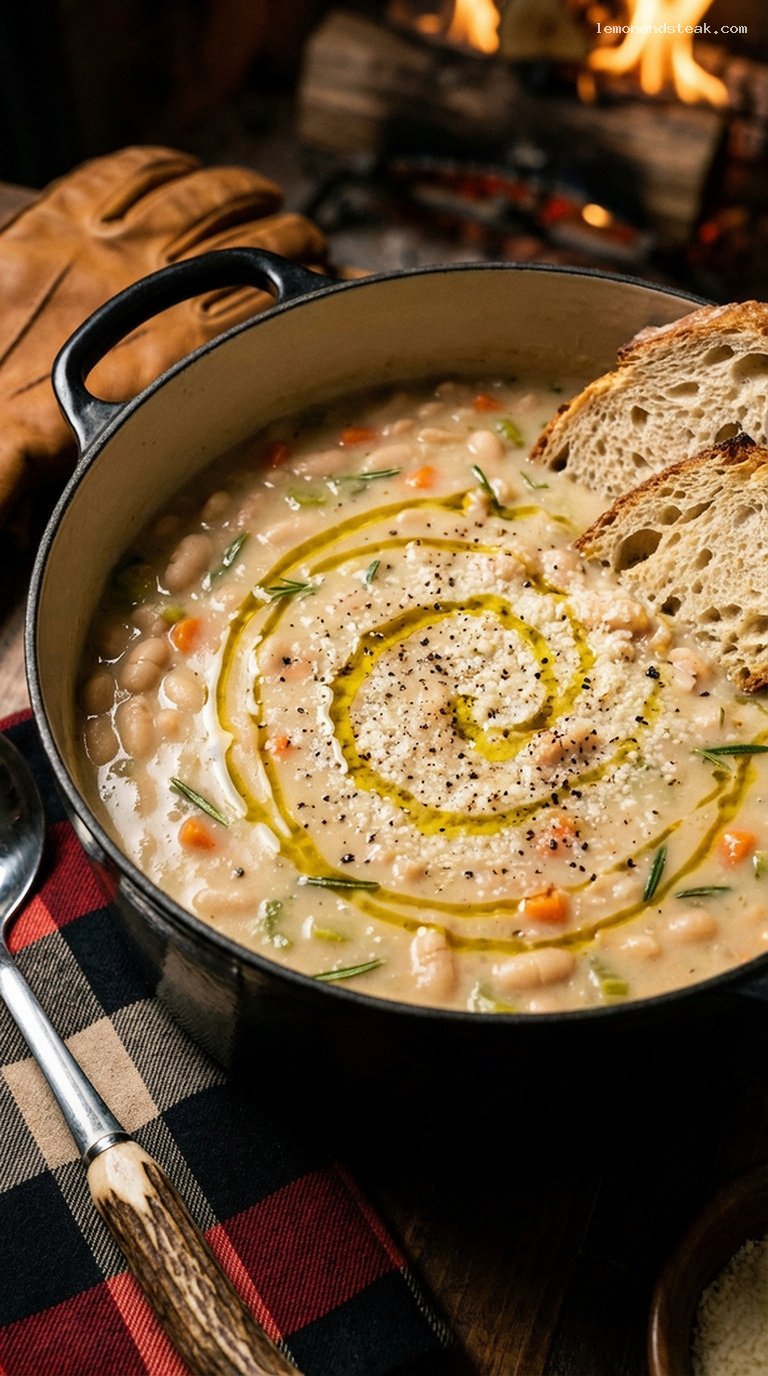
Ladle the hot soup into warm bowls. Drizzle each portion with a generous thread of extra-virgin olive oil so it glistens on top. Sprinkle with a few finely chopped fresh rosemary leaves and plenty of freshly grated Parmesan cheese, if using. Finish with an extra crack of black pepper or a pinch of red pepper flakes for color and warmth. Serve immediately with slices of crusty bread for dunking. The soup should be thick, creamy, and deeply aromatic, with some whole beans and vegetables still visible in the bowl.
Pro Tips
- Do not rush the simmer: Gentle, low heat gives the beans time to soften and release starch, creating a naturally creamy broth without adding cream.
- Salt gradually: Adding all the salt too early can slightly toughen the beans. Season lightly at first, then adjust once the beans are fully tender.
- Keep rosemary on the stem: Simmer whole sprigs so you can easily fish them out later; this prevents overpowering herbal bits while still infusing the soup.
- Control thickness: For a thicker, stew-like bowl, blend more of the soup; for a lighter broth, blend less and thin with a splash of hot water or broth.
- Use good olive oil: A flavorful extra-virgin olive oil drizzled at the end adds a luxurious, peppery finish that really makes the soup taste restaurant-quality.
Variations
- Faster canned-bean version: Use 3 cans (15 ounces each) of white beans, drained and rinsed. Skip soaking and reduce simmer time to about 25–30 minutes, just until flavors meld. Be more gentle with stirring so the beans do not break apart too much.
- With greens: Stir in 3–4 cups chopped kale, chard, or spinach during the last 10 minutes of simmering for extra color and nutrients. Cook until the greens are tender.
- Hearty sausage twist: Brown 8 ounces of Italian sausage (casings removed) in the pot before cooking the vegetables. Drain excess fat if needed, then proceed with the recipe as written for a more robust, meatier soup.
Storage & Make-Ahead
Cool the soup to room temperature, then transfer it to airtight containers. Refrigerate for up to 4 days. The flavors deepen and improve overnight, making this an excellent make-ahead meal. To reheat, warm gently on the stovetop over medium-low heat, adding a splash of water or broth if the soup has thickened in the fridge. Stir occasionally until steaming hot. This soup also freezes well: portion into freezer-safe containers, leaving some headspace, and freeze for up to 2–3 months. Thaw overnight in the refrigerator before reheating. Always finish reheated portions with a fresh drizzle of olive oil and a sprinkle of rosemary or Parmesan to bring back that just-made vibrancy.
Nutrition (per serving)
Approximate values per of 4 servings (without Parmesan or bread): about 380–420 calories; 17–19 g protein; 46–50 g carbohydrates; 15–18 g fat; 11–13 g fiber; 4–6 g sugar; 550–700 mg sodium (depending on broth and added salt). Adding Parmesan and bread will increase calories, protein, and sodium. These numbers are estimates and will vary with exact ingredients and portion sizes.
Leave a Reply