
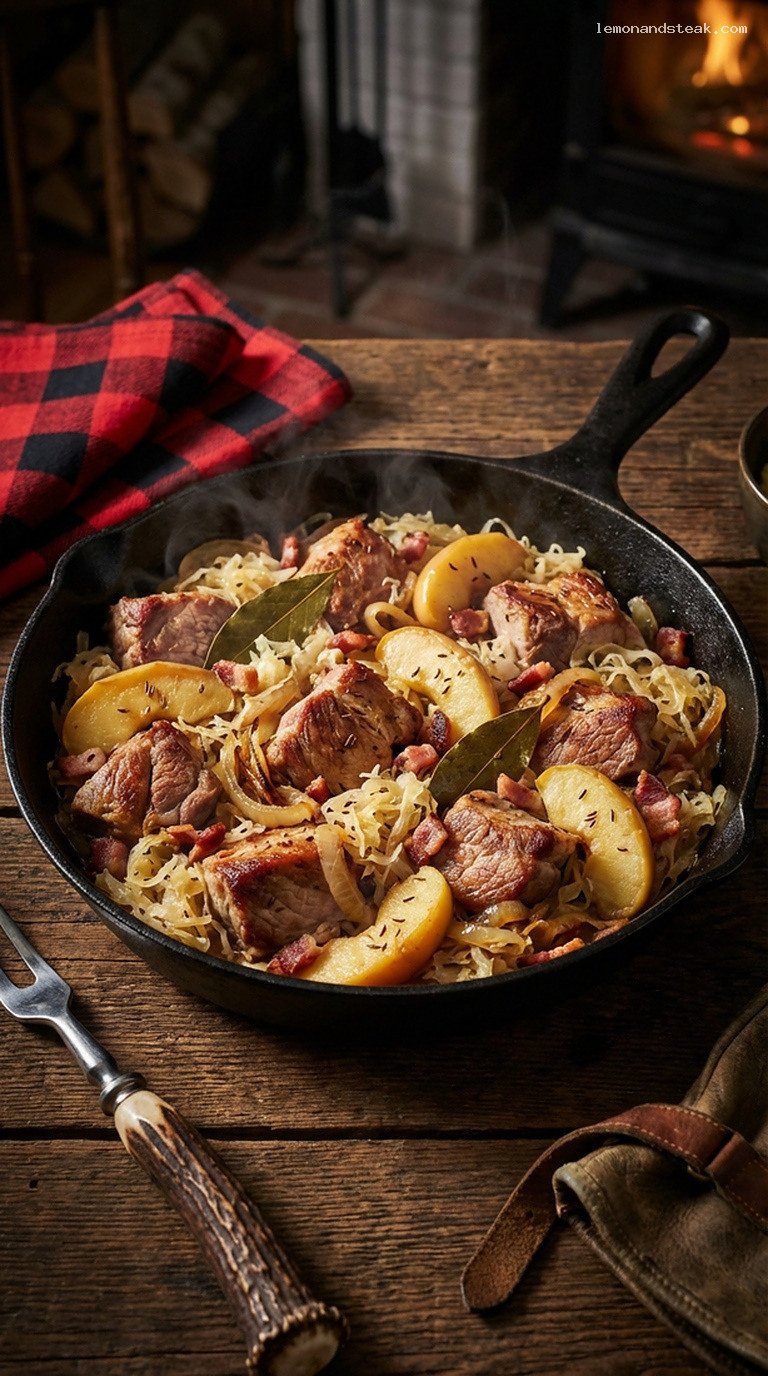
Quick Recipe Version (TL;DR)
Quick Ingredients
- 2 lb boneless pork shoulder, cut into 2-inch chunks
- 1 1/2 tsp kosher salt, divided (plus more to taste)
- 3/4 tsp freshly ground black pepper
- 4 slices thick-cut bacon, chopped
- 2 tbsp unsalted butter
- 2 medium yellow onions, thinly sliced
- 2 firm apples (such as Granny Smith or Honeycrisp), sliced
- 24 oz sauerkraut, drained and lightly rinsed
- 1 cup low-sodium chicken broth
- 1/2 cup apple cider (or apple juice)
- 1 tbsp Dijon mustard
- 1 tbsp brown sugar (optional, for balance)
- 1 tsp caraway seeds (optional but classic)
- 2 bay leaves
Do This
- 1. Pat pork dry, season with 1 tsp salt and pepper.
- 2. In a large heavy skillet, cook bacon until crisp; remove, leaving fat. Brown pork on all sides; set aside.
- 3. Add butter, onions, and apples to skillet; cook until softened and golden, 8–10 minutes.
- 4. Stir in sauerkraut, caraway, Dijon, brown sugar, broth, and cider; nestle pork and bacon into mixture, add bay leaves.
- 5. Bring to a gentle simmer, cover, and cook on low 60–75 minutes, stirring occasionally, until pork is very tender.
- 6. Uncover and simmer 10–15 minutes to thicken; adjust seasoning with more salt, pepper, or a splash of cider.
- 7. Serve hot straight from the skillet with mashed potatoes, boiled potatoes, or crusty bread.
Why You’ll Love This Recipe
- Deeply comforting winter flavors: savory pork, tangy sauerkraut, sweet apples, and mellow onions all in one pan.
- Hands-off cooking: once everything is in the skillet, it gently simmers into a rich, cozy meal.
- Budget-friendly: uses simple, inexpensive cuts like pork shoulder and pantry staples.
- Gets better as it rests: the flavors deepen, making it perfect for next-day lunches or make-ahead dinners.
Grocery List
- Produce: 2 medium yellow onions, 2 firm apples (Granny Smith or Honeycrisp), optional fresh parsley or chives for garnish
- Dairy: Unsalted butter
- Pantry: Sauerkraut (24 oz), chicken broth, apple cider or juice, Dijon mustard, brown sugar, caraway seeds, bay leaves, kosher salt, black pepper, cooking oil (if needed)
- Meat: 2 lb boneless pork shoulder, 4 slices thick-cut bacon
Full Ingredients
Pork and Skillet Base
- 2 lb boneless pork shoulder, trimmed of excess hard fat and cut into 2-inch chunks
- 1 1/2 tsp kosher salt, divided (start with this, then adjust to taste)
- 3/4 tsp freshly ground black pepper
- 4 slices thick-cut bacon, cut into 1/2-inch pieces
- 2 tbsp unsalted butter
Apples, Onions, and Sauerkraut
- 2 medium yellow onions, halved and thinly sliced
- 2 firm apples (such as Granny Smith or Honeycrisp), cored and sliced into 1/2-inch wedges (no need to peel unless you prefer)
- 24 oz sauerkraut, drained and lightly rinsed under cold water (squeeze out excess liquid)
- 1 tsp caraway seeds (optional but traditional and highly recommended)
- 2 bay leaves
Braising Liquid and Seasoning
- 1 cup low-sodium chicken broth
- 1/2 cup apple cider (or apple juice)
- 1 tbsp Dijon mustard
- 1 tbsp packed light brown sugar (optional, balances the tang)
- Additional salt and pepper to taste
For Serving (Optional)
- Fresh parsley or chives, finely chopped, for garnish
- Mashed potatoes, buttered egg noodles, boiled potatoes, or crusty bread
- A small spoonful of whole-grain mustard at the table
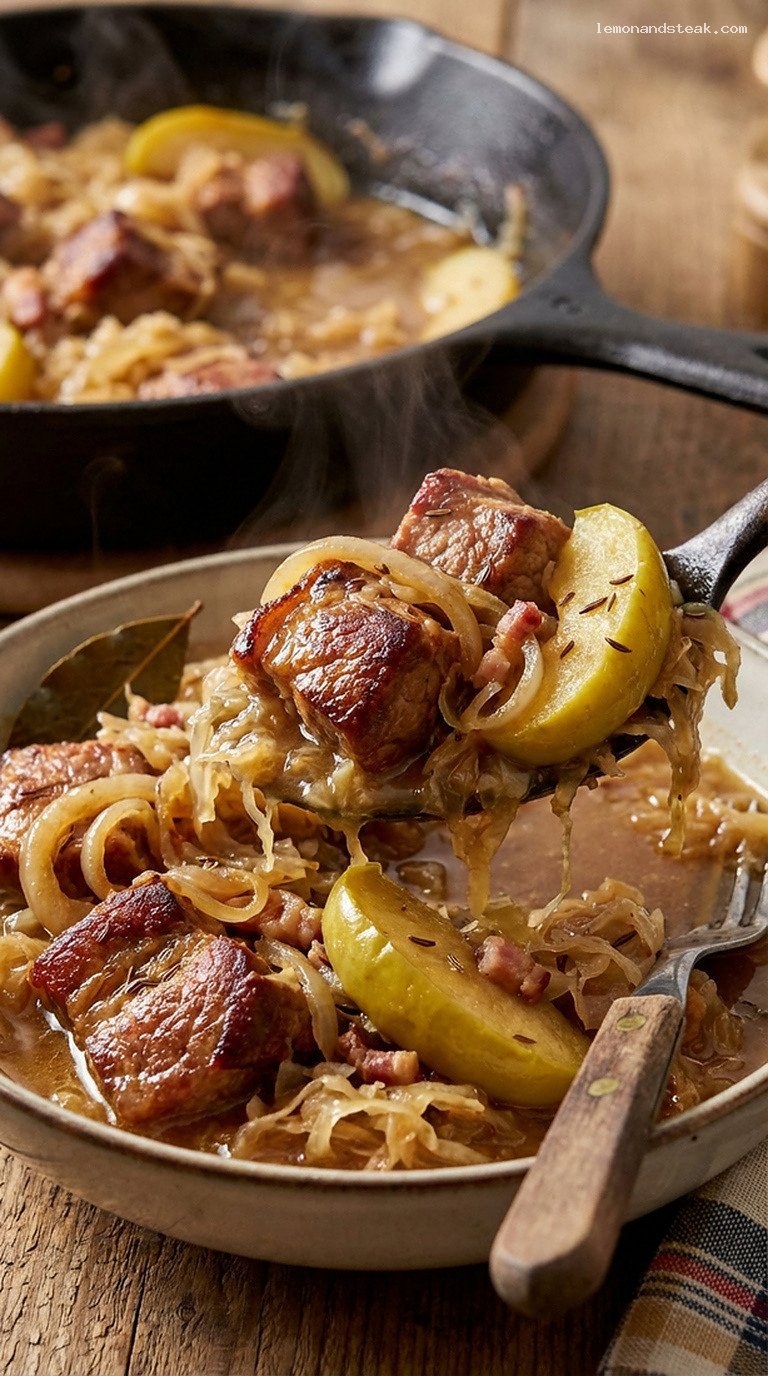
Step-by-Step Instructions
Step 1: Season and Prep the Pork
Pat the pork shoulder chunks very dry with paper towels; this helps them brown nicely. Sprinkle all over with about 1 teaspoon of the kosher salt and all of the black pepper. Let the pork sit at room temperature while you prep the vegetables to take off some of the chill; this promotes more even cooking.
Slice the onions and apples, drain and lightly rinse the sauerkraut (squeeze out excess brine with your hands), and measure out the broth, cider, Dijon, brown sugar, caraway seeds, and set the bay leaves aside. Having everything ready makes the cooking process smooth and relaxed.
Step 2: Cook the Bacon and Brown the Pork
Place a large, heavy skillet or wide Dutch oven (at least 12 inches across) over medium heat. Add the chopped bacon and cook, stirring occasionally, until the fat renders and the bacon is crisp, about 6–8 minutes. Use a slotted spoon to transfer the bacon to a bowl, leaving the rendered fat in the pan.
Increase heat to medium-high. If the pan looks very dry, add 1 tablespoon of neutral oil, but usually the bacon fat is enough. Add the seasoned pork in a single layer without crowding (work in batches if needed). Brown the pork on all sides until deeply golden, about 8–10 minutes total. Do not rush this step; good browning adds lots of flavor. Transfer browned pork to a plate and set aside. Leave the browned bits in the pan; they will flavor the onions and sauce.
Step 3: Soften the Onions and Apples
Reduce the heat to medium. Add the butter to the skillet. Once melted, add the sliced onions and a pinch of salt. Cook, stirring often and scraping up the browned bits from the bottom of the pan, until the onions soften and start to turn golden at the edges, about 6–8 minutes.
Add the apple slices and cook for another 3–4 minutes. The apples should soften slightly but still hold their shape; they will continue to cook with the pork. This stage builds sweetness and depth that will balance the tanginess of the sauerkraut later.
Step 4: Build the Sauerkraut Mixture
Stir the drained sauerkraut into the skillet with the onions and apples, breaking up any clumps with a spoon. Add the caraway seeds and stir well to distribute. Cook for 2–3 minutes to let some of the excess moisture evaporate and to wake up the flavors.
In a measuring cup or small bowl, whisk together the chicken broth, apple cider, Dijon mustard, and brown sugar (if using) until mostly smooth. Pour this mixture into the skillet and stir until everything is evenly combined. Nestle the bay leaves into the sauerkraut mixture.
Step 5: Nestle in the Pork and Simmer Slowly
Return the browned pork and the cooked bacon (along with any juices) to the skillet, tucking the pork pieces down into the sauerkraut mixture so they are mostly submerged. Bring the liquid just up to a gentle simmer over medium heat.
Once simmering, reduce the heat to low, cover the skillet with a tight-fitting lid, and cook for 60–75 minutes. Stir gently every 15–20 minutes, re-covering each time. Maintain a very gentle bubble; you want the pork to slowly braise until it is fork-tender but not falling apart completely. If the liquid seems to reduce too quickly, add a splash more broth or water.
Step 6: Uncover, Reduce, and Adjust Seasoning
After the pork is tender, remove the lid and increase the heat slightly to medium-low. Let the mixture simmer uncovered for 10–15 minutes, stirring occasionally, until the liquid thickens slightly and clings to the pork, sauerkraut, and apples. You are looking for a moist but not soupy skillet.
Taste the sauerkraut mixture and pork. Depending on how salty your sauerkraut and broth are, you may want to add an additional 1/4–1/2 teaspoon salt and a few more grinds of black pepper. For extra tang, add a small splash of cider. For more sweetness, stir in another teaspoon of brown sugar. Remove and discard the bay leaves.
Step 7: Serve Warm and Rustic
When the sauce has thickened and the pork is very tender, remove the skillet from the heat. If you like a fresh note, sprinkle chopped parsley or chives over the top just before serving.
Serve the rustic pork and sauerkraut directly from the skillet, family-style. It is excellent spooned over creamy mashed potatoes, buttered egg noodles, or simple boiled potatoes. Offer a small bowl of extra Dijon or whole-grain mustard at the table for anyone who likes more bite. This dish is even better after it sits for 10–15 minutes off the heat, as the flavors continue to mingle.
Pro Tips
- Brown in batches: If your skillet is smaller, brown the pork in two batches so it sears instead of steams; crowding the pan will prevent good caramelization.
- Adjust sauerkraut tang: Lightly rinsing and squeezing the sauerkraut tames its sharpness. For a more intense tang, skip the rinse or only rinse half of it.
- Low and slow wins: Keep the simmer gentle. A hard boil can make the pork tough; a slow braise keeps it tender and juicy.
- Apples with structure: Use firm apples (Granny Smith, Honeycrisp, Braeburn). Softer varieties can break down too much and disappear into the sauce.
- Make it a one-pan meal: Stir in small boiled potatoes during the last 15 minutes of simmering to soak up flavors right in the skillet.
Variations
- Smoky sausage twist: Replace half of the pork shoulder with 12 oz smoked sausage or kielbasa, sliced into thick rounds. Brown it briefly after the bacon, then proceed with the recipe for extra smokiness.
- Oven-braised version: After Step 4, cover the oven-safe skillet or Dutch oven and braise in a 325°F (165°C) oven for 1 1/4 to 1 1/2 hours, until the pork is tender. Uncover for the last 15 minutes to thicken.
- Slow cooker method: Brown the bacon and pork in a skillet as directed. Transfer everything to a slow cooker, layering pork under the sauerkraut mixture. Cook on LOW for 7–8 hours or HIGH for 4–5 hours, then uncover and cook another 20–30 minutes to reduce slightly if needed.
Storage & Make-Ahead
This skillet meal stores beautifully and may even taste better the next day. Cool leftovers to room temperature, then transfer to an airtight container and refrigerate for up to 4 days. Reheat gently on the stovetop over low heat, adding a splash of water or broth if it seems too thick. You can also reheat individual portions in the microwave at 50–70% power, stirring once or twice.
For longer storage, freeze in airtight containers for up to 3 months. Thaw overnight in the refrigerator, then reheat slowly on the stove. If you are planning ahead for a dinner party, you can fully cook the dish a day in advance, chill it, and reheat it in a covered skillet over low heat for 20–25 minutes, stirring occasionally, until steaming hot.
Nutrition (per serving)
Approximate values per serving (1/4 of the recipe, without sides): 620 calories; 38 g fat; 13 g saturated fat; 20 g carbohydrates; 3 g fiber; 11 g sugar; 41 g protein; 1,050 mg sodium. Actual values will vary based on specific ingredients and brands used, and whether you include the optional brown sugar.
Leave a Reply