
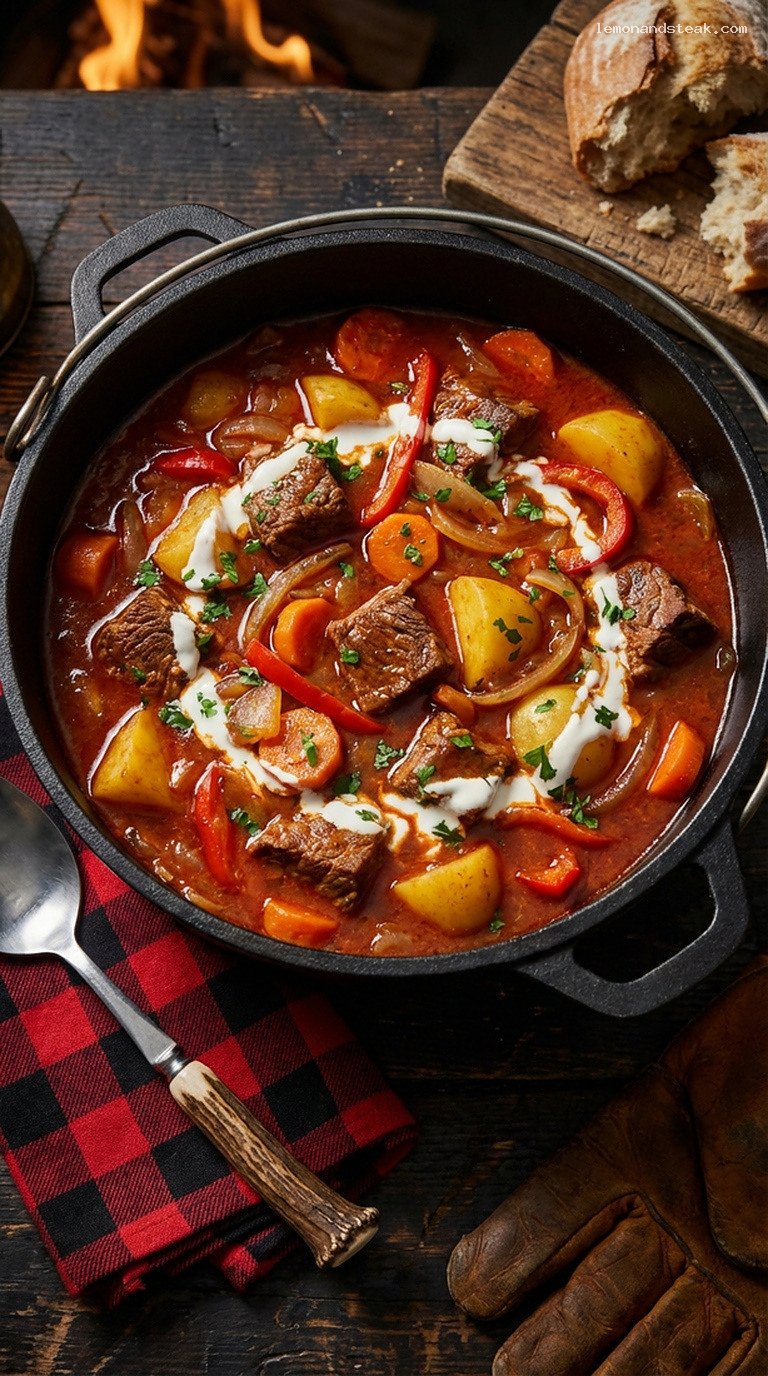
Quick Recipe Version (TL;DR)
Quick Ingredients
- 2 lb (900 g) beef chuck, cut into 1 1/2-inch cubes
- 2 tbsp vegetable oil (plus 1 tbsp if needed)
- 2 large yellow onions (about 1 lb), finely diced
- 4 garlic cloves, minced
- 2 medium carrots, sliced
- 1 red bell pepper, diced
- 2 medium tomatoes, chopped, or 1 cup (240 ml) canned crushed tomatoes
- 3 tbsp sweet Hungarian paprika
- 1 tsp hot Hungarian paprika (or 1/4 tsp cayenne, to taste)
- 2 tsp caraway seeds, lightly crushed
- 2 tbsp tomato paste
- 4 cups (960 ml) beef broth
- 2 bay leaves
- 1 1/2 lb (680 g) waxy potatoes, cut into 1-inch chunks
- 1 tsp dried marjoram (optional)
- Kosher salt and freshly ground black pepper
- Sour cream and chopped fresh parsley, for serving (optional)
Do This
- 1. Pat beef dry, season generously with salt and pepper, and brown in 2 batches in hot oil over medium-high heat; set aside.
- 2. In the same pot, reduce heat to medium, cook onions in remaining fat until deep golden (12–15 minutes), then add garlic, carrots, and bell pepper and cook 3–4 minutes.
- 3. Remove pot from heat, stir in sweet and hot paprika, caraway, and tomato paste until fragrant, then add tomatoes and scrape up browned bits.
- 4. Return beef and juices to pot, pour in beef broth, add bay leaves and marjoram, bring to a simmer over medium heat, then reduce to low, cover slightly, and cook 1 1/2 hours.
- 5. Stir in potatoes, re-cover partially, and simmer on low 40–50 minutes more, until beef and potatoes are very tender and broth is rich.
- 6. Taste and adjust seasoning with more salt, pepper, or paprika; if desired, simmer uncovered 10–15 minutes to thicken slightly.
- 7. Serve hot in warm bowls with a spoonful of sour cream and a sprinkle of parsley, with crusty bread on the side.
Why You’ll Love This Recipe
- Deep, slow-simmered flavor from plenty of onions, real Hungarian paprika, and tender beef chuck.
- Hearty potatoes and vegetables make this a complete one-pot meal, perfect for cold nights.
- Very forgiving and hands-off once it is simmering; great for weekends or relaxed entertaining.
- Even better the next day, so it is ideal for making ahead or cooking once and eating twice.
Grocery List
- Produce: Yellow onions, garlic, carrots, red bell pepper, tomatoes (or canned crushed tomatoes), waxy potatoes (Yukon Gold or similar), fresh flat-leaf parsley.
- Dairy: Sour cream (for serving, optional).
- Pantry: Beef chuck roast, vegetable oil, sweet Hungarian paprika, hot Hungarian paprika or cayenne, caraway seeds, tomato paste, beef broth, bay leaves, dried marjoram, kosher salt, black pepper, crusty bread (for serving, optional).
Full Ingredients
Main Goulash
- 2 lb (900 g) beef chuck, cut into 1 1/2-inch (4 cm) cubes, excess hard fat trimmed
- 1 1/2 tsp kosher salt, plus more to taste
- 1 tsp freshly ground black pepper, plus more to taste
- 2–3 tbsp vegetable oil (as needed for browning)
- 2 large yellow onions (about 1 lb / 450 g), finely diced
- 4 garlic cloves, minced
- 2 medium carrots, peeled and sliced into 1/4-inch rounds
- 1 red bell pepper, seeded and diced
- 2 medium ripe tomatoes, chopped, or 1 cup (240 ml) canned crushed tomatoes
- 3 tbsp sweet Hungarian paprika (not smoked)
- 1 tsp hot Hungarian paprika, or 1/4 tsp cayenne pepper, more to taste
- 2 tsp caraway seeds, lightly crushed with a mortar and pestle or the bottom of a pan
- 2 tbsp tomato paste
- 4 cups (960 ml) low-sodium beef broth
- 2 bay leaves
- 1 tsp dried marjoram (optional but traditional)
- 1 1/2 lb (680 g) waxy potatoes (such as Yukon Gold), peeled if desired, cut into 1-inch chunks
For Serving (Optional)
- Sour cream, for dolloping
- Chopped fresh flat-leaf parsley
- Crusty bread, buttered if you like
Step-by-Step Instructions
Step 1: Prep the beef and vegetables
Cut the beef chuck into roughly 1 1/2-inch (4 cm) cubes, trimming away any large, hard pieces of fat. Pat the cubes very dry with paper towels; dry surfaces brown better. Season the beef all over with 1 1/2 teaspoons kosher salt and 1 teaspoon freshly ground black pepper. Let it sit at room temperature for about 15 minutes while you prepare the vegetables.
Finely dice the onions, mince the garlic, slice the carrots, dice the red bell pepper, and chop the tomatoes (if using fresh). Peel the potatoes if you prefer (leaving the skin on is fine for waxy varieties), then cut them into 1-inch chunks. Keep the potatoes in a bowl of cold water to prevent browning until you are ready to use them. Lightly crush the caraway seeds so they are fragrant but not powdered.
Step 2: Brown the beef
Choose a heavy 5–6 quart (4.7–5.7 L) Dutch oven or large, heavy-bottomed pot with a lid. Heat 2 tablespoons of vegetable oil over medium-high heat until shimmering but not smoking, about 2 minutes. Add about half of the beef cubes in a single layer, leaving space between pieces so they sear rather than steam. Brown on at least two sides until deeply caramelized, about 6–8 minutes per batch. Adjust heat as needed so the fond (browned bits) on the bottom does not burn.
Transfer the browned beef to a plate, then repeat with the remaining beef, adding the remaining 1 tablespoon oil if the pot looks dry. Leave all the browned bits and fat in the pot; that is pure flavor for the goulash.
Step 3: Build the onion base
Reduce the heat to medium. Add the diced onions to the pot with a pinch of salt. Cook, stirring frequently, until the onions become soft, translucent, and then a deep golden color, 12–15 minutes. If the bottom starts to get too dark, add 1–2 tablespoons of water and scrape it up with a wooden spoon to deglaze, then keep cooking.
Stir in the minced garlic, sliced carrots, and diced red bell pepper. Cook for another 3–4 minutes, stirring often, until the vegetables soften slightly and the garlic becomes fragrant but not browned. This slow cooking of the onions and vegetables forms the sweet, rich backbone of a good Hungarian goulash.
Step 4: Add paprika and aromatics
Turn off the heat or remove the pot from the burner for a moment. This step helps prevent the paprika from burning, which would make the dish bitter. Add the sweet Hungarian paprika, hot paprika (or cayenne), crushed caraway seeds, and tomato paste to the onion mixture. Stir thoroughly until everything is well coated and the tomato paste darkens slightly, 30–60 seconds.
Add the chopped tomatoes or canned crushed tomatoes and stir, scraping up any remaining browned bits from the bottom of the pot. You should see a thick, brick-red base forming, with a rich paprika aroma starting to come through.
Step 5: Start the slow simmer
Return the browned beef and any accumulated juices on the plate to the pot. Pour in the beef broth, then add the bay leaves and dried marjoram (if using). Stir well to combine, making sure the beef is mostly submerged. Increase the heat to medium-high and bring the mixture just up to a gentle simmer, with small bubbles breaking the surface, about 5–8 minutes.
Once it begins to simmer, reduce the heat to low or low-medium so the liquid stays at a very gentle simmer (around 185–195°F / 85–90°C). Partially cover the pot with the lid slightly ajar to allow some steam to escape. Simmer for about 1 1/2 hours, stirring every 20–30 minutes to ensure nothing sticks. The beef should be starting to become tender, but not falling apart yet.
Step 6: Add the potatoes and finish simmering
Drain the potatoes and add them to the pot, stirring them into the goulash so they are submerged in the liquid. Continue to simmer on low heat, partially covered, for another 40–50 minutes. Stir occasionally and check that the simmer stays gentle; adjust the heat if needed.
After 40 minutes, test both the beef and potatoes. The beef should be very tender and easy to break apart with a fork, and the potatoes should be soft all the way through but still holding their shape. If either still feels firm, continue simmering for another 10–15 minutes, checking again.
Step 7: Adjust seasoning and consistency
Once the beef and potatoes are tender, taste the broth and adjust the seasoning. Add more salt as needed (goulash usually needs a bit more than you think), and a few more grinds of black pepper. If you want a deeper paprika flavor, you can stir in up to 1 additional teaspoon of sweet Hungarian paprika, then simmer 5 more minutes.
If the goulash seems too thin for your liking, remove the lid and simmer uncovered for 10–15 minutes to reduce and thicken slightly. If it is thicker than you prefer, stir in a splash of hot water or broth until it reaches your ideal consistency. It should be stew-like but still brothy enough to spoon up.
Step 8: Serve warm and enjoy
Discard the bay leaves. Let the goulash rest off the heat for about 5 minutes; this allows the flavors to settle and makes it easier to serve. Ladle the goulash into warm bowls, making sure each serving gets a good mix of beef, potatoes, and vegetables, along with plenty of the rich, red broth.
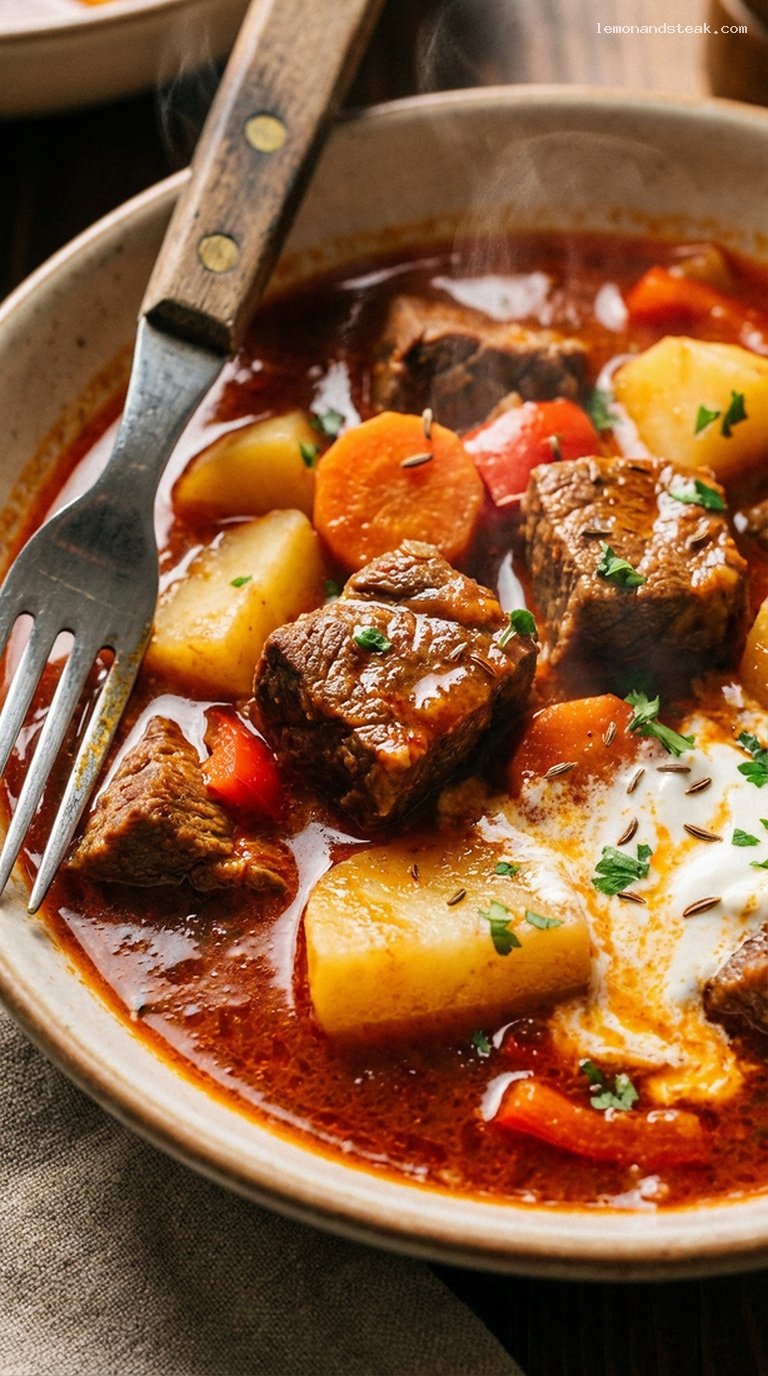
If desired, top each bowl with a small spoonful of sour cream and a sprinkle of chopped fresh parsley. Serve hot, with crusty bread on the side for dunking into the paprika-scented juices. This goulash is wonderful on its own as a complete meal and is even more flavorful the next day.
Pro Tips
- Use the right paprika: Seek out good-quality Hungarian sweet paprika for authenticity and depth of flavor. Smoked paprika will change the character of the dish, so avoid it here unless you specifically want a smokier taste.
- Do not rush the onions: Taking the full 12–15 minutes to cook the onions to a deep golden color adds natural sweetness and body to the goulash without extra sugar or thickeners.
- Keep the paprika from burning: Always add paprika off the heat or on very low heat and stir quickly. Burned paprika becomes bitter and cannot be fixed.
- Choose waxy potatoes: Waxy varieties such as Yukon Gold or red potatoes hold their shape and stay creamy without disintegrating into the broth.
- Better the next day: Like many stews, goulash gains flavor as it rests. Make it a day ahead if you can and reheat gently on the stovetop for especially rich results.
Variations
- More rustic “soup-style” goulash: Add an extra 1–2 cups (240–480 ml) beef broth or water to make the dish looser and more soup-like, closer to traditional Hungarian gulyás served in a bowl with bread.
- Mushroom goulash: Add 8 oz (225 g) sliced cremini mushrooms after the onions have softened and cook until they release their moisture and start to brown. They add an earthy note and extra body to the sauce.
- Smoky paprika twist: For a subtly different flavor, substitute 1 tablespoon of the sweet paprika with smoked paprika. This is not strictly traditional, but it gives a gentle campfire-like smokiness that works well in winter.
Storage & Make-Ahead
Let the goulash cool to room temperature, then transfer to airtight containers. Refrigerate for up to 4 days. The flavors deepen over time, so it often tastes best on days 2 and 3. To reheat, warm gently in a covered pot over low to medium-low heat, stirring occasionally, until hot throughout (about 10–15 minutes). If the stew has thickened in the fridge, add a splash of water or broth as it reheats. For longer storage, freeze in freezer-safe containers for up to 3 months. Thaw overnight in the refrigerator before reheating. Potatoes can soften slightly after freezing but will still be delicious.
Nutrition (per serving)
Approximate values per serving (1/6 of recipe, without sour cream or bread): 540 calories; 32 g protein; 28 g fat; 12 g saturated fat; 38 g carbohydrates; 5 g fiber; 7 g sugar; 980 mg sodium. Actual values will vary based on exact ingredients and portion sizes.
Leave a Reply