
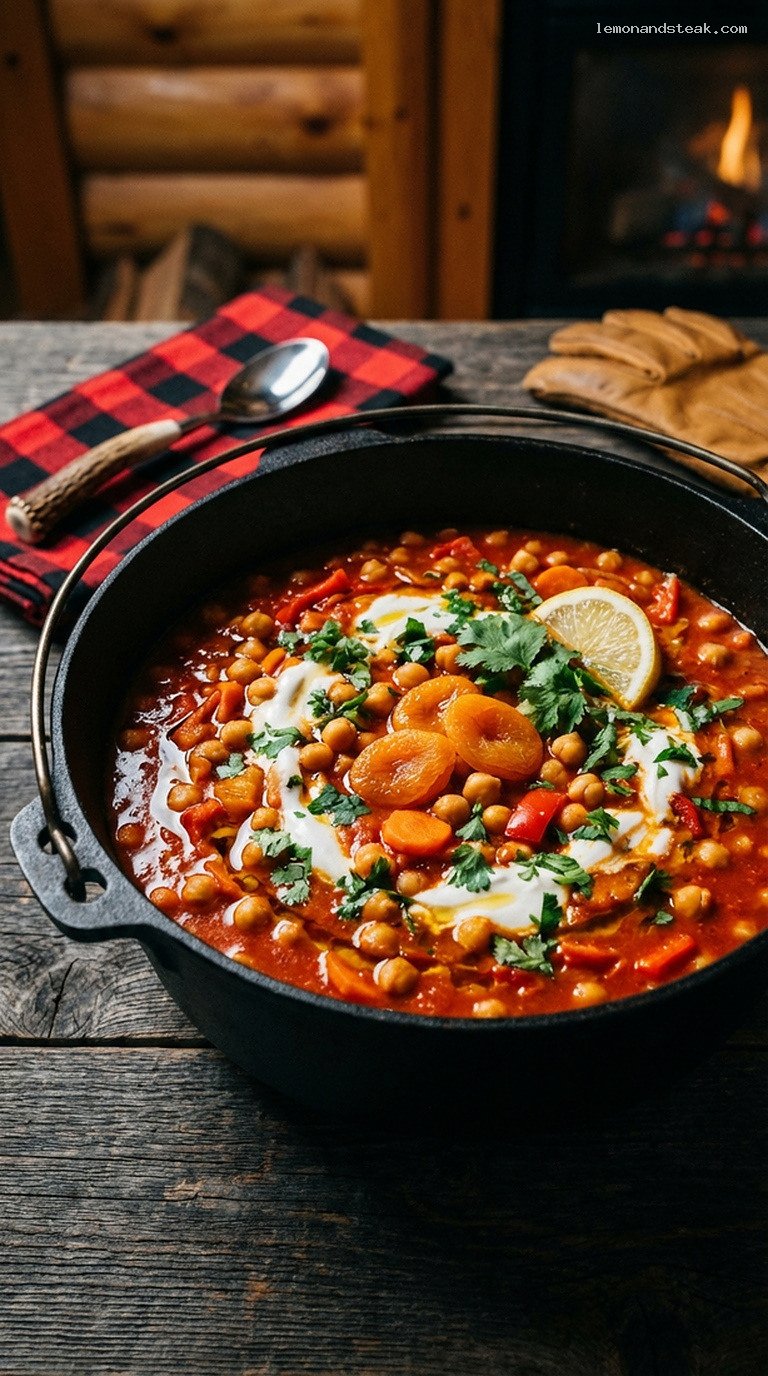
Quick Recipe Version (TL;DR)
Quick Ingredients
- 3 tbsp olive oil
- 1 large onion, diced
- 2 medium carrots, diced
- 1 red bell pepper, diced
- 3 cloves garlic, minced
- 2 tsp ground cumin, 1½ tsp ground coriander
- 1 tsp smoked paprika, ½ tsp cinnamon, ½ tsp turmeric
- ¼ tsp ground ginger, pinch red pepper flakes (optional)
- 2 tbsp tomato paste
- 1 can (14.5 oz / 400 g) diced tomatoes
- 3 cups vegetable broth
- 2 cans (15 oz / 425 g each) chickpeas, drained and rinsed
- ½ cup dried apricots, chopped
- ½–1 tsp fine sea salt, black pepper to taste
- Juice of ½ lemon
- Fresh cilantro or parsley, chopped (for garnish)
- Plain Greek yogurt and warm bread or couscous, to serve (optional)
Do This
- 1. Sauté onion, carrots, and bell pepper in olive oil over medium heat for 6–8 minutes until soft and lightly golden.
- 2. Add garlic; cook 1 minute. Stir in cumin, coriander, smoked paprika, cinnamon, turmeric, ginger, and red pepper flakes; toast 30–60 seconds.
- 3. Stir in tomato paste; cook 1–2 minutes until darkened and fragrant.
- 4. Add diced tomatoes, vegetable broth, chickpeas, apricots, ½ tsp salt, and a few grinds of black pepper. Bring to a gentle boil, then reduce to a simmer.
- 5. Simmer uncovered 20–25 minutes, stirring occasionally, until chickpeas are very tender and broth has thickened to a stew.
- 6. Stir in lemon juice and taste; adjust salt, pepper, and spices. Garnish with fresh herbs and a spoonful of yogurt. Serve hot with bread or couscous.
Why You’ll Love This Recipe
- Deeply fragrant Moroccan-inspired spices make this simple chickpea stew taste complex and cozy.
- Sweet dried apricots and tomatoes create a beautiful sweet-savory balance that feels perfect for cold evenings.
- Uses pantry staples and affordable ingredients, yet feels special enough for guests.
- Naturally vegetarian (and easily vegan), high in fiber and protein, and even better the next day.
Grocery List
- Produce: 1 large yellow onion, 2 medium carrots, 1 red bell pepper, 3 cloves garlic, 1 lemon, fresh cilantro and/or parsley
- Dairy: Plain Greek yogurt (for serving, optional)
- Pantry: Olive oil, 2 cans chickpeas, 1 can diced tomatoes, tomato paste, dried apricots, vegetable broth, ground cumin, ground coriander, smoked paprika, ground cinnamon, ground turmeric, ground ginger, red pepper flakes, bay leaf (optional), honey or maple syrup (optional), fine sea salt, black pepper, bread, rice, or couscous for serving
Full Ingredients
For the Moroccan-Spiced Chickpea Stew
- 3 tbsp olive oil
- 1 large yellow onion, diced (about 2 cups)
- 2 medium carrots, diced (about 1½ cups)
- 1 red bell pepper, diced (about 1 cup)
- 3 cloves garlic, minced
- 2 tsp ground cumin
- 1½ tsp ground coriander
- 1 tsp smoked paprika (or sweet paprika, if preferred)
- ½ tsp ground cinnamon
- ½ tsp ground turmeric
- ¼ tsp ground ginger (or 1 tsp freshly grated ginger)
- ⅛–¼ tsp red pepper flakes, to taste (optional, for gentle heat)
- 2 tbsp tomato paste
- 1 can (14.5 oz / 400 g) diced tomatoes with their juices
- 3 cups vegetable broth (low-sodium if possible)
- 2 cans (15 oz / 425 g each) chickpeas, drained and rinsed (about 3 cups cooked chickpeas)
- ½ cup dried apricots, chopped into small bite-size pieces
- 1 small bay leaf (optional)
- ½–1 tsp fine sea salt, plus more to taste
- Freshly ground black pepper, to taste
- 1–2 tsp honey or maple syrup (optional, to round out acidity and enhance sweetness)
- Juice of ½ lemon (about 1–1½ tbsp), plus extra wedges for serving
For Serving (Optional but Recommended)
- Plain Greek yogurt or thick plain yogurt, for dolloping
- Fresh cilantro and/or flat-leaf parsley, roughly chopped
- Warm crusty bread, naan, or pita; or cooked couscous, rice, or quinoa
- Extra lemon wedges
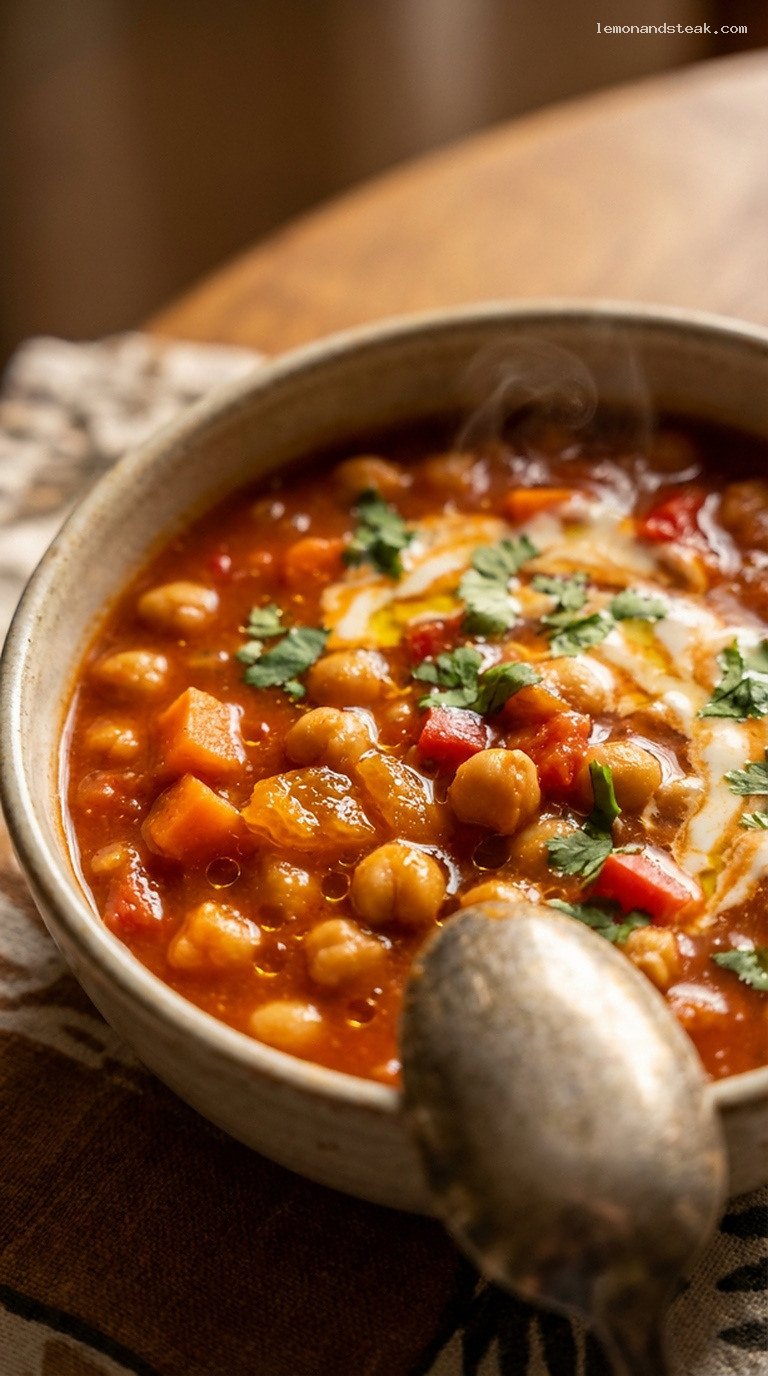
Step-by-Step Instructions
Step 1: Prep your vegetables and aromatics
Start by getting all your chopping out of the way. Dice the onion, carrots, and red bell pepper into small, even pieces so they cook at the same rate and melt into the stew. Mince the garlic finely. If you are using fresh ginger, peel and grate it. Chop the dried apricots into small bite-size pieces; this helps them soften quickly and distribute their sweetness throughout the stew. Rinse and drain the chickpeas. Have your spices, tomato paste, tomatoes, and broth measured and ready so once you start cooking, the process is smooth and relaxed.
Step 2: Soften the vegetables for a flavorful base
Place a heavy-bottomed pot or Dutch oven over medium heat. Add the olive oil and let it warm for about 30 seconds. Add the diced onion, carrots, and red bell pepper along with a small pinch of salt. Cook, stirring occasionally, for 6–8 minutes, until the vegetables are softened and the onions are turning translucent with a hint of golden color at the edges. Adjust the heat as needed so they gently sizzle but do not brown too quickly; this slow softening builds sweetness and depth into the stew.
Step 3: Bloom the spices and tomato paste
Add the minced garlic to the pot and cook for about 1 minute, stirring constantly, until fragrant but not browned. Sprinkle in the cumin, coriander, smoked paprika, cinnamon, turmeric, ground ginger, and red pepper flakes (if using). Stir well to coat the vegetables in the spices and toast them for 30–60 seconds. You should smell a big wave of fragrance. Stir in the tomato paste and cook for another 1–2 minutes, stirring frequently, until the paste darkens slightly in color and begins to stick lightly to the bottom of the pot. This caramelization gives the stew a richer, more complex flavor.
Step 4: Add liquids, chickpeas, and apricots
Pour in the diced tomatoes with their juices and use your spoon to scrape up any browned bits from the bottom of the pot. Add the vegetable broth, chickpeas, chopped apricots, bay leaf (if using), ½ teaspoon of sea salt, and several grinds of black pepper. Stir everything together thoroughly so the ingredients are evenly combined and the chickpeas are submerged in the liquid. Increase the heat to bring the mixture just up to a gentle boil.
Step 5: Simmer until thick, cozy, and fragrant
Once the stew reaches a gentle boil, reduce the heat to low or medium-low to maintain a steady simmer. Leave the pot uncovered and cook for 20–25 minutes, stirring occasionally. The broth should gradually thicken into a stew-like consistency as some of the liquid evaporates and the flavors concentrate. The chickpeas should become very tender, and the apricots will plump and soften, almost melting into the tomatoey broth. If the stew starts to look too thick before the chickpeas are very tender, add a splash more broth or water. If it seems too soupy toward the end of simmering, you can increase the heat slightly for the last few minutes.
Step 6: Finish with lemon, taste, and adjust
When the stew has thickened and smells deeply fragrant, remove the bay leaf. Stir in the lemon juice and, if desired, 1–2 teaspoons of honey or maple syrup to round out the acidity from the tomatoes and brightness of the lemon. Taste and adjust the seasoning: add more salt (a pinch at a time) and black pepper as needed. If you want a spicier kick, you can add a pinch more red pepper flakes. For even more body, you can gently mash a small portion of the chickpeas against the side of the pot and stir them back in.
Step 7: Garnish and serve
Just before serving, sprinkle the stew generously with chopped fresh cilantro and/or parsley. Ladle the hot chickpea stew into warm bowls. Top each serving with a spoonful of plain Greek yogurt for creaminess and a beautiful tangy contrast, if using. Serve with lemon wedges on the side for extra brightness. Pair with crusty bread for dipping, or spoon the stew over fluffy couscous, rice, or quinoa to soak up all the fragrant, spiced sauce. Enjoy it steaming hot while the kitchen still smells like warm spices.
Pro Tips
- Toast your spices properly: Give the spices 30–60 seconds of contact with the hot oil before adding liquids. This blooming step is key to unlocking their full fragrance.
- Adjust the sweetness balance: Dried apricots vary in sweetness. If your tomatoes are quite acidic, a small drizzle of honey or maple syrup at the end can bring everything into balance without making the stew sugary.
- Control the thickness: Prefer a thicker, almost saucy stew? Simmer uncovered for the full 25 minutes and mash a few chickpeas. Want it brothy? Add an extra ½–1 cup of vegetable broth.
- Layer the garnish: A contrast of creamy yogurt, fresh herbs, and a final squeeze of lemon makes the flavors pop and keeps the stew from tasting flat.
- Make it ahead for deeper flavor: The spices and aromatics continue to meld as the stew rests. It is often even more flavorful the next day.
Variations
- Vegan version: Simply omit the yogurt garnish or replace it with a plant-based yogurt or a drizzle of good olive oil. Use maple syrup instead of honey if you want that touch of sweetness.
- With greens: Stir in 2–3 cups of chopped kale, Swiss chard, or spinach during the last 5 minutes of simmering for extra color, nutrients, and texture.
- With extra vegetables or grains: Add 1 diced sweet potato or 1 cup small-diced butternut squash along with the chickpeas for extra heartiness, or stir in cooked farro or barley right at the end for a more substantial, stew-meets-grain-bowl feel.
Storage & Make-Ahead
Let the stew cool to room temperature before storing. Transfer to airtight containers and refrigerate for up to 4 days. The flavors deepen and improve as it rests, so it is excellent for meal prep. Reheat gently on the stovetop over medium-low heat, adding a splash of water or broth if it has thickened too much, and stir occasionally until hot. You can also reheat individual portions in the microwave, covered, stirring halfway. For longer storage, freeze in portioned containers for up to 3 months; thaw overnight in the refrigerator before reheating. Add fresh lemon juice and herbs after reheating to brighten the flavors back up.
Nutrition (per serving)
Approximate values for one of 4 servings, without yogurt or bread: about 420 calories; 13 g protein; 12 g fat; 65 g carbohydrates; 12 g dietary fiber; 9 g sugars (naturally occurring from tomatoes and apricots); 540 mg sodium (will vary based on broth and added salt). Adding yogurt and bread or couscous will increase calories and carbohydrates slightly, along with additional protein and calcium from the yogurt.
Leave a Reply