
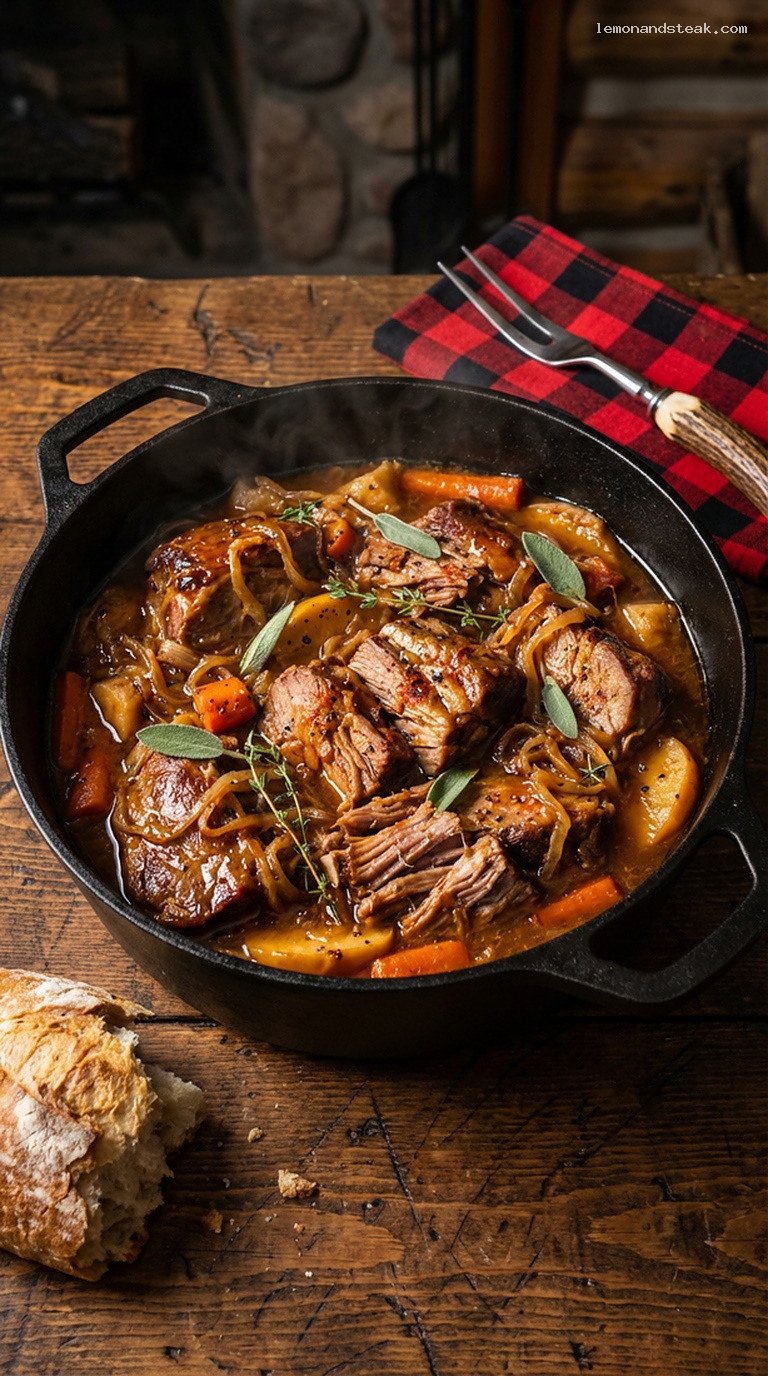
Quick Recipe Version (TL;DR)
Quick Ingredients
- 3.5 to 4 lb boneless pork shoulder (Boston butt)
- 2 1/2 tsp kosher salt + more to taste
- 1 1/2 tsp black pepper
- 1 tsp smoked paprika, 1 tsp garlic powder
- 2 Tbsp olive oil
- 2 large yellow onions, thinly sliced
- 4 garlic cloves, minced
- 1 large carrot, diced (optional but recommended)
- 1 firm apple, diced (optional, for sweetness)
- 8 fresh sage leaves, 4 thyme sprigs, 2 bay leaves
- 2 cups apple cider (not vinegar)
- 1 cup low-sodium chicken broth
- 2 Tbsp apple cider vinegar
- 1 Tbsp tomato paste, 1 Tbsp Dijon mustard
- 1 Tbsp brown sugar
- 1–2 Tbsp unsalted butter (to finish sauce)
Do This
- 1. Preheat oven to 325°F (165°C). Pat pork dry and rub with salt, pepper, smoked paprika, and garlic powder.
- 2. Sear pork in hot olive oil in a heavy Dutch oven until well browned on all sides; remove to a plate.
- 3. In the same pot, cook onions with a pinch of salt until golden. Add carrot, apple, then garlic, sage, and thyme; cook until fragrant.
- 4. Stir in tomato paste, then deglaze with apple cider and broth. Add Dijon, brown sugar, cider vinegar, bay leaves; bring to a simmer.
- 5. Return pork and juices to the pot, cover, and braise in the oven 2 1/2 to 3 hours, until fork-tender.
- 6. Transfer pork to a board to rest 10–15 minutes, then shred or chunk. Simmer sauce uncovered to thicken if needed, swirl in butter, adjust seasoning.
- 7. Return pork to the sauce, toss gently, and serve over mashed potatoes, noodles, or with crusty bread, topped with extra sage.
Why You’ll Love This Recipe
- Deep, cozy flavors from slow-braised pork, caramelized onions, sage, and apple cider.
- Mostly hands-off: a bit of stove work, then the oven does the rest.
- Extremely forgiving and hard to overcook; the pork becomes fall-apart tender.
- Perfect for feeding a crowd, and leftovers taste even better the next day.
Grocery List
- Produce: Yellow onions, garlic, carrot, firm apple, fresh sage, fresh thyme, fresh parsley (optional, for garnish).
- Dairy: Unsalted butter (for finishing the sauce; plus extra if making mashed potatoes).
- Pantry: Boneless pork shoulder (Boston butt), apple cider (drinkable, not vinegar), low-sodium chicken broth, apple cider vinegar, olive oil, tomato paste, Dijon mustard, brown sugar, smoked paprika, garlic powder, crushed red pepper flakes (optional), bay leaves, kosher salt, black pepper, optional sides like potatoes, egg noodles, polenta, or crusty bread.
Full Ingredients
Pork and Seasoning
- 3.5 to 4 lb boneless pork shoulder (Boston butt), trimmed of thick exterior fat if needed
- 2 1/2 tsp kosher salt
- 1 1/2 tsp freshly ground black pepper
- 1 tsp smoked paprika
- 1 tsp garlic powder
Braising Base
- 2 Tbsp olive oil
- 2 large yellow onions, halved and thinly sliced (about 4 packed cups)
- 1 large carrot, peeled and diced small (about 3/4 cup; optional but recommended)
- 1 firm, tart-sweet apple (such as Honeycrisp or Braeburn), cored and diced (about 1 cup; optional but wonderful)
- 4 garlic cloves, minced
- 8 fresh sage leaves, roughly chopped (or 1 1/2 tsp dried rubbed sage)
- 4 fresh thyme sprigs (or 1 tsp dried thyme)
- 2 bay leaves
- 1 Tbsp tomato paste
- 1 Tbsp Dijon mustard
- 2 cups (480 ml) apple cider (non-alcoholic, unspiced)
- 1 cup (240 ml) low-sodium chicken broth
- 2 Tbsp (30 ml) apple cider vinegar
- 1 Tbsp packed brown sugar (light or dark)
- 1/4 tsp crushed red pepper flakes (optional, for gentle warmth)
Finishing and Serving
- 1–2 Tbsp cold unsalted butter, cut into pieces (to finish the sauce)
- Extra kosher salt and black pepper, to taste
- Fresh sage leaves and/or chopped fresh parsley, for garnish
- Mashed potatoes, buttered egg noodles, soft polenta, or crusty bread, for serving (optional but highly recommended)
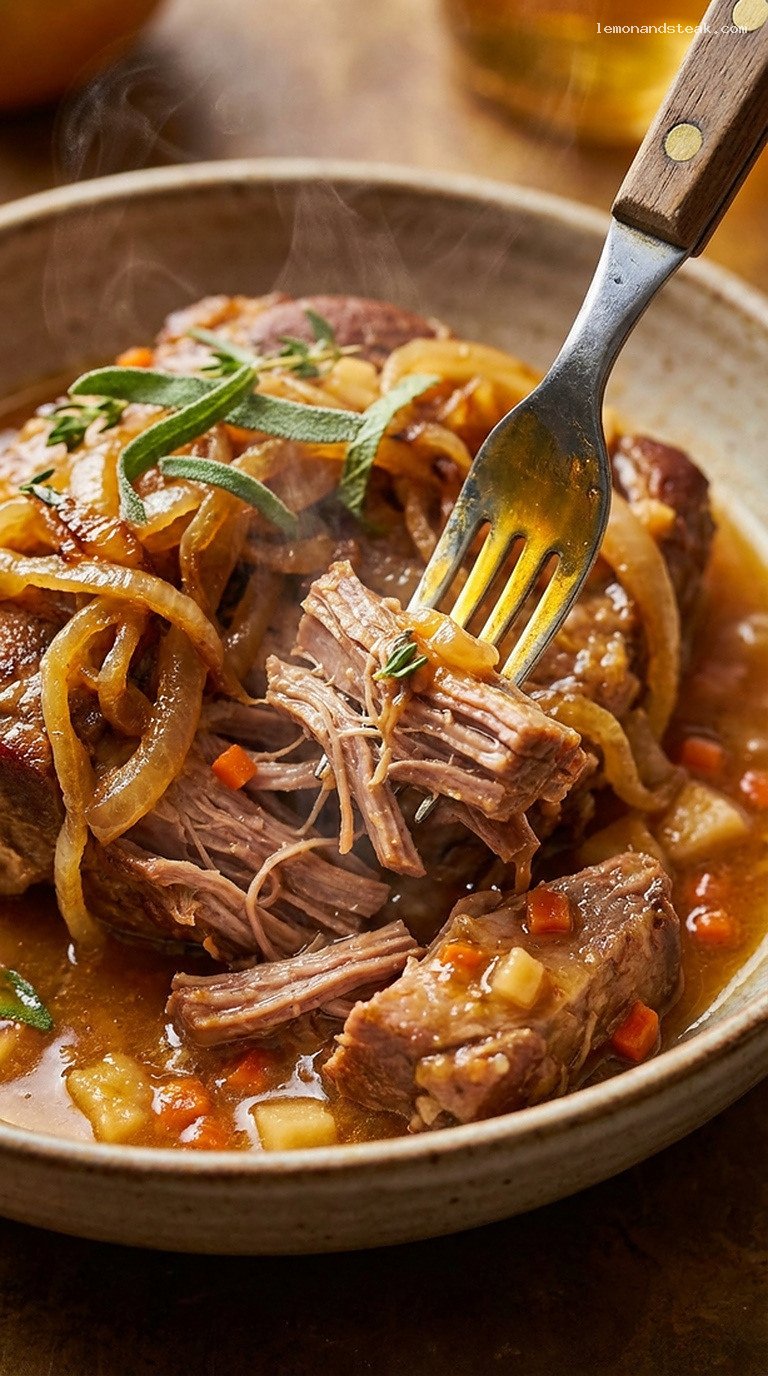
Step-by-Step Instructions
Step 1: Preheat the oven and season the pork
Preheat your oven to 325°F (165°C) with a rack in the lower-middle position. Pat the pork shoulder dry on all sides with paper towels; this helps it brown nicely instead of steaming.
In a small bowl, mix together the kosher salt, black pepper, smoked paprika, and garlic powder. Rub this mixture all over the pork, working it into any creases or seams. Let the seasoned pork sit at room temperature while you prep the vegetables; this takes the chill off the meat and helps it cook more evenly.
Step 2: Sear the pork for deep flavor
Place a heavy Dutch oven or other oven-safe pot (at least 5 quarts) over medium-high heat. Add the olive oil. When the oil is shimmering but not smoking, carefully lay the pork shoulder in the pot.
Sear the pork on all sides until deeply browned, 3–5 minutes per side. Use tongs to turn the roast; take your time here, as the browning adds tons of flavor to the final dish. Once browned, transfer the pork to a large plate or tray, keeping the pot on the heat with all the flavorful browned bits inside.
Step 3: Caramelize the onions and aromatics
Reduce the heat to medium. If the pot looks dry, add a small splash more olive oil. Add the sliced onions and a pinch of salt. Cook, stirring occasionally and scraping up any browned bits from the bottom, until the onions are softened and starting to turn golden at the edges, about 8–10 minutes.
Add the diced carrot and apple (if using) and cook for another 3–4 minutes, until they start to soften. Stir in the minced garlic, chopped sage, and thyme sprigs. Cook for 1 minute more, just until fragrant; do not let the garlic burn.
Step 4: Build the cider braising liquid
Push the vegetables to the sides of the pot and add the tomato paste to the center. Cook the paste, stirring it into the bottom of the pot, for about 1 minute to caramelize it slightly; it will darken in color and smell toasty.
Pour in the apple cider and chicken broth, stirring and scraping the bottom of the pot to release any remaining browned bits. Add the Dijon mustard, brown sugar, apple cider vinegar, crushed red pepper flakes (if using), and bay leaves. Stir well and bring the mixture up to a gentle simmer. Taste the liquid and add a pinch more salt if it tastes flat; it should be pleasantly seasoned but not too salty yet, as it will reduce during braising.
Step 5: Braise the pork low and slow
Return the seared pork shoulder (and any accumulated juices on the plate) to the pot, nestling it down into the onions and cider mixture. The liquid should come about halfway up the sides of the meat; if it seems low, add a bit more broth or water.
Bring the pot back to a gentle simmer on the stovetop. Cover tightly with a lid and transfer to the preheated oven. Braise for 2 1/2 to 3 hours, turning the pork once about halfway through, until the meat is very tender and easily pulls apart with a fork. If you like to be precise, the internal temperature should be around 195–205°F (90–96°C).
Step 6: Rest and shred the pork
Carefully remove the pot from the oven. Lift the pork onto a cutting board or platter, using two spatulas or sturdy tongs, as it will be very soft. Tent loosely with foil and let it rest for 10–15 minutes; this helps the juices settle.
While the pork rests, remove and discard the thyme stems and bay leaves from the braising liquid. If there is a thick layer of fat on top, you can spoon some off now. After resting, use two forks or your hands (once cool enough) to pull the pork into large, rustic chunks or shreds, discarding any large pieces of fat or sinew.
Step 7: Finish the sauce and serve
Place the pot with the cider-onion mixture back on the stove over medium heat. If the sauce seems thin, simmer it uncovered for 5–10 minutes to reduce slightly until it has a rich, glossy consistency. Taste and adjust with additional salt, pepper, or a splash more cider vinegar if you want extra brightness.
Turn off the heat and stir in 1–2 tablespoons of cold unsalted butter until melted and silky. Return the shredded pork to the pot, gently folding it into the onions and sauce so everything is well coated. The goal is juicy, saucy pork with plenty of onions and a spoonable cider broth.
Serve the pork piled over mashed potatoes, buttered egg noodles, creamy polenta, or alongside crusty bread to soak up the juices. Spoon extra onions and cider sauce over the top, and finish with a sprinkle of fresh sage or parsley for color.
Pro Tips
- Choose the right cider: Use drinkable apple cider or unfiltered apple juice, not apple cider vinegar or spiced holiday cider. A good, not-too-sweet cider gives the broth a woodsy, apple aroma.
- Brown the pork well: Do not rush the sear. Deep, even browning is key to a rich-tasting braise; if the pot starts to smoke, reduce the heat slightly but keep going until you see a dark golden crust.
- Adjust the liquid level: During braising, the pork should be partly submerged, not completely covered. If your pot is very wide, you may need a bit more broth or a splash of water.
- Skim the fat for a cleaner sauce: For an even lighter, more refined sauce, refrigerate the pot overnight, then remove the hardened fat from the surface before reheating.
- Texture control: For a rustic feel, leave some larger chunks of pork instead of shredding everything finely. It makes the dish feel heartier and more substantial.
Variations
- Slow Cooker Version: After searing the pork and sautéing the onions and aromatics on the stove, transfer everything to a slow cooker. Add the liquids and herbs, then cook on Low for 8–10 hours or on High for 5–6 hours, until the pork is pull-apart tender.
- Extra Apple and Sage: For a more pronounced apple-sage character, double the diced apple and add a few extra sage leaves. You can also finish with a splash of cider at the very end for a fresh, fruity note.
- Smoky Bacon Twist: Render 3–4 slices of chopped bacon in the pot before searing the pork. Use the bacon fat to sear, and stir the crispy bits into the sauce before serving for extra smokiness.
Storage & Make-Ahead
Let the pork and sauce cool to room temperature, then transfer to airtight containers. Refrigerate for up to 4 days or freeze for up to 3 months. The flavors actually deepen after a night in the fridge, making this an excellent make-ahead dish for entertaining.
To reheat, warm gently on the stovetop over low heat, adding a splash of water or broth if the sauce has thickened too much. Stir occasionally until hot all the way through. If reheating from frozen, thaw overnight in the refrigerator first for best texture.
Nutrition (per serving)
Approximate values for 1 of 8 servings (pork and sauce only, no sides): about 480 calories, 32 g protein, 26 g fat, 14 g carbohydrates, 2 g fiber, 9 g sugars, and 840 mg sodium. Actual values will vary based on the exact cut of pork, trimming, and how much fat is skimmed from the sauce.
Leave a Reply