
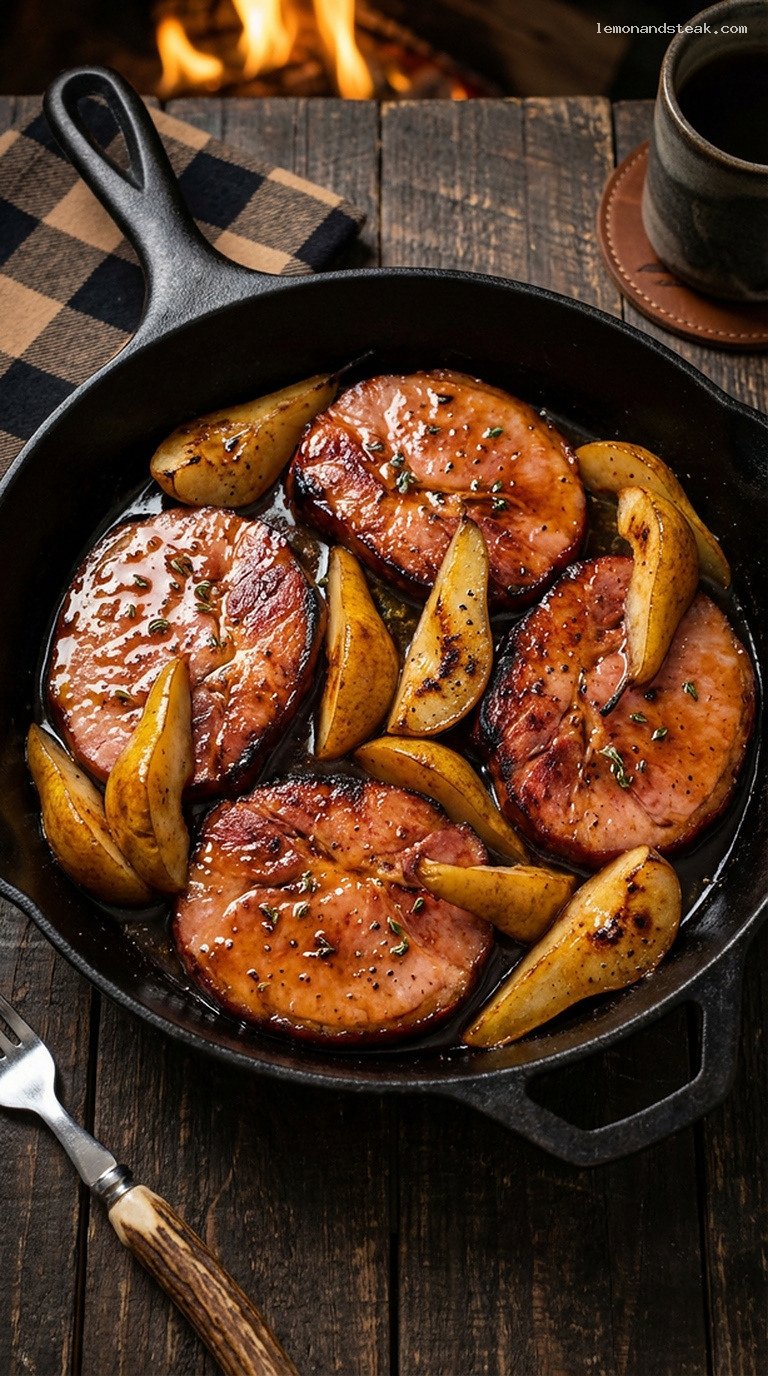
Quick Recipe Version (TL;DR)
Quick Ingredients
- 1.3–1.5 lb ham steak, 3/4–1 inch thick
- 2 firm-ripe pears, cored and sliced
- 2 tbsp unsalted butter
- 1 tbsp olive oil
- 1/4 cup pure maple syrup
- 2 tsp apple cider vinegar
- 1 tsp Dijon mustard
- 1/2 tsp ground cinnamon
- 1/4 tsp ground allspice
- 1/4 tsp smoked paprika (optional)
- 1/4 tsp freshly ground black pepper
- Pinch red pepper flakes (optional)
- 2 tsp fresh thyme leaves or 1/2 tsp dried thyme
- Salt to taste (if ham is very salty, you may not need any)
Do This
- 1. Pat the ham steak dry and cut into 4 large pieces; core and slice pears into thick wedges.
- 2. In a small bowl, whisk maple syrup, vinegar, Dijon, cinnamon, allspice, smoked paprika, pepper, and red pepper flakes.
- 3. Heat butter and olive oil in a large cast-iron or heavy skillet over medium-high heat until hot and foaming.
- 4. Sear ham pieces 3–4 minutes per side until browned and caramelized; transfer to a warm plate.
- 5. Add pears and thyme to the skillet; cook 4–6 minutes, turning occasionally, until golden and tender.
- 6. Pour maple mixture into the pan, return ham, and simmer 2–4 minutes, basting, until glossy and thickened; serve hot with pears and pan juices spooned over the top.
Why You’ll Love This Recipe
- It delivers big, cozy “cabin breakfast” flavor with minimal prep and just one skillet.
- Sweet pears and maple syrup balance the smoky, salty ham for a perfect sweet-savory bite.
- Done in about 30 minutes, but impressive enough for guests or a special weekend brunch.
- Flexible: serve it with crusty bread, roasted potatoes, or fried eggs for a full fry-up.
Grocery List
- Produce: Pears (2 firm-ripe), fresh thyme or parsley (optional garnish)
- Dairy: Unsalted butter
- Pantry: Ham steak (about 1.3–1.5 lb), olive oil, pure maple syrup, apple cider vinegar, Dijon mustard, ground cinnamon, ground allspice, smoked paprika, black pepper, red pepper flakes, salt
Full Ingredients
Main Dish
- 1 large ham steak (about 1.3–1.5 lb), 3/4–1 inch thick, bone-in or boneless
- 2 firm-ripe pears (such as Bosc or Anjou), cored and cut into 8–10 thick wedges each
- 2 tbsp unsalted butter
- 1 tbsp olive oil (or other neutral cooking oil)
- 2 tsp fresh thyme leaves, plus extra for garnish (or 1/2 tsp dried thyme)
- Fresh flat-leaf parsley, chopped, for garnish (optional)
Maple-Pear Glaze
- 1/4 cup pure maple syrup
- 2 tsp apple cider vinegar
- 1 tsp Dijon mustard
- 1/2 tsp ground cinnamon
- 1/4 tsp ground allspice
- 1/4 tsp smoked paprika (optional, for a subtle campfire note)
- 1/4 tsp freshly ground black pepper
- Pinch red pepper flakes (optional, for gentle heat)
- Pinch of salt, to taste (you may not need much if the ham is already salty)
To Serve (Optional but Recommended)
- Crusty bread, toasted English muffins, or skillet potatoes
- Fried or soft-scrambled eggs, if turning it into a full breakfast fry-up
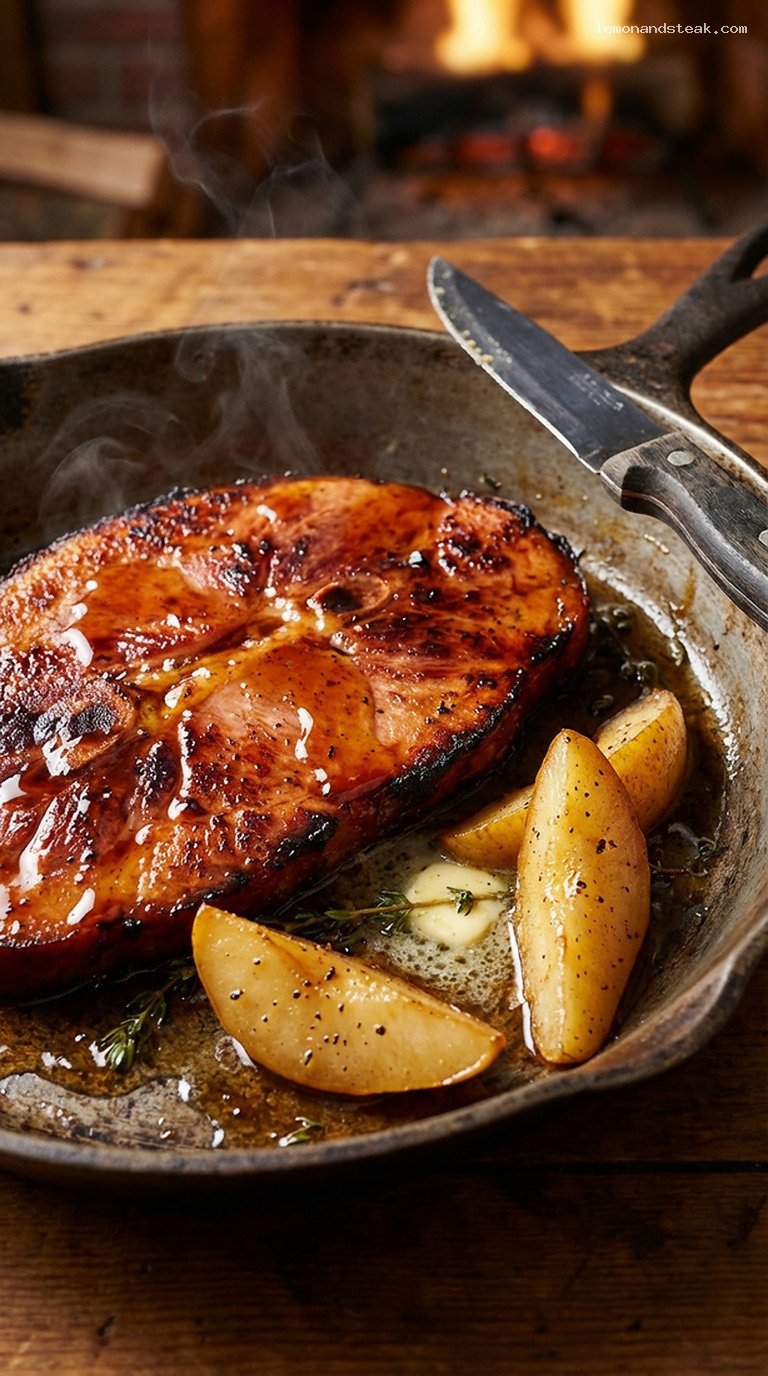
Step-by-Step Instructions
Step 1: Prep the Ham and Pears
Unwrap the ham steak and pat it very dry on both sides with paper towels. This helps it brown and caramelize instead of steaming. Cut the ham into 4 large, roughly equal pieces so they are easier to flip and serve.
Wash the pears thoroughly. Cut each pear into quarters lengthwise, remove the core and stem, then cut each quarter into 2–3 thick wedges. You want pieces that are about 1/2–3/4 inch thick so they hold their shape while softening. Set the pears aside. If using fresh thyme, strip the leaves from the stems and measure out about 2 teaspoons.
Step 2: Mix the Maple Cabin-Style Glaze
In a small bowl or measuring cup, combine the maple syrup, apple cider vinegar, Dijon mustard, ground cinnamon, ground allspice, smoked paprika (if using), black pepper, and a pinch of red pepper flakes. Whisk until the mixture is smooth and the mustard is fully dissolved.
Taste the glaze carefully. It should be sweet, tangy, a little spicy, and warmly spiced. Add a tiny pinch of salt if needed, bearing in mind that the ham itself will bring saltiness to the final dish. Set the glaze near the stove so it is ready when the ham and pears are seared.
Step 3: Sear and Caramelize the Ham
Place a large cast-iron skillet or other heavy-bottomed pan over medium-high heat. Add the butter and olive oil. When the butter is melted and foaming but not yet browning, lay the ham pieces in the skillet in a single layer.
Cook the ham undisturbed for 3–4 minutes on the first side, until deep golden brown around the edges and lightly caramelized. Flip the pieces and sear the second side for another 3–4 minutes. You want a good crust, but avoid burning any sugary glaze remnants (there are none yet, but the ham may have a little natural sugar).
Once both sides are nicely browned and the ham is heated through, transfer the pieces to a warm plate and cover loosely with foil to keep them hot. Do not wipe out the skillet; those browned bits are flavor for the pears and glaze.
Step 4: Fry Up the Pears with Herbs
Reduce the heat slightly to medium. If the pan looks dry, add another 1 teaspoon of butter or oil. Add the pear wedges in a roughly single layer, placing as many cut sides flat against the pan as possible. Sprinkle the thyme leaves over the pears.
Cook the pears for 4–6 minutes, turning them occasionally, until they are golden in spots, starting to soften, and picking up some of the savory flavor from the pan. They should hold their shape but be fork-tender at the edges. Adjust the heat as needed so they brown without burning.
Step 5: Add the Maple Glaze and Finish the Fry-Up
Give the maple glaze a quick stir, then pour it into the skillet with the pears. It should sizzle immediately. Use a wooden spoon or spatula to scrape up any browned bits from the bottom of the pan into the glaze.
Return the seared ham pieces to the skillet, nestling them among the pears. Spoon some of the glaze over the ham. Reduce the heat to medium-low and let everything simmer together for 2–4 minutes, turning the ham once and basting it several times with the bubbling glaze.
The glaze will thicken slightly and become glossy, lightly coating the ham and pears. If it seems too thick or starts to stick, splash in 1–2 tablespoons of water and stir to loosen. When the ham is hot, the pears are tender, and the glaze is syrupy, remove the skillet from the heat.
Step 6: Serve Warm and Rustic
Taste a bit of the glaze and adjust the seasoning with a small pinch of salt or extra black pepper if needed. Scatter over a little more fresh thyme or chopped parsley for color.
Serve the ham steaks straight from the skillet or transfer to warm plates, topping each piece with several pear wedges and a generous spoonful of the maple pan juices. This dish is excellent alongside skillet potatoes, buttered toast, or eggs for a full “cabin fry-up” experience. Serve immediately while everything is hot and glossy.
Pro Tips
- Choose the right pears: Use firm-ripe pears (Bosc or Anjou) that yield slightly when pressed at the stem. Very soft pears will fall apart in the skillet.
- Dry the ham well: Patting the ham dry is key for a good sear. Moisture is the enemy of browning.
- Watch the heat with maple: Maple syrup can scorch if the heat is too high. Once the glaze is in the pan, keep the heat at medium to medium-low and stir or baste frequently.
- Balance the sweetness: If your ham is quite sweet (like a honey-cured style), add an extra 1 teaspoon of cider vinegar to keep the sauce bright.
- Use a heavy skillet: Cast iron holds heat and creates great caramelization on both the ham and pears, giving you that rustic, fry-up character.
Variations
- Full breakfast fry-up: After cooking the ham and pears, push them to one side of the skillet and fry a few eggs in the remaining fat and glaze. Serve everything together with toast or fried potatoes.
- Apple and pear version: Swap one of the pears for a firm apple (like Honeycrisp or Granny Smith) for a mixed-fruit twist with a little extra tartness.
- Spicier cabin-style glaze: Double the red pepper flakes and add an extra 1/4 tsp smoked paprika for more campfire warmth and a gentle kick.
Storage & Make-Ahead
Let leftover ham and pears cool to room temperature, then transfer to an airtight container with all of the remaining glaze and juices. Refrigerate for up to 3–4 days. Reheat gently in a covered skillet over low heat with a splash of water if needed, basting often until warmed through. The flavors often deepen by the next day.
You can also make the maple glaze up to 2 days ahead: whisk all glaze ingredients together, cover, and refrigerate. Stir well before using. This makes the final cooking process even faster when you are ready to fry up the ham and pears.
Nutrition (per serving)
Approximate values per serving (1/4 of the recipe): 420–470 calories; 24–28 g protein; 20–24 g fat; 24–28 g carbohydrates; 1–2 g fiber; 19–22 g sugars; 900–1200 mg sodium (depending on the ham). These numbers are estimates and will vary based on the specific brand of ham, maple syrup, and any added sides.
Leave a Reply