
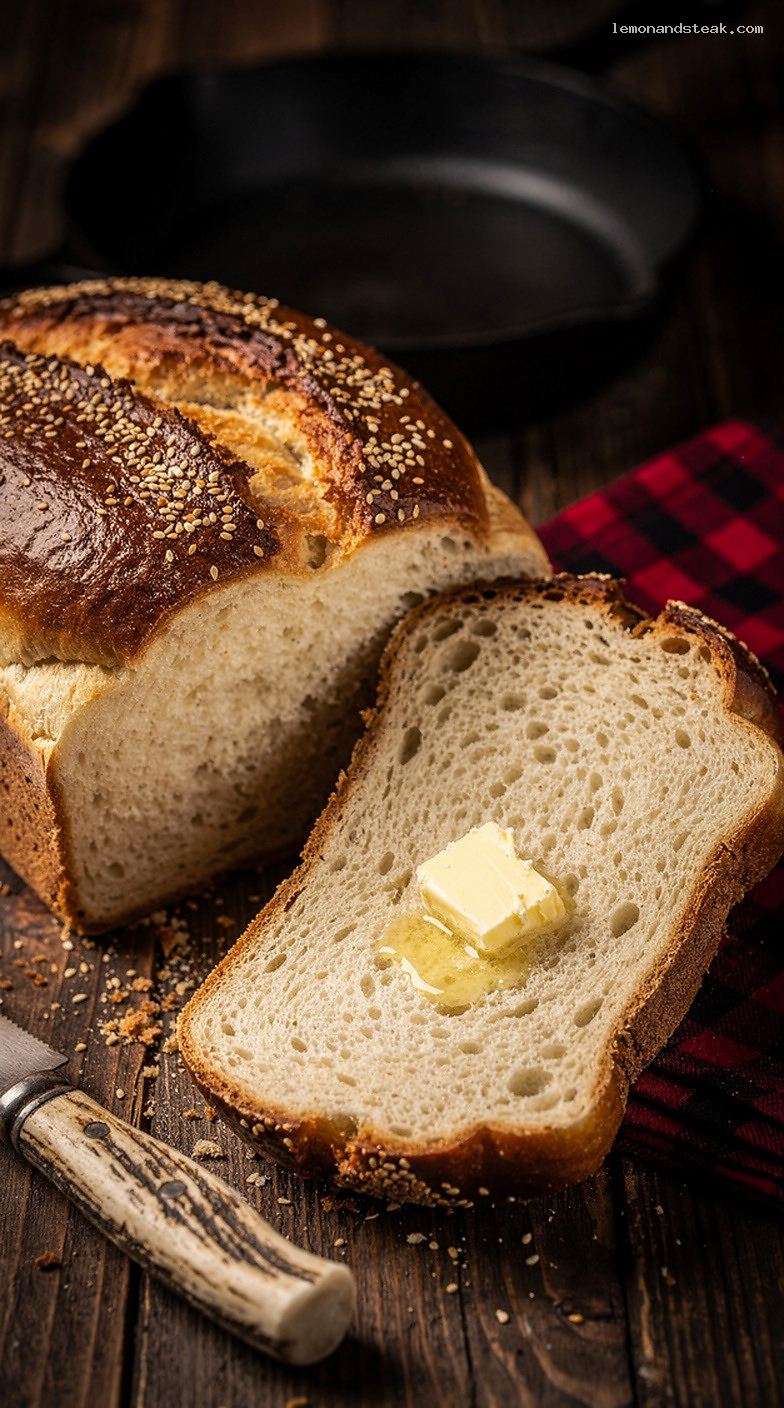
Quick Recipe Version (TL;DR)
Quick Ingredients
- 1 cup (226 g) cottage cheese (2% or 4%)
- 1/2 cup (120 g) whole milk, warmed to 105 to 110°F (40 to 43°C)
- 2 tablespoons (28 g) unsalted butter, melted and cooled slightly
- 1 tablespoon (12 g) granulated sugar
- 2 1/4 teaspoons (7 g) active dry yeast
- 1 large egg (50 g)
- 3 cups (360 g) bread flour
- 1 1/2 teaspoons (9 g) fine sea salt
- 1 teaspoon neutral oil or softened butter (for the bowl)
- Optional: 1 tablespoon sesame seeds (for topping)
- Optional: 1 egg + 1 tablespoon water (for egg wash)
Do This
- 1. Warm milk to 105 to 110°F (40 to 43°C). Stir in cottage cheese, sugar, and yeast; rest 5 minutes.
- 2. Mix in egg, melted butter, flour, and salt; knead 8 to 10 minutes until smooth and slightly tacky.
- 3. Let rise in an oiled bowl 60 to 75 minutes at warm room temp, until doubled.
- 4. Shape into a loaf; place in a greased 9 x 5-inch pan.
- 5. Proof 35 to 45 minutes until the dough domes about 1 inch over the rim.
- 6. Bake at 350°F (175°C) for 38 to 42 minutes, to 195 to 200°F (90 to 93°C) inside; cool 1 hour before slicing.
Why You’ll Love This Recipe
- Moist, tender crumb: Cottage cheese keeps the bread soft and sliceable, even the next day.
- Protein-rich: A simple way to bump up protein in homemade sandwich bread.
- Mild, comforting flavor: Gently buttery with a subtle tang, perfect for sweet or savory toppings.
- Reliable for home bakers: Straightforward knead, rise, and bake with clear doneness cues.
Grocery List
- Produce: Fresh chives (optional, for a savory variation)
- Dairy: Cottage cheese, whole milk, unsalted butter, eggs
- Pantry: Bread flour, granulated sugar, active dry yeast, fine sea salt, neutral oil, sesame seeds (optional)
Full Ingredients
For the Dough
- Cottage cheese: 1 cup (226 g), 2% or 4% (small curd or large curd both work)
- Whole milk: 1/2 cup (120 g), warmed to 105 to 110°F (40 to 43°C)
- Granulated sugar: 1 tablespoon (12 g)
- Active dry yeast: 2 1/4 teaspoons (7 g)
- Unsalted butter: 2 tablespoons (28 g), melted and cooled slightly
- Egg: 1 large (50 g)
- Bread flour: 3 cups (360 g), plus 1 to 3 tablespoons (8 to 24 g) as needed for stickiness
- Fine sea salt: 1 1/2 teaspoons (9 g)
- Neutral oil or softened butter (for the bowl): 1 teaspoon
For Finishing (Optional)
- Egg wash: 1 large egg (50 g) + 1 tablespoon (15 g) water, whisked
- Sesame seeds: 1 tablespoon (9 g)
Optional Savory Add-In
- Chives: 2 tablespoons finely chopped (about 6 g)
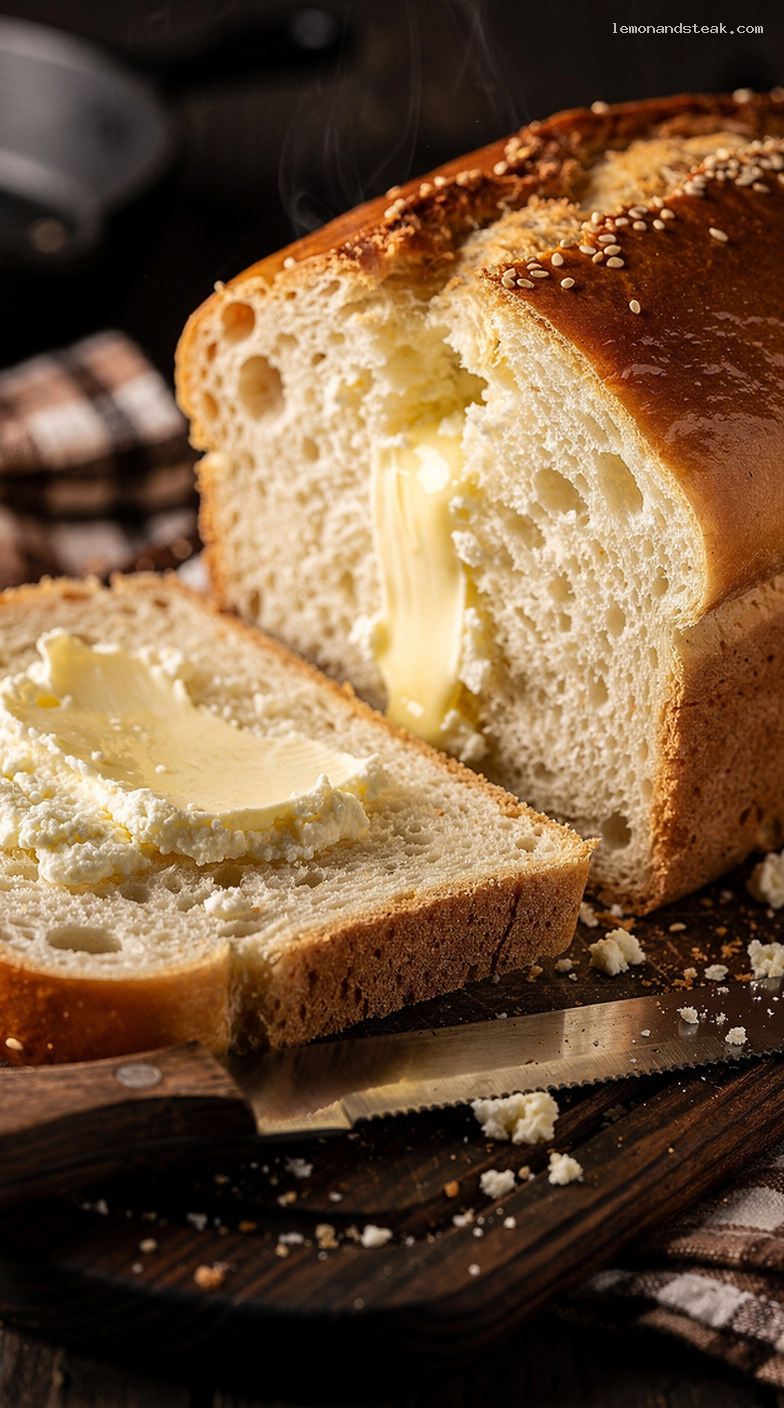
Step-by-Step Instructions
Step 1: Prep your pan and set up a warm rise spot
Grease a 9 x 5-inch loaf pan with butter or nonstick spray. If your kitchen runs cool, plan a cozy rise spot: the oven turned off with the light on works well (aim for about 75 to 80°F / 24 to 27°C).
Step 2: Warm the milk and activate the yeast
Warm the milk to 105 to 110°F (40 to 43°C). Pour it into a large mixing bowl (or the bowl of a stand mixer). Stir in the cottage cheese and sugar, then sprinkle the yeast over the top.
Let it stand for 5 minutes. You should see some light foaming or bubbling. If nothing happens, your yeast may be inactive or the mixture may have been too hot or too cold; it’s best to restart so the loaf rises properly.
Step 3: Mix in the egg, butter, flour, and salt
Add the egg and melted butter and mix until combined. Add the bread flour and salt. Stir with a sturdy spoon until a shaggy dough forms.
If using a stand mixer, use the dough hook on low speed until the dough comes together, about 2 minutes.
Step 4: Knead until smooth and elastic
Knead by hand on a lightly floured surface for 8 to 10 minutes, or in a stand mixer on medium-low speed for 6 to 8 minutes. The dough should feel smooth, elastic, and only slightly tacky.
If the dough is very sticky (sticking heavily to your hands or the bowl), add extra flour 1 tablespoon (about 8 g) at a time, up to 3 tablespoons (24 g). Try not to add too much; a slightly tacky dough bakes up more tender and moist.
If you’re adding chives, knead them in during the last 30 seconds so they distribute evenly without tearing the dough.
Step 5: First rise (bulk fermentation)
Lightly oil a clean bowl with 1 teaspoon oil or softened butter. Place the dough in the bowl, turn once to coat, and cover tightly with plastic wrap or a damp towel.
Let rise for 60 to 75 minutes at 75 to 80°F (24 to 27°C), or until doubled in size. A simple test: press a fingertip about 1/2 inch into the dough; the indentation should slowly spring back but remain slightly visible.
Step 6: Shape the loaf
Turn the dough onto a lightly floured surface and gently press it into a rectangle about 8 x 12 inches. Starting from a short end, roll it up tightly into a log, pinching the seam closed. Tuck the ends under for a neat loaf shape.
Place the loaf seam-side down into the prepared pan and gently press to even it out.
Step 7: Second rise (proof) and preheat the oven
Cover the pan loosely and let the dough proof for 35 to 45 minutes, until the center of the loaf domes about 1 inch above the rim of the pan.
Meanwhile, preheat the oven to 350°F (175°C), placing a rack in the center position.
Step 8: Finish and bake
If using egg wash, gently brush the top of the loaf with the egg wash. Sprinkle with sesame seeds if desired.
Bake at 350°F (175°C) for 38 to 42 minutes. The top should be a deep golden brown, and the internal temperature should read 195 to 200°F (90 to 93°C) in the center using an instant-read thermometer.
If the top browns too quickly, tent loosely with foil for the final 10 minutes.
Step 9: Cool for the best texture
Remove the loaf from the oven and let it cool in the pan for 10 minutes. Then turn it out onto a rack and cool for at least 1 hour before slicing.
This cooling time finishes the crumb structure; slicing too early can make the bread gummy even if it’s fully baked.
Pro Tips
- Use a thermometer if you can: Keeping the milk at 105 to 110°F (40 to 43°C) helps yeast wake up without being damaged.
- Don’t chase a dry dough: A slightly tacky dough usually means a softer loaf. Add extra flour slowly and only as needed.
- For extra-even slices: Let the loaf cool completely, then slice with a serrated bread knife using gentle sawing motions.
- Want a tighter sandwich crumb? Roll the loaf firmly during shaping and pinch the seam well to prevent large air tunnels.
- Check doneness by temperature: Aim for 195 to 200°F (90 to 93°C) in the center; color alone can be misleading.
Variations
- Herb cottage cheese bread: Add 2 tablespoons (6 g) chopped chives (or 1 tablespoon chopped dill) during kneading for a savory, dinner-ready loaf.
- Seeded top: Replace sesame with 1 tablespoon (9 g) poppy seeds or everything-bagel seasoning for a bolder crust.
- Honey-oat version: Replace sugar with 1 tablespoon (21 g) honey and swap 1/2 cup (60 g) of the bread flour for 1/2 cup (45 g) old-fashioned oats (pulse oats briefly for a finer crumb).
Storage & Make-Ahead
Let the loaf cool completely, then store tightly wrapped at room temperature for up to 3 days. For longer storage, slice the loaf, wrap well, and freeze for up to 2 months. Toast slices straight from frozen for the best texture. If your kitchen is humid, consider refrigerating after day 2, but note that refrigeration can dry bread out faster; to refresh, toast or warm slices briefly.
Nutrition (per serving)
Approximate per slice (1/12 loaf): 175 calories, 8 g protein, 27 g carbohydrates, 4 g fat, 1.5 g saturated fat, 2 g sugars, 430 mg sodium, 1 g fiber.
Leave a Reply