
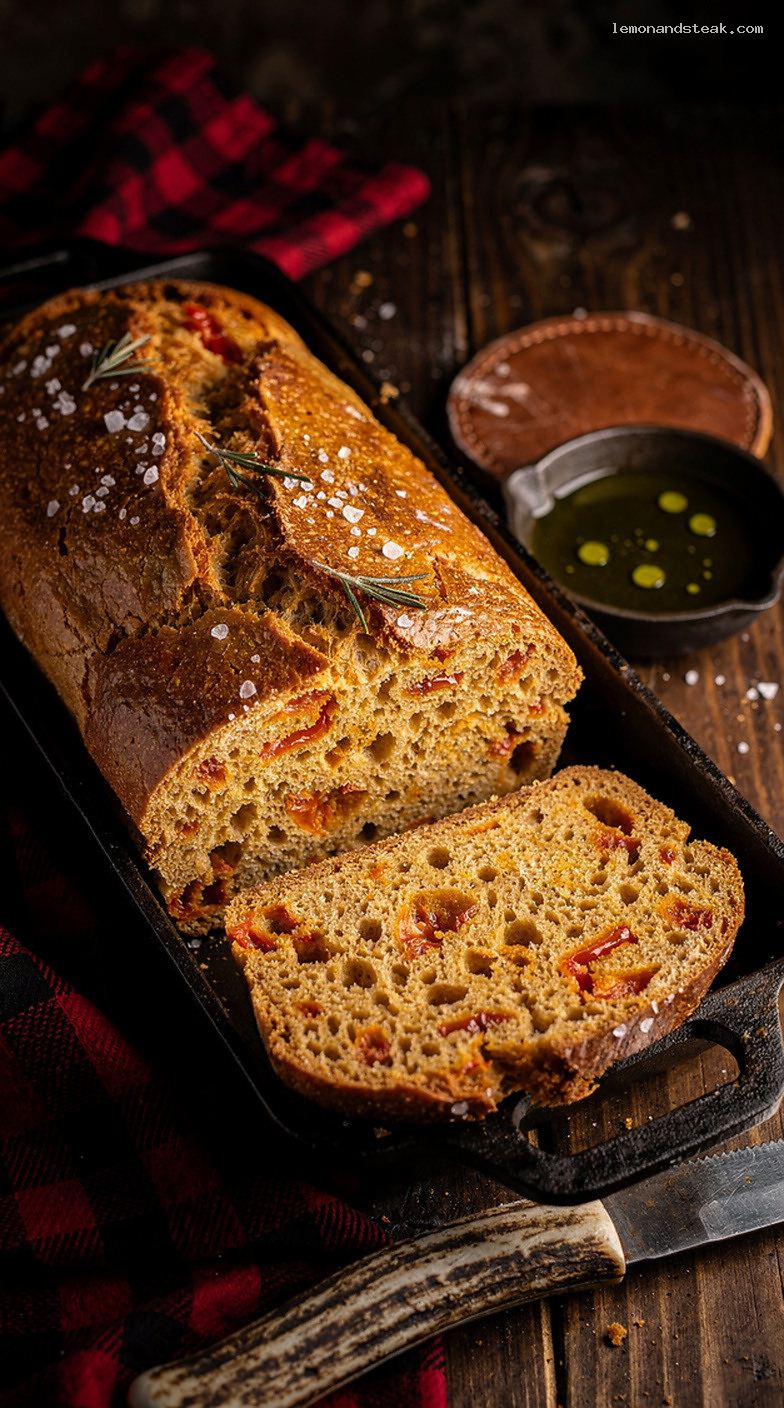
Quick Recipe Version (TL;DR)
Quick Ingredients
- Bread flour, 3 1/4 cups (390 g), plus extra for dusting
- Instant yeast, 2 1/4 teaspoons (7 g)
- Fine sea salt, 1 1/2 teaspoons
- Smoked paprika, 1 teaspoon
- Warm water (105–110°F / 40–43°C), 1 cup (240 g)
- Honey, 1 tablespoon (21 g)
- Extra-virgin olive oil, 1/4 cup (56 g), plus 1 tablespoon for the pan and brushing
- Roasted red peppers (jarred, drained well), 3/4 cup (about 130 g), finely chopped and patted dry
- Garlic, 2 cloves, finely grated or minced
- Optional topping: flaky salt, 1/4 teaspoon; chopped rosemary, 1 teaspoon
Do This
- 1. Mix flour, yeast, salt, and smoked paprika; add warm water, honey, olive oil, garlic, and chopped roasted peppers.
- 2. Knead 8–10 minutes until smooth and elastic (tacky is fine).
- 3. Rise covered 60–90 minutes until doubled.
- 4. Shape into a loaf and place in an oiled 9 x 5-inch pan; proof 35–55 minutes until the dough crowns about 1 inch over the rim.
- 5. Bake at 375°F (190°C) for 35–40 minutes, to 195–200°F (90–93°C) internal temp.
- 6. Cool 1 hour before slicing for the cleanest crumb.
Why You’ll Love This Recipe
- Roasted red peppers add subtle sweetness and a gentle smoky depth in every bite.
- Olive oil keeps the crumb tender and sliceable, perfect for sandwiches and toast.
- The dough is straightforward and friendly, even if you don’t bake bread often.
- It makes your kitchen smell like a cozy bakery while baking.
Grocery List
- Produce: roasted red peppers (jarred) or 2 large red bell peppers to roast, garlic, optional fresh rosemary
- Dairy: none required (optional: butter for serving)
- Pantry: bread flour, instant yeast, fine sea salt, smoked paprika, honey, extra-virgin olive oil
Full Ingredients
Roasted Red Peppers (choose one option)
- Easy option (recommended): Jarred roasted red peppers, 3/4 cup (about 130 g) after draining, finely chopped and patted dry
- Homemade option: 2 large red bell peppers (about 14–16 oz / 400–450 g total), roasted, peeled, seeded, and finely chopped to yield 3/4 cup; pat dry thoroughly
Dough
- Bread flour, 3 1/4 cups (390 g), plus extra for dusting
- Instant yeast, 2 1/4 teaspoons (7 g)
- Fine sea salt, 1 1/2 teaspoons
- Smoked paprika, 1 teaspoon
- Warm water (105–110°F / 40–43°C), 1 cup (240 g)
- Honey, 1 tablespoon (21 g)
- Extra-virgin olive oil, 1/4 cup (56 g)
- Garlic, 2 cloves, finely grated or minced
- Roasted red peppers (prepared as above), 3/4 cup (about 130 g), finely chopped and patted dry
Pan and Finish (optional but helpful)
- Extra-virgin olive oil, 1 tablespoon (for greasing the pan)
- Extra-virgin olive oil, 1–2 teaspoons (for brushing the top after baking)
- Optional topping: flaky salt, 1/4 teaspoon
- Optional topping: chopped fresh rosemary, 1 teaspoon
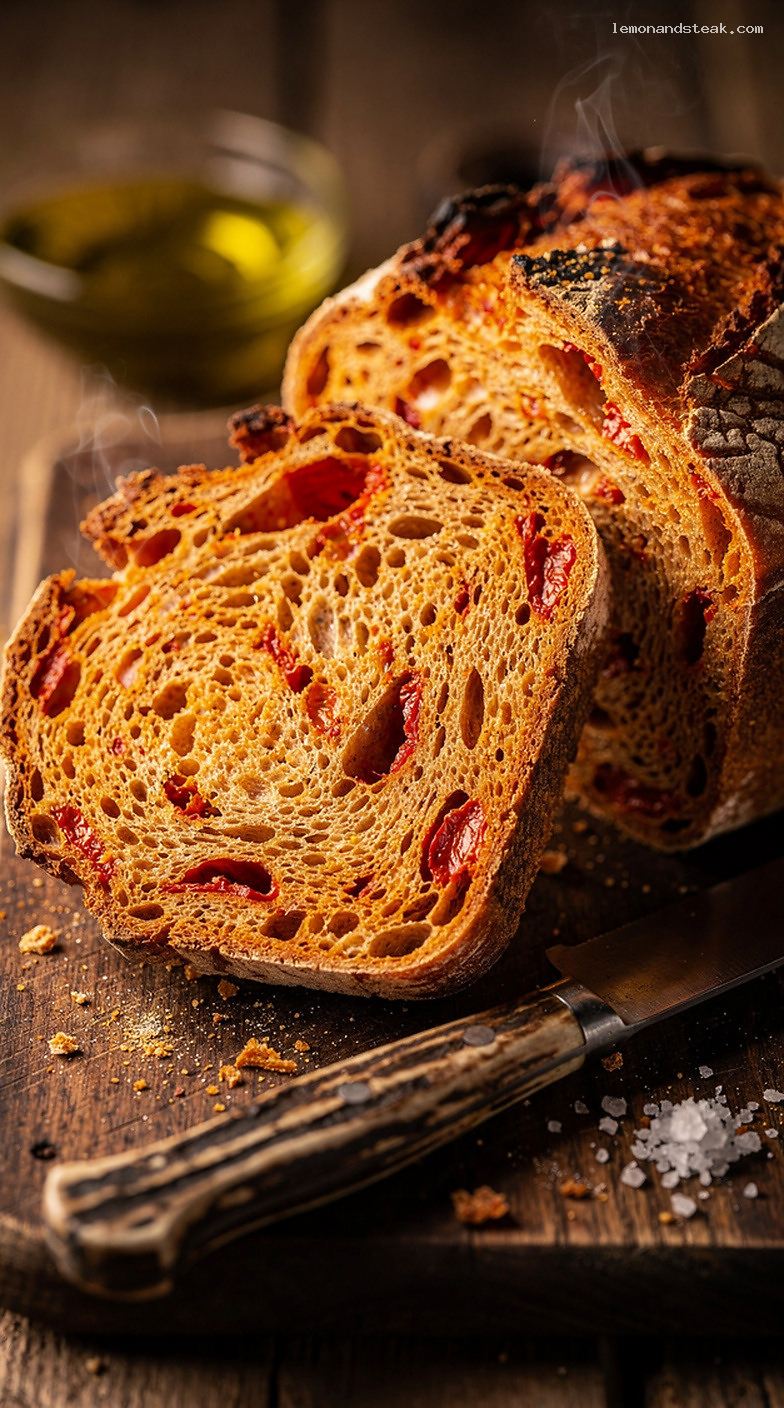
Step-by-Step Instructions
Step 1: Prep the peppers so they don’t waterlog the dough
If using jarred roasted red peppers, drain them well, chop finely, then press firmly between layers of paper towels until they feel mostly dry (this matters for a bread that rises well).
If roasting your own: set the oven to 475°F (245°C). Place whole peppers on a foil-lined sheet pan and roast for 20–25 minutes, turning every 7–8 minutes, until the skins are deeply blistered. Transfer peppers to a bowl, cover tightly, and steam for 10 minutes. Peel, remove seeds and stem, then chop finely. Pat dry very well.
Step 2: Mix the dough
In a large mixing bowl, whisk together the bread flour, instant yeast, salt, and smoked paprika. Add the warm water (105–110°F / 40–43°C), honey, 1/4 cup (56 g) olive oil, garlic, and the chopped, dried roasted peppers.
Stir with a sturdy spoon until a shaggy dough forms and there are no dry patches of flour. If it looks very dry and won’t come together, add additional water 1 teaspoon at a time (up to 1 tablespoon total). The dough should be slightly tacky, not soupy.
Step 3: Knead until smooth and elastic
Turn the dough onto a lightly floured counter. Knead for 8–10 minutes, until the dough becomes smoother and springy. The pepper pieces may make the surface look a little bumpy; that’s normal.
Alternatively, knead in a stand mixer with a dough hook on medium-low speed for 6–7 minutes. The finished dough should stretch a bit before tearing and feel tacky but manageable.
Step 4: First rise (bulk fermentation)
Lightly oil a clean bowl with about 1 teaspoon olive oil. Place the dough inside, turning once so the top is lightly oiled. Cover tightly.
Let rise at room temperature (about 70–75°F / 21–24°C) for 60–90 minutes, or until doubled in size. If your kitchen is cool, it may take closer to 90 minutes.
Step 5: Shape the loaf and set up the pan
Grease a 9 x 5-inch loaf pan with 1 tablespoon olive oil.
Gently punch down the dough to release excess gas. Turn it onto a lightly floured surface, pat into a rectangle about 8 x 12 inches, then roll it up tightly from the short end to form a log. Pinch the seam closed and tuck the ends under.
Place the dough seam-side down in the prepared pan.
Step 6: Proof until puffy
Cover the pan loosely with lightly oiled plastic wrap or a clean kitchen towel. Let the dough rise for 35–55 minutes, until it has risen to about 1 inch above the rim of the pan and looks airy and puffy.
While the dough proofs, set an oven rack in the lower-middle position.
Step 7: Bake until deeply golden and fully cooked
Preheat the oven to 375°F (190°C). If you’re using an optional topping, gently brush the top of the loaf with 1 teaspoon olive oil and sprinkle with 1/4 teaspoon flaky salt and 1 teaspoon chopped rosemary.
Bake for 35–40 minutes, until the top is deep golden brown and the loaf sounds hollow when tapped. For accuracy, check the internal temperature: it should read 195–200°F (90–93°C) in the center.
If the top browns too quickly, tent loosely with foil during the last 10 minutes.
Step 8: Cool for the best texture, then slice
Remove the loaf from the pan after 5 minutes and cool on a wire rack for at least 1 hour before slicing. This cooling time finishes setting the crumb so slices don’t turn gummy.
For extra aroma and shine, brush the warm loaf with 1–2 teaspoons olive oil right after it comes out of the pan.
Pro Tips
- Dry the peppers thoroughly: Excess moisture is the main reason pepper breads can turn dense or gummy. Pat them dry until they stop leaving wet marks on the towel.
- Weigh your flour if possible: 390 g bread flour gives consistent results and avoids an overly dry loaf.
- Watch the rise, not the clock: Room temperature changes everything. The dough is ready when it’s doubled (first rise) and nicely domed (second rise).
- Use the thermometer: Pulling the loaf at 195–200°F (90–93°C) prevents an underbaked center.
- Cool before slicing: Cutting too early compresses the crumb and can make it seem underbaked even when it isn’t.
Variations
- Olive and pepper loaf: Add 1/2 cup (75 g) pitted Kalamata olives, chopped and patted dry, along with the peppers. Reduce salt to 1 1/4 teaspoons.
- Cheesy roasted pepper bread: Add 3/4 cup (75 g) finely shredded Parmesan or aged provolone. Expect a slightly tighter crumb; bake to the same internal temperature.
- Spicy smoky version: Add 1/2 teaspoon crushed red pepper flakes and increase smoked paprika to 1 1/2 teaspoons.
Storage & Make-Ahead
Let the loaf cool completely, then store at room temperature in a bread bag or lightly sealed container for up to 3 days. For longer storage, slice the loaf, wrap tightly, and freeze for up to 2 months. Toast slices from frozen or thaw at room temperature for 20–30 minutes. To refresh a day-old loaf, warm in a 325°F (165°C) oven for 8–10 minutes.
Nutrition (per serving)
Approximate, per 1 of 10 slices: 190 calories; 5 g protein; 32 g carbs; 2 g fiber; 2 g sugar; 5 g fat; 1 g saturated fat; 320 mg sodium.
Leave a Reply