
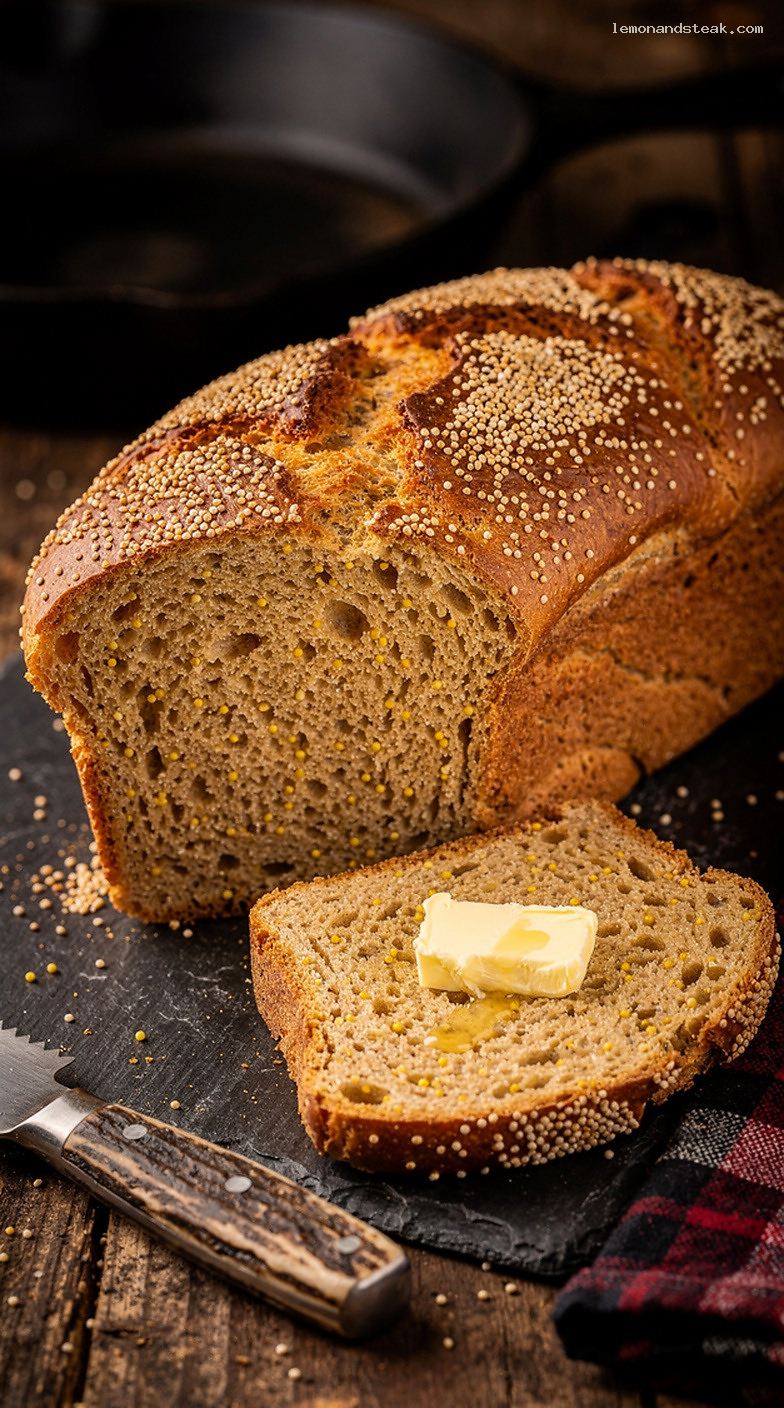
Quick Recipe Version (TL;DR)
Quick Ingredients
- 60 g (1/3 cup) dry millet + 360 ml (1 1/2 cups) water (to make cooked millet)
- 240 ml (1 cup) warm milk (43°C / 110°F)
- 7 g (2 1/4 tsp) active dry yeast
- 21 g (1 tbsp) honey
- 300 g (2 1/2 cups) bread flour
- 120 g (1 cup) millet flour
- 60 g (1/2 cup) whole wheat flour
- 10 g (1 3/4 tsp) fine salt
- 28 g (2 tbsp) unsalted butter, softened (or 30 ml / 2 tbsp olive oil)
- 240 g (1 cup) cooked millet, cooled to warm room temperature
- 1 egg + 1 tbsp water (optional egg wash)
- 2 tbsp hulled millet or sesame seeds (optional topping)
Do This
- 1) Cook millet (60 g dry millet + 360 ml water), simmer 18 minutes, rest 5 minutes; cool.
- 2) Proof yeast in warm milk + honey for 5–10 minutes until foamy.
- 3) Mix flours + salt; add yeast mixture, butter, and 1 cup cooked millet; knead 8–10 minutes.
- 4) Rise covered 60–75 minutes at warm room temp until doubled.
- 5) Shape into a log; place in a greased 9 x 5 in (23 x 13 cm) loaf pan; rise 45–60 minutes.
- 6) Bake at 190°C (375°F) for 35–40 minutes to 90–93°C (195–200°F) internal temp.
- 7) Cool in pan 10 minutes, then on a rack 45 minutes before slicing.
Why You’ll Love This Recipe
- Lightly nutty flavor with a pleasantly hearty bite from real cooked millet in the crumb.
- Soft, sliceable sandwich loaf that still feels wholesome and sturdy.
- Approachable method with simple ingredients and clear rise-and-bake timing.
- Great toasted, fantastic with butter and honey, and sturdy enough for grilled sandwiches.
Grocery List
- Produce: None (optional: a few sprigs fresh rosemary for a savory variation)
- Dairy: Milk, unsalted butter (or swap olive oil), 1 egg (optional for egg wash)
- Pantry: Dry millet, millet flour, bread flour, whole wheat flour, active dry yeast, honey, fine salt, hulled millet or sesame seeds (optional)
Full Ingredients
Cooked Millet (for the dough)
- 60 g (1/3 cup) dry millet
- 360 ml (1 1/2 cups) water
Dough
- 240 ml (1 cup) milk, warmed to 43°C (110°F)
- 21 g (1 tbsp) honey
- 7 g (2 1/4 tsp) active dry yeast
- 300 g (2 1/2 cups) bread flour (spooned and leveled if using cups)
- 120 g (1 cup) millet flour
- 60 g (1/2 cup) whole wheat flour
- 10 g (1 3/4 tsp) fine salt
- 28 g (2 tbsp) unsalted butter, softened (or 30 ml / 2 tbsp olive oil)
- 240 g (1 cup) cooked millet, cooled to warm room temperature (not hot)
Optional Topping
- 1 large egg + 15 ml (1 tbsp) water (egg wash)
- 2 tbsp hulled millet or 2 tbsp sesame seeds
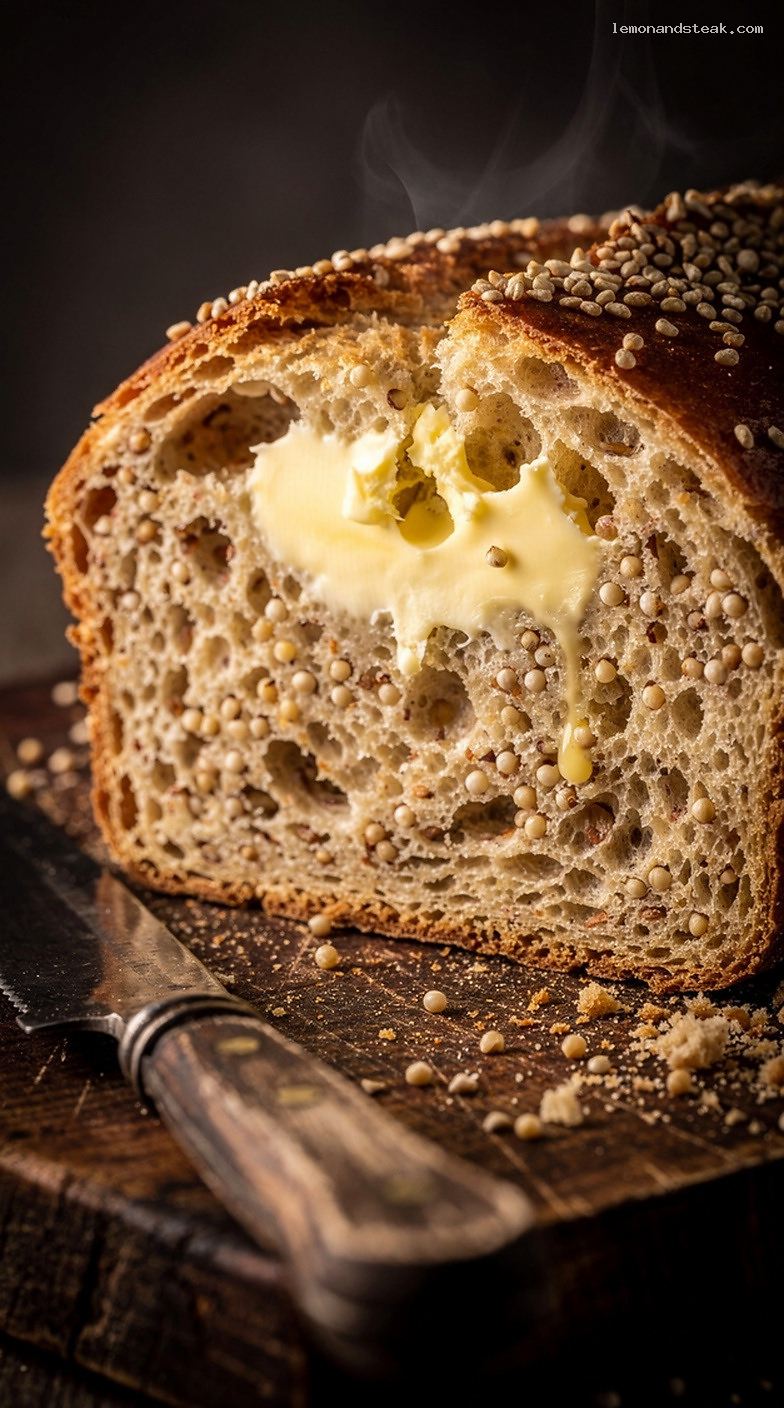
Step-by-Step Instructions
Step 1: Cook the millet
In a small saucepan, combine 60 g (1/3 cup) dry millet and 360 ml (1 1/2 cups) water. Bring to a boil over medium-high heat.
Reduce heat to low, cover, and simmer for 18 minutes. Turn off the heat and let it stand (still covered) for 5 minutes. Fluff with a fork and spread the millet on a plate to cool for 10–15 minutes until it’s warm room temperature. Measure out 240 g (1 cup) for the dough.
Step 2: Proof the yeast
Warm 240 ml (1 cup) milk to 43°C (110°F) (warm, not hot). Stir in 21 g (1 tbsp) honey, then sprinkle over 7 g (2 1/4 tsp) active dry yeast.
Let stand for 5–10 minutes, until the surface looks foamy. If it doesn’t foam, your yeast may be inactive or the milk temperature may have been off; it’s best to restart before moving on.
Step 3: Mix the dough
In a large bowl (or a stand mixer bowl), whisk together 300 g (2 1/2 cups) bread flour, 120 g (1 cup) millet flour, 60 g (1/2 cup) whole wheat flour, and 10 g (1 3/4 tsp) fine salt.
Add the foamy yeast-milk mixture, 28 g (2 tbsp) softened butter (or 2 tbsp olive oil), and 240 g (1 cup) cooked millet.
Mix until a shaggy dough forms and there are no dry patches. The dough will look slightly speckled and feel a bit tacky due to the millet.
Step 4: Knead until smooth and elastic
Stand mixer: Knead with a dough hook on medium-low speed for 8 minutes.
By hand: Turn the dough onto a lightly floured surface and knead for 10 minutes, adding only a light dusting of flour if it’s sticking badly.
You’re aiming for a dough that feels elastic and cohesive. It won’t be quite as silky as a 100% white flour dough, but it should hold together well and spring back when gently pressed.
Step 5: First rise (bulk fermentation)
Shape the dough into a ball and place it in a lightly buttered or oiled bowl. Cover tightly.
Let rise at warm room temperature (about 24–26°C / 75–79°F) for 60–75 minutes, or until doubled in size. If your kitchen is cool, this can take closer to 90 minutes.
Step 6: Shape and proof in the pan
Grease a 9 x 5 in (23 x 13 cm) loaf pan with butter or oil.
Gently turn out the dough and press it into a rough rectangle about 20 x 25 cm (8 x 10 in). Roll it up tightly from the short end to make a log, pinching the seam closed. Place seam-side down in the prepared pan.
Cover and let rise for 45–60 minutes, until the dough crowns about 2–3 cm (1 inch) above the rim of the pan.
Step 7: Bake the loaf
When the dough is nearly done rising, preheat the oven to 190°C (375°F) with a rack in the center.
Optional topping: Whisk 1 egg with 1 tbsp water. Brush gently over the top and sprinkle with 2 tbsp hulled millet or sesame seeds.
Bake for 35–40 minutes. The top should be deep golden brown, and the internal temperature in the center should read 90–93°C (195–200°F).
If the top browns too quickly, tent loosely with foil for the last 10 minutes of baking.
Step 8: Cool completely before slicing
Remove the pan from the oven and let the loaf cool in the pan for 10 minutes. Then turn it out onto a wire rack.
Cool for at least 45 minutes before slicing so the crumb can set. Cutting too soon can make the loaf feel gummy even if it’s fully baked.
Pro Tips
- Measure the cooked millet: Different simmer times can change how much water it holds. Use 240 g (1 cup) cooked millet for consistent dough texture.
- Milk temperature matters: Aim for 43°C (110°F) to wake up yeast without harming it.
- Use an instant-read thermometer: Pull the loaf at 90–93°C (195–200°F) in the center for a fully set crumb.
- Don’t over-flour while kneading: Millet flour and cooked millet make the dough naturally a bit tacky. Too much extra flour can lead to a dry loaf.
- For extra nuttiness: Toast the dry millet in the saucepan for 2 minutes before adding water (stir constantly), then cook as directed.
Variations
- Honey-Oat Millet Bread: Replace the optional seed topping with 2 tbsp rolled oats. Add an extra 7 g (1 tsp) honey to the dough.
- Seeded Rustic Loaf: Mix 36 g (1/4 cup) sunflower seeds into the dough at the end of kneading and top with a mix of millet and sesame.
- Herby Savory Millet Bread: Add 2 tsp dried rosemary (or 1 tbsp finely chopped fresh rosemary) and replace honey with 12 g (2 tsp) sugar for a less-sweet loaf.
Storage & Make-Ahead
Let the bread cool completely, then store tightly wrapped at room temperature for 3 days. For longer storage, slice the loaf, place parchment between slices if desired, and freeze in a freezer bag for up to 2 months. Toast slices straight from frozen (add 1–2 minutes to your usual toasting time). You can also make the cooked millet up to 3 days ahead; refrigerate it in a sealed container and bring it back to room temperature before mixing into the dough.
Nutrition (per serving)
Approximate per slice (1/10 loaf): 170 calories, 6 g protein, 4 g fat, 30 g carbohydrates, 3 g fiber, 4 g sugar, 230 mg sodium.
Leave a Reply