
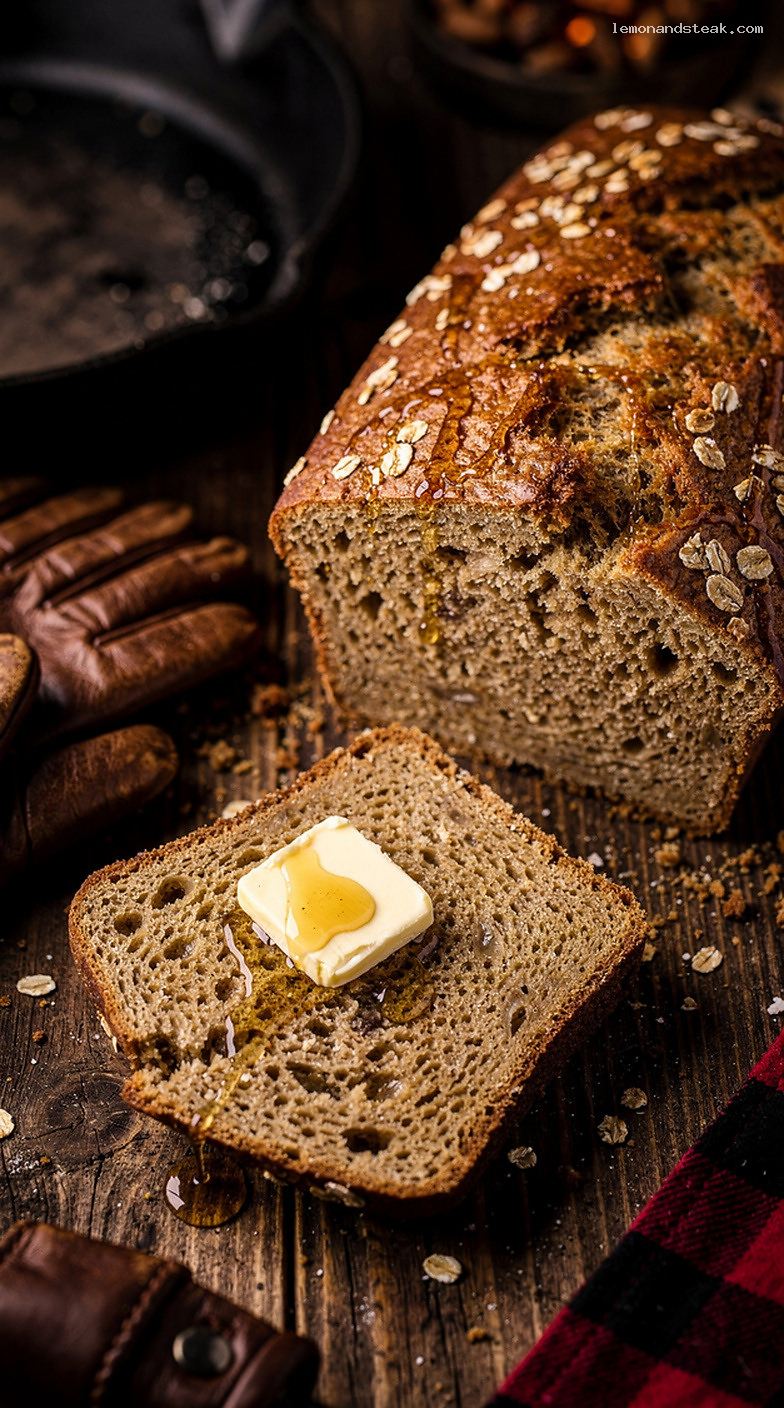
Quick Recipe Version (TL;DR)
Quick Ingredients
- 3/4 cup (60 g) old-fashioned rolled oats
- 1 cup (240 ml) water
- 1/2 cup (120 ml) whole milk
- 2 1/4 tsp (7 g) active dry yeast
- 1/4 cup (60 ml) warm milk (105–110°F / 40–43°C)
- 1/3 cup (80 ml) pure maple syrup, divided
- 3 tbsp (42 g) unsalted butter, melted and cooled slightly
- 1 large egg
- 3 1/4 cups (390 g) bread flour, plus more as needed
- 1 1/2 tsp (9 g) fine salt
- Optional: 1 tbsp maple syrup + 1 tbsp melted butter for brushing
Do This
- 1. Cook oats with water and 1/2 cup milk until thick; cool to lukewarm (about 100°F / 38°C).
- 2. Bloom yeast in 1/4 cup warm milk + 1 tbsp maple syrup for 5–10 minutes until foamy.
- 3. Mix oatmeal, yeast mixture, remaining maple syrup, melted butter, egg, flour, and salt; knead 8–10 minutes.
- 4. Let dough rise covered until doubled, 60–75 minutes.
- 5. Shape into a loaf, place in a greased 9×5-inch pan, and proof until the dough crowns 1 inch above the rim, 35–45 minutes.
- 6. Bake at 350°F (175°C) for 35–40 minutes to 195–200°F internal; cool 1 hour before slicing.
Why You’ll Love This Recipe
- Soft, tender crumb: Cooked oats hold moisture for that comforting, sliceable texture.
- Gentle sweetness: Pure maple syrup adds warmth without tasting like dessert.
- Everyday ingredients: Mostly pantry staples, with easy steps that feel familiar.
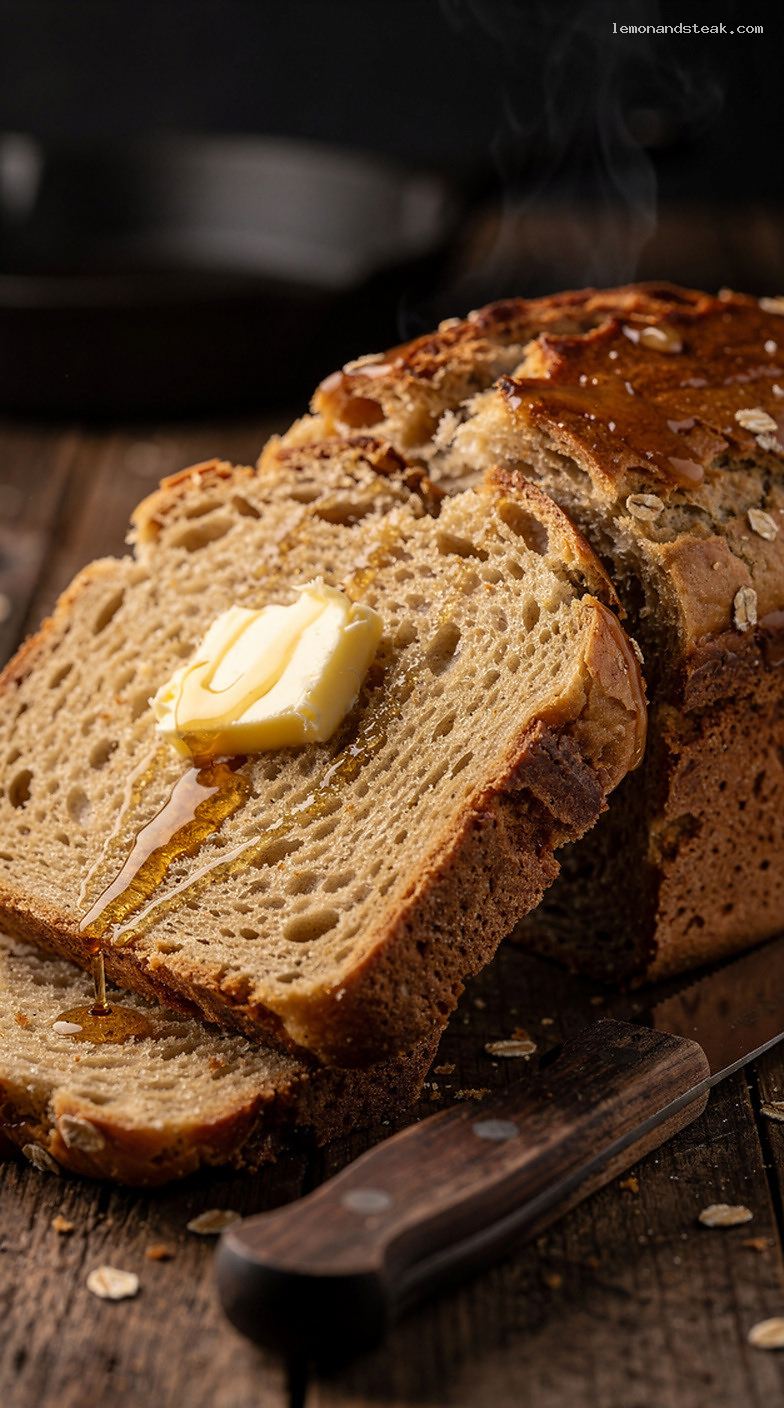
- Great for toast: This loaf shines with butter, jam, nut butter, or a drizzle of maple.
Grocery List
- Produce: None (optional add-ins: raisins or nuts)
- Dairy: Whole milk, unsalted butter, 1 large egg
- Pantry: Old-fashioned rolled oats, bread flour, active dry yeast, pure maple syrup, fine salt
Full Ingredients
Cooked Oatmeal Base
- 3/4 cup (60 g) old-fashioned rolled oats
- 1 cup (240 ml) water
- 1/2 cup (120 ml) whole milk
Yeast Mixture
- 1/4 cup (60 ml) whole milk, warmed to 105–110°F (40–43°C)
- 2 1/4 tsp (7 g) active dry yeast
- 1 tbsp (15 ml) pure maple syrup (taken from the total)
Dough
- Remaining pure maple syrup: 1/3 cup (80 ml) total minus 1 tbsp (15 ml) used above (so 1/4 cup + 2 tsp / 65 ml)
- 3 tbsp (42 g) unsalted butter, melted and cooled slightly
- 1 large egg
- 3 1/4 cups (390 g) bread flour, plus more as needed for dusting
- 1 1/2 tsp (9 g) fine salt
Optional Finish
- 1 tbsp (14 g) unsalted butter, melted
- 1 tbsp (15 ml) pure maple syrup
Step-by-Step Instructions
Step 1: Cook the oats until thick and creamy
In a small saucepan, combine the rolled oats, water, and 1/2 cup (120 ml) milk. Bring to a gentle simmer over medium heat, stirring often. Cook for 5 minutes, until the oats are softened and the mixture looks like thick oatmeal (not soupy).
Scrape the oatmeal into a wide bowl (spreading it out helps it cool faster). Let it cool until lukewarm, about 100°F (38°C). It should feel warm but not hot; too much heat can weaken the yeast later.
Step 2: Proof the yeast for reliable rise
In a small bowl, combine the 1/4 cup (60 ml) warm milk (105–110°F / 40–43°C), the active dry yeast, and 1 tbsp (15 ml) maple syrup. Stir and let stand for 5–10 minutes, until foamy on top.
If it does not foam, your yeast may be old or the milk may have been too hot/cool. It’s best to restart before moving on.
Step 3: Mix the dough
To the bowl of cooled oatmeal, add the yeast mixture, the remaining maple syrup, melted butter, and the egg. Stir until well combined.
Add the bread flour and salt. Mix with a sturdy spoon until a shaggy dough forms and most dry flour disappears.
Step 4: Knead until smooth and stretchy
Turn the dough out onto a lightly floured counter. Knead for 8–10 minutes, adding only a little flour as needed to prevent sticking. Because the oats hold moisture, the dough may start slightly tacky; aim for a dough that feels soft and elastic, not dry.
When it’s ready, the surface will look smoother, and the dough will spring back when you press it lightly. If you use a stand mixer, knead with the dough hook on medium-low for 7–9 minutes.
Step 5: First rise until doubled
Place the dough in a lightly buttered bowl and turn once to coat. Cover and let rise in a warm spot until doubled in size, about 60–75 minutes (a cooler kitchen may take closer to 90 minutes).
Step 6: Shape the loaf and proof in the pan
Grease a 9×5-inch loaf pan with butter.
Gently press down the dough to release excess gas. Pat it into a rectangle about the length of your pan, then roll it up tightly into a log. Pinch the seam closed and tuck the ends under for a neat shape. Place seam-side down in the prepared pan.
Cover and let proof until the dough crowns about 1 inch above the rim of the pan, about 35–45 minutes. Near the end of proofing, preheat the oven to 350°F (175°C).
Step 7: Bake, then cool for a tender crumb
Bake on the center rack at 350°F (175°C) for 35–40 minutes. The top should be a deep golden brown, and the loaf should sound hollow when tapped. For the most accurate doneness check, use an instant-read thermometer: aim for 195–200°F (90–93°C) in the center.
If the top browns too quickly, tent loosely with foil for the last 10 minutes.
Optional finish: As soon as the loaf comes out of the oven, brush the top with 1 tbsp melted butter mixed with 1 tbsp maple syrup for a glossy, softly sweet crust.
Cool in the pan for 10 minutes, then turn out onto a rack and cool at least 1 hour before slicing. This rest time helps the loaf set so slices stay soft instead of gummy.
Pro Tips
- Cool the oatmeal properly: Lukewarm is perfect. Hot oatmeal can slow or kill the yeast; cold oatmeal can slow your rise.
- Measure flour by weight if you can: Oatmeal makes dough feel stickier than typical white bread. Adding too much flour can make the loaf dry.
- Watch the proof, not the clock: The dough should crown about 1 inch above the pan before baking for the best oven spring.
- Use an internal temperature check: Pulling the loaf at 195–200°F (90–93°C) helps guarantee a baked-through, tender crumb.
- Slice after cooling: Warm bread is tempting, but slicing too early compresses the crumb and can make it feel gummy.
Variations
- Maple cinnamon oatmeal bread: Add 1 1/2 tsp ground cinnamon to the flour. For a stronger cinnamon note, swirl in 2 tbsp cinnamon-sugar when shaping.
- Maple-raisin oatmeal bread: Knead in 3/4 cup (110 g) raisins during the last minute of kneading. If raisins are dry, soak in warm water for 10 minutes and drain well first.
- Heartier whole grain: Replace 1 cup (120 g) of the bread flour with 1 cup (120 g) whole wheat flour. Add 1–2 tbsp extra milk if the dough feels stiff.
Storage & Make-Ahead
Store the cooled loaf tightly wrapped at room temperature for up to 3 days. For longer storage, slice the loaf once fully cool, then freeze slices in a zip-top freezer bag for up to 2 months. Toast straight from frozen for an easy breakfast. To make ahead for fresh bread in the morning, you can shape the loaf, place it in the pan, cover tightly, and refrigerate for up to 12 hours; let it sit at room temperature for 45–75 minutes (until nicely crowned) before baking.
Nutrition (per serving)
Approximate, based on 12 slices: 190 calories; 5 g protein; 33 g carbohydrates; 2 g fiber; 8 g sugar; 5 g fat; 3 g saturated fat; 260 mg sodium.
Leave a Reply