
Quick Recipe Version (TL;DR)
Quick Ingredients
- 300 g (about 2 cups) durum semolina flour
- 200 g (about 1 2/3 cups) bread flour
- 360 g (1 1/2 cups) warm water (about 100°F / 38°C)
- 7 g (2 1/4 tsp) active dry yeast
- 15 g (1 tbsp) honey (or sugar)
- 30 g (2 tbsp) extra-virgin olive oil
- 10 g (1 3/4 tsp) fine sea salt
- 1 tbsp olive oil (for the bowl)
- 1–2 tbsp semolina (for dusting)
- Optional: 1 tbsp sesame seeds (for topping)
Do This
- 1) Bloom yeast in warm water + honey for 5 minutes.
- 2) Mix in flours, olive oil, and salt; knead 8–10 minutes until smooth.
- 3) Let rise (covered) 90 minutes at warm room temp; do 1 gentle fold halfway through.
- 4) Shape into a tight loaf; proof 45–60 minutes until puffy.
- 5) Bake at 425°F (220°C) with steam for 15 minutes, then 400°F (205°C) for 20 minutes.
- 6) Cool completely (at least 1 hour) before slicing for the best crumb.
Why You’ll Love This Recipe
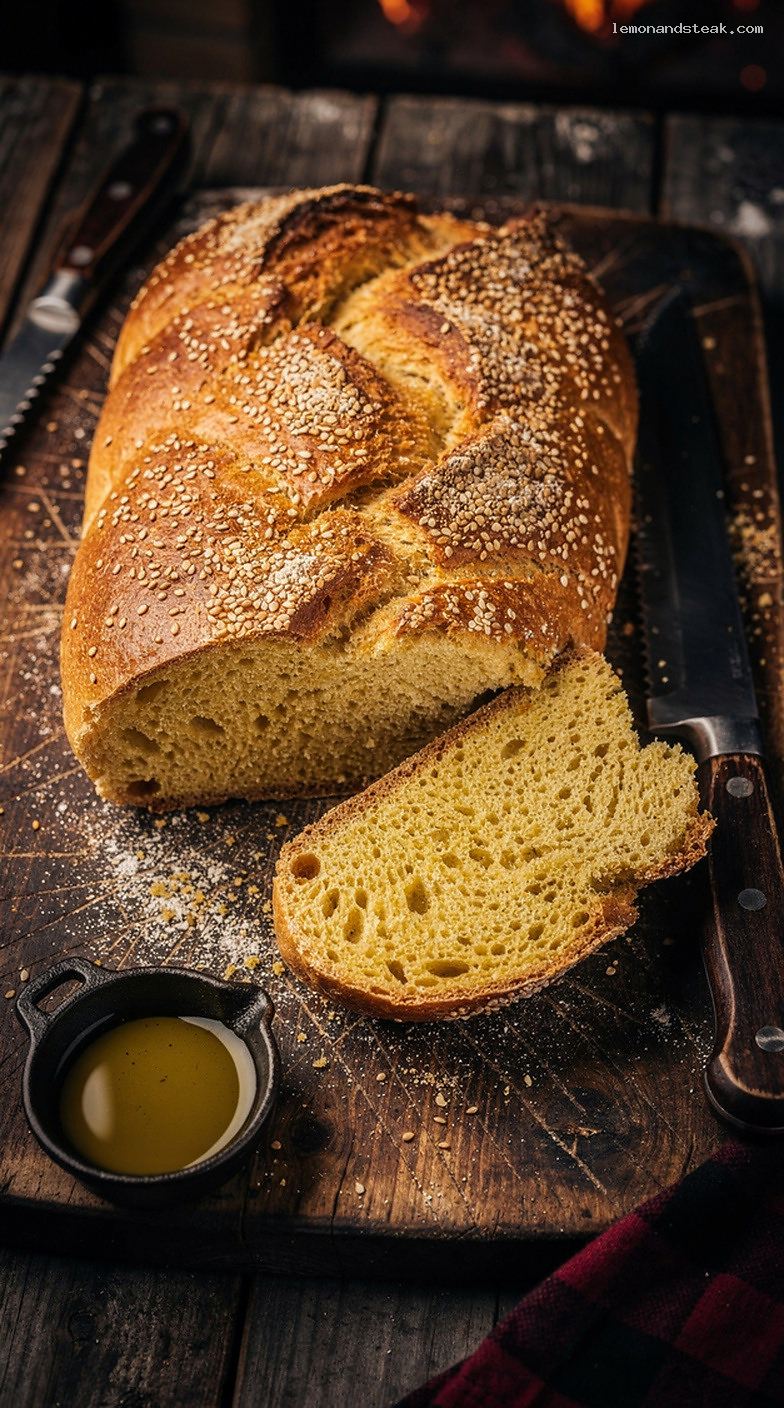
- Beautiful golden loaf: Durum semolina gives a sunny color and gently wheaty flavor.
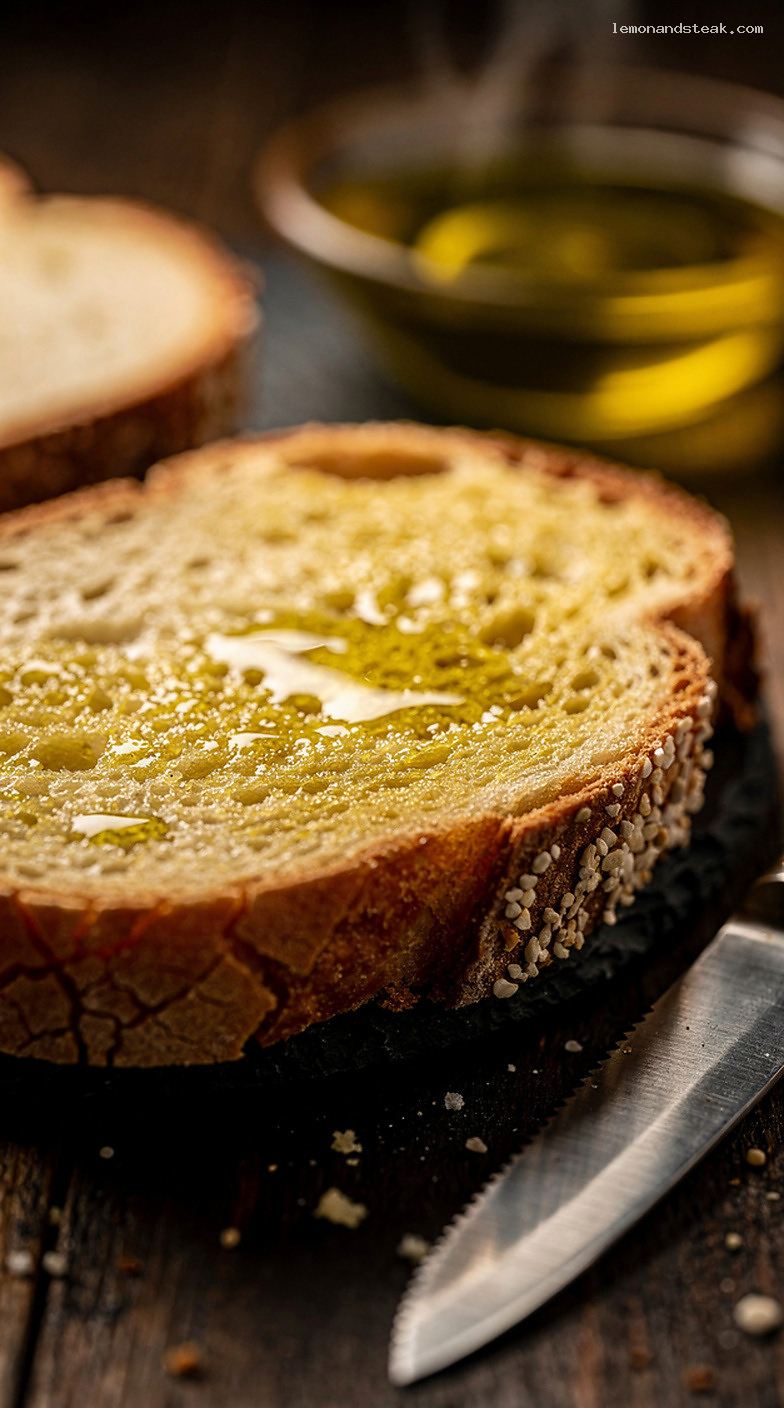
- Hearty, slightly firm crumb: Sturdy enough for sandwiches, toast, and dipping in olive oil.
- Home-bakery crust: A steamy start creates a crisp, crackly exterior.
- Simple pantry ingredients: Just flour, yeast, water, salt, and olive oil.
Grocery List
- Produce: None required
- Dairy: None required
- Pantry: Durum semolina flour, bread flour, active dry yeast, honey (or granulated sugar), extra-virgin olive oil, fine sea salt, sesame seeds (optional)
Full Ingredients
Dough
- Warm water: 360 g (1 1/2 cups), about 100°F / 38°C
- Active dry yeast: 7 g (2 1/4 tsp)
- Honey (or sugar): 15 g (1 tbsp)
- Durum semolina flour: 300 g (about 2 cups)
- Bread flour: 200 g (about 1 2/3 cups)
- Extra-virgin olive oil: 30 g (2 tbsp)
- Fine sea salt: 10 g (1 3/4 tsp)
For the Bowl and Shaping
- Olive oil (to grease bowl): 1 tbsp
- Semolina for dusting: 1–2 tbsp (for the counter and/or loaf)
Optional Topping
- Sesame seeds: 1 tbsp (sprinkle on before baking)
Step-by-Step Instructions
Step 1: Activate the yeast
In a large mixing bowl, combine the warm water (360 g / 1 1/2 cups), honey (15 g / 1 tbsp), and active dry yeast (7 g / 2 1/4 tsp). Stir briefly and let stand for 5 minutes, until the surface looks foamy or creamy.
If your yeast doesn’t foam, your water may have been too hot/cold or the yeast may be old. It’s worth restarting so the loaf rises well.
Step 2: Mix the dough
Add the durum semolina flour (300 g) and bread flour (200 g) to the bowl. Pour in the olive oil (30 g / 2 tbsp). Mix with a sturdy spoon or dough whisk until a shaggy dough forms and there are no dry patches.
Sprinkle in the salt (10 g / 1 3/4 tsp) and mix again until it’s evenly distributed. Let the dough rest for 10 minutes to help the semolina hydrate (this makes kneading easier).
Step 3: Knead until smooth and elastic
Turn the dough out onto a clean counter (no extra flour at first). Knead for 8–10 minutes, until the dough looks smoother and feels elastic. It should be slightly tacky but not gluey; if it’s very sticky after a few minutes of kneading, dust the counter with 1 teaspoon of bread flour at a time as needed.
Semolina dough often feels a bit firmer than standard white bread dough. That’s normal and part of the bread’s character.
Step 4: First rise (bulk ferment)
Lightly coat a large bowl with 1 tbsp olive oil. Place the dough inside and turn once so the surface is lightly oiled. Cover tightly (lid, wrap, or a damp towel) and let rise at warm room temperature (about 72–78°F / 22–26°C) for 90 minutes.
At the 45-minute mark, do one gentle fold: lift one side of the dough, stretch it up, and fold it over itself. Rotate the bowl and repeat 3 more times. Cover and finish the rise.
Step 5: Shape the loaf
Line a sheet pan with parchment paper (or prepare a proofing basket if you have one). Lightly dust your counter with semolina (1–2 tbsp).
Turn out the dough and gently press it into a rectangle. Shape into a tight loaf by folding the top third down, the bottom third up (like a letter), then rolling into a log. Pinch the seam closed and place seam-side down on the parchment.
Optional topping: Lightly mist or brush the loaf with a little water, then sprinkle with 1 tbsp sesame seeds.
Step 6: Proof and preheat the oven
Cover the loaf and let it proof for 45–60 minutes, until it looks puffy and springs back slowly when gently pressed.
Meanwhile, preheat the oven to 425°F (220°C). For steam, place an empty metal pan (like a small roasting pan) on the bottom rack while preheating. Set another rack in the middle position for baking.
Step 7: Score, steam, and bake
When the loaf is ready, use a sharp knife or lame to score a single long slash (about 1/4 inch deep) along the top. Slide the loaf (on parchment) onto the middle rack.
Carefully pour 1 cup (240 ml) hot water into the preheated empty pan on the bottom rack to create steam, and close the oven door immediately.
Bake at 425°F (220°C) for 15 minutes. Then remove the steam pan (carefully) and reduce the oven temperature to 400°F (205°C). Continue baking for 20 minutes, until deeply golden brown and the internal temperature is 205–210°F (96–99°C).
Cool on a wire rack for at least 1 hour before slicing. This finishing rest prevents a gummy crumb and helps the loaf set properly.
Pro Tips
- Use a scale if you can: Semolina compacts differently than white flour; weights make the dough more predictable.
- Don’t rush the cool-down: Semolina breads especially benefit from a full cool so the crumb turns tender instead of tacky.
- Steam makes the crust: That first 15 minutes with steam helps the loaf expand and turns the crust crisp and glossy.
- Want a slightly softer crumb? Replace 30 g of the bread flour with 30 g of semolina and add an extra 10 g (2 tsp) olive oil.
- Watch the proof, not the clock: If your kitchen is cool, the proof may take closer to 70 minutes; if warm, it may be ready at 40.
Variations
- Rosemary-olive oil semolina bread: Add 1 tbsp finely chopped fresh rosemary (or 1 tsp dried) during mixing.
- Sesame-crusted loaf: Brush the shaped loaf with water and coat generously with sesame seeds for a bakery-style finish.
- Pan loaf: Shape and place into a greased 9 x 5-inch loaf pan; bake at the same temperatures, checking for doneness at 30–35 minutes total.
Storage & Make-Ahead
Let the bread cool completely, then store at room temperature in a paper bag or loosely wrapped in foil for up to 2 days. For longer storage, slice the loaf and freeze in a zip-top freezer bag for up to 2 months. Toast slices straight from frozen for the best texture. If the crust softens, re-crisp the loaf in a 350°F (175°C) oven for 8–10 minutes.
Nutrition (per serving)
Approximate per slice (1/12 loaf): 210 calories, 6 g protein, 38 g carbs, 4 g fat, 1 g sugar, 2 g fiber, 490 mg sodium.
Leave a Reply