
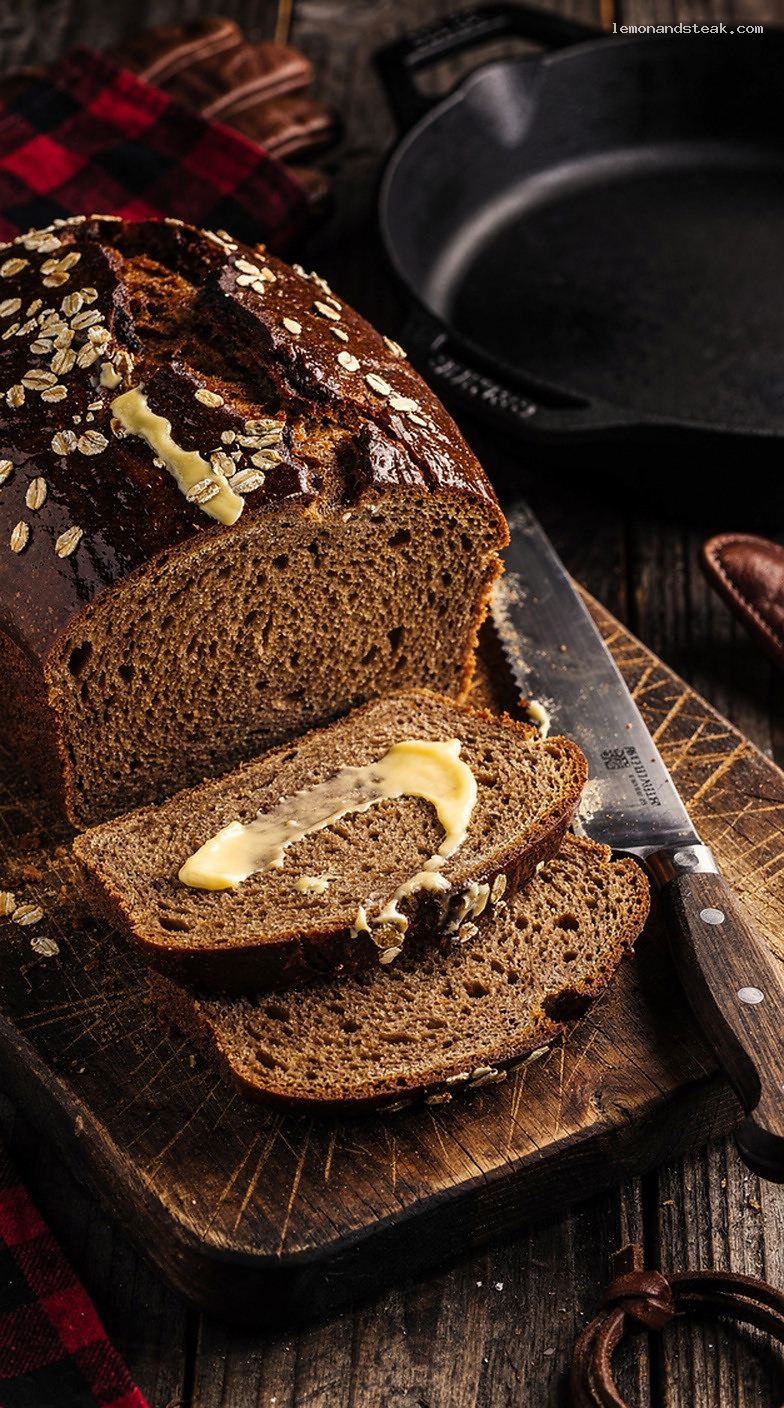
Quick Recipe Version (TL;DR)
Quick Ingredients
- 1 cup (240 ml) whole milk, warmed to 105–110°F (40–43°C)
- 2 1/4 teaspoons (7 g) active dry yeast
- 1/3 cup (110 g) unsulfured molasses
- 2 tablespoons (28 g) unsalted butter, melted (plus more for brushing)
- 1 large egg, room temperature
- 1 1/2 teaspoons fine salt
- 1 1/2 cups (180 g) whole wheat flour
- 1/2 cup (60 g) rye flour
- 1 1/4 cups (160 g) bread flour (plus 2–4 tablespoons for kneading)
- 1 tablespoon (7 g) unsweetened cocoa powder (optional, for deeper color)
- Optional topping: 1 tablespoon milk + 2 tablespoons old-fashioned oats
Do This
- 1) Proof yeast in warm milk for 5–10 minutes until foamy.
- 2) Mix in molasses, melted butter, egg, and salt.
- 3) Stir in flours (and cocoa, if using) until a shaggy dough forms; knead 8–10 minutes.
- 4) Rise covered 60–90 minutes until doubled.
- 5) Shape into a loaf, place in a greased 9×5-inch pan, and rise 35–50 minutes until the dough crowns about 1 inch over the rim.
- 6) Bake at 350°F (175°C) for 35–40 minutes to 195–200°F (90–93°C) internal; cool 1 hour before slicing.
Why You’ll Love This Recipe
- Old-fashioned comfort: deep molasses flavor with a soft, tender crumb.
- Hearty but not heavy: whole wheat and rye add body without making the loaf dense.
- Great for toast: it browns beautifully and tastes amazing with butter.
- Everyday ingredients: no fancy grains or hard-to-find items.
Grocery List
- Produce: none
- Dairy: whole milk, unsalted butter
- Pantry: active dry yeast, unsulfured molasses, whole wheat flour, rye flour, bread flour, fine salt, unsweetened cocoa powder (optional), old-fashioned oats (optional)
Full Ingredients
Wet Ingredients
- Whole milk: 1 cup (240 ml), warmed to 105–110°F (40–43°C)
- Active dry yeast: 2 1/4 teaspoons (7 g)
- Unsulfured molasses: 1/3 cup (110 g)
- Unsalted butter: 2 tablespoons (28 g), melted and cooled slightly (plus 1 teaspoon for brushing after baking, optional)
- Egg: 1 large (about 50 g), room temperature
Dry Ingredients
- Whole wheat flour: 1 1/2 cups (180 g)
- Rye flour: 1/2 cup (60 g)
- Bread flour: 1 1/4 cups (160 g), plus 2–4 tablespoons (15–30 g) as needed for kneading
- Fine salt: 1 1/2 teaspoons
- Unsweetened cocoa powder (optional): 1 tablespoon (7 g), for deeper color and a richer “brown bread” look (it will not taste like chocolate)
Optional Oat Topping
- Milk: 1 tablespoon (15 ml)
- Old-fashioned oats: 2 tablespoons
For the Pan
- Butter or neutral oil: about 1 teaspoon, for greasing a 9×5-inch loaf pan
Step-by-Step Instructions
Step 1: Warm the milk and proof the yeast
Warm the milk to 105–110°F (40–43°C). It should feel comfortably warm, not hot. Pour it into a large mixing bowl (or the bowl of a stand mixer).
Sprinkle the yeast over the milk and let it sit for 5–10 minutes, until the surface looks foamy. If nothing happens, your yeast may be inactive or the milk may have been too hot or too cool; it’s best to stop and start over so the loaf rises properly.
Step 2: Add the molasses, butter, egg, and salt
Whisk in the molasses, melted butter, egg, and salt until evenly combined. The mixture will look deep brown and glossy from the molasses.
Tip: If your egg is cold, you can place it in a cup of warm water for 5 minutes so it doesn’t chill the yeast mixture.
Step 3: Mix in the flours to form a dough
Add the whole wheat flour, rye flour, bread flour, and cocoa powder (if using). Stir with a sturdy spoon (or mix with a dough hook on low speed) until you get a shaggy, sticky dough with no dry flour pockets.
Let the dough rest for 5 minutes. This short pause helps the whole grains absorb moisture and makes kneading easier.
Step 4: Knead until smooth and springy
Knead by hand on a lightly floured counter, or knead in a stand mixer with a dough hook on medium-low speed, for 8–10 minutes.
You’re looking for a dough that feels soft and slightly tacky, not stiff. If it’s very sticky and unworkable, add bread flour 1 tablespoon at a time (up to 2–4 tablespoons total) until it’s manageable. If it feels dry or tight, knead in 1 teaspoon milk at a time.
Step 5: First rise (bulk fermentation)
Lightly oil a bowl, place the dough inside, and turn it once so the surface is lightly coated. Cover with a lid or damp towel.
Let rise in a warm spot until doubled in size, about 60–90 minutes (aim for around 75–80°F / 24–27°C). Whole-grain doughs can take a little longer; go by volume rather than the clock.
Step 6: Shape the loaf and let it rise again
Grease a 9×5-inch loaf pan. Gently press the dough to deflate (don’t tear it). Shape into a log: pat the dough into a rectangle about as wide as your pan, roll it up snugly, pinch the seam closed, and tuck the ends under.
Place seam-side down in the pan. Cover and let rise until the center of the loaf crowns about 1 inch above the rim, about 35–50 minutes.
If using the oat topping, gently brush the top with 1 tablespoon milk and sprinkle with 2 tablespoons oats right before baking.
Step 7: Bake, cool, and slice
About 15 minutes before baking, preheat the oven to 350°F (175°C).
Bake on the middle rack for 35–40 minutes. The top should be deep brown, and the loaf should read 195–200°F (90–93°C) in the center on an instant-read thermometer. If the top is browning too quickly, tent loosely with foil after 20–25 minutes.
Remove from the pan and cool on a rack for 1 hour before slicing (this finishes setting the crumb). For a soft, shiny crust, brush the warm loaf with about 1 teaspoon melted butter.
Pro Tips
- Measure flour by weight if possible: whole grain flours pack easily; a scale helps keep the loaf tender instead of dry.
- Don’t rush the second rise: the loaf should visibly dome over the pan; under-proofing can lead to a tight, heavy crumb.
- Use unsulfured molasses: it gives the classic brown bread flavor and color without harsh bitterness.
- Check doneness with a thermometer: the dark crust can hide underbaking; 195–200°F ensures the center is baked through.
- Slice after cooling: cutting too early can make the loaf gummy, especially with whole grains.
Variations
- Raisin-walnut molasses bread: knead in 1/2 cup (75 g) raisins and 1/2 cup (60 g) chopped walnuts during the last minute of kneading.
- Seeded crust: brush the shaped loaf with milk and sprinkle with 1–2 tablespoons sunflower seeds or pumpkin seeds (or a mix) before baking.
- Extra “old-fashioned” spice: add 1 teaspoon ground cinnamon and 1/4 teaspoon ground cloves to the dry ingredients for a warmly spiced loaf.
Storage & Make-Ahead
Let the loaf cool completely, then store wrapped at room temperature for 3 days. For longer storage, slice the loaf and freeze in a freezer bag for up to 2 months. Toast slices straight from frozen for the best texture. If your kitchen is dry, this bread stays nicest when kept tightly wrapped; if your kitchen is humid, consider storing it in a breathable bread bag to avoid a sticky crust.
Nutrition (per serving)
Approximate per slice (1/12 loaf): 190 calories, 4 g fat, 34 g carbs, 4 g fiber, 8 g sugar, 6 g protein, 290 mg sodium.
Leave a Reply