
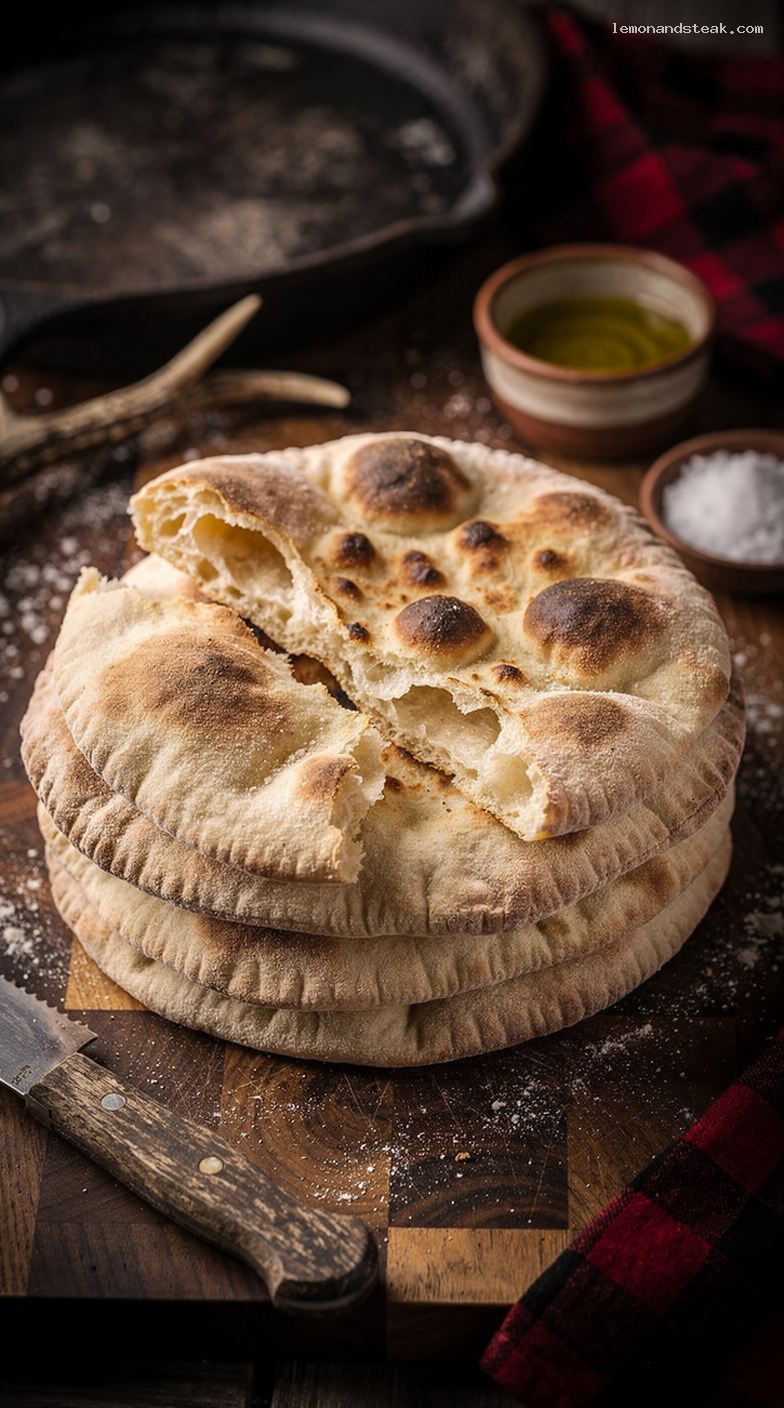
Quick Recipe Version (TL;DR)
Quick Ingredients
- 360 g (3 cups) bread flour (or all-purpose flour)
- 7 g (2 1/4 tsp) active dry yeast
- 12 g (2 tsp) granulated sugar
- 9 g (1 1/2 tsp) fine salt
- 240 g (1 cup) warm water (105–110°F / 40–43°C)
- 30 g (2 Tbsp) olive oil
- 1–2 Tbsp flour, for dusting
Do This
- 1) Bloom yeast with warm water + sugar for 5 minutes.
- 2) Mix in flour, salt, and olive oil; knead 8–10 minutes until smooth.
- 3) Rise covered until doubled, 60–75 minutes.
- 4) Preheat oven to 500°F (260°C) with a baking stone or inverted sheet pan inside for 30 minutes.
- 5) Divide dough into 8; rest 10 minutes; roll each to 1/4-inch (6 mm) thick.
- 6) Bake 2–3 minutes per pita until puffed; flip if needed and bake 30–60 seconds more.
- 7) Cool in a towel-lined bowl to keep soft; serve warm.
Why You’ll Love This Recipe
- Soft, tender pita with a reliable pocket for stuffing.
- Simple pantry ingredients and straightforward technique.
- High-heat baking creates that classic puff and light chew.
- Freezer-friendly, so you can bake once and enjoy for weeks.
Grocery List
- Produce: None (optional: parsley or sliced cucumber/tomato for serving)
- Dairy: None
- Pantry: Bread flour (or all-purpose), active dry yeast, granulated sugar, fine salt, olive oil, extra flour for dusting (optional: flaky salt for serving)
Full Ingredients
Pita Dough
- Warm water: 240 g (1 cup), warmed to 105–110°F (40–43°C)
- Granulated sugar: 12 g (2 tsp)
- Active dry yeast: 7 g (2 1/4 tsp)
- Bread flour: 360 g (3 cups), plus more as needed (see note)
- Fine salt: 9 g (1 1/2 tsp)
- Olive oil: 30 g (2 Tbsp)
For Rolling and Keeping Them Soft
- Flour for dusting: 1–2 Tbsp, as needed
- Clean kitchen towel: for holding warm pitas after baking
Optional for Serving
- Olive oil: 1–2 Tbsp, for brushing or dipping
- Flaky salt: 1/4 tsp, to sprinkle lightly
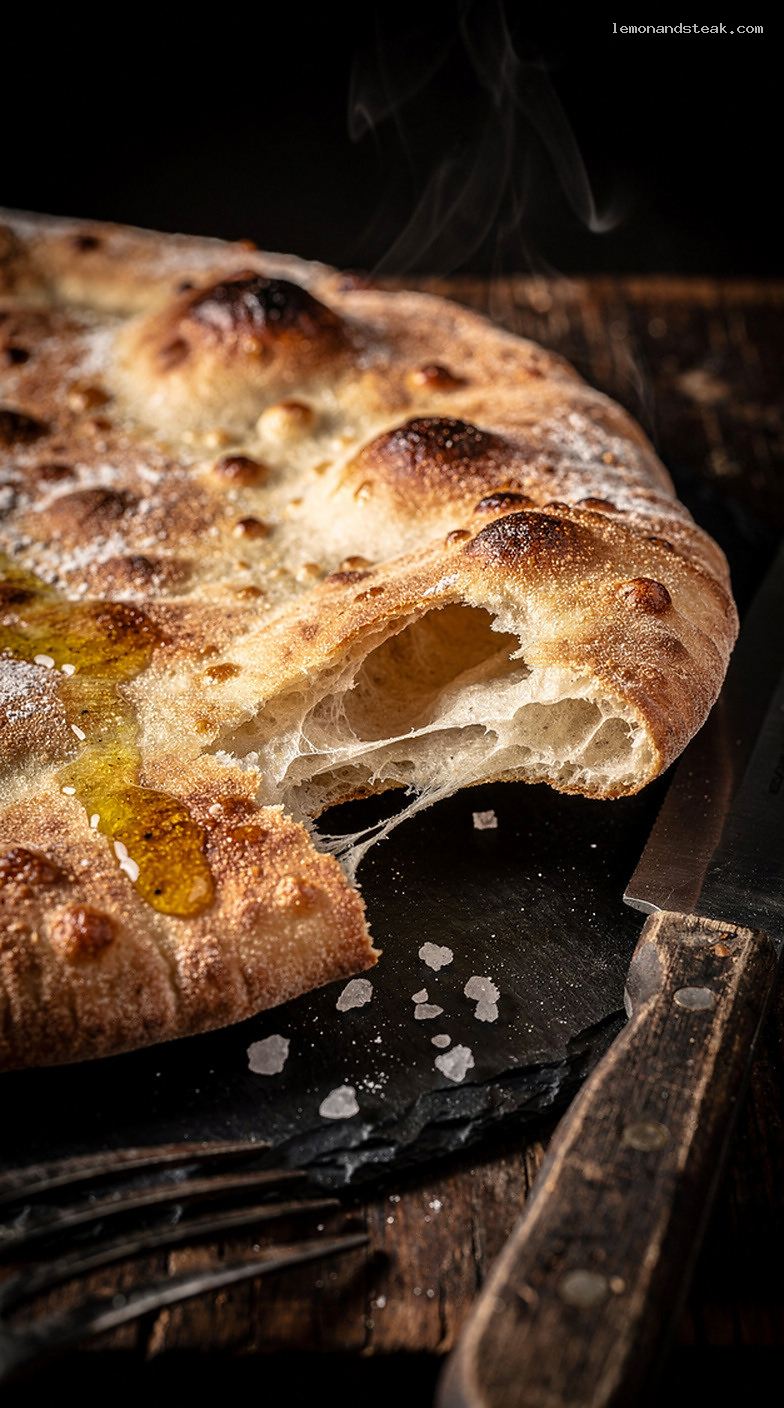
Step-by-Step Instructions
Step 1: Bloom the yeast
In a large mixing bowl, combine the warm water (105–110°F / 40–43°C) and sugar. Sprinkle the active dry yeast over the top and stir briefly. Let stand for 5 minutes, until the surface looks foamy.
If you don’t see foam: your yeast may be old or the water may have been too hot or too cool. Start again so you don’t waste the flour.
Step 2: Mix the dough
Add the bread flour and salt to the yeast mixture. Drizzle in the olive oil. Stir with a spoon or dough whisk until a shaggy dough forms and there’s no dry flour left.
If the dough seems very wet and loose, add 1 Tbsp (about 8 g) flour at a time. If it seems dry and won’t come together, add 1 tsp water at a time.
Step 3: Knead until smooth and elastic
Turn the dough out onto a lightly floured counter and knead for 8–10 minutes, until the dough is smooth, elastic, and only slightly tacky. It should spring back when you poke it.
Stand mixer option: Knead with a dough hook on medium-low speed for 6–8 minutes.
Step 4: First rise (bulk fermentation)
Shape the dough into a ball and place it in a lightly oiled bowl, turning once to coat. Cover tightly (lid or plastic wrap) and let rise at warm room temperature until doubled, 60–75 minutes.
Step 5: Preheat the oven and hot surface
Place a baking stone on the middle rack, or place a sturdy rimmed sheet pan upside-down on the middle rack (this mimics a flat baking surface). Preheat the oven to 500°F (260°C) for 30 minutes.
This long preheat is key: pita pockets form when the dough hits intense heat and the moisture inside turns to steam quickly.
Step 6: Divide, rest, and roll to the right thickness
Turn the risen dough onto a lightly floured surface. Divide into 8 equal pieces (about 85–90 g each). Shape each piece into a tight ball.
Cover the dough balls with a towel and let them rest for 10 minutes so they roll out easily.
Roll each ball into a circle about 6–7 inches (15–18 cm) wide and 1/4 inch (6 mm) thick. Dust with just enough flour to prevent sticking, but avoid heavy flouring (too much can interfere with puffing).
Step 7: Bake hot and fast to create the pocket
Working in batches (usually 2–3 pitas at a time), carefully place the rolled dough rounds onto the preheated stone or inverted sheet pan.
Bake at 500°F (260°C) for 2–3 minutes, until the pita balloons and puffs dramatically. If a pita puffs partially, give it another 30–60 seconds.
If needed for a little extra color, use tongs to flip the pita and bake 30–60 seconds more. Watch closely: they brown quickly at this temperature.
Step 8: Keep them soft, then serve
As pitas come out of the oven, stack them in a towel-lined bowl and cover. The trapped steam keeps the crust tender and helps the pocket set.
Let cool for 5 minutes before cutting (the inside finishes setting). Serve warm for the softest texture.
Pro Tips
- Thickness matters: Aim for an even 1/4-inch (6 mm). Too thin can crack; too thick may not inflate fully.
- Don’t skip the full preheat: A properly heated stone/pan is the biggest factor in strong puff and pocket formation.
- Use minimal bench flour: Excess flour can prevent the surface from sealing quickly, which can reduce puffing.
- Cover immediately after baking: Stacking hot pitas under a towel keeps them flexible for stuffing.
- If pitas won’t puff: Check that your oven truly hits 500°F (260°C), your rounds are evenly rolled, and your baking surface is fully preheated.
Variations
- Whole wheat pita: Replace 120 g (1 cup) of the bread flour with 120 g (1 cup) whole wheat flour. Add an extra 1–2 Tbsp (15–30 g) water if the dough feels stiff.
- Stovetop pita (no oven stone): Heat a cast iron skillet over medium-high for 5 minutes. Cook each pita 1–2 minutes on the first side, flip and cook 1 minute, then flip again for 30–60 seconds to encourage puffing.
- Extra-tender pita: Brush warm pitas lightly with 1–2 tsp olive oil and cover with a towel for 10 minutes.
Storage & Make-Ahead
Room temperature: Cool completely, then store in an airtight bag for up to 2 days. Rewarm for 20–30 seconds in the microwave or 2–3 minutes in a 350°F (175°C) oven, wrapped in foil.
Refrigerator: Store airtight for up to 5 days. Reheat before serving for best softness.
Freezer: Freeze fully cooled pitas in a freezer bag (separate layers with parchment if desired) for up to 2 months. Thaw at room temperature for 30–60 minutes, then warm in a 350°F (175°C) oven for 5–7 minutes.
Make-ahead dough: After kneading, cover and refrigerate for 12–24 hours. Let the dough sit at room temperature for 45–60 minutes before dividing and rolling.
Nutrition (per serving)
Approximate (1 pita, based on 8 servings): 170 calories, 2.5 g fat, 33 g carbohydrates, 5 g protein, 1 g fiber, 290 mg sodium.
Leave a Reply