
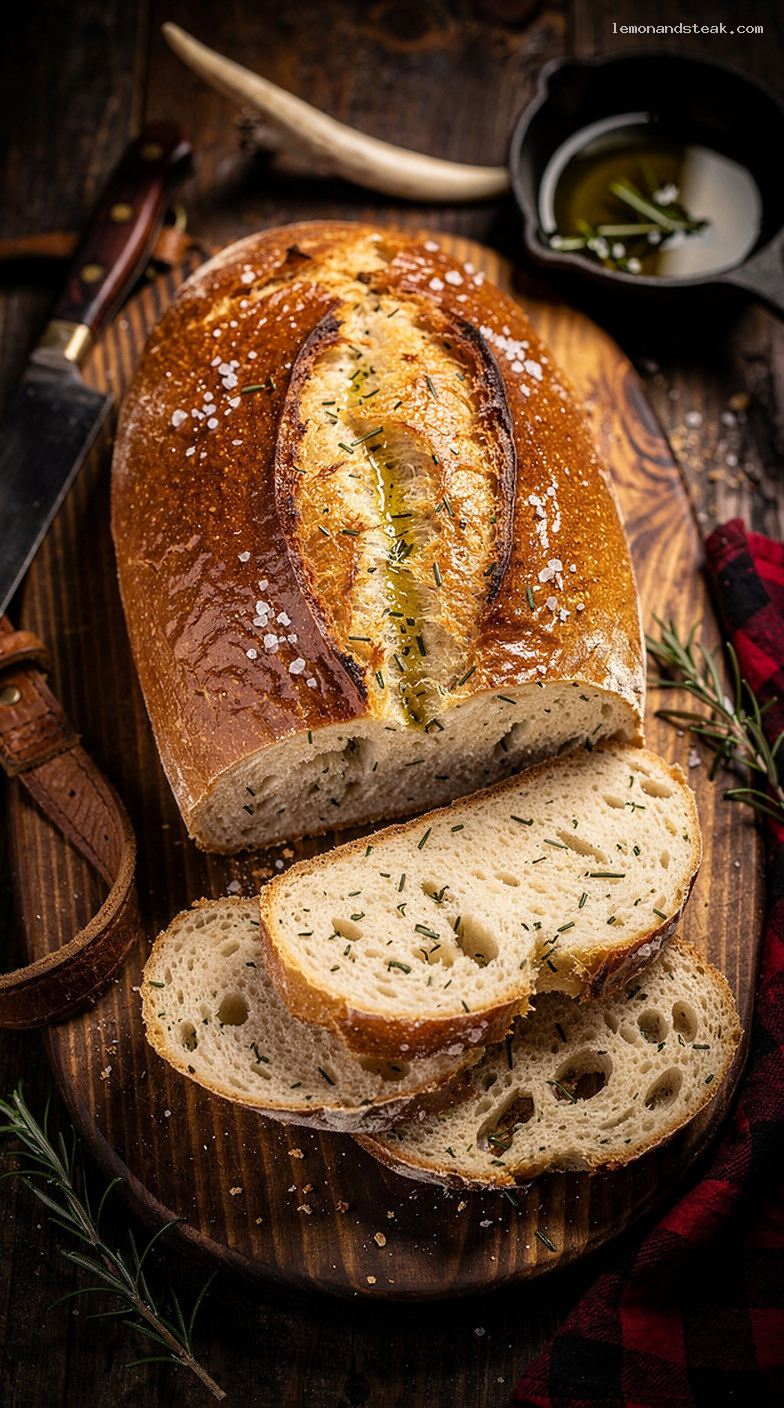
Quick Recipe Version (TL;DR)
Quick Ingredients
- 240 g warm water (1 cup), 105–110°F (40–43°C)
- 7 g instant yeast (2 1/4 teaspoons)
- 12 g granulated sugar (1 tablespoon)
- 60 ml extra-virgin olive oil (1/4 cup), plus more for the pan and brushing
- 360 g bread flour (3 cups), plus more as needed
- 8 g fine sea salt (1 1/4 teaspoons)
- 2 tablespoons finely chopped fresh rosemary
- 1 teaspoon flaky salt (optional, for topping)
Do This
- Mix warm water, yeast, sugar, and olive oil; rest 5 minutes.
- Stir in flour, salt, and rosemary; knead 8–10 minutes until smooth.
- Rise covered 60–75 minutes until doubled.
- Shape into a log; place in an oiled 9 x 5-inch loaf pan; rise 35–45 minutes.
- Heat oven to 375°F (190°C). Slash top; brush with olive oil; add flaky salt if using.
- Bake 35–40 minutes to deep golden (195–200°F / 90–93°C internal).
- Cool 20–30 minutes before slicing.
Why You’ll Love This Recipe
- Olive oil makes the crumb soft and tender, even the next day.
- Fresh rosemary perfumes the loaf without overpowering it.
- A simple, reliable dough that’s great for beginners and satisfying for experienced bakers.
- Perfect for soups, pastas, sandwiches, or just warm with a dip of olive oil.
Grocery List
- Produce: Fresh rosemary
- Dairy: None (optional: a small amount of butter if you prefer buttering the pan)
- Pantry: Bread flour, instant yeast, granulated sugar, fine sea salt, flaky salt (optional), extra-virgin olive oil
Full Ingredients
Dough
- Warm water: 240 g (1 cup), heated to 105–110°F (40–43°C)
- Instant yeast: 7 g (2 1/4 teaspoons)
- Granulated sugar: 12 g (1 tablespoon)
- Extra-virgin olive oil: 60 ml (1/4 cup)
- Bread flour: 360 g (3 cups), plus more as needed for dusting
- Fine sea salt: 8 g (1 1/4 teaspoons)
- Fresh rosemary: 2 tablespoons, finely chopped (from about 2–3 sprigs)
For the Pan and Topping
- Extra-virgin olive oil: 1–2 teaspoons, for greasing the loaf pan
- Extra-virgin olive oil: 1–2 teaspoons, for brushing the loaf before baking
- Flaky salt: 1 teaspoon (optional, for a crisp, savory top)
- Optional garnish: A small rosemary sprig to press into the top before baking
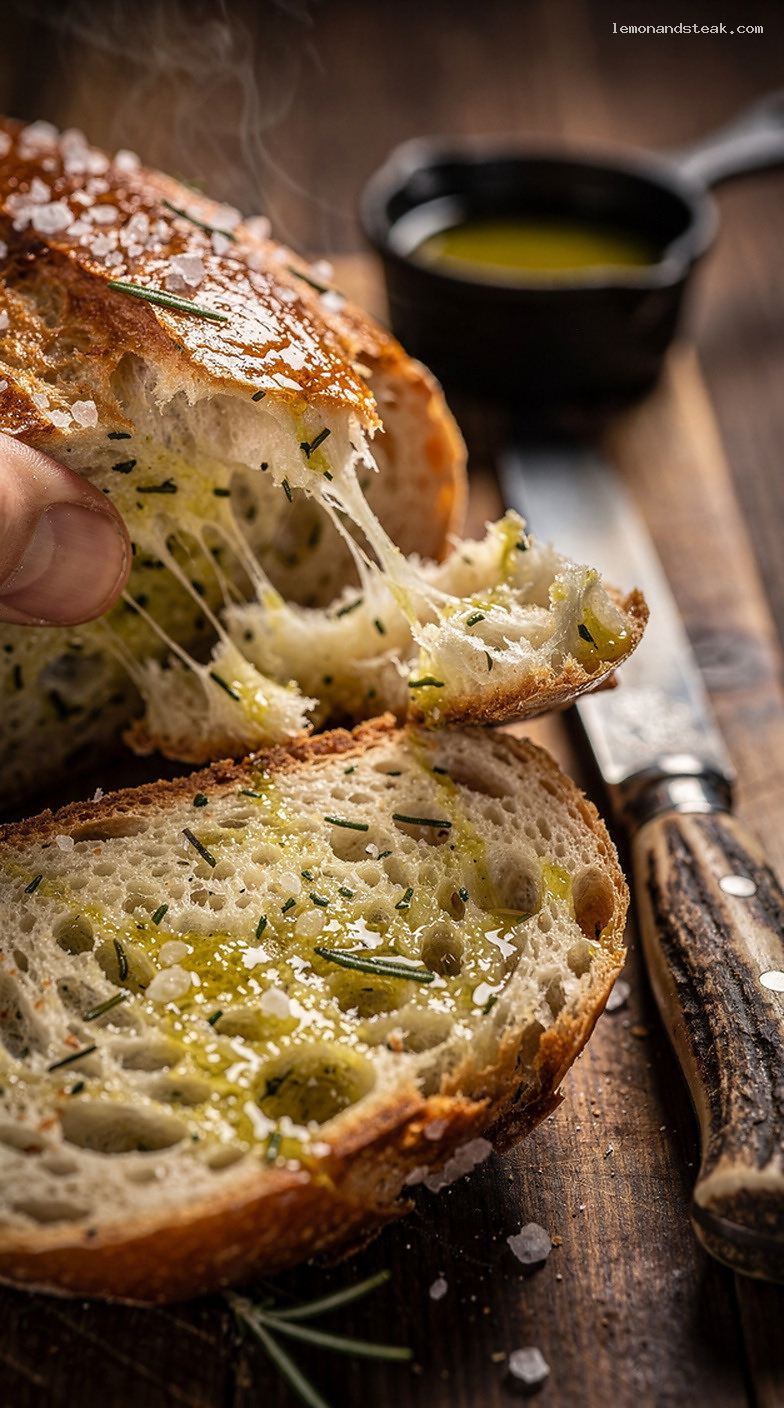
Step-by-Step Instructions
Step 1: Prep the rosemary and set up your mixing bowl
Strip the rosemary leaves from the stems and chop them finely. Measure everything out now; bread goes smoothly when your ingredients are ready to go.
If you’re using a 9 x 5-inch loaf pan, lightly grease it with 1–2 teaspoons olive oil, making sure to coat the corners.
Step 2: Mix the wet ingredients and wake up the yeast
In a large mixing bowl (or the bowl of a stand mixer), combine the warm water (105–110°F / 40–43°C), instant yeast, sugar, and 1/4 cup (60 ml) olive oil.
Stir for 10–15 seconds, then let it stand for 5 minutes. You may see a light foam on top; that’s a good sign the yeast is active.
Step 3: Form the dough
Add the bread flour, fine sea salt, and chopped rosemary to the bowl. Stir with a sturdy spoon until a shaggy dough forms and no dry flour remains.
If the dough looks very wet and soupy, add more flour 1 tablespoon at a time. You want it slightly tacky, not sticky like batter.
Step 4: Knead until smooth and elastic
By hand: Turn the dough onto a lightly floured surface and knead for 8–10 minutes. The dough should become smooth, stretchy, and only slightly tacky.
With a stand mixer: Use the dough hook on medium-low speed for 6–8 minutes, stopping once to scrape the bowl if needed.
A quick test: pinch off a small piece and stretch it gently. If it stretches thin enough to let some light through before tearing, you’ve kneaded enough.
Step 5: First rise (bulk fermentation)
Shape the dough into a ball and place it in a lightly oiled bowl. Cover tightly with a lid, plastic wrap, or a damp towel.
Let rise at room temperature (about 70–75°F / 21–24°C) for 60–75 minutes, or until doubled in size. If your kitchen is cool, it may take closer to 90 minutes.
Step 6: Shape the loaf and proof in the pan
Lightly oil your hands or your work surface. Gently press the dough into a rectangle about 8 x 10 inches, then roll it into a log (like a jelly roll), pinching the seam closed.
Place the log seam-side down in the prepared loaf pan. Cover and let rise for 35–45 minutes, until the dough crowns about 1 inch above the rim of the pan.
During the last 20 minutes of proofing, preheat the oven to 375°F (190°C), with a rack in the middle position.
Step 7: Brush, slash, and bake
When the dough is ready, gently brush the top with 1–2 teaspoons olive oil. If you like, press a small rosemary sprig into the top and sprinkle with 1 teaspoon flaky salt for extra crunch and flavor.
Using a sharp knife or lame, make one long slash down the center, about 1/4 inch deep. This helps the loaf expand neatly.
Bake at 375°F (190°C) for 35–40 minutes, until the top is deep golden brown and the loaf sounds hollow when tapped. For best accuracy, the internal temperature should be 195–200°F (90–93°C).
Step 8: Cool for the best texture (then slice and enjoy)
Remove the pan from the oven and let the bread rest for 5 minutes. Turn the loaf out onto a wire rack (this prevents a soggy bottom).
Cool for 20–30 minutes before slicing. The crumb finishes setting as it cools, giving you cleaner slices and a softer interior.
Pro Tips
- Measure flour by weight if you can. Too much flour is the most common reason for dense bread. Aim for a dough that’s soft and slightly tacky.
- Chop rosemary finely. Large rosemary pieces can create sharp, piney bites; finer pieces distribute the aroma evenly.
- Use olive oil on your hands instead of extra flour. This keeps the dough tender and prevents drying it out while shaping.
- Don’t rush the second rise. Under-proofed dough can split on the sides and bake up tight. Wait until it crowns about 1 inch over the pan.
- Want an extra-fragrant crust? Brush with a little more olive oil immediately after baking and let it soak in as the loaf cools.
Variations
- Garlic-rosemary olive oil bread: Add 1 teaspoon garlic powder to the dry ingredients, or knead in 1 small grated garlic clove (very finely grated) with the wet ingredients.
- Lemon-rosemary loaf: Add 1 teaspoon finely grated lemon zest to the dough for a bright, Mediterranean twist.
- Chewy focaccia-style version: Instead of a loaf pan, press the dough into an oiled 9 x 13-inch pan, dimple deeply, drizzle with 2 tablespoons olive oil, and bake at 425°F (218°C) for 20–24 minutes.
Storage & Make-Ahead
Let the loaf cool completely, then store it tightly wrapped at room temperature for up to 2 days. For longer storage, slice the loaf, wrap well, and freeze for up to 2 months. Toast slices straight from frozen.
Make-ahead option: After kneading, place the dough in an oiled bowl, cover, and refrigerate for 8–16 hours. The next day, let it sit at room temperature for 45–60 minutes, then shape, proof, and bake as directed.
Nutrition (per serving)
Approximate per slice (1/12 of loaf): 190 calories, 6 g fat, 30 g carbs, 5 g protein, 240 mg sodium, 1 g fiber, 1 g sugar.
Leave a Reply