
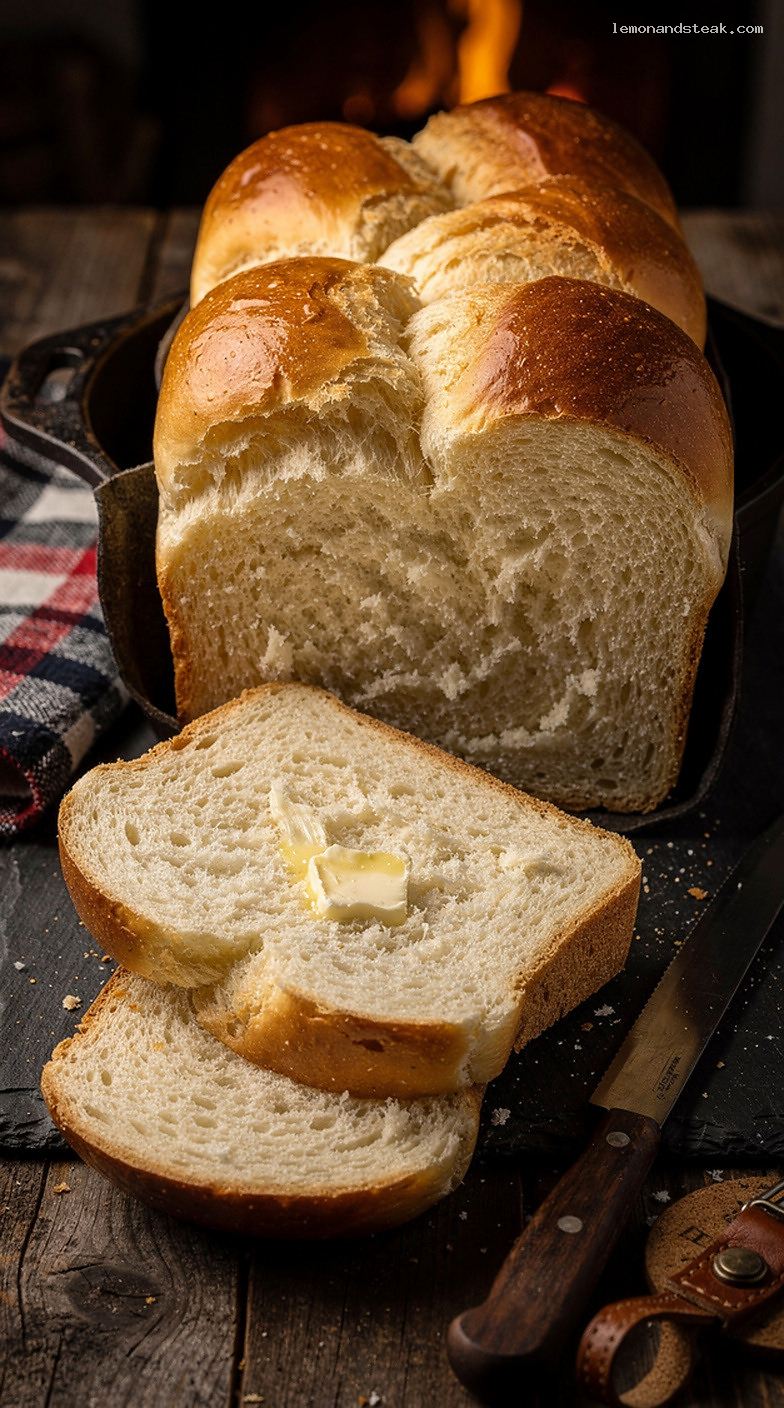
Quick Recipe Version (TL;DR)
Quick Ingredients
- Tangzhong: 25 g (3 tbsp) bread flour + 120 g (1/2 cup) whole milk
- Dough: 330 g (2 3/4 cups) bread flour, 15 g (2 tbsp) dry milk powder, 50 g (1/4 cup) sugar, 6 g (1 tsp) fine salt, 7 g (2 1/4 tsp) instant yeast
- Wet: 120 g (1/2 cup) whole milk, 1 large egg (about 50 g without shell)
- Fat: 50 g (3 1/2 tbsp) unsalted butter, softened
- Egg wash: 1 egg yolk + 15 g (1 tbsp) milk
Do This
- 1. Cook tangzhong (flour + milk) to 65°C/149°F until thick; cool to room temp.
- 2. Mix dry dough ingredients, then add milk, egg, and tangzhong; knead 8 minutes.
- 3. Knead in butter until glossy and stretchy, 4–6 minutes more (windowpane test).
- 4. Rise until doubled, 60–90 minutes at warm room temp.
- 5. Divide into 3 pieces, roll into logs, and place in a greased 9 x 5 in loaf pan.
- 6. Proof until the dough crowns 2–3 cm (about 1 in) over the rim, 45–60 minutes.
- 7. Brush with egg wash; bake at 175°C/350°F for 30–35 minutes (to 93°C/200°F). Cool fully.
Why You’ll Love This Recipe
- Cloud-soft crumb: The cooked flour starter (tangzhong) makes the loaf exceptionally tender and fluffy.
- Stays fresh longer: This bread remains soft for days instead of drying out quickly.
- Just lightly sweet: Perfect for toast, sandwiches, or simply warm with butter.
- Family-friendly: A gentle texture and flavor that works for kids and adults alike.
Grocery List
- Produce: None
- Dairy: Whole milk, unsalted butter, (optional but recommended) dry milk powder
- Pantry: Bread flour, granulated sugar, instant yeast, fine salt
Full Ingredients
Tangzhong (Cooked Flour Starter)
- 25 g (3 tbsp) bread flour
- 120 g (1/2 cup) whole milk
Dough
- 330 g (2 3/4 cups) bread flour (plus a little extra for dusting)
- 15 g (2 tbsp) dry milk powder (optional, but helps with softness and browning)
- 50 g (1/4 cup) granulated sugar
- 6 g (1 tsp) fine salt
- 7 g (2 1/4 tsp) instant yeast
- 120 g (1/2 cup) whole milk, cool to lukewarm (24–30°C / 75–86°F)
- 1 large egg (about 50 g without shell), room temperature if possible
- 50 g (3 1/2 tbsp) unsalted butter, softened but not melted
Egg Wash (for a Shiny, Deep Golden Top)
- 1 egg yolk
- 15 g (1 tbsp) whole milk
Pan
- 1 loaf pan, 9 x 5 in (23 x 13 cm), lightly greased
Step-by-Step Instructions
Step 1: Cook the tangzhong until thick and glossy
In a small saucepan, whisk together 25 g bread flour and 120 g whole milk until completely smooth (no lumps). Place the pan over medium-low heat and whisk constantly.
After a few minutes, it will thicken from “milk” to a soft, pudding-like paste. If you have a thermometer, cook it to 65°C / 149°F. Remove from heat immediately.
Scrape the tangzhong into a small bowl and press plastic wrap directly onto the surface (this prevents a skin). Let it cool to room temperature, about 10–15 minutes.
Step 2: Combine the dry ingredients
In a large mixing bowl (or the bowl of a stand mixer), whisk together:
330 g bread flour, 15 g dry milk powder (if using), 50 g sugar, 6 g salt, and 7 g instant yeast.
Tip: Keep the salt and yeast from sitting directly on top of each other in one spot before mixing (salt can slow yeast if concentrated).
Step 3: Add the wet ingredients and mix into a shaggy dough
Add the cooled tangzhong, 120 g milk, and 1 egg to the bowl. Mix with a spoon (or mix on low speed with a dough hook) until all the flour is hydrated and you have a shaggy dough, about 1–2 minutes.
If the dough looks dry and won’t come together, add 1 teaspoon milk at a time. If it looks very wet and soupy (unusual if you weighed ingredients), add 1 tablespoon flour at a time.
Step 4: Knead until smooth, then knead in the butter
Knead the dough (stand mixer on medium-low, or by hand on an unfloured counter) for 8 minutes until it looks smoother and begins to gain elasticity.
Add the softened 50 g butter one tablespoon at a time, kneading until each addition disappears into the dough before adding the next. Continue kneading until the dough is very smooth, slightly tacky, and stretchy, about 4–6 minutes more in a stand mixer (or 8–10 minutes by hand).
You’re aiming for a strong windowpane: stretch a small piece until it becomes thin enough to let light through without tearing quickly.
Step 5: First rise (bulk ferment) until doubled
Shape the dough into a ball and place it into a lightly greased bowl. Cover tightly.
Let it rise at 24–27°C / 75–81°F until doubled in size, about 60–90 minutes. (Cool kitchens may take closer to 90 minutes; warmer kitchens may finish sooner.)
Step 6: Divide, shape, and place into the pan
Grease a 9 x 5 in (23 x 13 cm) loaf pan.
Turn the dough onto a clean counter and gently press out the gases. Divide into 3 equal pieces (about 200 g each, if you want to weigh them).
Shape each piece into a ball, cover, and rest for 10 minutes (this relaxes the gluten and makes rolling easier).
Roll each piece into a rectangle about 15 x 20 cm (6 x 8 in). Fold the short sides inward slightly, then roll up tightly into a log. Place the 3 logs seam-side down in the loaf pan.
Step 7: Final proof until tall and airy
Cover the pan lightly (plastic wrap or a lid that won’t touch the dough). Proof at 24–27°C / 75–81°F until the dough rises to 2–3 cm (about 1 in) above the rim of the pan, about 45–60 minutes.
Near the end of proofing, preheat the oven to 175°C / 350°F with a rack in the lower-middle position.
Step 8: Egg wash and bake until golden and fully cooked
Whisk together 1 egg yolk and 1 tbsp milk. Brush a thin, even layer over the top of the loaf (try not to let it drip down the sides, which can “glue” the bread to the pan).
Bake at 175°C / 350°F for 30–35 minutes, until deeply golden. For accuracy, check the center with an instant-read thermometer: the loaf is done at 93°C / 200°F.
If the top browns too quickly, tent loosely with foil after 20 minutes.
Step 9: Cool (this sets the crumb) and slice
Remove the loaf from the pan and cool on a rack for at least 60 minutes before slicing. Cutting too early can make the crumb gummy, even if it’s fully baked.
Slice with a serrated knife for neat slices, or pull apart gently for that classic feathery texture.
Pro Tips
- Weigh ingredients for best results: Milk bread is soft and enriched, so small measuring differences matter. A kitchen scale makes it consistent.
- Don’t rush the knead: The “cloud” texture comes from well-developed gluten. Keep kneading until the dough stretches thin without tearing.
- Watch the dough, not the clock: Rising times vary with room temperature. Aim for doubled on the first rise and 1 inch over the pan on the second.
- Use the thermometer: Tangzhong is ideal at 65°C/149°F, and the baked loaf is perfect at 93°C/200°F.
- For extra-tall slices: Use a Pullman pan (with lid) and bake to the same internal temperature; check a few minutes early.
Variations
- Hokkaido milk bread rolls: Divide the finished dough into 12 pieces (about 50 g each), proof in a greased 9 x 13 in pan until puffy, then bake at 175°C/350°F for 18–22 minutes.
- Cinnamon-sugar swirl: Roll each portion out, brush lightly with melted butter, sprinkle with 2 tbsp sugar + 2 tsp cinnamon, then roll and pan. (Keep filling light so it doesn’t separate.)
- Honey milk bread: Replace 15 g (1 tbsp) of the sugar with 15 g (2 tsp) honey (add with the wet ingredients). Expect slightly deeper browning.
Storage & Make-Ahead
Let the loaf cool completely, then store tightly wrapped at room temperature for up to 3 days. For longer storage, slice the loaf and freeze in a zip-top bag for up to 2 months. Toast slices from frozen (no need to thaw) for the best texture.
Make-ahead option: Prepare the tangzhong up to 24 hours in advance and refrigerate it in an airtight container. Bring it back to room temperature before mixing the dough.
Nutrition (per serving)
Approximate, based on 12 slices: 190 calories; 6 g protein; 28 g carbohydrates; 6 g fat; 6 g sugar; 150 mg sodium.
Leave a Reply