
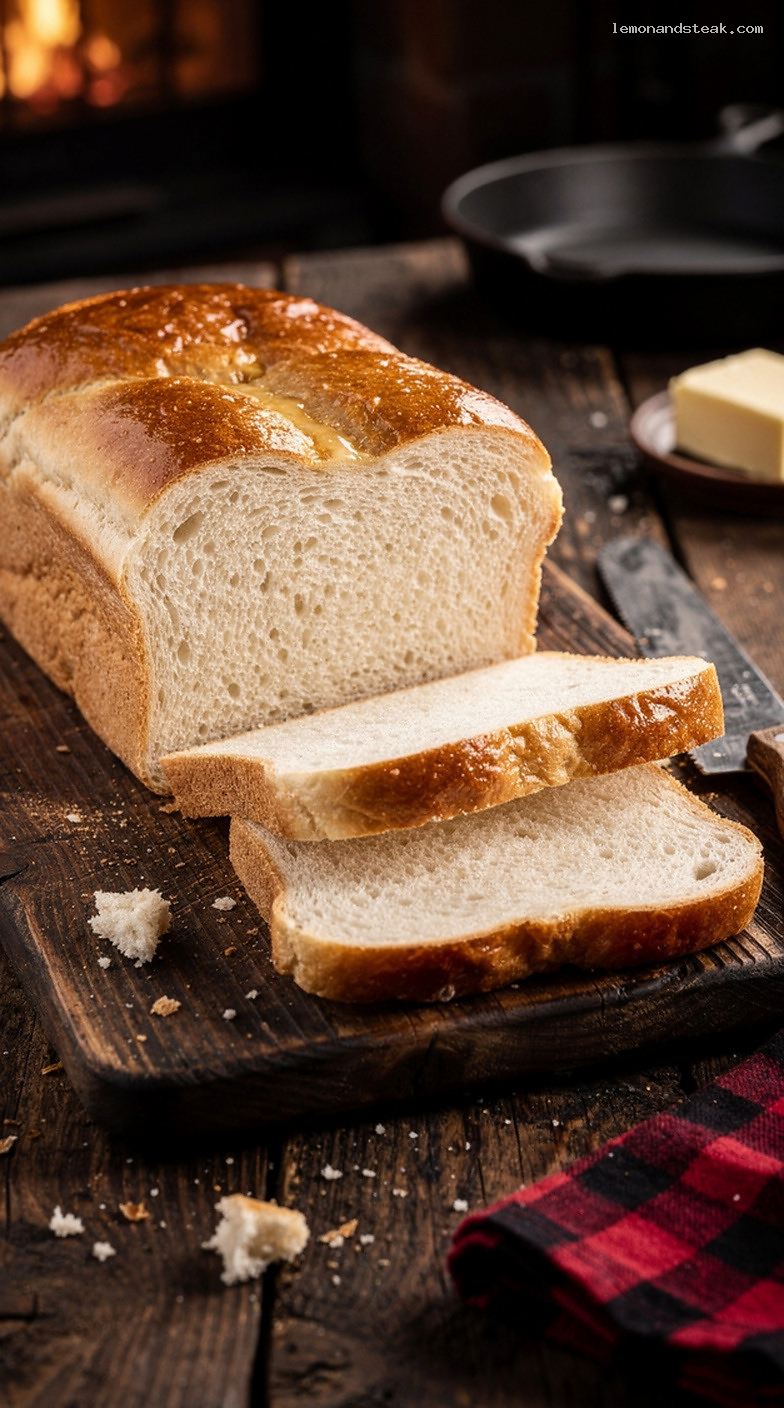
Quick Recipe Version (TL;DR)
Quick Ingredients
- 1 cup (240 g) whole milk, warmed to 105–110°F (40–43°C)
- 2 tablespoons (25 g) granulated sugar
- 2 1/4 teaspoons (7 g) active dry yeast
- 4 tablespoons (56 g) unsalted butter, melted and slightly cooled
- 3 1/4 cups (390 g) bread flour
- 1 1/2 teaspoons (9 g) fine salt
- 1 teaspoon neutral oil or softened butter (for greasing the pan)
- 1 tablespoon (14 g) butter (for brushing after baking)
Do This
- 1. Warm milk to 105–110°F, stir in sugar, then sprinkle yeast on top; wait 5–10 minutes until foamy.
- 2. Stir in melted butter, then mix in flour and salt until a shaggy dough forms.
- 3. Knead 8–10 minutes until smooth and elastic (or 6–8 minutes in a stand mixer).
- 4. Rise covered in a greased bowl until doubled, 60–90 minutes at warm room temperature.
- 5. Shape into a log, place in greased 9 x 5-inch pan, and rise until about 1 inch above rim, 45–60 minutes.
- 6. Bake at 350°F (175°C) for 32–35 minutes, until deep golden and 190°F (88°C) inside.
- 7. Brush with butter, cool 1 hour before slicing.
Why You’ll Love This Recipe
- Soft, fluffy crumb with a mild, classic flavor that works for everything from PB&J to grilled cheese.
- Milk and butter create a tender, sliceable loaf that toasts beautifully without drying out.
- Reliable, straightforward method with clear cues so you know what to look for at each stage.
- Makes a tall, even loaf designed for everyday sandwiches and neat slices.
Grocery List
- Produce: None
- Dairy: Whole milk, unsalted butter
- Pantry: Bread flour, granulated sugar, active dry yeast, fine salt, neutral oil (or extra butter) for greasing
Full Ingredients
For the dough
- Whole milk: 1 cup (240 g), warmed to 105–110°F (40–43°C)
- Granulated sugar: 2 tablespoons (25 g)
- Active dry yeast: 2 1/4 teaspoons (7 g)
- Unsalted butter: 4 tablespoons (56 g), melted and slightly cooled
- Bread flour: 3 1/4 cups (390 g), plus 1–2 tablespoons (8–16 g) as needed for dusting
- Fine salt: 1 1/2 teaspoons (9 g)
For the pan and finish
- Neutral oil or softened butter: 1 teaspoon (5 g) for greasing the bowl and 9 x 5-inch (23 x 13 cm) loaf pan
- Unsalted butter: 1 tablespoon (14 g) for brushing the top after baking (optional but recommended)
Step-by-Step Instructions
Step 1: Warm the milk and activate the yeast
Warm the milk to 105–110°F (40–43°C). (It should feel very warm but not hot; too-hot milk can weaken yeast.) Pour the warm milk into a large mixing bowl and stir in the sugar until dissolved.
Sprinkle the yeast evenly over the surface. Let stand for 5–10 minutes until foamy and fragrant. If you don’t see foam, your yeast may be old or the milk may have been too hot or too cool; it’s best to start over for a dependable rise.
Step 2: Mix the dough
Stir the melted butter into the yeast mixture. Add the bread flour and salt. Mix with a sturdy spoon or dough whisk until a shaggy dough forms and no dry patches remain.
If the dough looks extremely wet and slack, add flour 1 tablespoon (8 g) at a time. The goal is a dough that feels soft and slightly tacky, not stiff or dry.
Step 3: Knead until smooth and elastic
By hand: Turn the dough out onto a lightly floured counter and knead for 8–10 minutes until smooth, elastic, and only slightly tacky.
Stand mixer: Knead with a dough hook on medium-low speed for 6–8 minutes.
You’re looking for a dough that holds together well and stretches without tearing quickly. If it’s sticking heavily to your hands/counter, dust lightly with flour; if it feels tight or dry, rest it for 5 minutes, then continue kneading.
Step 4: First rise (bulk fermentation)
Lightly grease a large bowl with neutral oil or softened butter. Place the dough in the bowl, turning once so the surface is lightly coated. Cover tightly with plastic wrap or a damp towel.
Let rise at warm room temperature (72–78°F / 22–26°C) until doubled in size, 60–90 minutes. A simple test: gently press a floured fingertip into the dough; the indentation should slowly spring back but still remain slightly visible.
Step 5: Shape for a tall sandwich loaf
Grease a 9 x 5-inch (23 x 13 cm) loaf pan.
Turn the dough onto a lightly floured surface and gently press it into a rectangle about 8 x 12 inches. Starting from a short end, roll it into a tight log, pinching the seam closed. Tuck the ends under for a neat shape.
Place the log seam-side down in the prepared pan and gently press to even it out so it fills the corners.
Step 6: Second rise (proof) and preheat the oven
Cover the pan loosely and let the dough rise until it crowns about 1 inch (2.5 cm) above the rim, 45–60 minutes. Near the end of this rise, preheat the oven to 350°F (175°C) with a rack in the center.
If your kitchen is cool, the second rise may take closer to 75 minutes. Don’t rush this stage; under-proofed dough tends to split and can bake up dense.
Step 7: Bake, butter the top, and cool completely
Bake at 350°F (175°C) for 32–35 minutes, until the top is deep golden brown. For best accuracy, check doneness with an instant-read thermometer inserted into the center of the loaf: it should read 190°F (88°C).
If the top is browning too quickly, loosely tent with foil during the last 10 minutes of baking.
Remove the bread from the pan within 5 minutes and cool on a wire rack. Immediately brush the warm top with 1 tablespoon (14 g) butter for a soft, flavorful crust.
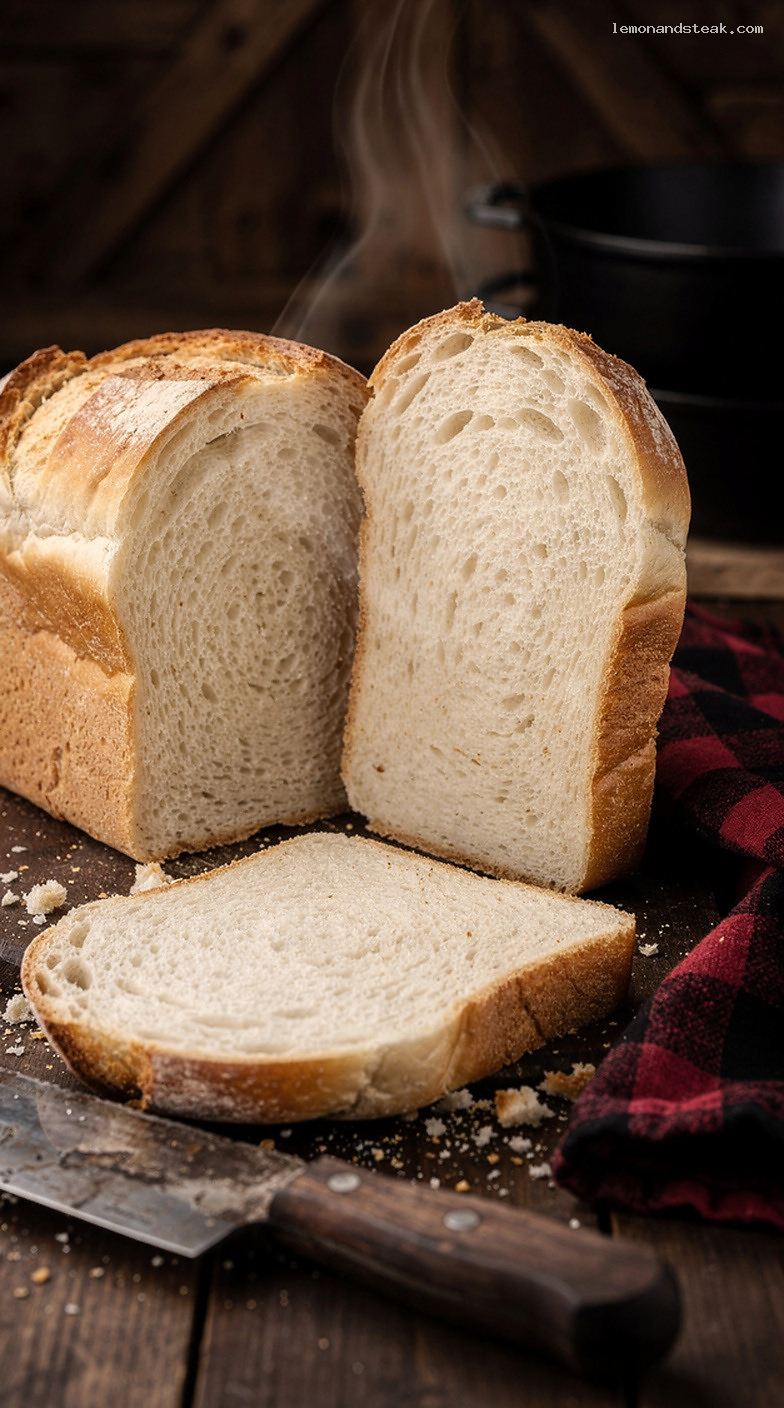
Let cool for at least 1 hour before slicing. Slicing too soon can compress the crumb and make the bread gummy.
Pro Tips
- Use a thermometer for the milk and the finished loaf. 105–110°F for milk helps yeast thrive; 190°F internal temp confirms the center is baked through.
- Measure flour carefully. If using cups, fluff the flour, spoon it into the measuring cup, then level. Too much flour is the most common reason sandwich bread turns out dry.
- Know what “doubled” looks like. If your bowl has straight sides, mark the starting level with a piece of tape to make rising easy to judge.
- Tight shaping = better slices. Rolling into a snug log helps create an even crumb and a tall, uniform loaf that’s perfect for sandwiches.
- Cool fully for clean slices. For extra neat slices, wait until completely cool and use a serrated bread knife with gentle sawing motions.
Variations
- Honey white bread: Replace the sugar with 2 tablespoons (42 g) honey. (Honey browns faster; tent with foil if needed.)
- Buttermilk sandwich bread: Use 1 cup (240 g) buttermilk instead of milk for a slightly tangy flavor and extra tenderness.
- Soft wheat blend: Swap in 1 cup (120 g) whole wheat flour for 1 cup of the bread flour. Add 1 tablespoon (15 g) extra milk if the dough feels dry.
Storage & Make-Ahead
Once completely cool, store the loaf tightly wrapped at room temperature for 3–4 days. For longer storage, slice the loaf, place parchment between slices if you like, and freeze in a freezer bag for up to 2 months. Toast slices straight from frozen or thaw at room temperature for 15–20 minutes. To refresh a day-old loaf, warm slices briefly in the toaster or wrap the loaf in foil and warm in a 300°F (150°C) oven for 10–12 minutes.
Nutrition (per serving)
Approximate, based on 12 slices: 170 calories; 4 g fat; 30 g carbohydrates; 3 g sugar; 1 g fiber; 5 g protein; 240 mg sodium.
Leave a Reply