
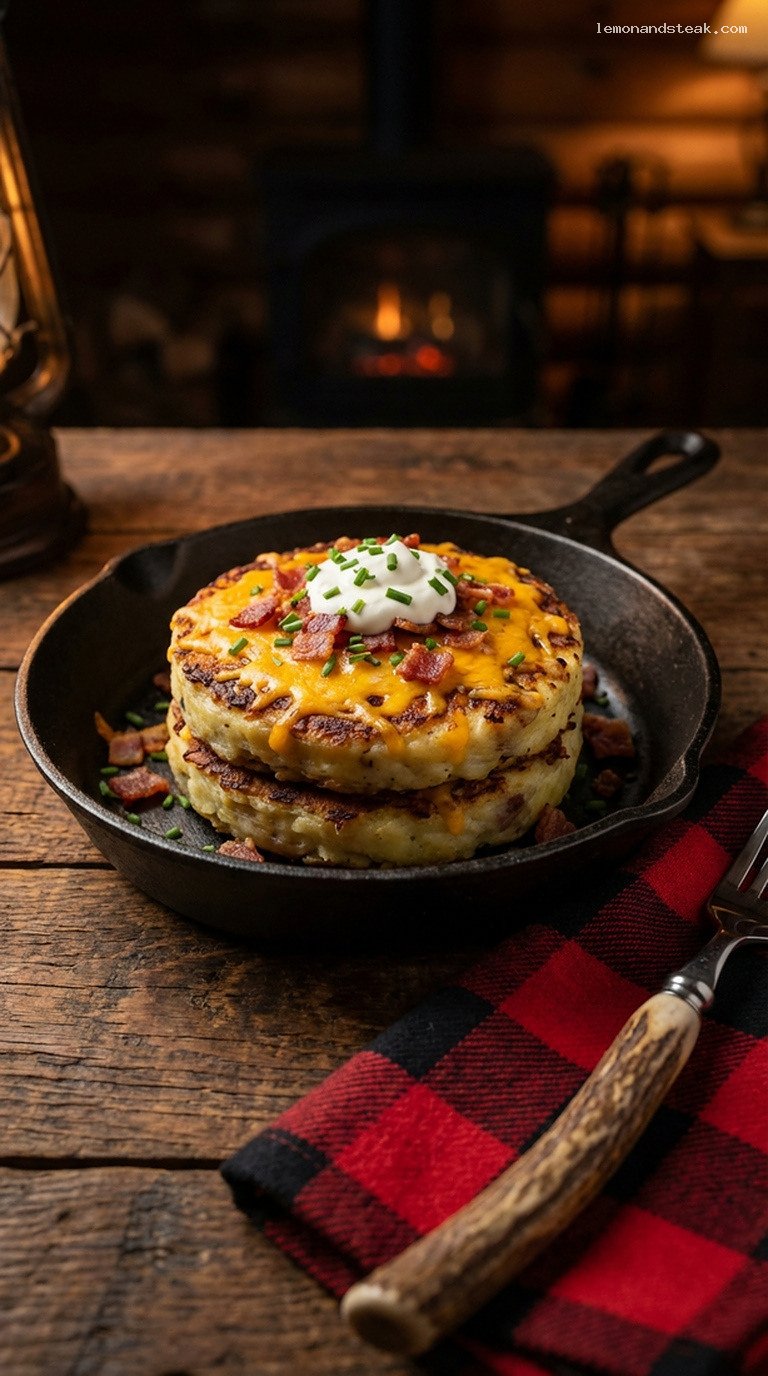
Quick Recipe Version (TL;DR)
Quick Ingredients
- 2 lb (900 g) russet or Yukon gold potatoes, peeled and chunked
- 6 slices (6 oz / 170 g) smoked bacon, diced
- 2 cups (230 g) sharp cheddar, shredded (divided)
- 4 Tbsp (56 g) unsalted butter
- 1/2 cup (120 ml) whole milk or half-and-half
- 2 large eggs, lightly beaten
- 1/3 cup (40 g) all-purpose flour
- 2 green onions, thinly sliced (optional)
- 2 Tbsp chopped fresh chives (optional)
- 1/2 tsp garlic powder, 1/2 tsp smoked paprika
- Salt and freshly ground black pepper
- 3 Tbsp neutral oil for frying (plus bacon fat if desired)
- Optional: sour cream and extra bacon/cheddar for serving
Do This
- 1. Boil potatoes in salted water 15–20 minutes until very tender; drain well and let steam dry.
- 2. While potatoes cook, fry diced bacon until crisp; drain on paper towels, reserve 1–2 Tbsp bacon fat.
- 3. Mash hot potatoes with butter, milk, 1 cup cheddar, bacon, green onions, spices, salt, and pepper; cool slightly, then mix in eggs and flour.
- 4. Chill mixture 20–30 minutes, then form 8 thick patties (about 3 inches wide, 3/4 inch thick).
- 5. Pan-fry patties in oil/bacon fat over medium heat 4–5 minutes per side until deep golden and crisp.
- 6. Top each cake with a generous pinch of cheddar; cover pan 1–2 minutes to melt.
- 7. Stack 2 cakes per plate, garnish with extra bacon, chives, and sour cream; serve hot.
Why You’ll Love This Recipe
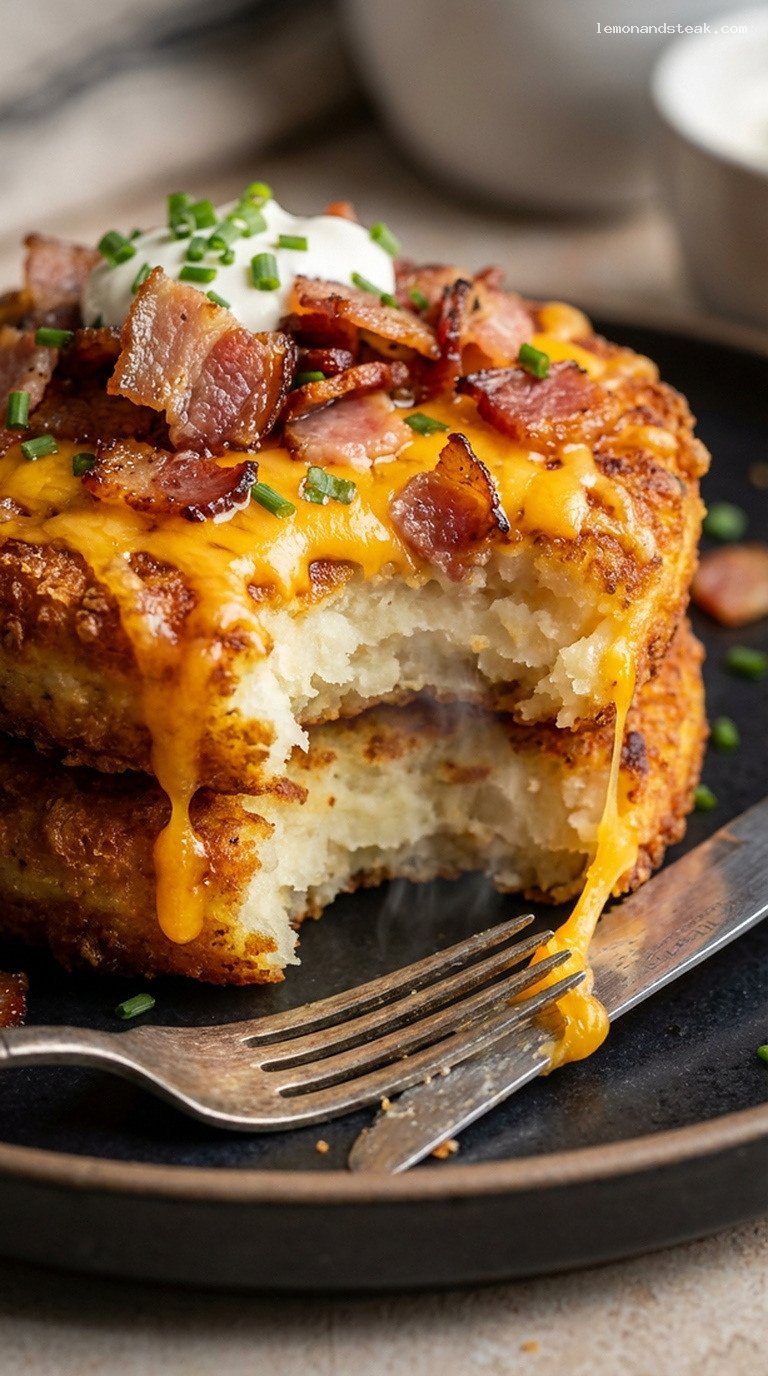
- All the comfort of creamy mashed potatoes, but with a crisp, golden crust that crackles when you cut into it.
- Loaded with smoky bacon and sharp cheddar, then stacked for a restaurant-worthy presentation at home.
- Flexible enough to be a cozy main dish with a salad, or a hearty side alongside steak, chicken, or roasted veggies.
- Make-ahead friendly: shape the cakes in advance, then pan-fry and melt the cheese right before serving.
Grocery List
- Produce: Russet or Yukon gold potatoes, green onions, fresh chives (optional)
- Dairy: Sharp cheddar cheese, unsalted butter, whole milk or half-and-half, sour cream (optional)
- Pantry: All-purpose flour, garlic powder, smoked paprika, salt, black pepper, neutral frying oil (canola, vegetable, or sunflower)
Full Ingredients
For the Potato Cakes
- 2 lb (900 g) russet or Yukon gold potatoes, peeled and cut into 1 1/2-inch chunks
- 1 1/2 tsp kosher salt (for boiling water), plus more to taste
- 4 Tbsp (56 g) unsalted butter
- 1/2 cup (120 ml) whole milk or half-and-half, warmed
- 1 cup (115 g) sharp cheddar cheese, shredded
- 6 slices (about 6 oz / 170 g) smoked bacon, diced
- 2 green onions, thinly sliced (white and green parts; optional but recommended)
- 1/2 tsp garlic powder
- 1/2 tsp smoked paprika
- 1/2 tsp freshly ground black pepper (plus more to taste)
- 2 large eggs, lightly beaten
- 1/3 cup (40 g) all-purpose flour
For Frying and Melting the Cheese
- 3 Tbsp neutral oil (canola, vegetable, or sunflower), divided
- 1–2 Tbsp reserved bacon fat (optional, for extra flavor)
- 1 cup (115 g) sharp cheddar cheese, shredded (for topping the cakes)
For Serving and Stacking
- 1/4–1/2 cup (60–120 ml) sour cream, for dolloping (optional)
- 2 Tbsp chopped fresh chives or extra sliced green onions, for garnish
- Extra crispy bacon bits (from above), for sprinkling on top
- Freshly ground black pepper, to finish
Step-by-Step Instructions
Step 1: Cook and Dry the Potatoes
Place the peeled, chunked potatoes in a large pot and cover with cold water by about 1 inch. Add 1 1/2 teaspoons of kosher salt. Bring to a boil over high heat, then reduce to a gentle boil and cook for 15–20 minutes, or until the potatoes are very tender when pierced with a fork.
Drain the potatoes well in a colander. Return them to the hot pot and set the pot over low heat for 1–2 minutes, gently shaking. This helps excess moisture evaporate and gives you fluffier, less gummy cakes. Remove from the heat and let the potatoes sit uncovered for another 2–3 minutes to steam-dry.
Step 2: Fry the Smoked Bacon
While the potatoes cook, place the diced smoked bacon in a large skillet or cast iron pan. Turn the heat to medium and cook, stirring occasionally, for 8–10 minutes or until the bacon is deeply browned and crisp.
Using a slotted spoon, transfer the bacon to a paper towel–lined plate to drain. Carefully pour the bacon fat into a heatproof bowl, then return 1–2 tablespoons of the fat to the skillet if you want extra smoky flavor for frying later. Set the skillet aside; you will use it again to crisp the potato cakes.
Step 3: Mash and Flavor the Potato Base
Add the butter to the hot potatoes and mash with a potato masher or ricer until mostly smooth and fluffy. Pour in the warm milk or half-and-half and continue mashing or stirring until creamy but still fairly thick. You want a firmer consistency than regular mashed potatoes so the cakes hold their shape.
Stir in 1 cup shredded cheddar, the cooked bacon (reserve a small handful for garnish if you like), sliced green onions (if using), garlic powder, smoked paprika, 1/2 teaspoon black pepper, and a pinch or two of extra salt to taste. Let the mixture cool for about 5 minutes so it is warm but not hot.
Once slightly cooled, add the beaten eggs and flour. Mix gently but thoroughly until no dry flour remains and the mixture holds together easily when pressed. If it feels very loose, sprinkle in an extra tablespoon of flour.
Step 4: Chill and Shape the Potato Cakes
Transfer the potato mixture to a shallow bowl or baking dish, cover, and refrigerate for 20–30 minutes. This brief chill makes the mixture much easier to shape and helps the cakes keep their form while frying.
When ready to shape, lightly oil your hands. Divide the mixture into 8 equal portions. Roll each portion into a ball, then gently flatten into a thick patty about 3 inches wide and 3/4 inch thick. Press any cracks back together so the edges are smooth. Place the shaped patties on a parchment-lined baking sheet or plate.
Step 5: Pan-Fry Until Crisp and Golden
Heat 1 1/2 tablespoons of neutral oil plus 1 tablespoon of bacon fat (if using) in your large skillet or cast iron pan over medium heat. When the oil shimmers, carefully add 4 potato cakes, leaving space between them. Do not overcrowd the pan.
Fry for 4–5 minutes per side, or until each cake is deeply golden brown and crisp, adjusting the heat as needed so they do not burn before the centers heat through. Transfer the cooked cakes to a paper towel–lined plate or a wire rack set over a baking sheet. Repeat with the remaining oil and cakes. Keep warm in a low oven (about 200°F / 95°C) if desired.
Step 6: Melt the Cheddar and Build the Stacks
Once all the cakes are fried, return them to the skillet (work in batches if needed) and reduce the heat to low. Sprinkle a generous layer of the remaining 1 cup shredded cheddar over the tops of the cakes.
Cover the pan with a lid and let the cheese melt for 1–2 minutes, until glossy and stretchy. To assemble, place one cheesy potato cake on each plate, cheese side up. Top with a small spoonful of sour cream and a few bacon bits if you like. Gently set a second potato cake on top to create a stack, again with the cheesy side up so you see melted cheddar on top.
Step 7: Garnish and Serve Hot
Finish each stack with another small dollop of sour cream, a sprinkle of the reserved bacon bits, and a shower of fresh chives or green onions. Add a final twist of freshly ground black pepper over the top for a cozy, steakhouse-style touch.
Serve immediately while the cakes are hot, the edges are crisp, and the cheddar is still soft and melty. These stacks are hearty enough to be a main dish with a simple green salad, or a luxurious side next to grilled or roasted meats.
Pro Tips
- Dry the potatoes well: Letting the potatoes steam in the hot pot after draining is key. Less moisture means crisper cakes that do not fall apart.
- Chill before shaping: Even 20 minutes in the fridge makes the mixture much easier to handle and helps the cakes keep their edges while frying.
- Use medium heat, not high: Too-high heat will burn the outside before the centers warm through. Medium heat gives you an even, deep golden crust.
- Do not flip too early: Let the cakes form a solid crust before turning (about 4–5 minutes). If they resist releasing from the pan, give them another minute.
- Shred your own cheddar: Freshly shredded cheese melts more smoothly than pre-shredded, which often contains anti-caking agents.
Variations
- Loaded Baked Potato Style: Add 1/4 cup sour cream directly into the mashed potato mixture for extra tang, and top the finished stacks with more sour cream, chives, and a drizzle of hot sauce.
- Extra Smoky Chipotle Version: Replace the smoked paprika with 1 teaspoon finely minced chipotle in adobo and add an extra slice or two of smoked bacon. The gentle heat pairs beautifully with the rich cheddar.
- Vegetarian Cheddar and Onion Cakes: Omit the bacon and bacon fat. Add 1 small finely diced sautéed onion and an extra 1/4 cup cheddar to the potato mixture, and use only neutral oil for frying.
Storage & Make-Ahead
To make ahead: Prepare the potato mixture through Step 3, then refrigerate, covered, for up to 24 hours. Shape the cakes up to 8 hours ahead and keep them chilled, well covered, until ready to fry.
To store leftovers: Cool completely, then refrigerate the cooked potato cakes (without extra sour cream on top) in an airtight container for up to 3 days. Reheat in a 350°F (175°C) oven for 10–15 minutes, or in a skillet over medium heat with a small splash of oil until hot and crisp again. Add fresh cheese on top during the last few minutes so it melts nicely.
Freezing: For best texture, freeze after frying but before topping with sour cream. Arrange the cooled cakes in a single layer on a baking sheet, freeze until solid, then transfer to a freezer bag. Freeze for up to 2 months. Reheat from frozen in a 375°F (190°C) oven for 20–25 minutes, then add cheese and melt just before serving.
Nutrition (per serving)
Approximate values for one serving (2 stacked potato cakes with cheese and a small amount of sour cream): about 700 calories, 36 g fat, 60 g carbohydrates, 27 g protein, 3 g fiber, and 1050 mg sodium. Values will vary based on the exact brands of ingredients used and how generously you top with cheese, bacon, and sour cream.
Leave a Reply