
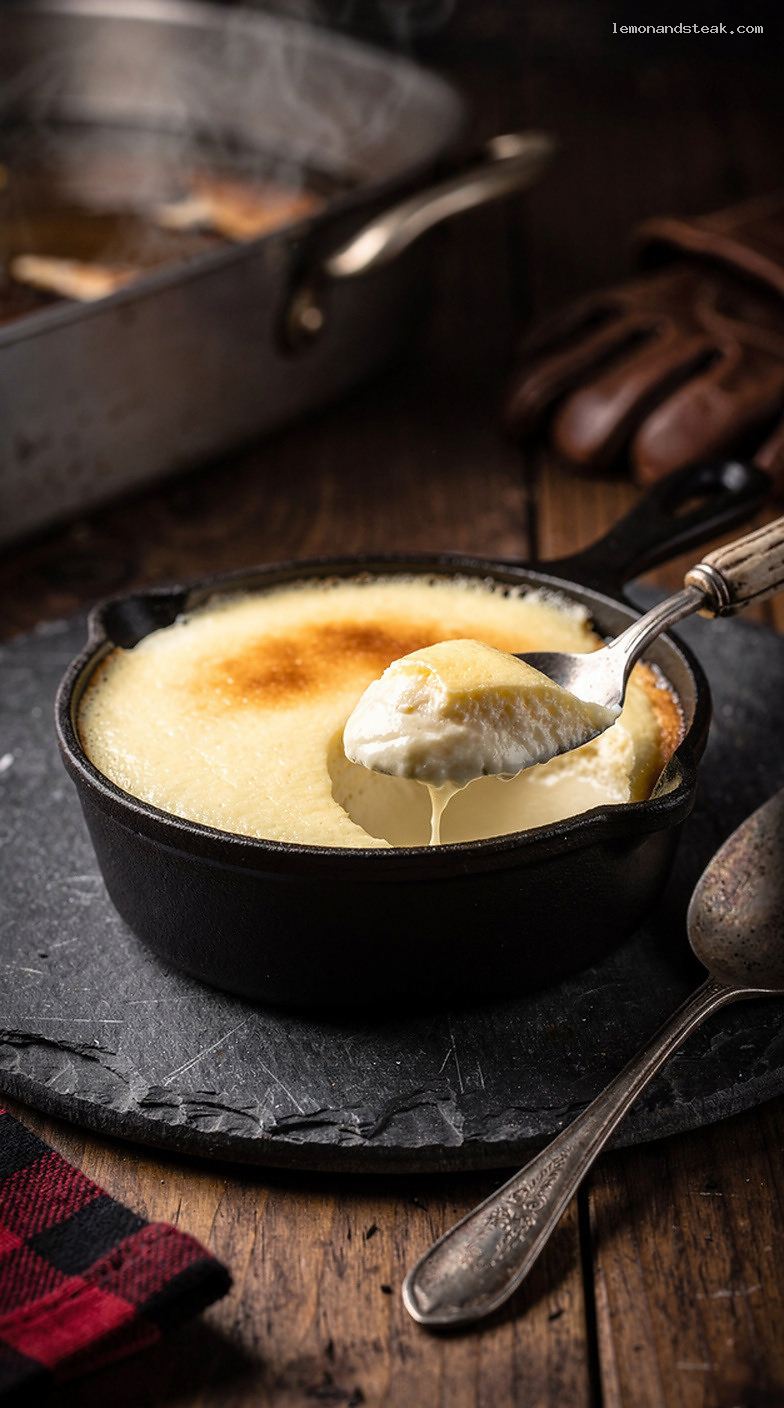
Quick Recipe Version (TL;DR)
Quick Ingredients
- 4 large eggs
- 2 cups (480 ml) whole milk
- 1/2 cup (100 g) granulated sugar
- 2 teaspoons vanilla extract
- About 6 cups (1.4 L) boiling water (for the water bath)
Do This
- 1) Heat oven to 325°F (163°C). Set 6 (6-oz) ramekins in a roasting pan.
- 2) Warm milk to steaming (not boiling), about 160–170°F (71–77°C).
- 3) Whisk eggs + sugar until smooth, then whisk in vanilla.
- 4) Slowly whisk warm milk into egg mixture. Strain for extra-silky custard.
- 5) Pour into ramekins. Add boiling water to the pan halfway up the sides.
- 6) Bake 30–35 minutes until edges are set and centers still gently wobble.
- 7) Cool 30 minutes, then chill at least 2 hours before serving.
Why You’ll Love This Recipe
- Silky, classic texture: a gentle water-bath bake keeps the custard smooth, not curdled.
- Simple ingredients: just eggs, milk, sugar, and vanilla (plus water for baking).
- Make-ahead friendly: it actually gets better after chilling.
- Beginner approachable: clear doneness cues so you don’t have to guess.
Grocery List
- Produce: None
- Dairy: Whole milk, large eggs
- Pantry: Granulated sugar, vanilla extract
Full Ingredients
Custard
- 4 large eggs (about 200 g without shells)
- 1/2 cup (100 g) granulated sugar
- 2 teaspoons vanilla extract
- 2 cups (480 ml) whole milk
For the Water Bath (Bain-Marie)
- About 6 cups (1.4 L) boiling water (enough to come halfway up the ramekins)
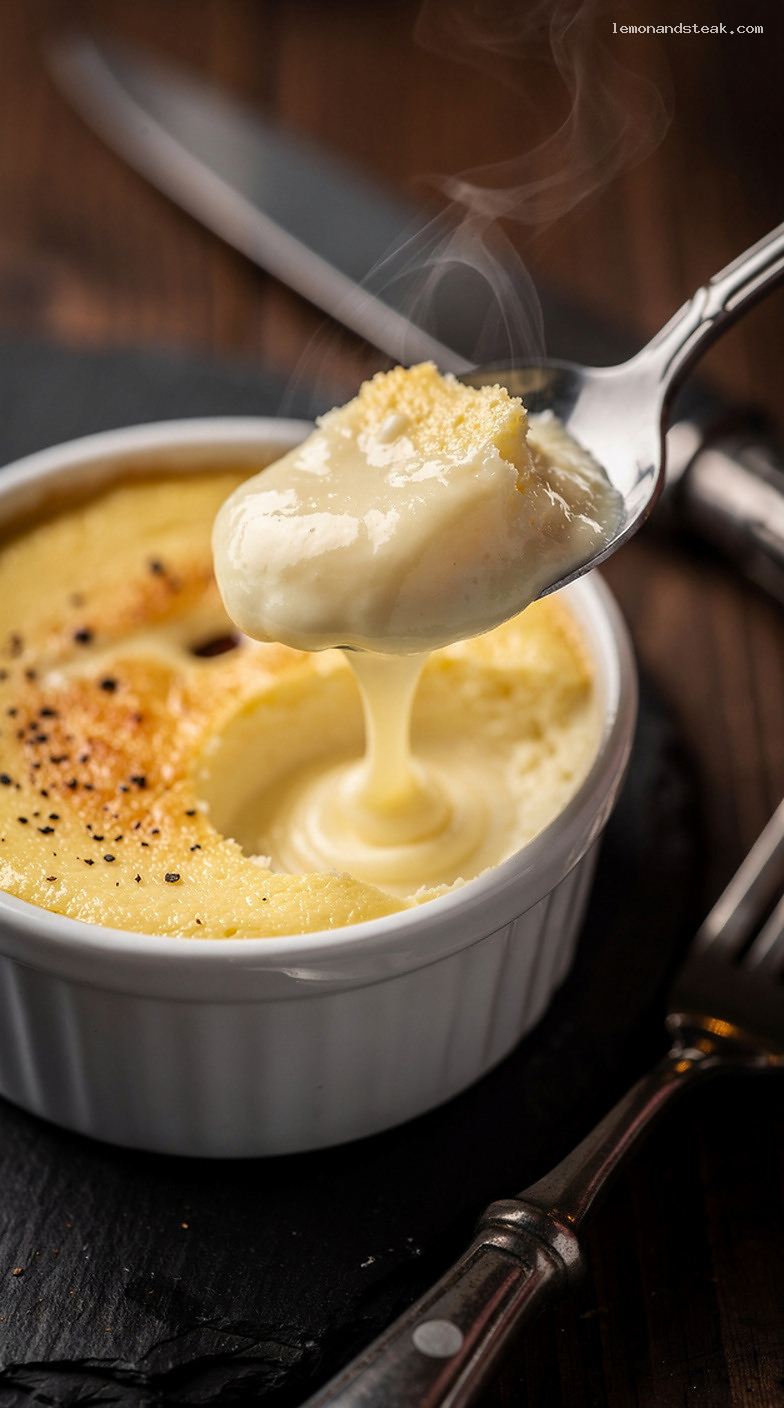
Step-by-Step Instructions
Step 1: Preheat the oven and set up your pan
Preheat the oven to 325°F (163°C).
Place 6 ramekins (6-ounce/180 ml each) into a deep roasting pan or baking dish with high sides. Set a kettle or pot of water on to boil so it’s ready when you need it.
Step 2: Warm the milk (don’t boil it)
Pour 2 cups (480 ml) whole milk into a small saucepan. Warm over medium heat until it’s steaming and very hot to the touch, but not bubbling hard. If you like to be exact, aim for 160–170°F (71–77°C).
Turn off the heat.
Step 3: Whisk eggs, sugar, and vanilla until smooth
In a medium bowl, whisk together the 4 large eggs and 1/2 cup (100 g) granulated sugar just until the sugar is dissolved and the mixture looks smooth and slightly lighter in color (about 30–45 seconds). Whisk in 2 teaspoons vanilla extract.
Tip: Don’t whip aggressively or you’ll build extra foam, which can lead to bubbles on top of the finished custard.
Step 4: Temper with warm milk for a silky custard
While whisking the egg mixture constantly, slowly pour in the warm milk in a thin stream. This gentle approach (called tempering) helps prevent the eggs from scrambling.
Once all the milk is added, whisk just until evenly combined.
Step 5: Strain, then fill the ramekins
For the smoothest possible texture, pour the mixture through a fine-mesh strainer into a large measuring jug or bowl with a spout. This removes any tiny bits of cooked egg and helps create that classic custard “silk.”
Divide the custard evenly among the ramekins.
Step 6: Add the water bath (bain-marie)
Carefully place the roasting pan on the oven rack (or pull the rack out slightly for easier pouring). Then carefully pour in boiling water until it reaches about halfway up the sides of the ramekins.
This water bath keeps the oven’s heat gentle and steady, which is the secret to a tender, creamy set.
Step 7: Bake until gently set
Bake at 325°F (163°C) for 30 to 35 minutes, until the custards are set around the edges but the centers still have a soft wobble when you nudge the pan.
If you want an exact internal cue, the custard is typically done around 175–180°F (79–82°C) in the center.
Avoid baking until fully firm all the way through; overbaking can make custard grainy.
Step 8: Cool, then chill for the best texture
Carefully remove the ramekins from the water bath (tongs or a towel helps) and set them on a rack. Cool for 30 minutes at room temperature.
Cover each ramekin and refrigerate for at least 2 hours (or up to overnight). Serve chilled, or let sit at room temperature for 10 minutes if you prefer it less cold.
Pro Tips
- Use whole milk: it gives the custard a fuller body and silkier mouthfeel.
- Go low and slow: 325°F (163°C) plus a water bath prevents curdling and keeps the custard tender.
- Strain every time: it’s the easiest step that makes your custard taste “bakery smooth.”
- Watch the wobble: pull the custards when the center still jiggles slightly; residual heat will finish the set.
- Prevent water splashes: pour the water bath after the pan is on the rack, and pour slowly.
Variations
- Deeper vanilla flavor: replace the vanilla extract with 1 tablespoon vanilla bean paste (same volume, stronger flavor and visible specks).
- Citrus twist: whisk in 1 teaspoon finely grated orange or lemon zest with the sugar (bright and fragrant).
- Warm spice finish: dust the tops with a small pinch of freshly grated nutmeg just before serving.
Storage & Make-Ahead
Cover and refrigerate the baked custards for up to 3 days. For the cleanest surface, cover each ramekin once fully cooled (after the initial 30-minute cool) to reduce condensation. This recipe is ideal for making ahead: bake, chill overnight, and serve the next day.
Nutrition (per serving)
Approximate, based on 6 servings: 165 calories, 7 g protein, 21 g carbohydrates, 6 g fat, 4 g saturated fat, 150 mg sodium, 95 mg cholesterol.
Leave a Reply