
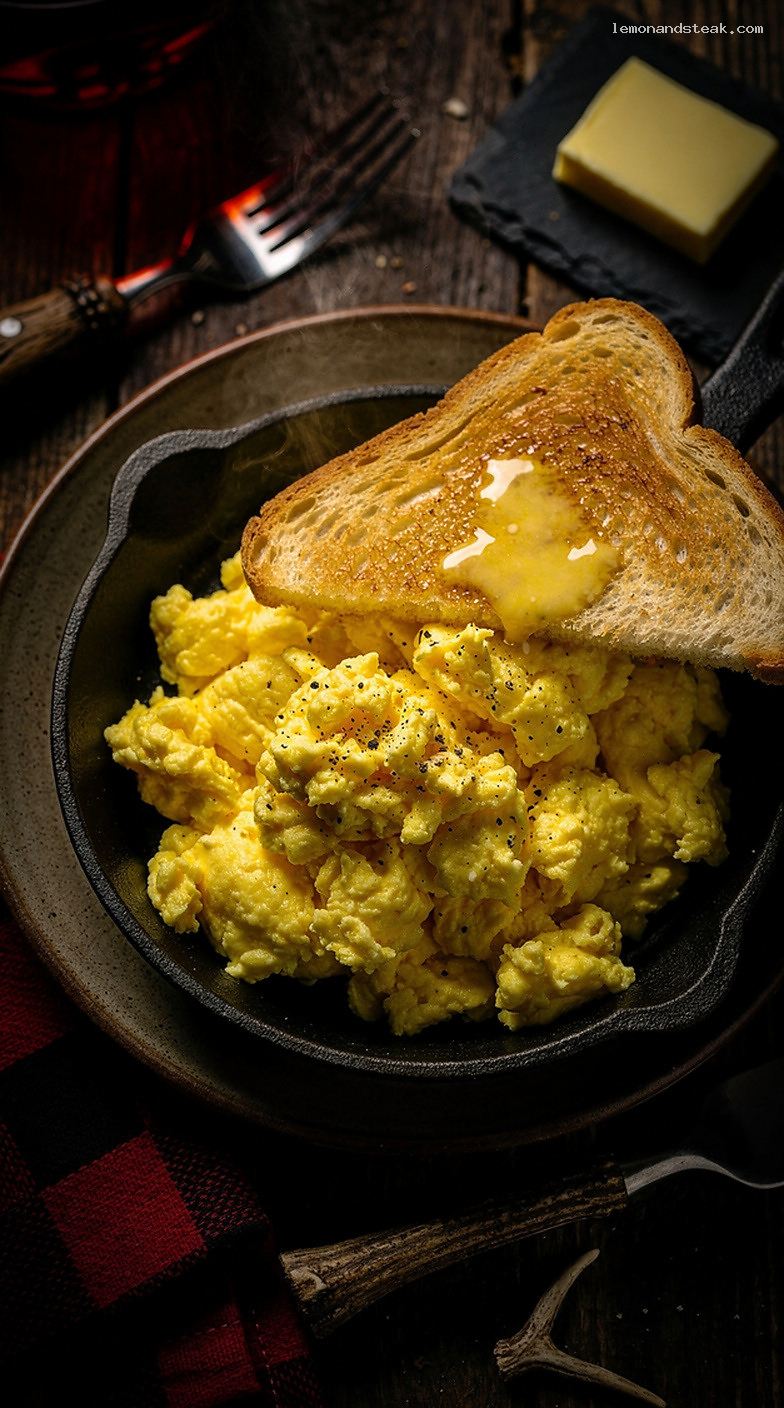
Quick Recipe Version (TL;DR)
Quick Ingredients
- 4 large eggs
- 2 tablespoons whole milk (or 1 tablespoon heavy cream)
- 2 tablespoons unsalted butter, divided
- 1/4 teaspoon kosher salt (plus more to taste)
- 1/8 teaspoon freshly ground black pepper (plus more to taste)
- 2 slices sandwich bread (for toast)
Do This
- 1) Whisk 4 eggs with milk (or cream), salt, and pepper for 20–30 seconds.
- 2) Heat a nonstick skillet over low heat (aim for 250–275°F pan surface) for 1 minute.
- 3) Melt 1 1/2 tablespoons butter in the pan until foamy, not browned (about 30–45 seconds).
- 4) Pour in eggs and stir slowly with a spatula, scraping the pan, 3–5 minutes.
- 5) When eggs are softly set and still glossy, remove from heat; stir in remaining 1/2 tablespoon butter.
- 6) Toast bread, plate eggs immediately, and finish with extra pepper (and salt if needed).
Why You’ll Love This Recipe
- Comforting and classic: Soft, creamy curds with buttery richness and simple seasoning.
- Reliable: Gentle heat and a clear “stop point” keep the eggs from turning dry.
- Fast: Ready in about 10 minutes, start to finish.
- Perfect with toast: The creamy eggs soak into crisp edges for an easy, satisfying breakfast.
Grocery List
- Produce: None (optional: 1 tablespoon minced chives for garnish)
- Dairy: 4 large eggs, unsalted butter, whole milk or heavy cream
- Pantry: Kosher salt, black pepper, sandwich bread
Full Ingredients
For the creamy scrambled eggs
- 4 large eggs
- 2 tablespoons whole milk (or 1 tablespoon heavy cream for extra richness)
- 2 tablespoons unsalted butter, divided (1 1/2 tablespoons for the pan + 1/2 tablespoon to finish)
- 1/4 teaspoon kosher salt
- 1/8 teaspoon freshly ground black pepper, plus more to finish
For serving
- 2 slices sandwich bread, toasted
- Optional: 1/2 tablespoon unsalted butter for spreading on toast
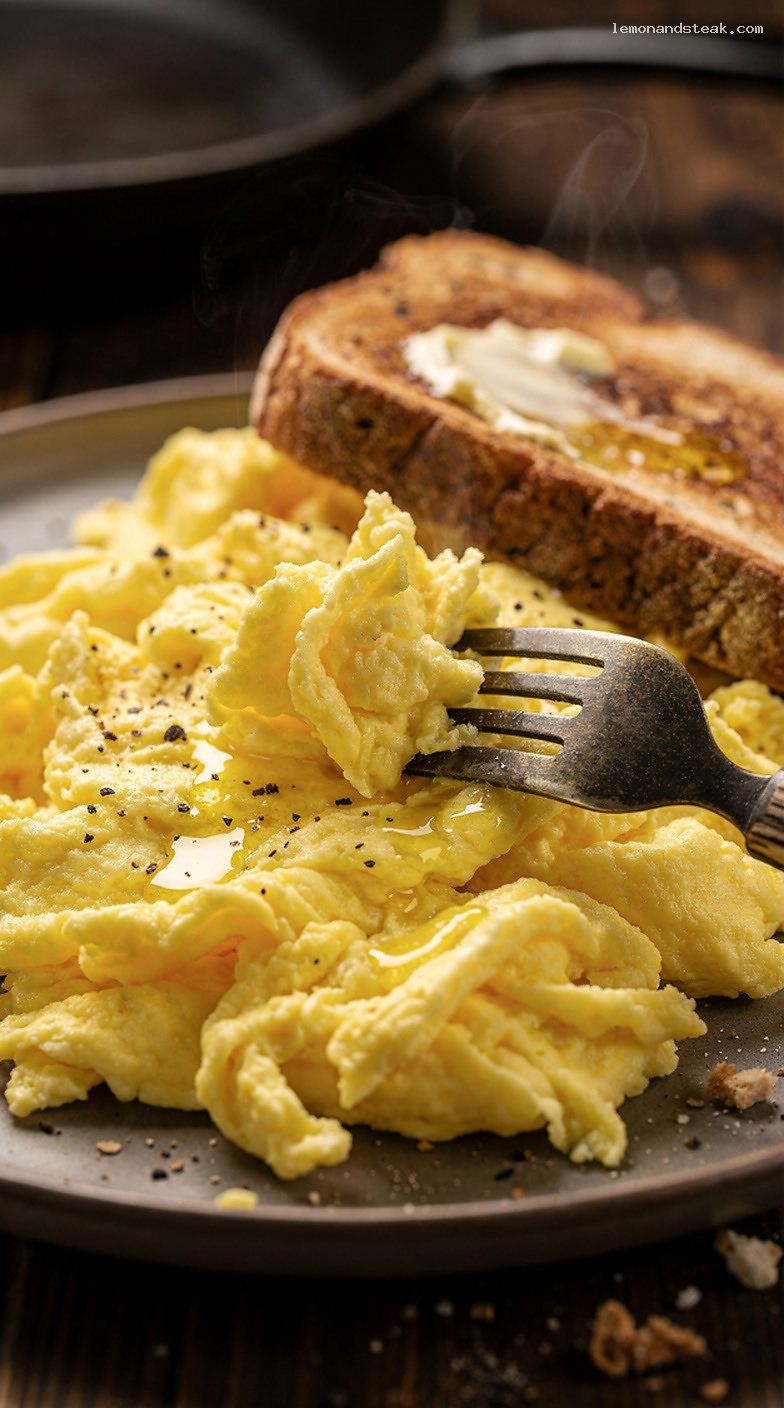
Step-by-Step Instructions
Step 1: Warm your plates and set up your tools
Scrambled eggs are at their best piping hot, and they cool quickly. If you can, warm two plates in a 200°F oven for 5 minutes, or rinse them with hot water and dry well. Set a silicone spatula (or wooden spoon) by the stove so you can stir continuously once the eggs hit the pan.
Step 2: Whisk the eggs with milk (or cream), salt, and pepper
Crack the 4 eggs into a medium bowl. Add 2 tablespoons whole milk (or 1 tablespoon heavy cream), 1/4 teaspoon kosher salt, and 1/8 teaspoon black pepper.
Whisk vigorously for 20–30 seconds, until the mixture looks uniform and slightly frothy on top. This helps the eggs cook up tender and creamy.
Step 3: Preheat the skillet gently, then melt most of the butter
Place an 8- or 10-inch nonstick skillet over low heat. Let it warm for 1 minute. If you have an infrared thermometer, aim for a pan surface temperature of about 250–275°F.
Add 1 1/2 tablespoons of the butter. Let it melt until foamy but not browned, about 30–45 seconds. (If the butter starts to brown, the heat is too high—lower it and give the pan 30 seconds to cool.)
Step 4: Pour in the eggs and stir slowly to form creamy curds
Pour the egg mixture into the skillet. Wait 10 seconds, then begin stirring slowly and constantly with your spatula, scraping the bottom and sweeping the eggs from the edges toward the center.
Keep the heat on low and stir gently for 3–5 minutes. You’re looking for soft curds that are just coming together. The eggs should still look a little glossy and slightly loose in spots—this is the key to a creamy finish.
Step 5: Stop the cooking at the glossy stage and finish with butter
When the eggs are softly set but still shiny and moist, remove the skillet from the heat. Immediately add the remaining 1/2 tablespoon butter and fold it in. The residual heat will finish cooking the eggs without drying them out.
Taste and adjust with a pinch more salt and a few grinds of black pepper if needed.
Step 6: Toast the bread and serve right away
Toast 2 slices of bread to your preference. For skillet toast, set a pan over medium heat (325–350°F) and toast each side for about 2 minutes, until golden.
Plate the scrambled eggs immediately on warm plates, with toast alongside (buttered if you like). Finish with a little extra black pepper for a classic look and flavor.
Pro Tips
- Low and slow wins: Keep the heat low (around 250–275°F pan surface) for creamy curds instead of dry, crumbly eggs.
- Pull early: Take the pan off the heat while the eggs still look slightly glossy. They will keep cooking from residual heat.
- Finish with butter off-heat: That final 1/2 tablespoon adds shine and helps stop the eggs from overcooking.
- Use a flexible spatula: A silicone spatula makes it easier to scrape the pan clean and form soft curds.
- Season thoughtfully: The listed salt amount is balanced for 4 eggs, but always taste at the end and adjust.
Variations
- Extra-rich “creamier” eggs: Use 1 tablespoon heavy cream instead of milk and add 1 additional teaspoon butter at the end.
- Cheesy scrambled eggs: Add 1/4 cup (28 g) finely shredded cheddar during the last 30 seconds of cooking, then remove from heat and fold until melted.
- Herb finish: Top with 1 tablespoon minced chives or parsley right before serving.
Storage & Make-Ahead
Scrambled eggs are best eaten immediately. If you have leftovers, cool them within 1 hour and refrigerate in an airtight container for up to 2 days. Reheat gently in a nonstick skillet over low heat with 1 teaspoon butter (or a splash of milk) for 2–3 minutes, stirring often, just until warmed through. Avoid microwaving on high, which can make the eggs rubbery; if using a microwave, reheat at 50% power in 20-second bursts, stirring between bursts.
Nutrition (per serving)
Approximate, per serving (recipe makes 2 servings; includes 1 slice toast per serving): 390 calories, protein 18 g, carbohydrates 14 g, fat 29 g, saturated fat 13 g, fiber 1 g, sugars 3 g, sodium 520 mg.
Leave a Reply