

Quick Recipe Version (TL;DR)
Quick Ingredients
- 1 lb (450 g) frozen potato pierogi
- 12 oz (340 g) smoked sausage (kielbasa), sliced into 1/4 in coins
- 1 large yellow onion, thinly sliced
- 2 cloves garlic, minced
- 3 tbsp unsalted butter, divided
- 1 tbsp olive oil
- 1/4 cup low-sodium chicken broth or water
- 1/2 tsp smoked paprika
- 1/4 tsp dried thyme
- Pinch red pepper flakes (optional)
- Salt and black pepper
- 2 tbsp chopped fresh parsley or chives
- 1/2 cup sour cream + 1 tsp horseradish or Dijon (optional, for serving)
Do This
- 1. Slice onion and sausage; mince garlic. Stir together sour cream and horseradish/Dijon; chill.
- 2. In a large skillet over medium heat, cook onion in 1 tbsp butter and olive oil with a pinch of salt until deeply golden, 12–15 minutes. Stir in garlic; transfer to a bowl.
- 3. Brown sausage in the same skillet over medium-high heat until crisp on both sides, 6–8 minutes; add to onions.
- 4. Meanwhile, boil pierogi in salted water until they float, 3–5 minutes. Drain very well and pat dry.
- 5. In the same skillet, melt remaining 2 tbsp butter over medium heat. Add pierogi in a single layer; sear until golden and crisp, 2–3 minutes per side, letting the butter turn nutty brown.
- 6. Return onions and sausage to the pan. Add smoked paprika, thyme, red pepper flakes, broth, salt, and pepper; toss and cook 2–3 minutes.
- 7. Top with parsley or chives. Serve hot with dollops of the tangy sour cream mixture.
Why You’ll Love This Recipe
- Smoky sausage, crisp-edged pierogi, and sweet caramelized onions come together in one hearty skillet.
- Browned butter adds a rich, nutty flavor that makes this taste restaurant-level with very little effort.
- Uses freezer-friendly pierogi and pantry staples, so it is easy to throw together on a busy night.
- Cooks in one pan (plus a pot for boiling), making cleanup simple and fast.
Grocery List
- Produce: 1 large yellow onion, 2 cloves garlic, fresh parsley or chives
- Dairy: Unsalted butter, sour cream
- Pantry: Frozen potato pierogi, smoked sausage (kielbasa), olive oil, low-sodium chicken broth (or water), smoked paprika, dried thyme, crushed red pepper flakes, prepared horseradish or Dijon mustard, kosher salt, black pepper
Full Ingredients
For the Smoked Sausage & Pierogi Skillet
- 1 lb (450 g) frozen potato pierogi (potato or potato-cheese)
- 12 oz (340 g) smoked sausage or kielbasa, sliced into 1/4 inch (6 mm) thick coins on a slight bias
- 1 large yellow onion, thinly sliced (about 2 packed cups / 200 g)
- 2 cloves garlic, minced
- 3 tbsp unsalted butter, divided
- 1 tbsp olive oil (or other neutral oil)
- 1/4 cup (60 ml) low-sodium chicken broth or water
- 1/2 tsp smoked paprika
- 1/4 tsp dried thyme (or 1 tsp finely chopped fresh thyme)
- 1/4 tsp crushed red pepper flakes (optional, for mild heat)
- 1/2 tsp kosher salt, plus more to taste
- 1/4 tsp freshly ground black pepper, plus more to taste
- 2 tbsp chopped fresh parsley or chives, for garnish
For the Tangy Sour Cream (Optional but Recommended)
- 1/2 cup (120 g) full-fat sour cream
- 1 tsp prepared horseradish or 1 tsp Dijon mustard
- Pinch of kosher salt
- 1–2 tsp water or milk, to thin slightly if desired
Step-by-Step Instructions
Step 1: Prep the Ingredients and Make the Tangy Sour Cream
Thinly slice the onion, mince the garlic, and slice the smoked sausage into 1/4 inch (6 mm) coins on a slight angle. Finely chop the parsley or chives and set aside for garnish.
In a small bowl, stir together the sour cream, horseradish or Dijon, and a pinch of salt. Add a teaspoon or two of water or milk if you prefer it a bit looser for drizzling. Cover and refrigerate while you cook the skillet. This lets the flavors meld and keeps the sour cream nice and cool.
Step 2: Caramelize the Onions
Place a large heavy skillet (ideally 12 inch cast iron or stainless steel) over medium heat (about 325–350°F / 165–175°C surface temperature if measured). Add 1 tbsp unsalted butter and the 1 tbsp olive oil. Once the butter has melted and is shimmering, add the sliced onion and 1/4 tsp of the kosher salt.
Cook, stirring every couple of minutes, until the onions are soft, deeply golden, and caramelized, 12–15 minutes. If they start to brown too quickly or stick badly, reduce the heat slightly and add a tablespoon of water to loosen the fond (the browned bits) from the bottom of the pan. When the onions are nicely golden, stir in the minced garlic and cook just until fragrant, about 30 seconds. Transfer the onion and garlic mixture to a bowl and set aside.
Step 3: Brown the Smoked Sausage
Return the same skillet to medium-high heat. If the pan looks very dry, add 1–2 tsp of oil. Arrange the sausage slices in a single layer and let them cook undisturbed until the bottoms are browned and crisp at the edges, about 3–4 minutes.
Flip the slices and cook for another 2–3 minutes on the second side until browned and heated through. You are aiming for nicely rendered, slightly crisp edges and a deep mahogany color. Transfer the sausage to the bowl with the onions, leaving as much of the flavorful fat in the skillet as possible. Turn off the heat while you finish cooking the pierogi.
Step 4: Boil the Pierogi Until Tender
While the onions and sausage are cooking, bring a large pot of well-salted water to a rolling boil over high heat. Add the frozen pierogi, stirring gently so they do not stick to the bottom. Return to a gentle boil and cook until the pierogi float to the surface and are fully heated through, 3–5 minutes (or follow the package directions).
Use a slotted spoon to transfer the pierogi to a colander. Let them drain very well, then spread them out on a clean kitchen towel or paper towels and gently pat dry. Removing surface moisture is important so they can sear and crisp nicely in the next step instead of steaming.
Step 5: Pan-Sear the Pierogi in Browned Butter
Return the skillet to medium heat (about 325–350°F / 165–175°C). Add the remaining 2 tbsp unsalted butter. When the butter has fully melted and starts to foam, add the drained and dried pierogi in a single layer. Do not overcrowd; work in two batches if needed.
Cook the pierogi without moving them for 2–3 minutes, until the bottoms are deeply golden and crisp. Flip and cook the second side another 2–3 minutes. As they cook, the butter will continue to sizzle; watch for it to turn a rich golden-brown color and smell nutty, with tiny brown milk solids at the bottom of the pan. Swirl the pan occasionally so the browned butter coats the pierogi. Adjust the heat as needed so the butter browns but does not burn.
Step 6: Bring Everything Together and Season
Once the pierogi are crisp and the butter is browned, reduce the heat to medium-low. Return the caramelized onions and browned sausage to the skillet, along with any juices that collected in the bowl.
Sprinkle in the smoked paprika, dried thyme, crushed red pepper flakes (if using), remaining 1/4 tsp kosher salt, and the black pepper. Pour in the chicken broth or water. Gently toss everything together, scraping up any browned bits from the bottom of the pan. Cook for 2–3 minutes, just until the liquid has mostly evaporated, the flavors have mingled, and everything is hot and glossy with the browned butter sauce. Taste and adjust seasoning with more salt and pepper if needed.
Step 7: Garnish and Serve
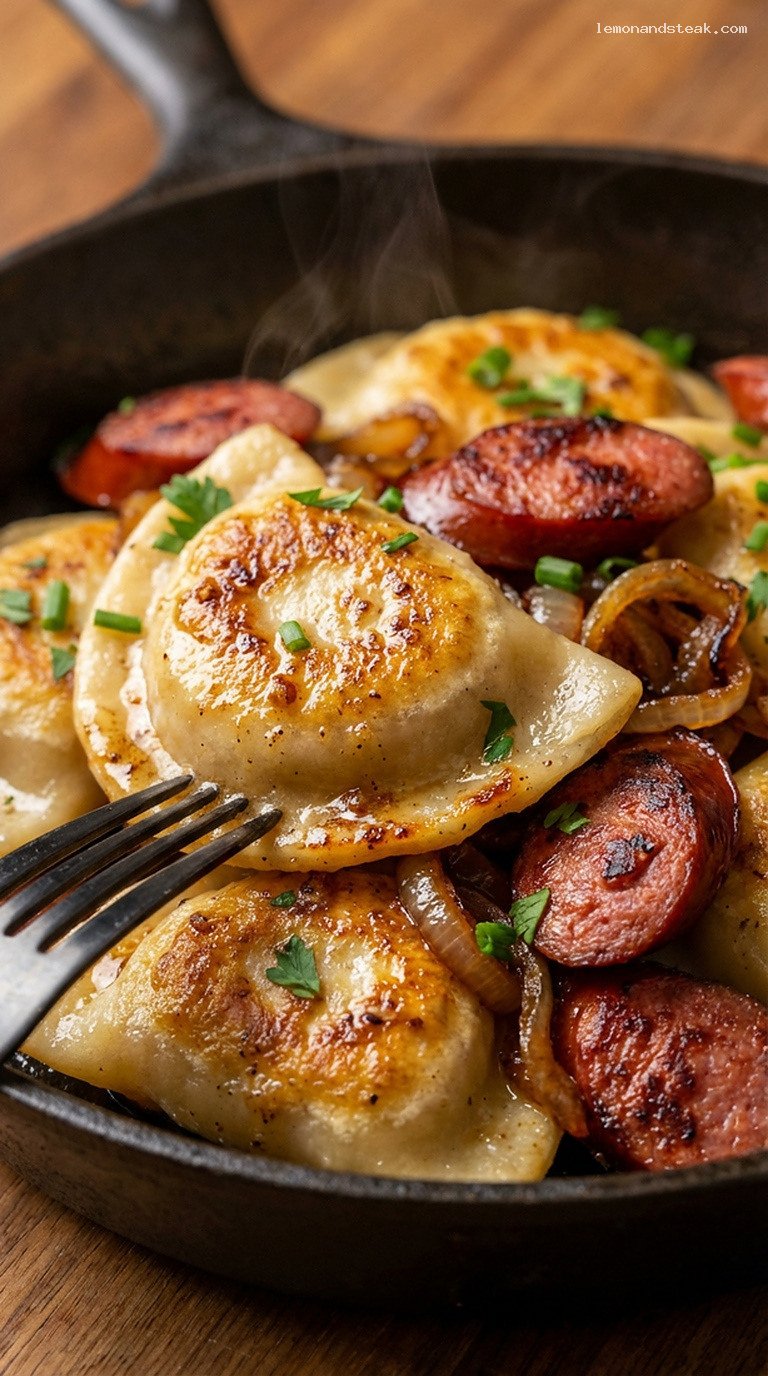
Turn off the heat. Scatter the chopped parsley or chives over the top. You can either serve the skillet family-style straight from the pan, or portion the mixture onto warm plates, making sure each serving has plenty of pierogi, sausage, onions, and a spoonful of the nutty browned butter from the bottom of the pan.
Serve immediately with dollops or drizzles of the tangy sour cream mixture on top or on the side for dipping. The contrast of hot, smoky, buttery skillet and cool, creamy topping is what makes this dish especially satisfying.
Pro Tips
- Dry the pierogi well after boiling so they can sear and crisp instead of steaming in the pan.
- Control the heat for perfect browned butter: stay at medium to medium-low and swirl the pan often. If the butter starts smelling sharp or the specks turn very dark, remove from heat briefly.
- Use a heavy skillet (cast iron or stainless steel) to get deep browning on both the sausage and the pierogi without hot spots.
- Caramelize the onions patiently; low and slow cooking brings out their sweetness and adds a lot of flavor without extra ingredients.
- Finish with acidity: if the dish tastes a bit heavy, a small squeeze of lemon juice or an extra spoonful of tangy sour cream brightens everything up.
Variations
- Smoky Bacon Upgrade: Cook 4–6 slices of chopped thick-cut bacon first, remove to a plate, and use some of the bacon fat instead of oil to cook the onions. Sprinkle the crisp bacon over the finished dish.
- Veggie-Loaded Skillet: Add sliced bell peppers, shredded cabbage, or thinly sliced Brussels sprouts after the onions have caramelized and sauté until tender, then continue with the recipe.
- Extra-Cheesy Finish: In the last 2 minutes of cooking, sprinkle 1/2–3/4 cup shredded sharp cheddar or smoked gouda over the skillet, cover just until melted and gooey.
Storage & Make-Ahead
Store leftover smoked sausage and pierogi skillet in an airtight container in the refrigerator for up to 3 days. Keep the sour cream mixture in a separate container, also refrigerated, for up to 4 days.
To reheat, warm the skillet mixture in a nonstick or cast iron pan over medium heat with a small splash of water or broth, tossing occasionally, until heated through and some crispness returns to the pierogi, 5–7 minutes. You can also reheat individual portions in the microwave, though the pierogi will be softer. Stir the sour cream mixture briefly before serving and add a tiny splash of water if it has thickened too much.
If you would like to work ahead, you can caramelize the onions and brown the sausage up to 2 days in advance. Store them together in the refrigerator. When ready to eat, boil and sear the pierogi fresh, then add the pre-cooked onions and sausage to heat through in the browned butter.
Nutrition (per serving)
Approximate values for 1 of 4 servings (including sour cream topping): about 750 calories, 30 g protein, 52 g carbohydrates, 40 g fat, 4 g fiber, and 1,600 mg sodium. Actual values will vary depending on the specific brands of pierogi, sausage, and dairy you use.
Leave a Reply