
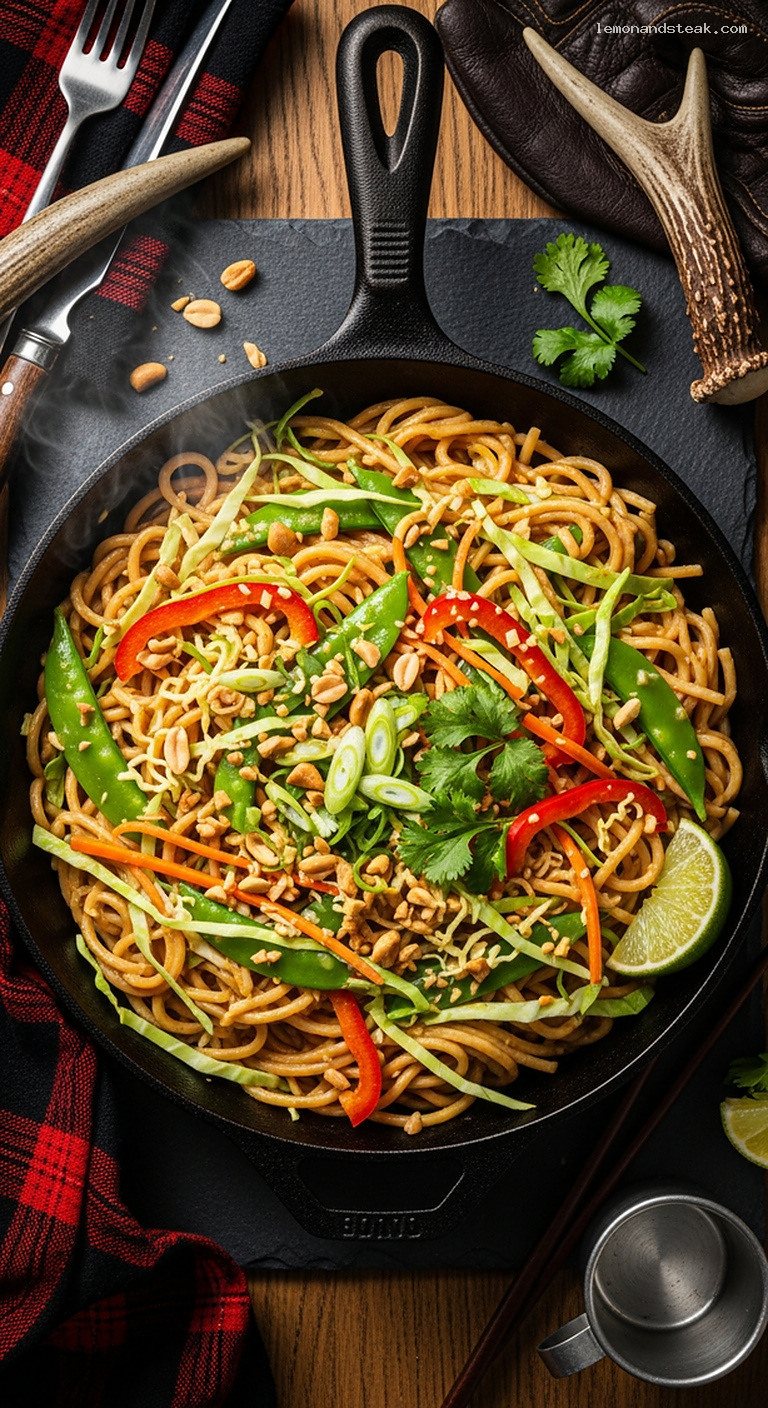
Quick Recipe Version (TL;DR)
Quick Ingredients
- 12 oz (340 g) fully cooked noodles (rice noodles, lo mein, udon, or spaghetti), drained
- 2 tsp neutral oil (plus more as needed)
- 1 red bell pepper, thinly sliced
- 2 cups (140 g) shredded green cabbage
- 1 cup (110 g) shredded carrots
- 1 cup (100 g) snap peas, sliced on the bias (optional)
- 3 green onions, sliced (white and green parts separated)
- 1/2 cup (128 g) creamy peanut butter
- 1/4 cup (60 ml) low-sodium soy sauce
- 2 tbsp (30 ml) fresh lime juice
- 2 tbsp (30 ml) rice vinegar
- 2 tbsp (25 g) packed brown sugar
- 1 tbsp (15 ml) toasted sesame oil
- 2 tsp sriracha (optional)
- 1 garlic clove, finely minced
- 1 tsp fresh ginger, finely grated
- 1/2 cup (120 ml) very hot water (to thin sauce as needed)
- 1/3 cup (45 g) roasted peanuts, chopped
- 1/2 cup (10 g) cilantro leaves (optional)
Do This
- 1. Whisk peanut butter, soy sauce, lime juice, rice vinegar, brown sugar, sesame oil, sriracha, garlic, ginger, and 1/3 cup hot water into a smooth sauce.
- 2. Preheat a cast iron skillet over a medium campfire (or medium heat on a stove) until the surface is about 350–375°F.
- 3. Add 2 tsp oil; stir-fry bell pepper, cabbage, carrots, snap peas, and green onion whites for 4–5 minutes.
- 4. Add cooked noodles and 2–3 tbsp water; toss 1–2 minutes to loosen and heat through.
- 5. Pour in peanut sauce; toss 2–3 minutes until glossy and warmed (aim for 165°F in the center).
- 6. Adjust with extra hot water (1 tbsp at a time) if thick; top with peanuts, green onion greens, cilantro, and more lime.
Why You’ll Love This Recipe
- Perfect for camping: Uses pre-cooked noodles, so dinner comes together fast in one skillet.
- Big flavor, simple method: A bold, creamy Thai-style peanut sauce coats every bite.
- Flexible: Swap in whatever sturdy veggies you have, and add chicken, tofu, or shrimp if you like.
- Minimal cleanup: One skillet, one bowl, and you are done.
Grocery List
- Produce: 1 red bell pepper, green cabbage (or bagged coleslaw mix), carrots, snap peas (optional), green onions, garlic, fresh ginger, limes, cilantro (optional)
- Dairy: None
- Pantry: Creamy peanut butter, low-sodium soy sauce, rice vinegar, brown sugar, toasted sesame oil, sriracha (optional), neutral oil, roasted peanuts, salt, black pepper
Full Ingredients
Noodles and Vegetables
- 12 oz (340 g) fully cooked noodles (rice noodles, lo mein, udon, or spaghetti), drained
- 2 tsp neutral oil (canola, avocado, vegetable), plus more as needed
- 1 red bell pepper, thinly sliced
- 2 cups (140 g) shredded green cabbage (or a bagged coleslaw mix)
- 1 cup (110 g) shredded carrots
- 1 cup (100 g) snap peas, thinly sliced on the bias (optional)
- 3 green onions, sliced, with whites and greens separated
- 2–4 tbsp water, to help loosen noodles and sauce as needed
Peanut Sauce
- 1/2 cup (128 g) creamy peanut butter
- 1/4 cup (60 ml) low-sodium soy sauce
- 2 tbsp (30 ml) fresh lime juice (about 1 large lime)
- 2 tbsp (30 ml) rice vinegar
- 2 tbsp (25 g) packed brown sugar
- 1 tbsp (15 ml) toasted sesame oil
- 2 tsp sriracha (optional, for gentle heat)
- 1 garlic clove, finely minced
- 1 tsp fresh ginger, finely grated
- 1/2 cup (120 ml) very hot water, divided, to thin the sauce
- 1/4 tsp kosher salt (optional; add only after tasting)
For Serving
- 1/3 cup (45 g) roasted peanuts, chopped
- 1/2 cup (10 g) cilantro leaves (optional)
- 1 lime, cut into wedges
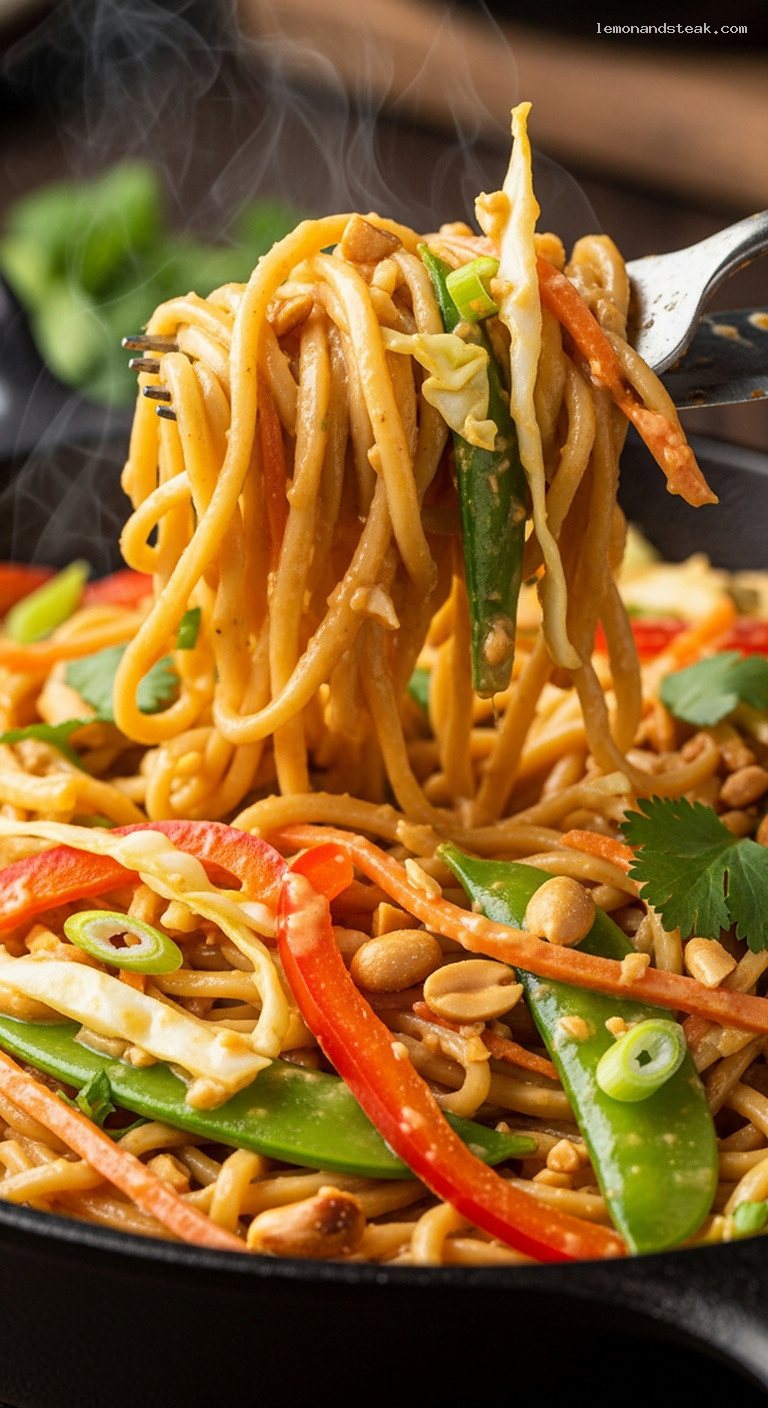
Step-by-Step Instructions
Step 1: Prep noodles and camp setup
If your noodles were cooked ahead and chilled, loosen them now so they are easy to toss later. If they are stuck together, rinse briefly with warm water, drain well, and toss with 1 tsp neutral oil to prevent clumping.
Build your cooking fire and let it burn down to a steady bed of coals. You want consistent, medium heat rather than tall flames for controlled skillet cooking.
Step 2: Whisk the peanut sauce until smooth
In a medium bowl, whisk together 1/2 cup peanut butter, 1/4 cup soy sauce, 2 tbsp lime juice, 2 tbsp rice vinegar, 2 tbsp brown sugar, 1 tbsp toasted sesame oil, 2 tsp sriracha (if using), 1 minced garlic clove, and 1 tsp grated ginger.
Whisk in 1/3 cup (80 ml) very hot water until the sauce turns creamy and pourable. It should ribbon off the whisk. Set aside; you will thin it more later if needed.
Step 3: Preheat the skillet to the right temperature
Set a 10–12 inch cast iron skillet over the coals and preheat for 3 minutes. The goal is a skillet surface temperature of 350–375°F (if using an infrared thermometer). If you do not have one, flick a few drops of water into the pan; they should sizzle and evaporate quickly, but not violently smoke.
Campfire heat varies. If the pan starts smoking heavily at any point, move it slightly off the hottest coals for 30–60 seconds to cool.
Step 4: Stir-fry the vegetables until crisp-tender
Add 2 tsp neutral oil to the hot skillet. Add the bell pepper, cabbage, carrots, snap peas (if using), and the white parts of the green onions.
Cook, stirring often with tongs or a sturdy spatula, for 4–5 minutes until the vegetables are bright, slightly softened, and still have bite. If the pan looks dry, add 1 tbsp water to keep things moving without scorching.
Step 5: Add the noodles and warm them through
Add the cooked noodles to the skillet. Add 2 tbsp water and toss continuously for 1–2 minutes to warm them through and help them separate.
Keep the heat at medium. If you notice noodles sticking, scrape up browned bits (they add flavor) and add an additional 1 tbsp water.
Step 6: Toss with peanut sauce and heat to serving temperature
Pour the peanut sauce over the noodles and vegetables. Toss and stir for 2–3 minutes until everything is evenly coated and the sauce is warmed through.
For food safety, aim for an internal temperature of 165°F at the center of the skillet if you are adding any cooked protein (or if the dish has been sitting out). If the sauce gets too thick in the heat, thin it with hot water, 1 tbsp at a time, until glossy and saucy.
Taste and adjust: more lime for brightness, a small pinch of salt if needed, or another 1 tsp sriracha for heat.
Step 7: Finish and serve
Remove the skillet from the heat. Top with the green parts of the green onions, chopped roasted peanuts, and cilantro (if using). Serve straight from the skillet with lime wedges for squeezing over each bowl.
Pro Tips
- Control campfire heat: Cook over coals, not flames. If the skillet smokes, slide it to the edge of the fire ring to drop the heat quickly.
- Thin the sauce with hot water: Peanut butter thickens as it cools. Add hot water 1 tablespoon at a time to keep the sauce silky.
- Use sturdy vegetables: Cabbage, carrots, bell pepper, and snap peas hold up well and stay crisp-tender even with high heat.
- Prevent noodle clumps: Toss pre-cooked noodles with 1 tsp oil before packing or cooking so they separate easily in the skillet.
- Boost the char, not the burn: Let the veggies sit for 20–30 seconds between stirs to pick up a little browning, then toss to avoid scorching.
Variations
- Add protein: Stir in 2 cups (280 g) shredded cooked chicken or 12 oz (340 g) cooked shrimp during Step 6 and heat until the skillet center reaches 165°F.
- Extra-veg shortcut: Replace the cabbage and carrots with 4 cups (about 240 g) bagged coleslaw mix and add it in Step 4.
- Nut-free option: Swap peanut butter for sunflower seed butter and use toasted sesame seeds instead of peanuts for crunch.
Storage & Make-Ahead
Make-ahead: Whisk the peanut sauce up to 3 days in advance and refrigerate in a sealed container. Before cooking, let it sit at room temperature for 15 minutes, then thin with 1–3 tbsp hot water so it pours easily. You can also pre-slice vegetables up to 24 hours ahead and store them chilled.
Storage: Cool leftovers to room temperature (within 2 hours), then refrigerate in an airtight container for up to 4 days.
Reheating: Warm in a skillet over medium-low heat for 4–6 minutes, adding 1–3 tbsp water to loosen the sauce. Or microwave in a covered bowl for 60–90 seconds, stirring halfway through.
Nutrition (per serving)
Approximate, based on 4 servings: 610 calories, 20 g protein, 74 g carbohydrates, 28 g fat, 7 g fiber, 980 mg sodium. (Will vary by noodle type and exact brands.)
Leave a Reply