
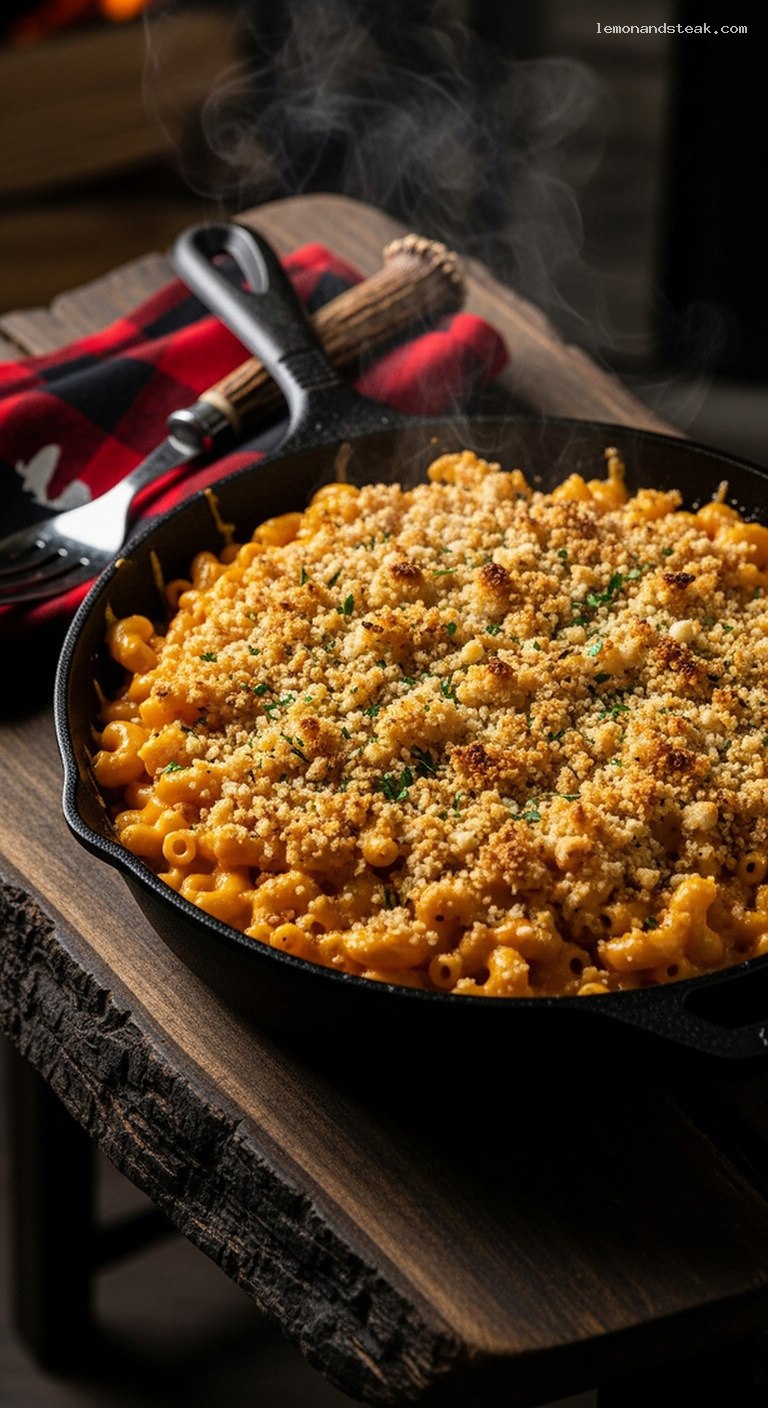
Quick Recipe Version (TL;DR)
Quick Ingredients
- 8 oz (about 2 cups) elbow macaroni or other short pasta
- 2 cups shredded sharp cheddar cheese
- 1/2 cup shredded Gruyère or more cheddar
- 2 cups whole milk
- 4 tbsp unsalted butter, divided
- 2 tbsp all-purpose flour
- 3/4 cup panko breadcrumbs
- 2 tbsp grated Parmesan cheese
- 1 tsp Dijon mustard
- 1/2 tsp smoked paprika, 1/2 tsp garlic powder
- 3/4 to 1 tsp salt, 1/4 tsp black pepper, pinch cayenne (optional)
- Chopped fresh parsley for garnish (optional)
Do This
- 1. Light a medium campfire and set a sturdy grate over low to medium-low coals. Bring a pot of salted water to a boil and cook pasta until just al dente; drain.
- 2. In a 10 to 12 inch cast-iron skillet over the fire, melt 2 tbsp butter. Stir in breadcrumbs and toast until golden; mix in Parmesan and set topping aside in a bowl.
- 3. In the same skillet, melt remaining 2 tbsp butter. Whisk in flour and cook 1 to 2 minutes to form a blond roux.
- 4. Slowly whisk in milk. Simmer, stirring often, until slightly thickened, then stir in Dijon, smoked paprika, garlic powder, salt, pepper, and cayenne.
- 5. Remove from direct heat and stir in cheddar and Gruyère until melted and smooth. Add cooked pasta and toss to coat.
- 6. Sprinkle toasted breadcrumbs evenly over the top. Cover skillet tightly with a lid or foil and set over gentle coals (or a 350°F covered grill) for 10 to 15 minutes, until bubbling and crisp on top. Rest 5 minutes, garnish, and serve.
Why You’ll Love This Recipe
- Deep, sharp cheddar flavor with extra richness from Gruyère and Parmesan.
- Buttery, golden breadcrumb topping that stays crisp even over the fire.
- Campfire-friendly method that also works perfectly on a grill or in the oven.
- All made in one cast-iron skillet for easy cooking and rustic presentation.
Grocery List
- Produce: Fresh parsley (optional, for garnish)
- Dairy: Sharp cheddar cheese, Gruyère (or extra cheddar), Parmesan, whole milk, unsalted butter
- Pantry: Elbow macaroni (or other short pasta), panko breadcrumbs, all-purpose flour, Dijon mustard, smoked paprika, garlic powder, salt, black pepper, cayenne pepper (optional)
Full Ingredients
Pasta
- 8 oz elbow macaroni or other short pasta (about 2 cups dry)
- 1 tbsp kosher salt (for pasta water)
Cheese Sauce
- 2 tbsp unsalted butter
- 2 tbsp all-purpose flour
- 2 cups whole milk (cold or room temperature)
- 2 cups shredded sharp cheddar cheese (about 8 oz)
- 1/2 cup shredded Gruyère cheese (about 2 oz; or use more cheddar)
- 1 tsp Dijon mustard
- 1/2 tsp smoked paprika
- 1/2 tsp garlic powder
- 3/4 tsp kosher salt, plus more to taste
- 1/4 tsp freshly ground black pepper
- Pinch of cayenne pepper (optional, for gentle heat)
Crunchy Breadcrumb Topping
- 2 tbsp unsalted butter
- 3/4 cup panko breadcrumbs
- 2 tbsp finely grated Parmesan cheese
- Pinch of salt
For Finishing
- Chopped fresh parsley, for garnish (optional)
- Extra black pepper, to taste
Step-by-Step Instructions
Step 1: Build your campfire cooking zone
Start your campfire with enough time for the flames to die down into a solid bed of glowing coals. You are aiming for medium to medium-low heat beneath a sturdy cooking grate. If you can hold your hand about 5 inches over the grate for 4 to 5 seconds before it feels too hot, you are in the right zone.
Place a large pot of water and a 10 to 12 inch cast-iron skillet near the fire. Have a lid or heavy-duty aluminum foil ready for the skillet. If you prefer, you can follow the same steps on a covered charcoal or gas grill preheated to about 350°F.
Step 2: Cook the pasta until just al dente
Fill the pot with at least 3 quarts of water and bring it to a rolling boil over the campfire. Stir in 1 tablespoon of kosher salt, then add the 8 ounces of pasta. Cook, stirring occasionally, until just al dente, usually 1 to 2 minutes less than the package directions.
Drain the pasta well. If your fire is very hot and you are worried about the pasta sticking while you prepare the sauce, you can toss it with a teaspoon of butter or oil to keep it loose. Set aside near the fire so it stays warm.
Step 3: Toast the buttery breadcrumb topping
Place the empty cast-iron skillet on the grate over medium heat. Add 2 tablespoons of butter and let it melt. Stir in the 3/4 cup panko breadcrumbs and a pinch of salt. Cook, stirring frequently, until the crumbs are evenly coated and turning deep golden brown, 3 to 5 minutes. Watch closely; they can go from golden to burnt quickly over a campfire.
When the breadcrumbs are toasty and fragrant, remove the skillet from direct heat. Stir in the 2 tablespoons grated Parmesan. Transfer the breadcrumb mixture to a small bowl and set aside. Wipe out any obvious burnt bits, but leave a light buttery film in the skillet if there is one.
Step 4: Make the creamy sharp cheddar sauce
Return the skillet to the grate over medium heat. Add the remaining 2 tablespoons butter and let it melt. Sprinkle in the 2 tablespoons flour and whisk or stir constantly, scraping the bottom and corners of the pan. Cook this roux for 1 to 2 minutes, until it looks smooth and blond and smells slightly nutty, but does not brown deeply.
Slowly pour in the 2 cups of milk, a splash at a time at first, whisking constantly to avoid lumps. Once about half the milk is incorporated and the mixture is smooth, you can add the rest more quickly. Continue cooking, stirring often, until the sauce gently simmers and thickens enough to coat the back of a spoon, 5 to 8 minutes depending on your heat.
Stir in the Dijon mustard, smoked paprika, garlic powder, 3/4 teaspoon salt, black pepper, and cayenne (if using). Taste the sauce; it should be nicely seasoned. Add a pinch more salt if needed. Pull the skillet slightly away from the hottest part of the fire so it is just off a boil.
Add the shredded cheddar and Gruyère in small handfuls, stirring after each addition until melted and smooth before adding more. You want a thick, glossy cheese sauce. If it seems too thick, splash in another 2 to 4 tablespoons of milk. If it looks thin, it will thicken once the pasta is added and the mac and cheese bakes.
Step 5: Combine pasta and sauce in the skillet
Add the drained, still-warm pasta directly into the skillet of cheese sauce. Using a wooden spoon or heatproof spatula, fold and stir gently until every piece of pasta is coated and the sauce is evenly distributed.
Smooth the top into an even layer so the breadcrumb topping will bake uniformly. If you like your mac and cheese extra cheesy and saucy, you can sprinkle an additional small handful of cheddar over the surface before adding the crumbs.
Step 6: Add the crunchy topping and campfire-bake
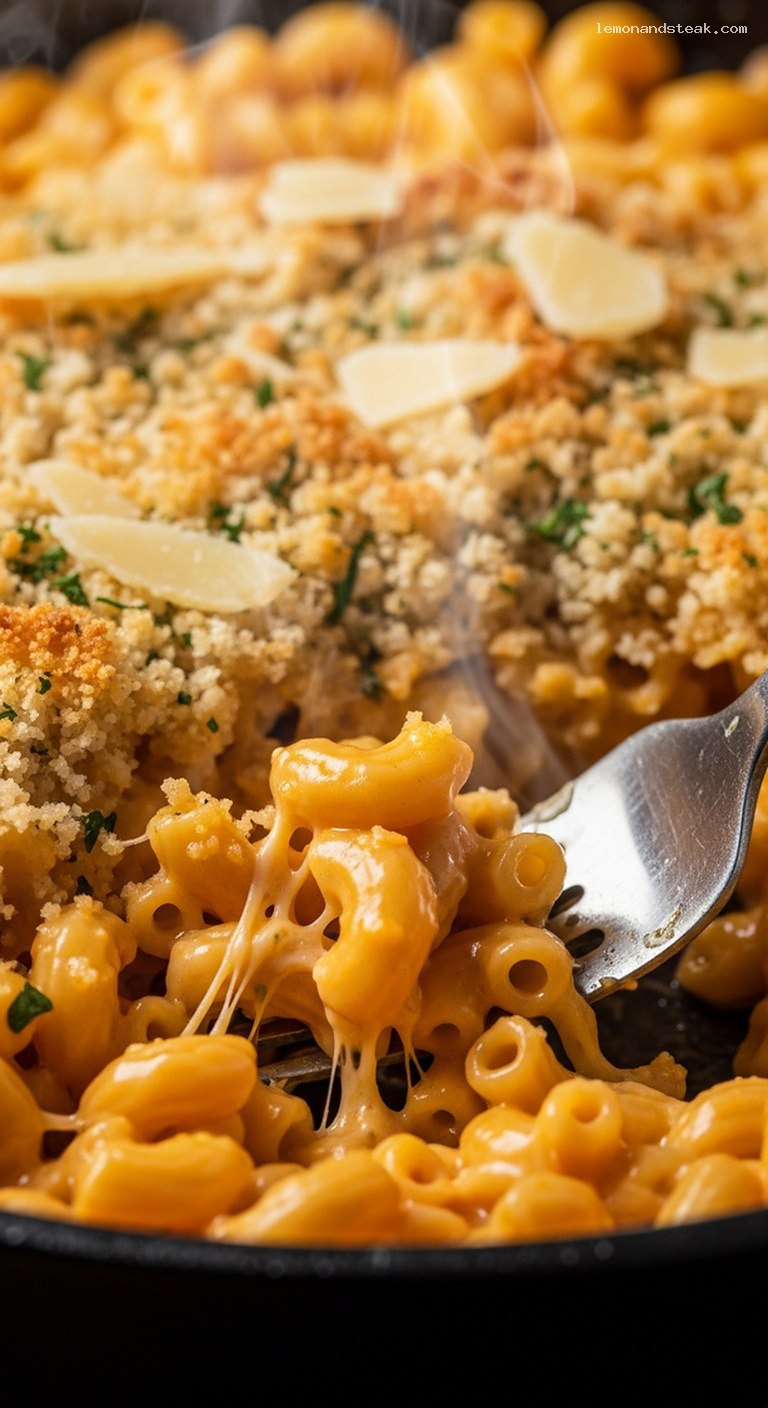
Sprinkle the toasted breadcrumb mixture evenly over the top of the mac and cheese in the skillet, covering it from edge to edge in a fairly even layer. This will form the crisp, buttery crust.
Cover the skillet tightly with its lid or a double layer of heavy-duty foil, crimping the edges well to trap the heat. Place the covered skillet over low to medium-low coals, avoiding direct high flames. If using a grill, aim for about 350°F, close the lid, and cook.
Let the mac and cheese bake until the edges are bubbling and the topping is deeply crisp, about 10 to 15 minutes. If your fire is uneven, rotate the skillet halfway through so it cooks uniformly. You should hear a gentle sizzle when you get close but not see aggressive boiling.
Step 7: Rest, garnish, and serve
Carefully remove the skillet from the heat using thick gloves or a folded towel; the handle will be very hot. Remove the lid or foil, watching out for escaping steam. Let the mac and cheese rest for about 5 minutes to thicken slightly and cool to a comfortable eating temperature.
If desired, sprinkle the top with chopped fresh parsley and a few extra grinds of black pepper for color and aroma. Serve straight from the cast-iron skillet for that rustic campfire feel, scooping generous portions into bowls or onto sturdy plates. Enjoy the contrast of creamy, sharp cheddar mac beneath the crunchy, buttery breadcrumb crust while it is still hot and bubbling.
Pro Tips
- Keep the pasta slightly undercooked. Stop boiling the pasta when it is just al dente; it will finish softening as it bakes over the coals, preventing mushy mac and cheese.
- Grate your own cheese. Pre-shredded cheese often contains anti-caking agents that prevent smooth melting. Freshly grated sharp cheddar and Gruyère melt creamier and taste richer.
- Manage the fire, not just the recipe. A steady bed of coals is better than high flames. If things are bubbling too hard, slide the skillet to a cooler spot or raise it higher above the coals.
- Do not skip the resting time. Letting the mac and cheese sit for 5 minutes after baking allows the sauce to thicken into a silky coating rather than a runny pool.
- Prep at home for easier camping. Pre-measure dry ingredients (breadcrumbs, flour, spices) into labeled bags and grate cheese before you leave, keeping it chilled in a cooler.
Variations
- Smoky bacon campfire mac. Cook 4 to 6 slices of chopped bacon in the skillet first, remove to a plate, and use some of the bacon fat along with butter to make the roux. Stir the cooked bacon into the pasta before adding the topping.
- Three-cheese blend. Replace half of the cheddar with a mix of Gruyère and fontina or Monterey Jack for a more complex, ultra-creamy flavor profile.
- Spicy jalapeño version. Add 1 to 2 finely diced fresh or pickled jalapeños into the cheese sauce along with the spices, and increase the cayenne for a gentle kick.
Storage & Make-Ahead
For camping, you can cook the pasta at home until just shy of al dente, toss it with a little oil to prevent sticking, and store it in an airtight container in a cooler for up to 24 hours. You can also pre-grate all cheeses and portion the breadcrumbs, flour, and spices ahead of time for quick assembly at the campsite.
If you have leftovers, let the mac and cheese cool completely, then transfer to an airtight container and refrigerate up to 3 to 4 days. Reheat gently in a covered skillet or oven-safe dish with a splash of milk over low heat, stirring occasionally until warmed through. The breadcrumb topping will soften somewhat, but you can sprinkle on a few fresh crumbs and toast briefly under a broiler or over the fire to restore some crunch.
Nutrition (per serving)
Approximate values for 1 of 4 servings: about 700 calories; 35 g fat; 20 g saturated fat; 65 g carbohydrates; 3 g fiber; 10 g sugar; 30 g protein; 950 mg sodium. Actual values will vary based on brands used and any additions or substitutions.
Leave a Reply