
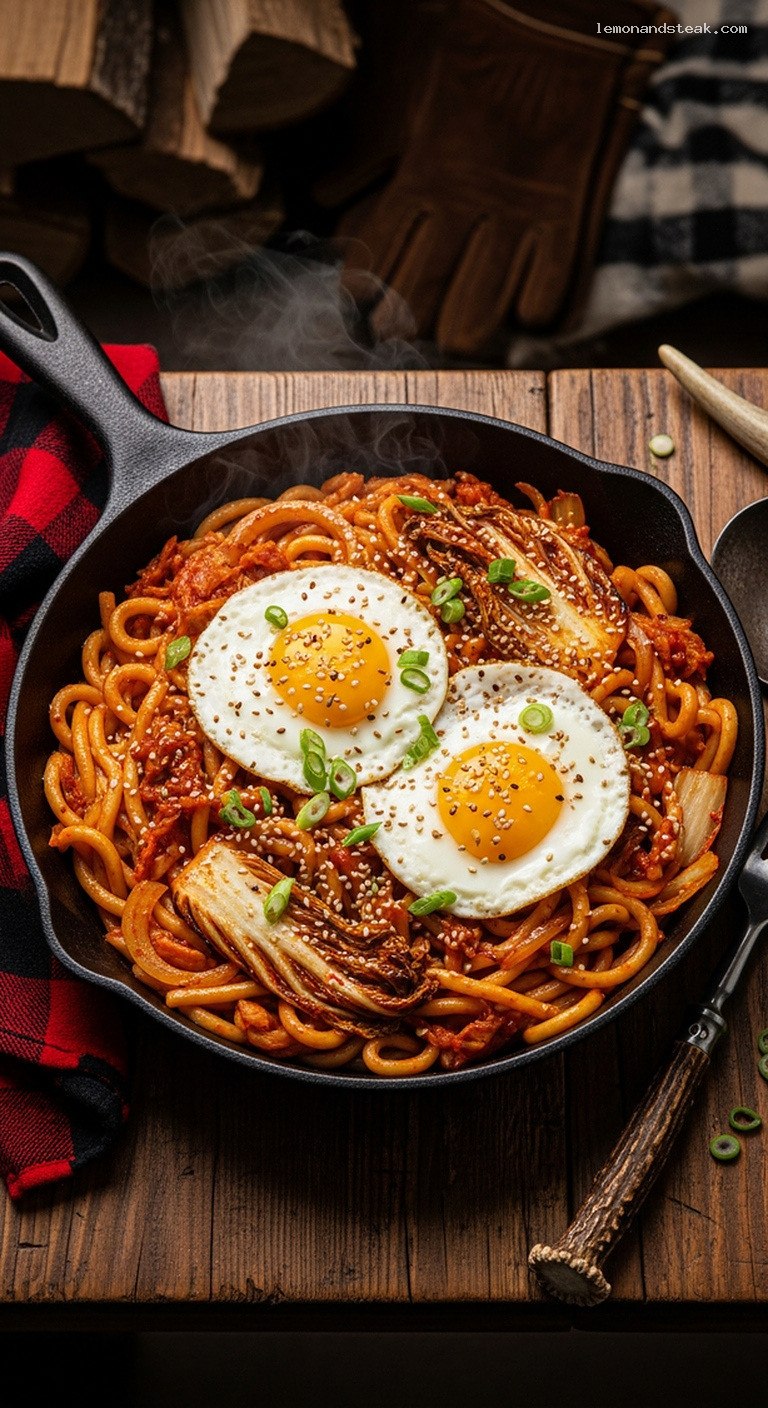
Quick Recipe Version (TL;DR)
Quick Ingredients
- 2 (7–8 oz / 200–230 g) packs frozen or vacuum-packed udon noodles
- 1 cup finely chopped well-fermented napa cabbage kimchi + 2 Tbsp kimchi brine
- 2 Tbsp neutral oil (canola or vegetable), divided
- 1 Tbsp soy sauce
- 2 tsp gochugaru (Korean red pepper flakes), or to taste
- 1–2 tsp gochujang (optional, for extra depth)
- 3 cloves garlic, minced
- 2 green onions, sliced (whites and greens separated)
- 1 tsp sugar or honey
- 1 tsp rice vinegar
- 1 tsp toasted sesame oil
- 1 tsp toasted sesame seeds (for garnish)
- 2 fried eggs (optional but highly recommended)
Do This
- 1. Bring a pot of water to a boil. Loosen udon noodles for 30–60 seconds, drain, and set aside.
- 2. In a small bowl, stir together soy sauce, gochugaru, gochujang, sugar, rice vinegar, sesame oil, and kimchi brine.
- 3. Heat 1 Tbsp oil in a large skillet or wok over medium-high heat (about 375°F / 190°C). Sauté garlic, green onion whites, and chopped kimchi for 2–3 minutes until fragrant and slightly caramelized.
- 4. Add drained udon noodles and remaining 1 Tbsp oil. Toss and stir-fry for 1–2 minutes to coat noodles in the kimchi mixture.
- 5. Pour in the sauce and stir-fry for 2–3 minutes until noodles are glossy, thickened, and a little charred in spots.
- 6. In a separate pan, fry eggs sunny-side-up or over-easy.
- 7. Plate noodles, top with fried eggs, green onion tops, and sesame seeds. Serve hot.
Why You’ll Love This Recipe
- Bold, tangy heat from kimchi and gochugaru wrapped around ultra-chewy udon noodles.
- Fast weeknight-friendly: on the table in under 25 minutes with very little prep.
- Uses simple pantry items and one pan, but tastes like a restaurant favorite.
- Easy to customize: add bacon, tofu, extra veggies, or cheese to make it your own.
Grocery List
- Produce: Napa cabbage kimchi, garlic, green onions (scallions), optional: yellow onion, carrot, nori strips.
- Dairy: None required; optional: butter (for extra richness), shredded mozzarella or mild melting cheese (for a cheesy variation).
- Pantry: Frozen or vacuum-packed udon noodles, neutral oil, soy sauce, gochugaru, gochujang, sugar or honey, rice vinegar, toasted sesame oil, toasted sesame seeds, eggs, salt and pepper.
Full Ingredients
For the Kimchi Fried Udon
- 2 (7–8 oz / 200–230 g) packs frozen or vacuum-packed udon noodles (about 14–16 oz / 400–450 g total)
- 1 cup (about 150 g) well-fermented napa cabbage kimchi, finely chopped
- 2–3 Tbsp kimchi brine (from the kimchi container)
- 2 Tbsp neutral oil (canola, vegetable, or grapeseed), divided
- 3 cloves garlic, minced
- 2 green onions, thinly sliced; white and green parts separated
- 1/2 small yellow onion, thinly sliced (optional, for sweetness and texture)
- 1 small carrot, julienned or cut into thin matchsticks (optional, for color and crunch)
For the Spicy Kimchi Sauce
- 1 Tbsp soy sauce (regular or low-sodium)
- 2 tsp gochugaru (Korean red pepper flakes), or to taste
- 1–2 tsp gochujang (Korean chili paste), optional but recommended for extra depth
- 1 tsp sugar or honey
- 1 tsp rice vinegar
- 1 tsp toasted sesame oil
- 2 Tbsp water (to loosen the sauce so it coats the noodles)
For Serving
- 2 large eggs, fried sunny-side-up or over-easy
- 1–2 tsp toasted sesame seeds
- Reserved green onion tops
- Optional: thin strips of nori, extra kimchi on the side, a drizzle of sesame oil, or a pinch of freshly cracked black pepper

Step-by-Step Instructions
Step 1: Prep your ingredients and sauce
Finely chop the kimchi so it distributes evenly through the noodles. Measure out 2–3 tablespoons of the kimchi brine and set aside. Mince the garlic. Slice the green onions, keeping the white parts and green tops separate. If using, thinly slice the yellow onion and julienne the carrot.
In a small bowl, whisk together the soy sauce, gochugaru, gochujang (if using), sugar, rice vinegar, toasted sesame oil, water, and the reserved kimchi brine. Taste a small dab: it should be salty, spicy, tangy, and slightly sweet. Adjust with more gochugaru for heat, sugar for sweetness, or soy sauce for saltiness. Set the sauce near the stove.
Step 2: Soften the udon noodles
Bring a medium pot of water to a rolling boil (212°F / 100°C). Add the frozen or vacuum-packed udon blocks. If using frozen udon, cook for 1–2 minutes; if using shelf-stable packs, 30–60 seconds is usually enough. Gently separate the strands with chopsticks or tongs as they loosen.
Once the noodles are just tender and bouncy, drain in a colander and rinse quickly under hot tap water to remove excess starch. Let them drain well while you start the stir-fry. You want them slightly tacky, not dripping wet, so they can char a little in the pan.
Step 3: Sauté the aromatics and kimchi
Heat a large skillet, cast-iron pan, or wok over medium-high heat (about 375°F / 190°C surface temperature if you are able to measure). Add 1 tablespoon of the neutral oil and swirl to coat the bottom.
Add the minced garlic, green onion whites, and sliced yellow onion (if using). Stir-fry for 1–2 minutes until fragrant and starting to soften, being careful not to brown the garlic too deeply.
Stir in the chopped kimchi and cook for another 2–3 minutes. Let it sit undisturbed for 20–30 seconds at a time so it can lightly caramelize on the pan before stirring again. This deepens the flavor and adds a smoky edge that makes the noodles taste more complex.
Step 4: Add the noodles and get some char
Add the drained udon noodles to the pan, along with the remaining 1 tablespoon of neutral oil. Use tongs or chopsticks to gently toss and separate the noodles, coating them in the kimchi and aromatics.
Spread the noodles out into an even layer and let them cook undisturbed for about 30–45 seconds so they can pick up a bit of color and crispness on the bottom. Then toss again. Repeat once or twice. You want some golden, slightly chewy edges without burning.
Step 5: Pour in the sauce and stir-fry
Give the prepared sauce a quick stir, then pour it evenly over the noodles. Immediately toss everything together so the sauce coats the udon and kimchi. Continue stir-frying over medium-high heat for 2–3 minutes.
The sauce will thicken slightly and cling to the noodles, turning them a glossy, deep red-orange. If the pan looks dry or the noodles seem to stick too much, add 1–2 tablespoons of water and toss again. Taste a strand of noodle and a piece of kimchi; adjust with a splash more soy sauce or a pinch of sugar if needed.
Step 6: Fry the eggs and finish the dish
While the noodles are finishing, heat a small nonstick skillet over medium heat. Add a light drizzle of oil. Crack in the eggs and fry until the whites are set but the yolks are still runny, 3–4 minutes for sunny-side-up. For over-easy, flip for the last 20–30 seconds.
Turn off the heat under the noodles. Toss in most of the sliced green onion tops, saving a small handful for garnish. Give everything a final stir so the fresh onion gets lightly wilted by the residual heat.
Step 7: Plate and garnish
Divide the spicy kimchi fried udon between two warm bowls or shallow plates. Top each portion with a fried egg. Sprinkle with toasted sesame seeds and the reserved green onion tops. Garnish with nori strips or an extra spoonful of chopped kimchi if you like a stronger kick.
Serve immediately while piping hot, letting the runny egg yolk mix into the noodles at the table for extra richness.
Pro Tips
- Use well-fermented kimchi. Older, tangier kimchi (sour and bubbly) gives the most flavor. Fresh kimchi will be milder and less complex.
- Do not overcook the udon. Udon should stay thick and chewy. Only boil long enough to loosen the strands; they will cook further in the pan.
- Let the kimchi and noodles char slightly. Brief periods of undisturbed contact with a hot pan create those delicious smoky, caramelized bits that make the dish taste restaurant-quality.
- Control the heat level. Start with 1 tsp gochugaru if you are sensitive to spice, and add more at the end if needed. Remember, kimchi already brings some heat.
- Work with high heat and a wide pan. A large skillet or wok over medium-high heat prevents steaming and helps you get that classic stir-fried texture.
Variations
- Bacon or spam kimchi udon: Sauté 3–4 strips of chopped bacon or 1/2 cup diced spam at the beginning until browned. Use the rendered fat instead of some or all of the neutral oil, then continue with the recipe.
- Crispy tofu version: Pan-fry 1 cup small tofu cubes in oil until golden on all sides, then set aside. Stir them back in during Step 5 with the sauce for a vegetarian-friendly protein boost.
- Cheesy kimchi udon: At the very end, sprinkle 1/2 cup shredded mozzarella or another mild melting cheese over the hot noodles. Cover the pan for 1–2 minutes off the heat to let it melt into a stretchy, creamy layer.
Storage & Make-Ahead
This dish is best eaten fresh, while the noodles are bouncy and the egg yolk is runny. However, leftovers can be stored in an airtight container in the refrigerator for up to 3 days.
For easier prep, you can chop the kimchi, slice the vegetables, and mix the sauce up to 2 days ahead; store each in separate covered containers in the fridge. When ready to cook, all you need to do is soften the udon, stir-fry, and fry the eggs.
To reheat, add a small splash of water or a drizzle of oil to a skillet over medium heat. Add the leftover noodles and stir-fry for 3–4 minutes until hot, loosening with a bit more water if they seem dry. Freshly fry a new egg to put on top for that just-cooked feel.
Nutrition (per serving)
Approximate values (including one egg per serving; will vary based on brands and exact quantities): about 500–550 calories; 18–22 g fat; 70–80 g carbohydrates; 12–16 g protein; 4–6 g fiber; sodium is relatively high (around 1500–2000 mg) due to kimchi and soy sauce, so consider using low-sodium soy sauce if needed.
Leave a Reply