
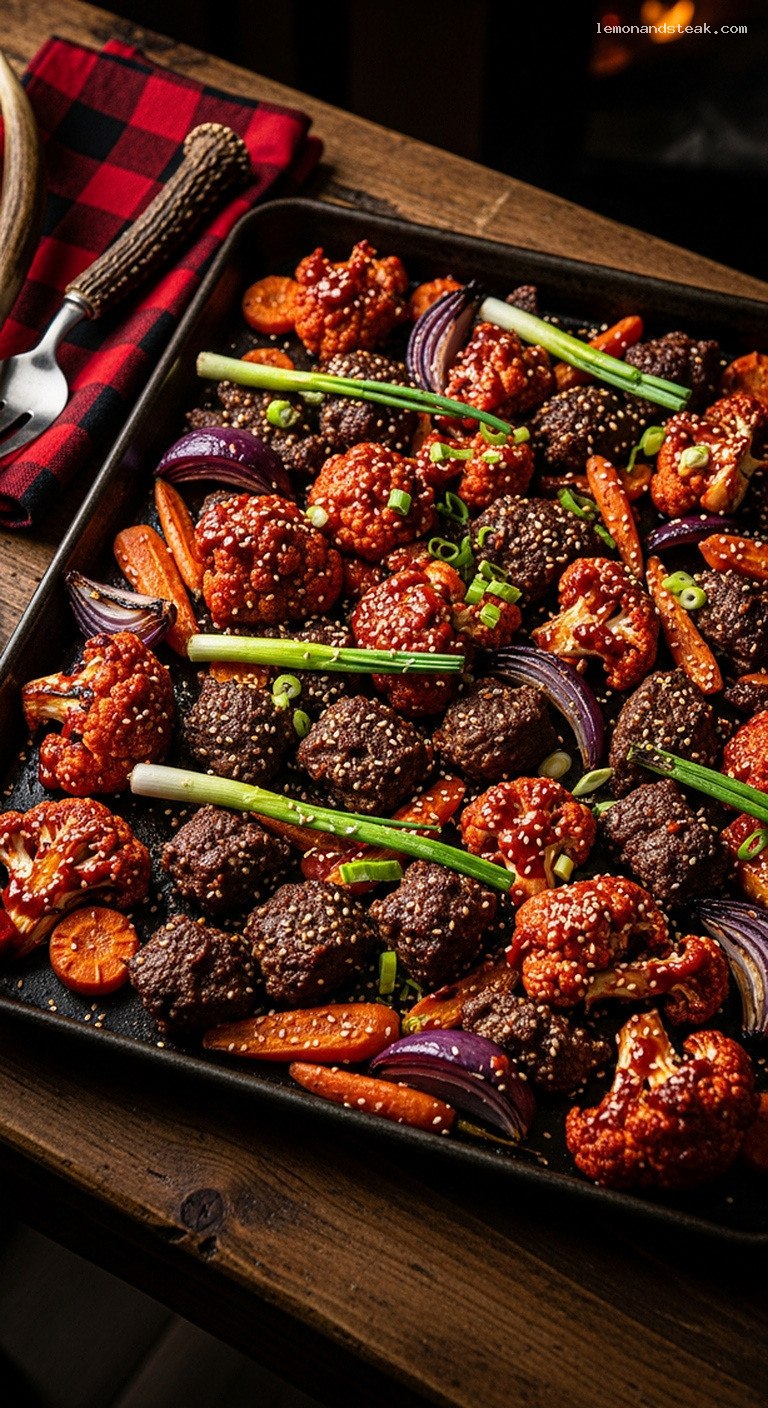
Quick Recipe Version (TL;DR)
Quick Ingredients
- 1 medium head cauliflower (about 1 1/2 lb), cut into florets
- 1 lb (450 g) ground beef (85–90% lean)
- 1 medium red onion, cut into wedges
- 2 medium carrots, sliced into 1/4-inch coins (optional)
- 3 tbsp gochujang (Korean chili paste)
- 3 tbsp soy sauce (low-sodium preferred)
- 2 tbsp honey or packed light brown sugar
- 1 1/2 tbsp rice vinegar
- 1 tbsp toasted sesame oil
- 2 tbsp neutral oil (canola, avocado, or vegetable)
- 4 garlic cloves, minced
- 1 tbsp fresh grated ginger
- 2 tbsp water (to thin sauce)
- 1 tsp gochugaru (Korean red pepper flakes), optional
- 1/2 tsp kosher salt, plus more to taste
- 2 green onions, thinly sliced (for garnish)
- 1 tsp toasted sesame seeds (for garnish)
- Cooked rice or grains, for serving (optional)
Do This
- 1. Preheat oven to 425°F (220°C). Line a large rimmed sheet pan with parchment for easier cleanup.
- 2. Whisk gochujang, soy sauce, honey, rice vinegar, sesame oil, garlic, ginger, neutral oil, water, and gochugaru (if using) into a smooth sauce.
- 3. Toss cauliflower, red onion, and carrots with about half the sauce and a pinch of salt. Spread on sheet pan in a single layer.
- 4. Roast vegetables for 15 minutes, stirring once halfway if edges brown quickly.
- 5. While veggies roast, mix ground beef with remaining sauce and 1/4 tsp salt. Break into small, craggy chunks.
- 6. After 15 minutes, stir vegetables, make spaces, and scatter beef chunks over the pan. Roast 12–15 minutes more until beef is cooked and cauliflower is deeply caramelized. Broil 2–3 minutes if you want extra char.
- 7. Toss everything together on the pan, sprinkle with green onions and sesame seeds, and serve hot over rice or grains.
Gochujang Roasted Cauliflower and Beef Sheet Pan Dinner
Why You’ll Love This Recipe
- Big sweet-spicy flavor from a simple gochujang sauce that coats both the beef and the cauliflower.
- One sheet pan, minimal cleanup, and no standing over the stove.
- Caramelized cauliflower and juicy, browned beef roast together for maximum flavor with minimal effort.
- Easy to customize: dial the heat up or down, swap veggies, or use a different protein.
Grocery List
- Produce: 1 medium head cauliflower, 1 red onion, 2 carrots (optional), garlic, fresh ginger, 2–3 green onions, 1 lime (optional for serving).
- Dairy: None required.
- Pantry: Ground beef (85–90% lean), gochujang, soy sauce, honey or brown sugar, rice vinegar, toasted sesame oil, neutral oil, gochugaru (optional), kosher salt, black pepper, toasted sesame seeds, rice or other grains (for serving, optional).
Full Ingredients
For the Gochujang Sauce
- 3 tbsp gochujang (Korean chili paste)
- 3 tbsp soy sauce (low-sodium recommended)
- 2 tbsp honey or packed light brown sugar
- 1 1/2 tbsp rice vinegar
- 1 tbsp toasted sesame oil
- 2 tbsp neutral oil (canola, avocado, or vegetable)
- 4 garlic cloves, minced or pressed
- 1 tbsp fresh grated ginger (or 1 tsp ground ginger in a pinch)
- 2 tbsp water, to thin the sauce
- 1 tsp gochugaru (Korean red pepper flakes), optional for extra heat
- 1/4 tsp freshly ground black pepper
For the Sheet Pan Beef and Cauliflower
- 1 medium head cauliflower (about 1 1/2 lb / 680 g), cut into medium florets
- 1 lb (450 g) ground beef, 85–90% lean
- 1 medium red onion, peeled and cut into 8 wedges
- 2 medium carrots, sliced into 1/4-inch coins (optional, for extra color and sweetness)
- 1/2 tsp kosher salt, divided, plus more to taste
For Serving (Optional but Recommended)
- Cooked white or brown rice, quinoa, or other grains
- 2 green onions, thinly sliced
- 1–2 tsp toasted sesame seeds
- Lime wedges, for squeezing over the top
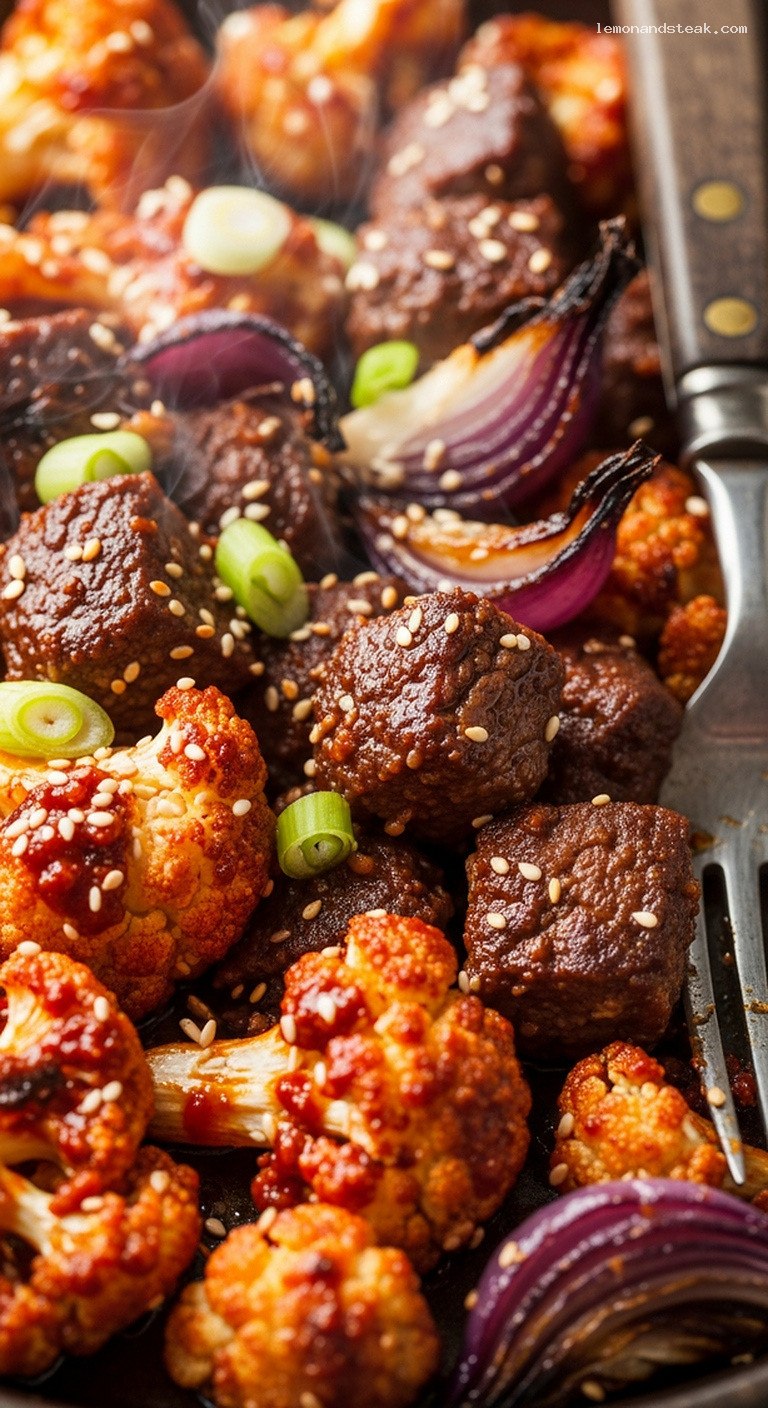
Step-by-Step Instructions
Step 1: Preheat the oven and prep the pan
Preheat your oven to 425°F (220°C). Position a rack in the middle of the oven so the food cooks evenly without burning on top.
Line a large rimmed sheet pan (a standard half sheet, about 18 x 13 inches) with parchment paper for easy cleanup. If you prefer extra caramelization, you can skip the parchment and lightly oil the pan instead, but be ready to soak it afterward.
Step 2: Make the sweet-spicy gochujang sauce
In a medium bowl, whisk together the gochujang, soy sauce, honey (or brown sugar), rice vinegar, toasted sesame oil, neutral oil, garlic, ginger, water, gochugaru (if using), and black pepper until completely smooth. The sauce should be thick but pourable; if it seems too thick to coat the vegetables easily, whisk in up to 1 more tablespoon of water.
Taste a tiny bit. It should be salty-sweet, tangy, and pleasantly spicy. Remember that it will taste a bit less intense once spread over the beef and vegetables, so a slightly bold flavor here is perfect.
Step 3: Season the vegetables and start roasting
In a large mixing bowl, add the cauliflower florets, red onion wedges, and carrot coins (if using). Drizzle over about half of the gochujang sauce (roughly 1/2 cup, but no need to measure exactly) and add 1/4 teaspoon kosher salt.
Toss very well until every piece of cauliflower and onion is nicely coated in sauce. Spread the vegetables out on the prepared sheet pan in a single, even layer, trying not to overcrowd them. Any overlapping pieces will steam rather than brown.
Transfer the pan to the oven and roast for 15 minutes. If your oven runs hot or the edges are getting very dark, you can give everything a quick stir at the 10-minute mark.
Step 4: Season the beef with the remaining sauce
While the vegetables start roasting, place the ground beef in the same mixing bowl (no need to wash it; leftover sauce is great flavor). Pour in the remaining half of the gochujang sauce and sprinkle with the remaining 1/4 teaspoon kosher salt.
Use a fork or your hands to gently mix the beef and sauce together until the meat is evenly seasoned. Try not to mash it into a paste; you want to keep some texture. Lightly break the beef into small, craggy chunks or rough bite-sized clumps. These irregular pieces will brown better and give you lovely caramelized edges later.
Step 5: Roast the beef with the cauliflower until caramelized
After the vegetables have roasted for 15 minutes, carefully remove the sheet pan from the oven. Use a spatula to stir and flip the cauliflower and onions, exposing new surfaces to the heat. Push the vegetables slightly toward the edges to make space for the beef.
Scatter the seasoned beef chunks evenly over the pan between and over the vegetables, leaving a little space between pieces where possible. Return the pan to the oven and roast for another 12–15 minutes, or until:
- The beef is cooked through (no pink remains and it reaches 160°F / 71°C internally).
- The cauliflower is deeply golden-brown in spots and tender when pierced with a fork.
- The onions have softened and picked up some char on the edges.
If you love extra char and sticky, caramelized edges, switch the oven to broil (high) for the last 2–3 minutes, watching closely so nothing burns.
Step 6: Finish, garnish, and serve
Once everything is cooked and nicely caramelized, remove the pan from the oven. Use a spatula to gently toss the beef and vegetables together on the sheet pan so that the sauce and rendered juices coat everything.
Taste and adjust the seasoning with a bit more salt if needed. Scatter over the sliced green onions and toasted sesame seeds. If you like a tangy finish, squeeze a wedge of lime over the top just before serving.
Serve hot, straight from the pan, spooned over steamed rice or grains for a full meal, or enjoy it as-is for a lower-carb option. Any extra pan juices are delicious drizzled over the top.
Pro Tips
- Dry the cauliflower well: If you rinsed your cauliflower, pat it very dry before saucing. Excess moisture will prevent those nice browned, caramelized edges.
- Do not overcrowd the pan: Use a large sheet pan and spread everything in a single layer. If things are piled up, they will steam instead of roast and you will miss out on flavor.
- Control the heat level: For milder heat, use only 2 tbsp gochujang and skip the gochugaru. For spicier, add extra gochugaru or a pinch of crushed red pepper flakes.
- Use broil wisely: A brief blast under the broiler at the end gives gorgeous char, but it goes from perfect to burnt quickly. Watch closely and pull the pan as soon as the edges darken.
- Make it a complete bowl: Serve over rice with quick cucumber slices or a simple green salad for contrast and crunch.
Variations
- Different protein: Swap the ground beef for ground pork, chicken, or turkey. Use the same amount and cooking time; just make sure it is fully cooked through.
- Extra veggies: Add sliced bell peppers, broccoli florets, or green beans with the cauliflower. Keep the total vegetable volume roughly the same so the pan is not overcrowded.
- Vegetarian version: Replace the beef with extra-firm tofu, torn into chunks, or chickpeas. Pat tofu dry, toss it in the sauce, and roast just like the beef until golden and slightly crisp.
Storage & Make-Ahead
Store leftovers in an airtight container in the refrigerator for up to 4 days. Reheat in a skillet over medium heat or in a 375°F (190°C) oven for 8–10 minutes, just until warmed through and sizzling at the edges. The microwave works in a pinch, but you will lose some crisp edges.
For make-ahead prep, you can cut the vegetables and whisk the sauce up to 2 days in advance; keep them stored separately in the fridge. You can also toss the beef with the sauce up to 12 hours ahead and refrigerate it tightly covered. When ready to cook, all you need to do is coat the vegetables, spread everything on the sheet pan, and roast as directed.
Nutrition (per serving)
Approximate values per serving (without rice): Calories: 560; Protein: 30 g; Fat: 38 g; Carbohydrates: 26 g; Fiber: 5 g; Sugar: 15 g; Sodium: 1150 mg. Values will vary based on brand of gochujang, soy sauce, and exact amounts used.
Leave a Reply