
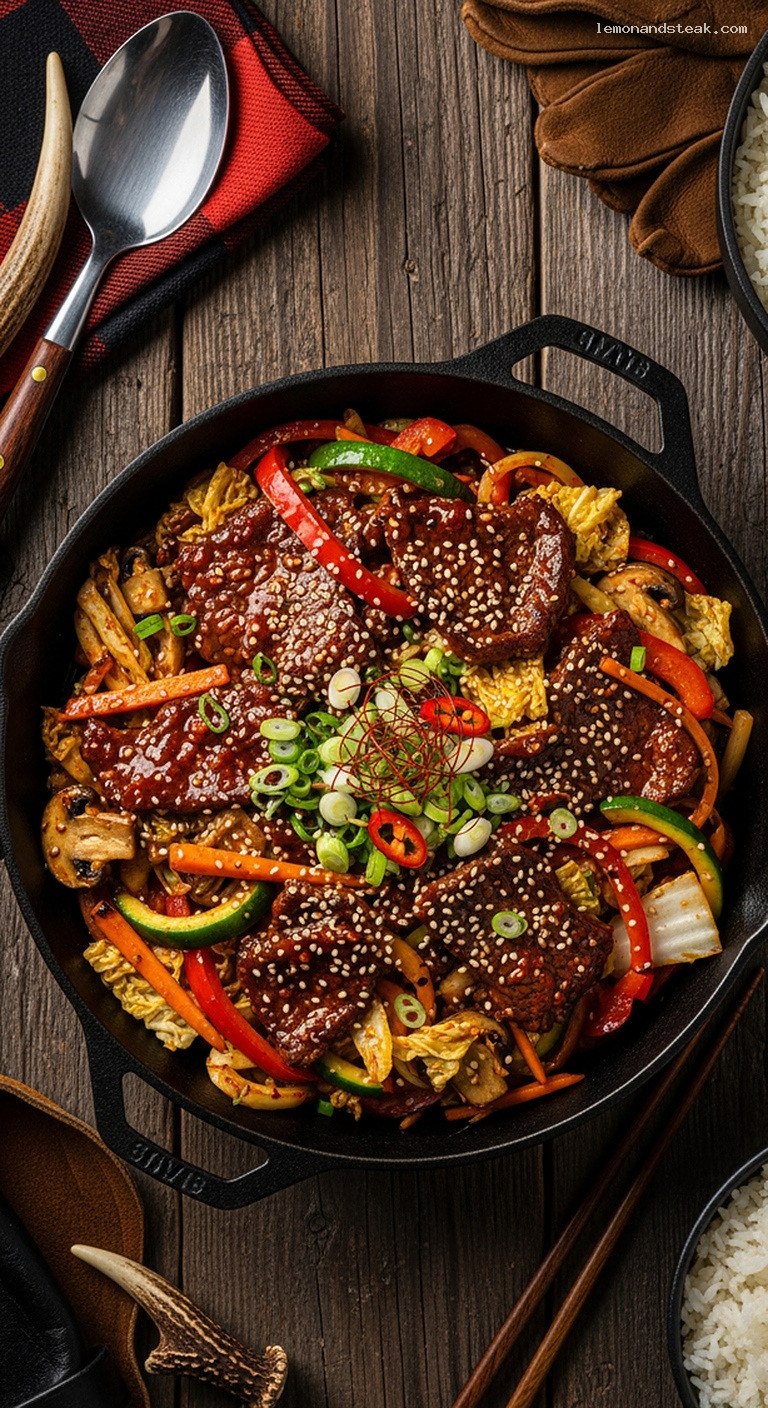
Quick Recipe Version (TL;DR)
Quick Ingredients
- 1 1/2 lb (680 g) beef ribeye or sirloin, very thinly sliced
- 1/4 cup (60 g) gochujang (Korean chili paste)
- 1/4 cup (60 ml) soy sauce
- 2 tbsp light brown sugar, packed
- 1 tbsp honey
- 2 tbsp mirin or unseasoned rice vinegar
- 1 tbsp toasted sesame oil
- 4 cloves garlic, finely minced
- 1 tbsp fresh ginger, grated
- 1/2 small Asian or Bosc pear, grated (about 1/3 cup)
- 2 tbsp finely sliced green onion (plus more for garnish)
- 1 tsp freshly ground black pepper
- 1/2–1 tsp Korean chili flakes (gochugaru), optional for extra heat
- 2 tbsp neutral oil (canola, grapeseed, or avocado), for stir-frying
- 1 medium yellow onion, thinly sliced
- 1 red bell pepper, thin strips
- 1 small carrot, matchsticks
- 1 small zucchini, half-moons
- 4 oz (115 g) shiitake or cremini mushrooms, sliced
- 2 cups (120 g) napa or green cabbage, thinly shredded
- Steamed white rice, lettuce leaves, sesame seeds, and extra green onions, for serving
Do This
- 1. Slice beef very thinly across the grain; prep all vegetables and set aside.
- 2. Whisk together gochujang, soy sauce, brown sugar, honey, mirin, sesame oil, garlic, ginger, grated pear, green onion, black pepper, and gochugaru.
- 3. Toss beef with marinade; chill at least 30 minutes (up to 12 hours) while you cook rice and organize toppings.
- 4. Heat 1 tbsp neutral oil in a large cast-iron skillet or wok over high heat; stir-fry onions, peppers, carrot, zucchini, mushrooms, and cabbage for 3–4 minutes until crisp-tender. Transfer to a bowl.
- 5. Add remaining 1 tbsp oil; working in 2 batches, sear marinated beef over high heat for 2–3 minutes per batch until deeply browned with charred edges.
- 6. Return all beef and any remaining marinade to the pan; boil 1–2 minutes until glossy and slightly thickened, then toss in veggies.
- 7. Garnish with sesame seeds and green onions; serve hot over rice or in lettuce wraps for a sweet-heat bulgogi stir-fry.
Why You’ll Love This Recipe
- Big, bold flavor from gochujang, garlic, soy, and sesame, with just the right amount of sweet heat.
- Fast weeknight-friendly stir-fry: quick cook time with a simple 30-minute marinade.
- Charred, caramelized beef edges and colorful crisp-tender vegetables in one pan.
- Flexible serving options: pile over rice, tuck into lettuce wraps, or serve family-style in a sizzling pan.
Grocery List
- Produce: Yellow onion, red bell pepper, carrot, zucchini, mushrooms, cabbage (napa or green), garlic, fresh ginger, green onions, Asian pear or Bosc pear, lettuce (for wraps, optional).
- Dairy: None required.
- Pantry: Beef ribeye or sirloin, gochujang, soy sauce, light brown sugar, honey, mirin or rice vinegar, toasted sesame oil, neutral cooking oil, Korean chili flakes (gochugaru, optional), black pepper, sesame seeds, white rice.
Full Ingredients
For the Spicy Bulgogi Beef Marinade
- 1 1/2 lb (680 g) beef ribeye or sirloin, very thinly sliced across the grain
- 1/4 cup (60 g) gochujang (Korean chili paste)
- 1/4 cup (60 ml) soy sauce (regular, not low-sodium, or adjust salt to taste)
- 2 tbsp light brown sugar, packed
- 1 tbsp honey
- 2 tbsp mirin or unseasoned rice vinegar
- 1 tbsp toasted sesame oil
- 4 cloves garlic, finely minced
- 1 tbsp fresh ginger, finely grated
- 1/2 small Asian pear or Bosc pear, finely grated (about 1/3 cup / 40 g)
- 2 tbsp finely sliced green onion (green and light green parts)
- 1 tsp freshly ground black pepper
- 1/2–1 tsp Korean chili flakes (gochugaru), optional for extra spiciness
For the Stir-Fry Vegetables
- 2 tbsp neutral oil (canola, grapeseed, or avocado), divided
- 1 medium yellow onion, thinly sliced (about 1 1/2 cups)
- 1 red bell pepper, seeded and sliced into thin strips
- 1 small carrot, cut into thin matchsticks (julienne)
- 1 small zucchini, sliced into 1/4-inch (0.5 cm) half-moons
- 4 oz (115 g) shiitake or cremini mushrooms, stems removed and caps sliced
- 2 cups (120 g) napa cabbage or green cabbage, thinly shredded
- 2–3 tbsp water, as needed to loosen sauce while cooking (optional)
For Serving & Garnish
- 4 cups hot steamed white rice (short-grain or jasmine), for serving
- 1 small head green leaf lettuce, butter lettuce, or red leaf lettuce, separated into leaves (optional, for wraps)
- 2–3 tbsp toasted sesame seeds
- 2–3 green onions, thinly sliced on the bias
- Korean chili flakes (gochugaru) or thinly sliced fresh red chile, optional for extra heat and color
- Kimchi and pickled radish, optional, for serving on the side
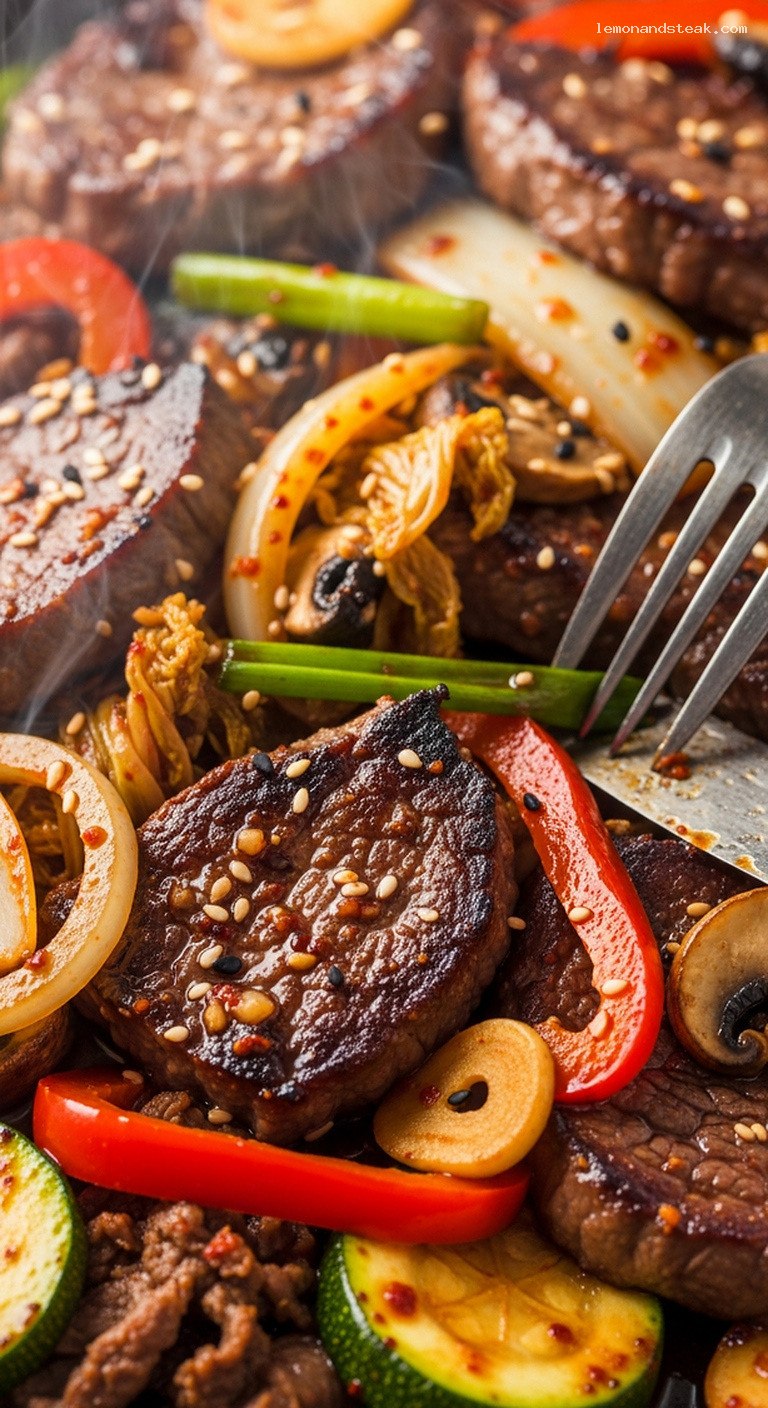
Step-by-Step Instructions
Step 1: Prep and slice the beef and vegetables
Place the beef in the freezer for 20–30 minutes until it is very cold and slightly firm; this makes it much easier to slice thinly. Using a sharp knife, slice the beef across the grain into very thin strips, about 1/8 inch (3 mm) thick. Trim any large pockets of fat but keep some marbling for flavor.
Prep all vegetables: thinly slice the yellow onion; cut the red bell pepper into thin strips; julienne the carrot; slice the zucchini into half-moons; slice the mushrooms; and shred the cabbage. Slice the green onions, keeping 2 tbsp for the marinade and the rest for garnish. Set all vegetables on a tray or in separate bowls so you can cook quickly later.
Step 2: Make the bold gochujang bulgogi marinade
In a medium mixing bowl, whisk together the gochujang, soy sauce, brown sugar, honey, mirin (or rice vinegar), and toasted sesame oil until smooth. Add the minced garlic, grated ginger, grated pear, 2 tbsp sliced green onion, black pepper, and optional gochugaru. Whisk until everything is evenly combined and the mixture is glossy and thick but pourable. Taste a tiny amount: it should be salty-sweet, garlicky, and spicy. Adjust sweetness with an extra 1–2 tsp brown sugar if desired, or heat with a pinch more gochugaru.
Step 3: Marinate the beef
Place the sliced beef in a large bowl or zip-top bag. Pour the marinade over the beef and use clean hands or tongs to gently massage it into every slice, separating any pieces that are stuck together. Ensure all the beef is well coated. Cover the bowl or seal the bag, pressing out excess air if using a bag.
Marinate in the refrigerator for at least 30 minutes. For deeper flavor and more tender beef, marinate for 2–4 hours, or up to 12 hours. Do not marinate longer than 12 hours, or the pear and acids can make the texture too soft. While the beef marinates, cook your rice, wash the lettuce leaves if using, and set out garnishes.
Step 4: Stir-fry the vegetables until crisp-tender
When you are ready to cook, heat 1 tbsp neutral oil in a large cast-iron skillet, carbon steel pan, or wok over high heat. Allow the pan to preheat until the oil shimmers and a drop of water sizzles on contact, about 2–3 minutes (roughly 450°F / 230°C surface temperature if using an infrared thermometer).
Add the sliced onion and bell pepper. Stir-fry for 1–2 minutes until they begin to soften with light char in spots. Add the carrot, zucchini, mushrooms, and shredded cabbage. Stir-fry another 2–3 minutes until the vegetables are crisp-tender and slightly charred at the edges but still bright in color. If the pan gets too dry or things start to stick, splash in 1–2 tbsp water to release any browned bits.
Transfer the vegetables to a large bowl and keep them near the stove. Wipe out the pan only if there are very dark, burnt bits; otherwise, leave the tasty browned bits for extra flavor.
Step 5: Flash-sear the spicy marinated beef
Return the pan to high heat and add the remaining 1 tbsp neutral oil. Let it heat until just smoking. Meanwhile, remove the beef from the marinade, allowing excess marinade to drip back into the bowl. Reserve the leftover marinade; you will use it as a sauce in the next step.
Working in 2 batches so you do not overcrowd the pan, spread half of the beef in a single layer in the hot pan. Let it sear undisturbed for 45–60 seconds so it develops charred, caramelized edges. Then stir-fry for another 1–2 minutes, just until the beef is mostly cooked through with a few pink spots remaining. Remove this batch to a clean plate and repeat with the remaining beef, adding a little extra oil if needed.
Step 6: Combine, glaze, and finish with sweet heat
Once all the beef is seared and back in the pan, pour in the reserved marinade. Bring it to a rapid boil over high heat for 1–2 minutes, stirring constantly. This both cooks the raw marinade and reduces it into a glossy, clinging sauce. If the pan seems too dry, add 2–3 tbsp water to help the sauce coat everything without burning.
Return the stir-fried vegetables to the pan and toss everything together for 1–2 minutes until the beef is fully cooked, the vegetables are hot, and the sauce is thickened and clinging to the meat and veggies with a shiny red-brown sheen. Taste and adjust: add a splash of soy sauce for more salt, a drizzle of honey for more sweetness, or a pinch of gochugaru for more heat.
Step 7: Garnish and serve
Turn off the heat. Sprinkle generously with toasted sesame seeds and the remaining sliced green onions. For extra color and kick, add a small pinch of gochugaru or thinly sliced fresh red chili on top.
Serve immediately, while sizzling hot. Spoon the spicy bulgogi beef and vegetables over bowls of steamed white rice, or pile into fresh lettuce leaves for wraps. Offer kimchi and pickled radish on the side for contrast. Make sure each serving has a good mix of charred beef slices, colorful vegetables, and plenty of sticky, spicy-sweet sauce.
Pro Tips
- Slice the beef ultra-thin: A short 20–30 minute freeze firms the meat and makes it easy to slice very thinly for that classic bulgogi texture and quick cooking.
- Do not overcrowd the pan: Sear the beef in batches so it caramelizes and chars instead of steaming. Crowding the pan will prevent those delicious browned edges.
- Use high heat and a heavy pan: Cast iron, carbon steel, or a wok over high heat (almost smoking) gives you that restaurant-style char and smoky flavor.
- Boil the marinade: Always bring the leftover marinade to a full boil for at least 1–2 minutes before using it as a sauce, since it was in contact with raw beef.
- Adjust the heat level: For milder bulgogi, reduce gochujang to 3 tbsp and skip the gochugaru. For extra heat, add more gochugaru or a drizzle of chili oil at the end.
Variations
- Chicken or pork bulgogi stir-fry: Swap the beef for the same weight of very thinly sliced boneless chicken thighs or pork shoulder. Increase cook time slightly until the meat is cooked through and nicely browned.
- Noodle stir-fry version: Toss cooked and drained udon, rice noodles, or sweet potato glass noodles (dangmyeon) into the pan during the final 2 minutes to soak up the spicy-sweet sauce.
- Gluten-free option: Use gluten-free tamari instead of regular soy sauce and check that your gochujang is labeled gluten-free.
Storage & Make-Ahead
Store leftover spicy bulgogi stir-fry in an airtight container in the refrigerator for up to 3–4 days. Reheat gently in a hot skillet over medium-high heat for 3–4 minutes, adding a splash of water if needed to loosen the sauce. You can also microwave in short bursts, stirring in between, but the beef will stay juicier if reheated on the stovetop.
For make-ahead prep, slice the beef and mix the marinade up to 24 hours in advance, storing them separately in the fridge. Combine and marinate the beef up to 12 hours before cooking. The vegetables can be washed and sliced a day ahead and stored in sealed containers. You can also freeze the beef in the marinade for up to 2 months; thaw overnight in the refrigerator, then cook as directed for an almost instant stir-fry night.
Nutrition (per serving)
Approximate values per serving (1/4 of the recipe, without rice): 420 calories; 26 g protein; 24 g fat; 20 g carbohydrates; 2 g fiber; 13 g sugar; 980 mg sodium. Numbers will vary based on the cut of beef, exact vegetables used, and your specific brands of gochujang and soy sauce.
Leave a Reply