
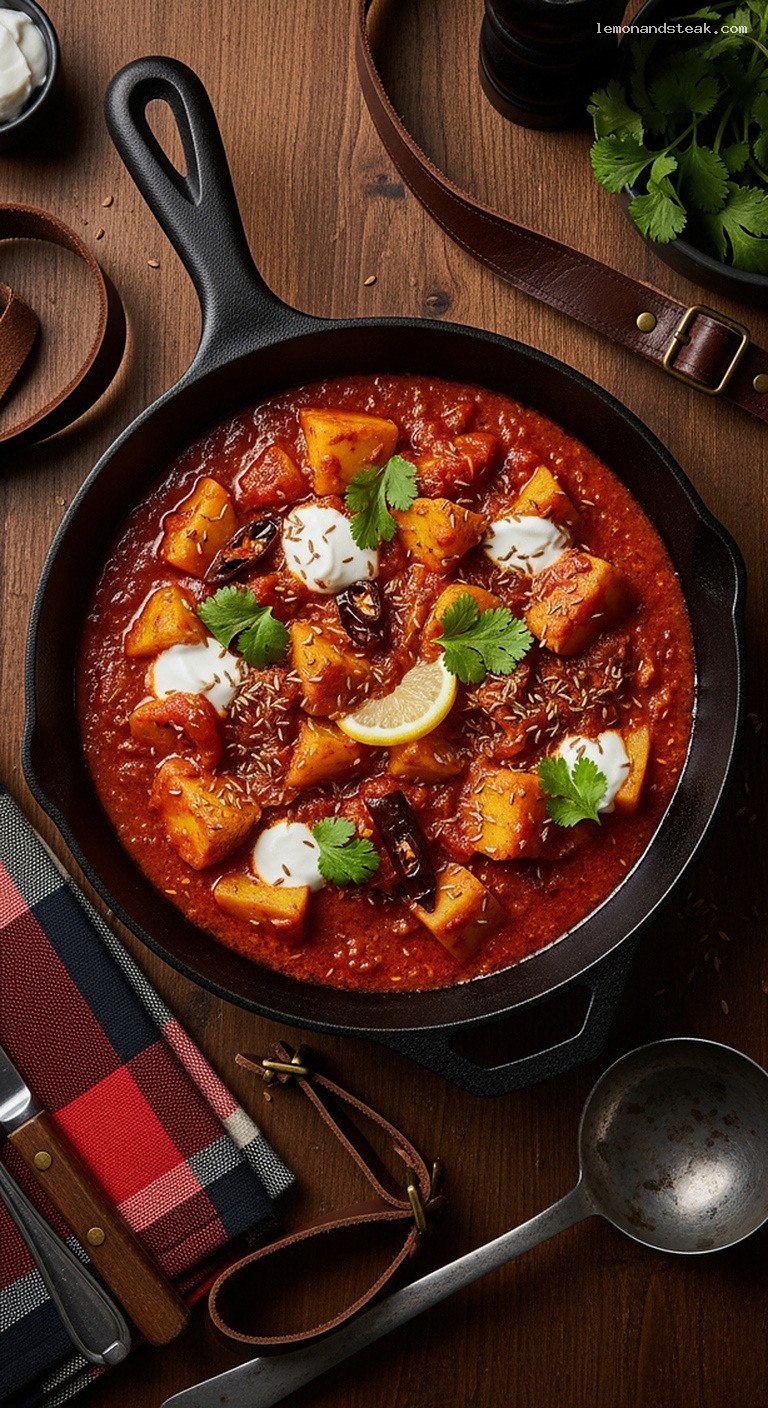
Quick Recipe Version (TL;DR)
Quick Ingredients
- 2 tbsp neutral oil (or 1 tbsp oil + 1 tbsp ghee)
- 1 tsp cumin seeds
- 1 large onion, finely chopped
- 4 cloves garlic, minced
- 1.5 tbsp fresh ginger, grated
- 1–2 green chilies, finely chopped (optional)
- 600 g (about 4 medium) potatoes, peeled and 2 cm cubes
- 1 can (400 g / 14 oz) crushed or diced tomatoes
- 2 tsp ground coriander
- 1.5 tsp ground cumin
- 0.5 tsp turmeric
- 0.5–1 tsp mild chili powder or paprika
- 1 tsp garam masala
- 1.5 tsp fine sea salt, plus more to taste
- 1.5 cups (360 ml) water or vegetable broth
- Small bunch fresh cilantro, chopped
- Lemon wedges and plain yogurt, for serving (optional)
Do This
- 1) Heat oil in a wide pot over medium heat. Add cumin seeds and sizzle 30 seconds.
- 2) Add onion and cook 7–8 minutes until soft and golden.
- 3) Stir in garlic, ginger, and chilies; cook 1–2 minutes until fragrant.
- 4) Add ground coriander, ground cumin, turmeric, chili powder, and salt. Toast 30 seconds.
- 5) Add tomatoes and simmer 5 minutes, stirring, until thickened and glossy.
- 6) Stir in potatoes and water/broth. Bring to a simmer, cover, and cook 18–22 minutes until potatoes are tender.
- 7) Uncover, gently mash a few potatoes to thicken. Stir in garam masala and cilantro. Adjust salt, rest 5 minutes, then serve with rice or flatbread.
Why You’ll Love This Recipe
- Deeply warming and comforting thanks to ginger, cumin, and coriander, but still bright from tomatoes and fresh cilantro.
- Uses simple, inexpensive pantry ingredients and a few fresh vegetables you can find anywhere.
- Fully vegetarian and easily made vegan, yet hearty enough to be a satisfying main dish.
- Great for weeknights: mostly hands-off simmering and tastes even better the next day.
Grocery List
- Produce: Potatoes, onion, garlic, fresh ginger, green chilies (optional), fresh cilantro, lemon (optional), fresh tomatoes if not using canned.
- Dairy: Plain yogurt for serving (optional; omit or use plant-based yogurt to keep it vegan).
- Pantry: Neutral oil or ghee, canned crushed or diced tomatoes, cumin seeds, ground coriander, ground cumin, turmeric, mild chili powder or paprika, garam masala, fine sea salt, black pepper, sugar (optional), vegetable broth or bouillon, basmati rice or flatbreads for serving.
Full Ingredients
For the Potato and Tomato Curry
- 2 tbsp neutral oil (such as sunflower, canola, or light olive oil), or 1 tbsp oil + 1 tbsp ghee
- 1 tsp cumin seeds
- 1 large yellow or white onion (about 200 g), finely chopped
- 4 cloves garlic, minced
- 1.5 tbsp fresh ginger, peeled and finely grated (about a 4 cm thumb-sized piece)
- 1–2 green chilies, finely chopped (optional, to taste; use jalapeño, serrano, or similar)
- 600 g potatoes (about 4 medium all-purpose potatoes), peeled and cut into 2 cm (3/4 inch) cubes
- 1 can (400 g / 14 oz) crushed or diced tomatoes, with juices
- 1.5 cups (360 ml) water or low-sodium vegetable broth
Ground Spices and Seasoning
- 2 tsp ground coriander
- 1.5 tsp ground cumin
- 0.5 tsp ground turmeric
- 0.5–1 tsp mild chili powder or paprika (adjust to heat preference)
- 1.5 tsp fine sea salt, plus more to taste
- 0.25 tsp freshly ground black pepper
- 0.5–1 tsp garam masala (add at the end, to taste)
- 0.5 tsp sugar (optional; helps balance the acidity of the tomatoes)
To Finish and Serve
- Small bunch fresh cilantro (coriander leaves), roughly chopped (about 0.5 cup loosely packed)
- Lemon wedges, for squeezing over at the table (optional but recommended)
- Plain yogurt or thick plant-based yogurt, for dolloping on top (optional)
- Cooked basmati rice, naan, or other flatbread, for serving
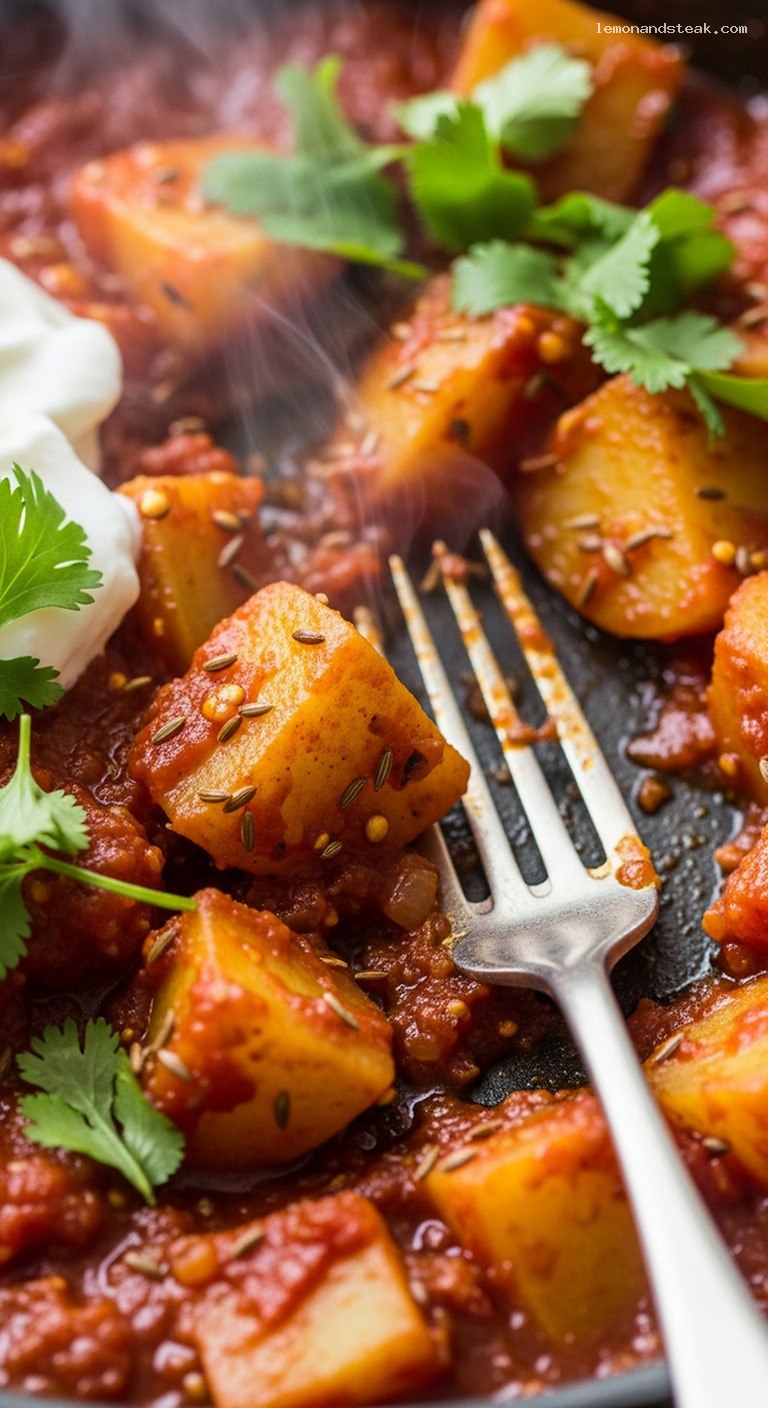
Step-by-Step Instructions
Step 1: Prep the vegetables and aromatics
Peel the potatoes and cut them into roughly 2 cm (3/4 inch) cubes so they cook evenly and hold their shape. Rinse them briefly under cold water to remove excess surface starch, then drain well and set aside.
Finely chop the onion. Mince the garlic cloves. Peel and finely grate the ginger. If using green chilies, remove seeds for a milder curry or leave them in for more heat, then finely chop. Roughly chop the cilantro and keep the leafy tops for garnishing; you can finely chop the tender stems and use them in the curry for extra flavor.
Step 2: Bloom the cumin seeds
Set a heavy-bottomed pot or deep skillet (about 24–26 cm / 10–11 inches wide) over medium heat. Add the oil (and ghee, if using). When the fat is hot and shimmering but not smoking, sprinkle in the cumin seeds.
Let the cumin seeds sizzle and crackle for 30–45 seconds, stirring often, until they darken slightly and release a nutty, toasty aroma. Be careful not to burn them; if they turn very dark or smell acrid, start again with fresh oil and cumin. This blooming step infuses the oil with deep flavor.
Step 3: Soften the onions and build the aromatic base
Add the chopped onion to the pot with the cumin oil. Stir to coat the onion in the fat, then cook for 7–8 minutes, stirring occasionally, until the onion is soft, translucent, and turning light golden around the edges. If it starts browning too quickly, lower the heat slightly.
Stir in the minced garlic, grated ginger, and chopped green chilies (if using). Cook for 1–2 minutes, stirring continuously, until very fragrant and the raw smell of garlic and ginger has mellowed. Do not let the garlic brown; adjust the heat if necessary.
Step 4: Toast the ground spices and add the tomatoes
Sprinkle the ground coriander, ground cumin, turmeric, chili powder or paprika, salt, black pepper, and sugar (if using) over the onion mixture. Stir constantly for about 30 seconds to 1 minute to lightly toast the spices; they should smell fragrant and slightly nutty. If the pan looks very dry or the spices begin to stick, add 1–2 tbsp of water and stir to prevent burning.
Pour in the canned crushed or diced tomatoes with their juices. Stir well, scraping up any browned bits from the bottom of the pot. Bring to a gentle simmer and cook for 5–7 minutes, stirring occasionally, until the mixture thickens slightly and the oil just begins to separate around the edges. This step helps cook off raw tomato flavor and deepens the sauce.
Step 5: Add the potatoes and simmer until tender
Add the cubed potatoes to the pot and stir to coat them thoroughly in the spiced tomato mixture. Pour in the water or vegetable broth and stir again. The liquid should just about cover the potatoes; if it does not, add a splash more water.
Increase the heat to medium-high and bring the curry to a gentle boil. Once boiling, reduce the heat to low or medium-low to maintain a steady simmer. Cover the pot with a lid, leaving it slightly ajar, and cook for 18–22 minutes, stirring every 5 minutes or so, until the potatoes are completely tender when pierced with a fork but not falling apart. Adjust the heat as needed to keep a gentle simmer rather than a rolling boil.
Step 6: Thicken, finish with garam masala, and add cilantro
When the potatoes are tender, remove the lid. Using the back of a spoon or a potato masher, lightly mash a small handful of the potatoes directly in the pot. This will thicken the sauce and give it a velvety, hearty texture while still leaving plenty of distinct potato pieces.
Sprinkle in the garam masala and about two-thirds of the chopped cilantro (including any finely chopped tender stems). Stir well, then taste the curry. Adjust seasoning with more salt, black pepper, or chili powder as needed. If the curry is too thick, add a splash of water; if it is too thin, simmer uncovered for a few more minutes to reduce. Turn off the heat and let the curry rest for 5 minutes so the flavors can mingle.
Step 7: Serve warm and garnish
Just before serving, give the curry a final gentle stir. Ladle it into warm bowls. Top each serving with a sprinkle of the remaining fresh cilantro. If you like, add a small squeeze of lemon juice for brightness and a spoonful of plain yogurt or plant-based yogurt for creaminess and a cooling contrast to the spices.
Serve the potato and tomato curry hot with steamed basmati rice, warm naan, or your favorite flatbread. It is also excellent alongside simple sautéed greens or a crisp salad for a complete, comforting meal.
Pro Tips
- Cut potatoes evenly: Aim for uniform 2 cm cubes so they cook at the same rate and keep their shape in the curry.
- Control the heat level: Use mild chili powder or paprika for gentle warmth, then adjust with fresh green chilies or extra chili powder at the end if you prefer more heat.
- Bloom spices, do not burn them: Ground spices scorch easily. If they start sticking or darkening too quickly, add a splash of water and stir.
- Rest before serving: Five to ten minutes off the heat helps the potatoes absorb the sauce and gives the curry a fuller, rounder flavor.
- Use broth for extra savoriness: Vegetable broth instead of water adds another layer of depth without complicating the recipe.
Variations
- Chickpea boost: Stir in 1 can (400 g / 14 oz) drained chickpeas during the last 10 minutes of simmering for extra protein and a heartier curry.
- Creamy coconut version: Replace 0.5 cup (120 ml) of the water with full-fat coconut milk. Add it after the potatoes are mostly tender and simmer gently for a few minutes.
- Spinach and potato curry: Stir in 2 large handfuls of fresh baby spinach or chopped mature spinach during the last 2–3 minutes of cooking, just until wilted.
Storage & Make-Ahead
Allow the curry to cool to room temperature, then transfer it to an airtight container. Refrigerate for up to 4 days. The flavors often deepen and improve by the next day, making this an excellent make-ahead meal or lunch prep option. To reheat, warm gently in a covered pot over low to medium-low heat, adding a splash of water if the sauce has thickened too much. You can also reheat individual portions in the microwave, stirring halfway through.
For longer storage, freeze in airtight containers or freezer bags for up to 2 months. Thaw overnight in the refrigerator, then reheat on the stovetop, adjusting thickness and seasoning as needed. Potatoes may become slightly softer after freezing, but the curry will still be delicious and comforting.
Nutrition (per serving)
Approximate values for 1 of 4 servings (curry only, without rice, bread, or yogurt): about 320 kcal; 7 g protein; 11 g fat; 52 g carbohydrates; 7 g dietary fiber; 8 g sugars; 720 mg sodium (will vary depending on salt, broth, and tomato brand). These numbers are estimates and can change based on specific ingredients and any variations or garnishes you use.
Leave a Reply