
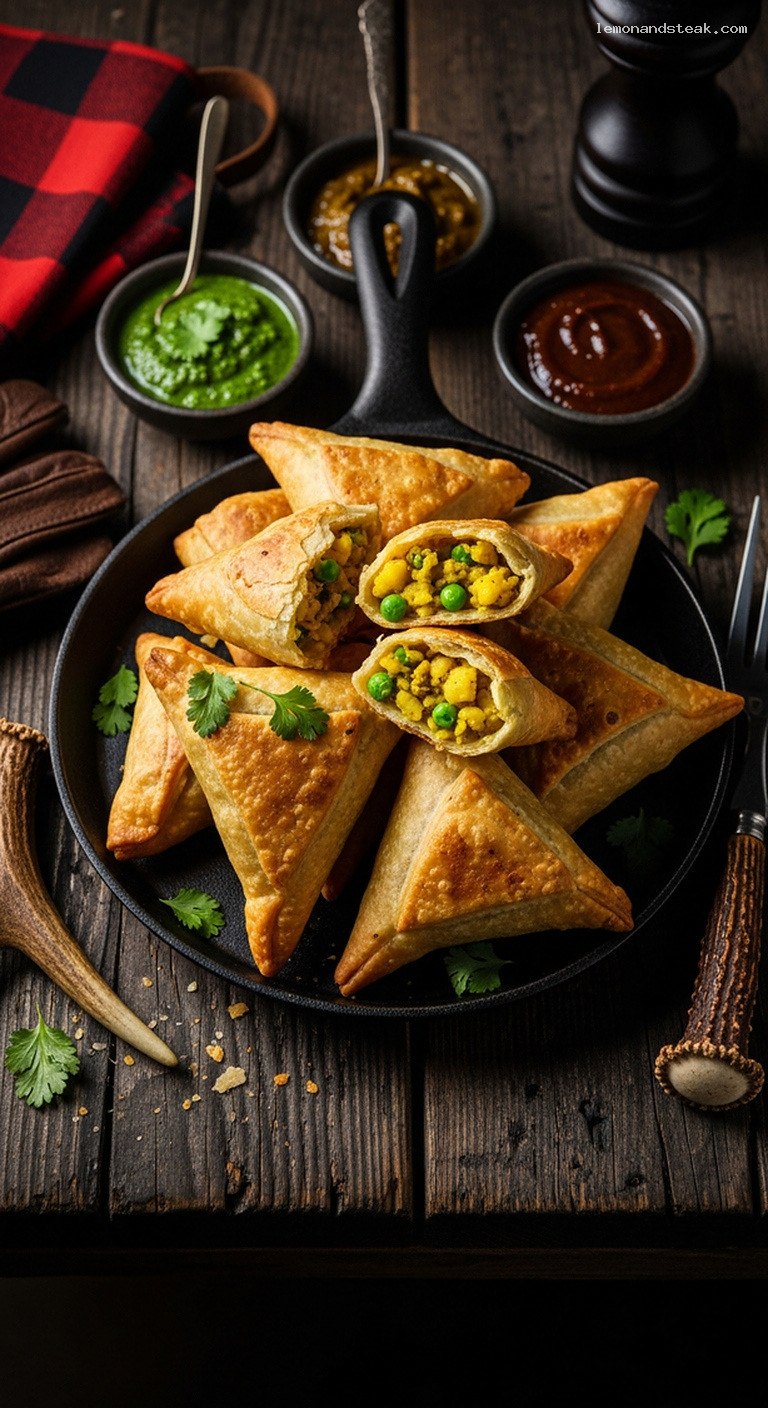
Quick Recipe Version (TL;DR)
Quick Ingredients
- 2 cups (260 g) all-purpose flour
- 2 tbsp fine semolina (optional, for extra crispness)
- 1 tsp fine salt, plus more to taste
- 1/2 tsp ajwain (carom) seeds (optional)
- 4 tbsp neutral oil or ghee (for dough)
- 7–9 tbsp cold water (as needed)
- 4 medium starchy potatoes (about 800 g), peeled and cubed
- 1 cup green peas (fresh or frozen)
- 2 tbsp vegetable oil (for filling)
- 1 1/2 tsp cumin seeds
- 1 tbsp finely minced ginger
- 1–2 green chilies, finely chopped (optional)
- 2 tsp ground coriander
- 1 tsp garam masala
- 1/2 tsp ground turmeric
- 1/2 tsp mild chili powder (such as Kashmiri)
- 1 1/2 tsp amchur (dried mango powder) or 1 1/2 tbsp lemon juice
- 1/4 cup chopped fresh cilantro
- Neutral oil for deep frying (about 4–5 cups) or 2 tbsp oil for brushing if baking
Do This
- 1. Make dough: Mix flour, semolina, salt, ajwain, and oil/ghee. Rub to a sandy texture, then add cold water gradually to form a firm, smooth dough. Rest 30 minutes, covered.
- 2. Boil potatoes in salted water until tender, 12–15 minutes. In last 2 minutes add peas, then drain well and lightly mash.
- 3. Cook filling: In oil, sizzle cumin, ginger, and chili. Stir in spices, then potatoes, peas, salt, amchur/lemon, and cilantro. Cool completely.
- 4. Divide dough into 9–10 balls. Roll each into a 6–7 inch oval, cut in half, and shape each half into a cone.
- 5. Fill each cone with 2–3 tbsp potato mixture. Seal the top edges firmly, pinching to create a triangle.
- 6. Fry in 325–340°F (165–170°C) oil for 8–10 minutes until deeply golden and crisp; drain on a rack.
- 7. For baking: Brush shaped samosas with oil and bake at 400°F (200°C) for 20–25 minutes, turning once, until golden and crisp.
Why You’ll Love This Recipe
- Crisp, flaky pastry wrapped around a warmly spiced potato-and-pea filling that is comforting and satisfying.
- Includes both deep-fried and baked options, so you can choose between indulgent and lighter versions.
- Clear, step-by-step instructions tailored for home cooks, even if you have never made samosas before.
- Perfect for freezing, party snacks, lunch boxes, or a cozy evening appetizer with chutney and tea.
Grocery List
- Produce: 4 medium potatoes, 1 cup green peas, fresh ginger, 1–2 green chilies (optional), fresh cilantro, 1 lemon (if not using amchur).
- Dairy: Ghee (optional, can replace with oil if preferred).
- Pantry: All-purpose flour, fine semolina, neutral oil, cumin seeds, ajwain seeds (optional), ground coriander, garam masala, ground turmeric, mild chili powder, amchur (optional), salt.
Full Ingredients
For the Samosa Dough
- 2 cups (260 g) all-purpose flour
- 2 tbsp fine semolina (optional, for extra crunch)
- 1 tsp fine salt
- 1/2 tsp ajwain (carom) seeds (optional but traditional and very flavorful)
- 4 tbsp neutral oil or melted ghee
- 7–9 tbsp cold water, added gradually as needed, to form a firm dough
For the Spiced Potato & Pea Filling
- 4 medium starchy potatoes (about 800 g), peeled and cut into 1-inch cubes
- 1 cup green peas, fresh or frozen
- 2 tbsp vegetable oil (or ghee)
- 1 1/2 tsp cumin seeds
- 1 tbsp finely minced fresh ginger
- 1–2 green chilies, finely chopped (seeds removed for milder heat, optional)
- 2 tsp ground coriander
- 1 tsp garam masala
- 1/2 tsp ground turmeric
- 1/2 tsp mild red chili powder (such as Kashmiri) or paprika for color
- 1 1/4 tsp salt, or to taste
- 1 1/2 tsp amchur (dried mango powder), or 1 1/2 tbsp fresh lemon juice
- 1/4 cup finely chopped fresh cilantro leaves and tender stems
For Frying or Baking
- Neutral oil for deep frying (about 4–5 cups, depending on pot size)
- OR 2 tbsp neutral oil, for brushing if baking
To Serve (Optional but Recommended)
- Green chutney (mint-cilantro)
- Tamarind chutney
- Lemon wedges
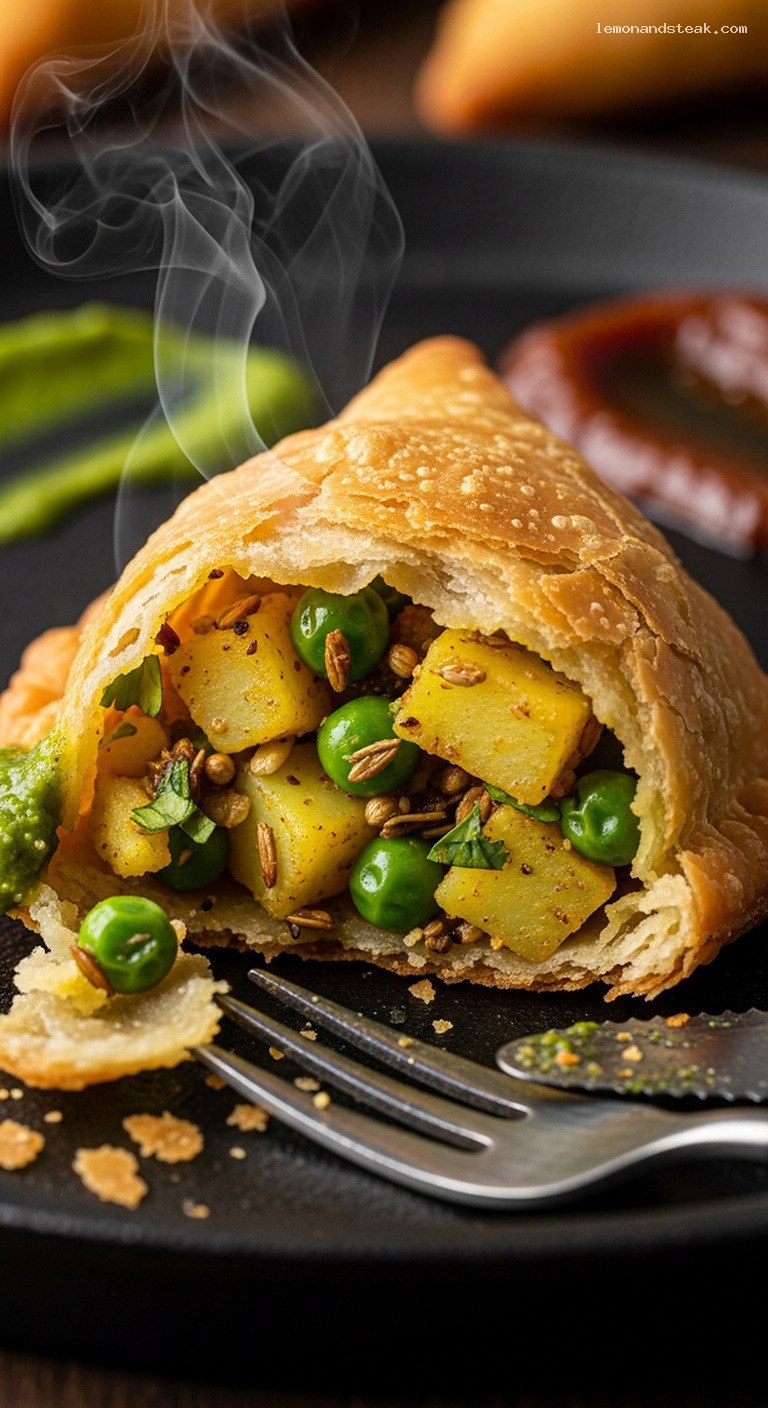
Step-by-Step Instructions
Step 1: Make the samosa dough
In a large mixing bowl, combine the all-purpose flour, semolina (if using), salt, and ajwain seeds. Stir to distribute the salt and spices evenly. Drizzle in the 4 tablespoons of oil or melted ghee. Using your fingertips, rub the fat into the flour mixture until it looks sandy and clumps slightly when pressed in your palm. This step is crucial for a flaky, crisp crust.
Begin adding cold water 1 tablespoon at a time, mixing with your hand or a spoon until the dough just comes together. You want a firm but smooth dough, tighter than chapati or pizza dough and not sticky. You will likely need between 7 and 9 tablespoons of water. Knead for 3–4 minutes until smooth. Cover the dough with a damp kitchen towel or plastic wrap and let it rest at room temperature for 30 minutes while you make the filling.
Step 2: Boil and prep the potatoes and peas
Place the peeled, cubed potatoes in a medium pot and cover with cold water by about 1 inch. Add 1 teaspoon of salt to season them from the inside out. Bring to a boil over medium-high heat, then reduce to a gentle simmer. Cook for 12–15 minutes, until the potatoes are easily pierced with a fork but not falling apart.
In the last 2 minutes of cooking, add the green peas to the pot. Once the potatoes are tender, drain the potatoes and peas thoroughly in a colander and let them steam-dry for a few minutes. Transfer to a large bowl and lightly mash with a fork or potato masher. Aim for a chunky texture, not a smooth puree; some small potato pieces give the filling more body.
Step 3: Cook the spiced potato-pea filling
Heat 2 tablespoons of oil or ghee in a large skillet over medium heat. Add the cumin seeds and let them sizzle for 20–30 seconds until fragrant and slightly darker. Stir in the minced ginger and chopped green chilies, cooking for another 30–60 seconds until aromatic but not browned.
Lower the heat slightly and add the ground coriander, garam masala, turmeric, and chili powder. Stir for 20–30 seconds to wake up the spices, then immediately add the warm potatoes and peas to prevent burning. Sprinkle in the salt and mix everything thoroughly, gently pressing so that the spices coat the potatoes evenly.
Turn off the heat. Stir in the amchur (or lemon juice) and the chopped cilantro. Taste and adjust seasoning: more salt for depth, more amchur or lemon for tang, or more chili for heat. Spread the filling slightly in the pan or in a bowl and let it cool to room temperature before stuffing. Warm or hot filling will make the dough soft and harder to handle.
Step 4: Rest and divide the dough
After the dough has rested for at least 30 minutes, knead it briefly for 15–20 seconds to bring it back together. Divide the dough into 9 or 10 equal pieces (each about the size of a golf ball). Roll each piece into a smooth ball by cupping it under your palm and rolling on the counter.
Keep the dough balls covered with a damp towel while you work to prevent them from drying out, which can cause cracks in the pastry later. Lightly dust your work surface with flour. Working with one ball at a time, roll it into a thin oval about 6–7 inches long and 4–5 inches wide. Try to keep the thickness even, about 1–2 mm, so the samosas cook uniformly. Cut the oval in half crosswise to create two long semi-circles.
Step 5: Shape and fill the samosas
Take one semi-circle with the straight edge facing you. Lightly moisten the straight edge with water using your fingertip. Fold the two corners of the straight edge toward each other to form a cone, overlapping the straight edges slightly. Press firmly to seal, pinching together so no gaps remain. You should now have a hollow cone with a pointed bottom.
Hold the cone in your hand and spoon 2–3 tablespoons of cooled potato-pea filling into it, gently packing it down but not over-stuffing (leave about 1/4 inch space at the top). Lightly moisten the open top edge with water, then pinch and fold it closed, pressing well to create a tight seam and a classic triangular samosa shape. Make sure there are no cracks or open seams; pinch gently wherever needed. Place the shaped samosas on a tray lined with parchment or a lightly floured surface. Repeat with remaining dough and filling.
Step 6: Fry the samosas until crisp and golden
Pour oil into a heavy-bottomed pot or deep pan, enough to submerge the samosas (about 2–3 inches deep). Heat over medium heat until the oil reaches 325–340°F (165–170°C). If you do not have a thermometer, test by dropping in a small piece of dough: it should rise slowly to the surface with gentle bubbling, not vigorously sizzle and brown quickly.
Add 4–5 samosas at a time, taking care not to crowd the pan. Fry on medium-low heat, turning occasionally, for 8–10 minutes or until they are an even deep golden brown and feel crisp when tapped. Cooking at a moderate temperature is key; if the oil is too hot, the outside will brown quickly while the pastry inside stays doughy.
Use a slotted spoon to remove the fried samosas to a wire rack or paper-towel-lined tray to drain excess oil. Allow the oil temperature to recover between batches and repeat with remaining samosas.
Step 7: Bake option (for a lighter version)
For baked samosas, preheat your oven to 400°F (200°C). Line a baking sheet with parchment paper. Arrange the shaped, un-fried samosas on the sheet, leaving a little space between each. Brush each samosa lightly but thoroughly with oil on all sides, or use an oil spray to coat them evenly.
Bake on the middle rack for 20–25 minutes, turning the samosas over halfway through baking. They are done when they are golden brown on both sides and feel firm and crisp to the touch. Baking will give a slightly less blistered crust than frying, but still a satisfying crunch.
Step 8: Serve and enjoy
Let the samosas cool for 5–10 minutes before serving; the filling will be extremely hot right out of the oil or oven. Serve them warm or at room temperature with green chutney, tamarind chutney, and lemon wedges. They make an excellent snack with hot tea, or can be turned into a meal alongside a simple salad or a bowl of yogurt.
For a party platter, arrange the samosas in a circle on a wooden board or large plate with small bowls of chutneys in the center. Garnish with extra cilantro leaves or thinly sliced red onions if you like a bit of crunch on the side.
Pro Tips
- Firm dough is essential: A slightly stiff dough gives you a crisp, flaky shell that does not soak up oil. If the dough feels soft or sticky, knead in a bit more flour.
- Do not over-hydrate the filling: Let the potatoes and peas steam-dry after boiling, and cool the filling completely before stuffing. Excess moisture can make the pastry soggy and harder to seal.
- Seal thoroughly: Use a little water as “glue” and pinch the seams well. Any small opening can cause the filling to leak into the oil while frying.
- Fry low and slow: Keeping the oil around 325–340°F (165–170°C) ensures the crust cooks all the way through and stays crisp for longer.
- Test one first: Fry or bake a single samosa, then adjust seasoning in the filling, oil temperature, or baking time before cooking the full batch.
Variations
- Extra-veg samosas: Add 1/2 cup finely diced carrots or green beans to the filling. Parboil them with the potatoes, then mix into the spiced mash.
- Spicy paneer and potato: Replace 1 potato with 150 g crumbled paneer (Indian cottage cheese). Add it with the potatoes and peas for a richer, slightly creamy filling.
- Sweet potato twist: Substitute half of the regular potatoes with sweet potatoes. Increase chili powder and lemon or amchur slightly to balance the natural sweetness.
Storage & Make-Ahead
Refrigerator: Cooled, cooked samosas keep in an airtight container in the fridge for up to 3 days. Reheat in a 350°F (175°C) oven or air fryer for 8–10 minutes until hot and crisp again. Microwaving alone will soften the crust, so finish in the oven if possible.
Freezer (uncooked): Shape the samosas and place them on a parchment-lined tray. Freeze until solid, then transfer to a freezer bag or container. Cook from frozen: fry at 325°F (165°C) for 10–12 minutes, or bake at 400°F (200°C) for 25–30 minutes, until golden and cooked through.
Freezer (cooked): Fully cooled fried or baked samosas can be frozen for up to 2 months. Reheat from frozen at 375°F (190°C) for 15–20 minutes, until piping hot and crisp.
Nutrition (per serving)
Approximate values for 1 serving (3 samosas), fried, without chutney: about 380–430 calories; 16–20 g fat; 55–60 g carbohydrates; 7–9 g protein; 5–7 g fiber. Baked samosas will be somewhat lower in total fat and calories, depending on how lightly they are brushed with oil.
Leave a Reply