
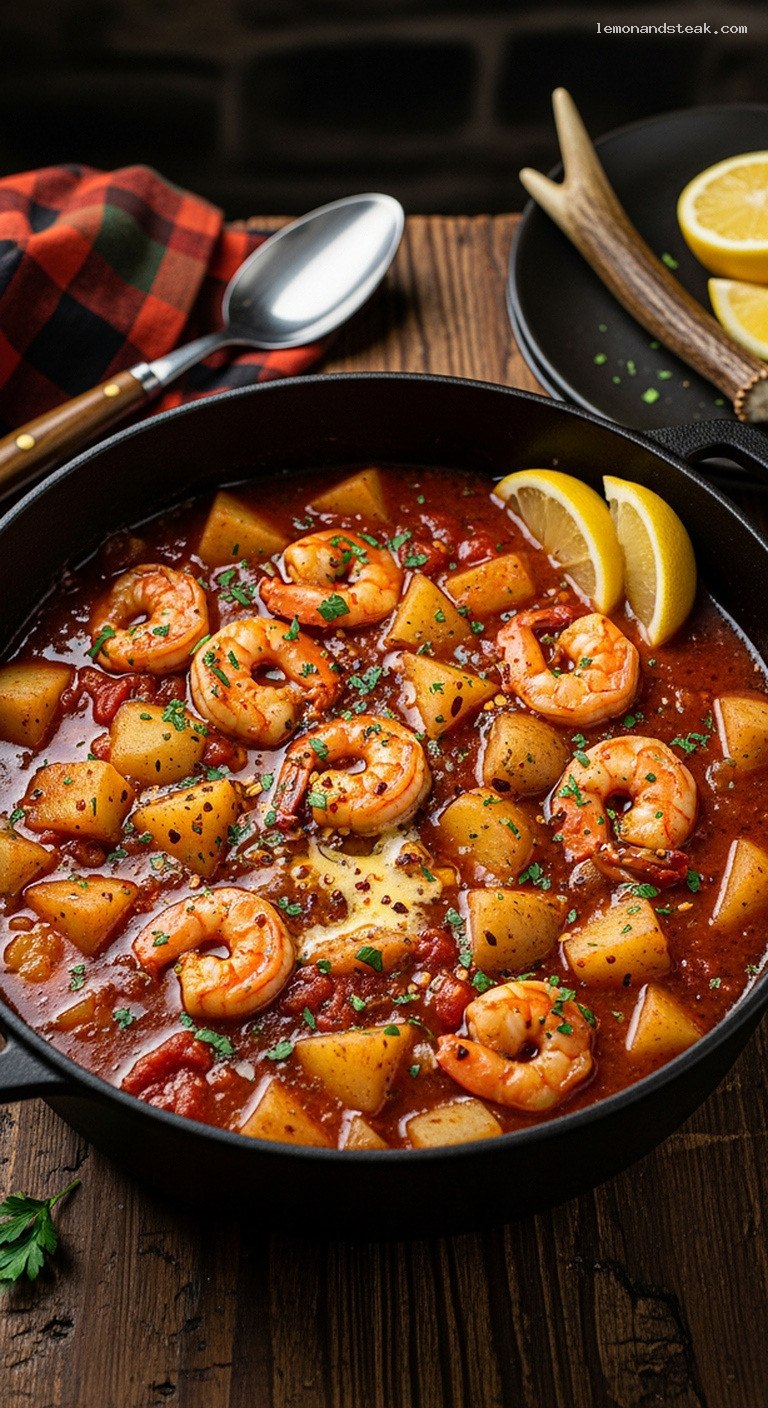
Quick Recipe Version (TL;DR)
Quick Ingredients
- 2 tbsp olive oil
- 2 tbsp unsalted butter, divided
- 1 medium onion, finely chopped
- 4 garlic cloves, minced
- 1 tsp smoked paprika
- 1/2 tsp dried thyme + 1/2 tsp dried oregano
- 1/4 tsp red pepper flakes (optional)
- 2 tbsp tomato paste
- 1 can (14.5 oz / 400 g) crushed tomatoes
- 4 cups (960 ml) low-sodium seafood stock or chicken broth
- 1 bay leaf
- 1 1/2 lb (680 g) waxy potatoes, 1-inch chunks
- 1 lb (450 g) raw shrimp, peeled and deveined
- 2 tbsp fresh lemon juice
- 2 tbsp chopped fresh parsley
- Salt and black pepper, to taste
- Optional: 1/4 cup (60 ml) heavy cream; crusty bread for serving
Do This
- 1. Sauté onion in olive oil and 1 tbsp butter over medium heat for 5–6 minutes until soft.
- 2. Stir in garlic, smoked paprika, thyme, oregano, red pepper flakes, and tomato paste; cook 1–2 minutes.
- 3. Add crushed tomatoes, stock, bay leaf, 3/4 tsp salt, and 1/2 tsp pepper. Bring to a simmer (185–200°F / 85–93°C).
- 4. Add potatoes; simmer gently, partially covered, 18–22 minutes until tender.
- 5. Add shrimp; simmer 3–5 minutes until pink and opaque and internal temperature reaches 145°F (63°C).
- 6. Stir in lemon juice, remaining 1 tbsp butter, cream if using, and parsley. Adjust salt, pepper, and heat.
- 7. Serve hot with crusty bread and extra lemon wedges.
Why You’ll Love This Recipe
- Cozy, coastal flavors: sweet shrimp, tender potatoes, and a garlicky tomato broth feel like a seaside getaway in a bowl.
- One-pot simplicity: everything simmers together in a single pot, making cleanup easy.
- Flexible and forgiving: use seafood or chicken stock, adjust the heat level, and choose your favorite potatoes.
- Great for guests: looks impressive and restaurant-worthy, but uses straightforward pantry ingredients and simple techniques.
Grocery List
- Produce: Yellow onion, garlic, waxy potatoes (Yukon Gold or red), lemon, fresh parsley, optional celery and carrot.
- Dairy: Unsalted butter, optional heavy cream or half-and-half.
- Pantry: Olive oil, canned crushed tomatoes, seafood or chicken stock, bay leaf, smoked paprika, dried thyme, dried oregano, red pepper flakes, sugar (optional), salt, black pepper, raw shrimp, crusty bread.
Full Ingredients
For the Tomato-Garlic Broth
- 2 tbsp olive oil
- 2 tbsp unsalted butter, divided
- 1 medium yellow onion, finely chopped (about 1 cup)
- 1 small carrot, finely diced (about 1/2 cup, optional but adds sweetness)
- 1 small celery stalk, finely diced (about 1/3 cup, optional)
- 4 garlic cloves, minced
- 1 tsp smoked paprika
- 1/2 tsp dried thyme
- 1/2 tsp dried oregano
- 1/4 tsp crushed red pepper flakes (optional, for gentle heat)
- 2 tbsp tomato paste
- 1 can (14.5 oz / 400 g) crushed tomatoes
- 4 cups (960 ml) low-sodium seafood stock or chicken broth
- 1 bay leaf
- 1 tsp sugar (optional, to balance acidity)
- 3/4 tsp fine sea salt, plus more to taste
- 1/2 tsp freshly ground black pepper, plus more to taste
For the Potatoes and Shrimp
- 1 1/2 lb (680 g) waxy potatoes (Yukon Gold or red), peeled if desired and cut into 1-inch chunks
- 1 lb (450 g) raw medium or large shrimp (21/25 or 26/30 count), peeled and deveined, tails on or off
- 2 tbsp fresh lemon juice (from about 1 lemon), plus extra lemon wedges for serving
- 2 tbsp chopped fresh flat-leaf parsley, plus more for garnish
- 1/4 cup (60 ml) heavy cream or half-and-half (optional, for a creamier stew)
For Serving (Optional)
- Crusty bread, toasted or warmed
- Extra chopped parsley
- Extra red pepper flakes for sprinkling
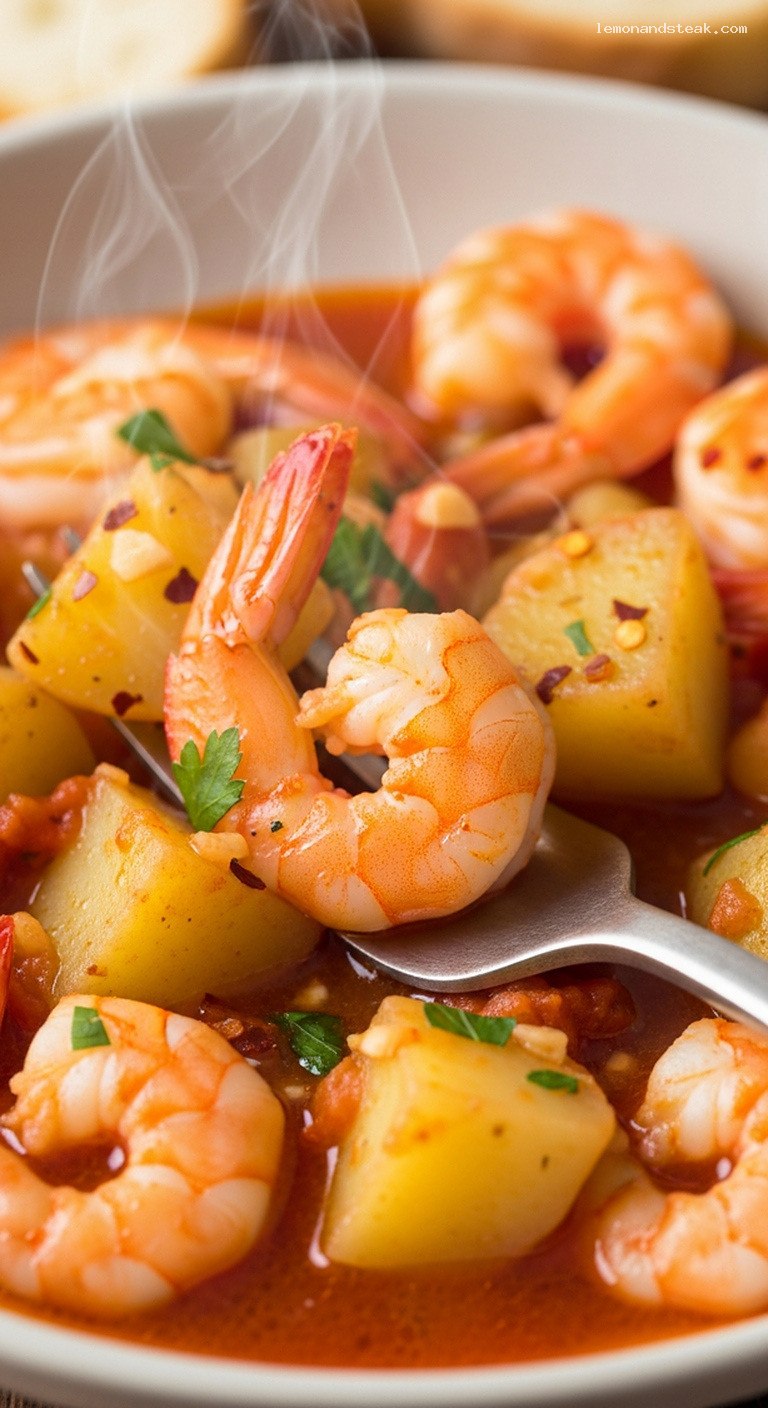
Step-by-Step Instructions
Step 1: Prep the shrimp and vegetables
If your shrimp are not already cleaned, peel and devein them. Pat dry with paper towels and keep chilled in the refrigerator until needed. This helps them sear slightly and prevents the stew from becoming watery.
Finely chop the onion. Dice the carrot and celery, if using. Mince the garlic. Peel the potatoes if you prefer (thin-skinned potatoes can be left unpeeled), then cut into 1-inch chunks so they cook evenly. Chop the parsley and cut the lemon into wedges. Having everything prepped makes the cooking process smooth and relaxed.
Step 2: Build the aromatic base
In a large heavy-bottomed pot or Dutch oven, heat the olive oil and 1 tbsp of the butter over medium heat. When the butter has melted and is foaming slightly, add the chopped onion, carrot, and celery. Cook, stirring occasionally, for 5–7 minutes until the vegetables are softened and the onion is translucent but not browned.
Stir in the minced garlic, smoked paprika, dried thyme, dried oregano, and crushed red pepper flakes (if using). Cook for 1–2 minutes, stirring frequently, until very fragrant. Add the tomato paste and cook it out for another 1–2 minutes; it will darken slightly and stick a bit to the bottom. This deepens the tomato flavor and gives the broth a rich, coastal-style base.
Step 3: Add tomatoes and simmer the broth
Pour in the crushed tomatoes and stock, using a wooden spoon to scrape up any browned bits from the bottom of the pot. Add the bay leaf, sugar (if using), 3/4 tsp salt, and 1/2 tsp black pepper. Stir well to combine.
Increase the heat to medium-high and bring the mixture just to a boil. As soon as it boils, reduce the heat to low or medium-low so the stew maintains a gentle simmer, around 185–200°F (85–93°C). You should see small, lazy bubbles rather than a vigorous boil. Simmer for 5–10 minutes to let the flavors meld before adding the potatoes.
Step 4: Simmer the potatoes until tender
Add the potato chunks to the pot and stir to submerge them in the tomato-garlic broth. Partially cover the pot with a lid (leave it slightly ajar) to reduce evaporation while allowing steam to escape.
Maintain a gentle simmer (again, aim for small bubbles rather than a rolling boil) and cook for 18–22 minutes, stirring occasionally, until the potatoes are very tender when pierced with a fork but not falling apart. If the stew becomes too thick, add a splash of additional stock or water. If it seems too thin, remove the lid fully for the last 5 minutes to reduce slightly.
Step 5: Add the shrimp and finish the stew
Once the potatoes are tender, taste the broth and adjust the seasoning with more salt and pepper if needed. The broth should taste well-seasoned at this stage, because the shrimp will cook quickly and not add much salt on their own.
Add the shrimp to the gently simmering stew in an even layer. Stir once to distribute them, then let them cook, uncovered, for 3–5 minutes. The shrimp are done when they curl into a loose “C” shape, turn pink and opaque, and reach an internal temperature of 145°F (63°C). Avoid boiling hard, which can make shrimp tough.
Remove and discard the bay leaf.
Step 6: Brighten and enrich the flavors
Turn the heat down to low. Stir in the remaining 1 tbsp butter, the fresh lemon juice, and the chopped parsley. If you prefer a creamier stew, gently mix in the heavy cream or half-and-half. Heat for 1–2 minutes, just until everything is warmed through but not boiling, which could cause the cream to separate.
Taste once more and adjust with additional salt, pepper, red pepper flakes, or lemon juice. The finished stew should be savory, slightly sweet from the vegetables and tomatoes, with a gentle garlic kick and a bright citrus finish.
Step 7: Serve warm and enjoy
Ladle the hot potato and shrimp stew into warm bowls, making sure each serving has plenty of potatoes, shrimp, and broth. Sprinkle with a little extra parsley and red pepper flakes if you like a bit more heat. Serve immediately with crusty bread for dipping, and lemon wedges on the side for squeezing over the top.
The stew is best enjoyed piping hot, while the potatoes are silky and the shrimp are tender and juicy.
Pro Tips
- Choose the right potatoes: Waxy varieties like Yukon Gold or red potatoes hold their shape and stay tender without getting grainy or falling apart.
- Do not overcook the shrimp: Add them at the very end and cook just until pink and opaque. Overcooked shrimp become rubbery quickly.
- Control the simmer: Keep the stew at a gentle simmer (not a rapid boil) around 185–200°F (85–93°C) so the potatoes cook evenly and the broth stays clear and flavorful.
- Season in layers: Lightly season when you add the broth, taste after the potatoes are done, and again after the shrimp go in. This builds depth without over-salting.
- Brothy or creamy: For a lighter, coastal feel, skip the cream. For a richer, chowder-like stew, add the optional cream at the end.
Variations
- Spicy coastal style: Increase the crushed red pepper flakes to 1/2–3/4 tsp and add a pinch of cayenne. Finish with extra lemon and parsley for a bright, fiery stew.
- Creamy Mediterranean: Stir in the cream plus 1/4 cup grated Parmesan at the end, and add a handful of baby spinach leaves to wilt just before serving.
- Mixed seafood version: Replace half the shrimp with firm white fish chunks (such as cod or halibut) or scallops. Add fish pieces for 5–7 minutes of gentle simmering; add scallops for 3–4 minutes.
Storage & Make-Ahead
For the best texture, this stew is ideal eaten fresh, because shrimp can become rubbery when reheated. If you do have leftovers, let the stew cool to room temperature, then store in an airtight container in the refrigerator for up to 2 days. Reheat gently on the stovetop over low heat until just steaming hot; avoid boiling.
For a make-ahead option, prepare the stew base and potatoes (Steps 1–4) up to 2 days in advance. Cool and refrigerate. When ready to serve, bring the stew back to a gentle simmer, then add the shrimp and finish with lemon, parsley, and cream (if using) as directed in Steps 5 and 6. This method keeps the shrimp perfectly tender while still giving you a big head start on dinner.
Nutrition (per serving)
Approximate values for 1 of 4 servings (without cream, using seafood stock): about 420 calories; 30 g protein; 14 g fat; 48 g carbohydrates; 4 g fiber; 1,050 mg sodium. Using heavy cream will add roughly 40–50 calories and 4–5 g fat per serving. Actual values will vary based on the specific brands of stock, tomatoes, and bread served alongside.
Leave a Reply