
Quick Recipe Version (TL;DR)
Quick Ingredients
- 1 1/4 cups (150 g) all-purpose flour
- 1/2 cup (115 g) cold unsalted butter, cubed
- 1/2 tsp fine salt + extra for seasoning
- 3–5 tbsp ice water
- 2 tbsp olive oil, divided
- 1 tbsp unsalted butter
- 3 large yellow onions, thinly sliced
- 1/2 tsp sugar (optional, for caramelizing)
- 1 tsp balsamic or sherry vinegar
- 3 medium Yukon Gold potatoes (about 400 g), thinly sliced
- 3 large eggs
- 1/2 cup (120 ml) heavy cream
- 1/2 cup (120 ml) whole milk
- 1 tsp Dijon mustard
- 1 1/2 tsp fresh thyme leaves (plus extra for garnish)
- 1 cup (100 g) grated Gruyère cheese
- 1/4 cup (25 g) grated Parmesan cheese
- Freshly ground black pepper
Do This
- 1. Make pastry: Cut cold butter into flour and salt, add just enough ice water to form a dough. Shape into a disk, wrap, and chill 30 minutes.
- 2. While dough chills, slowly caramelize sliced onions in olive oil and butter over medium-low heat (25–35 minutes). Finish with sugar (if using), vinegar, salt, and pepper.
- 3. Roll dough to fit a 9-inch (23 cm) tart pan. Line pan, trim edges, chill 10 minutes. Blind-bake at 400°F (200°C) for 15 minutes with weights, then 5 minutes without, until lightly golden. Reduce oven to 375°F (190°C).
- 4. Thinly slice potatoes and blanch in salted boiling water for 3 minutes. Drain well and pat dry.
- 5. Whisk eggs, cream, milk, Dijon, thyme, salt, and pepper to make custard. Mix cheeses together.
- 6. Spread caramelized onions in crust, sprinkle half the cheese, then layer potatoes in overlapping circles. Pour custard around the potatoes and top with remaining cheese and a drizzle of olive oil.
- 7. Bake at 375°F (190°C) for 30–35 minutes, until puffed, golden, and set. Cool 15–20 minutes, garnish with thyme, slice, and serve warm or at room temperature.
Why You’ll Love This Recipe
- Deeply caramelized onions and fresh thyme create a beautiful sweet-savory balance that tastes restaurant-level but is very doable at home.
- Flaky, buttery pastry contrasts with silky custard, tender potatoes, and melty cheese for a wonderfully rustic, cozy tart.
- Perfect as a centerpiece for brunch, a light dinner with salad, or a special holiday side.
- Great make-ahead potential: the dough and onions can be prepped in advance to keep day-of cooking relaxed.
Grocery List
- Produce: 3 large yellow onions, 3 medium Yukon Gold potatoes, fresh thyme
- Dairy: Unsalted butter, heavy cream, whole milk, Gruyère cheese, Parmesan cheese, eggs
- Pantry: All-purpose flour, olive oil, Dijon mustard, sugar, balsamic or sherry vinegar, fine salt, black pepper
Full Ingredients
Flaky Pastry Crust
- 1 1/4 cups (150 g) all-purpose flour
- 1/2 tsp fine sea salt
- 1/2 cup (115 g) cold unsalted butter, cut into small cubes
- 3–5 tbsp ice water, as needed
Caramelized Onions
- 2 tbsp olive oil
- 1 tbsp unsalted butter
- 3 large yellow onions (about 850–900 g), halved and thinly sliced
- 1/2 tsp fine sea salt (plus more to taste)
- 1/2 tsp sugar (optional, helps with even browning)
- Freshly ground black pepper, to taste
- 1 tsp balsamic vinegar or sherry vinegar
Potato & Thyme Custard Filling
- 3 medium Yukon Gold potatoes (about 400 g), scrubbed and sliced 1/8 inch (3 mm) thick
- 3 large eggs
- 1/2 cup (120 ml) heavy cream
- 1/2 cup (120 ml) whole milk
- 1 tsp Dijon mustard
- 1 1/2 tsp fresh thyme leaves, finely chopped (plus extra sprigs for garnish)
- 3/4 tsp fine sea salt
- 1/2 tsp freshly ground black pepper
Cheese Layer
- 1 cup (100 g) grated Gruyère cheese
- 1/4 cup (25 g) grated Parmesan cheese
For Assembly & Finish
- 1 tbsp olive oil (for drizzling over potatoes)
- Extra fresh thyme leaves or small sprigs, for garnish
- Flaky sea salt, to finish (optional)
Step-by-Step Instructions
Step 1: Make and Chill the Pastry Dough
In a medium bowl, whisk together the flour and salt. Add the cold, cubed butter. Using a pastry cutter, two knives, or your fingertips, cut the butter into the flour until the mixture looks like coarse crumbs with some pea-sized pieces of butter remaining. These little bits of butter are what make the crust flaky.
Sprinkle 3 tablespoons of ice water over the mixture and gently toss with a fork. Add more water 1 tablespoon at a time, just until the dough starts to clump together when you squeeze it in your hand. Avoid overmixing; you want the dough to just come together.
Turn the dough onto a lightly floured surface, bring it into a rough ball, and gently press it into a disk about 1 inch (2.5 cm) thick. Wrap tightly in plastic wrap or parchment and chill in the refrigerator for at least 30 minutes while you prepare the onions.
Step 2: Slowly Caramelize the Onions
While the dough chills, heat 2 tablespoons olive oil and 1 tablespoon butter in a large, wide skillet over medium heat. Add the sliced onions and 1/2 teaspoon salt. Stir to coat the onions evenly in the fat, then reduce the heat to medium-low.
Cook, stirring every few minutes, for 25–35 minutes. The onions will first soften and release liquid, then gradually turn golden, then a deep caramel color. If they start to brown too quickly or stick, lower the heat and add a tablespoon of water to deglaze the pan, scraping up any browned bits.
About halfway through, you can sprinkle in the optional 1/2 teaspoon sugar to encourage even browning. When the onions are a deep golden brown and jammy, turn off the heat. Stir in the vinegar and a few grinds of black pepper. Taste and adjust seasoning with more salt if needed. Set aside to cool slightly.
Step 3: Roll, Line, and Blind-Bake the Crust
Preheat your oven to 400°F (200°C). Lightly flour your work surface and rolling pin. Unwrap the chilled dough and roll it into a circle about 11 inches (28 cm) in diameter, rotating the dough frequently and adding a little flour as needed to prevent sticking.
Gently roll the dough around your rolling pin and transfer it to a 9-inch (23 cm) tart pan with a removable bottom. Ease the dough into the corners without stretching, pressing it gently against the sides. Trim excess dough flush with the rim (or leave a slightly rustic overhang if you like). Prick the bottom all over with a fork.
Place the tart pan on a baking sheet. Chill in the freezer for 10 minutes to help prevent shrinking. Line the chilled crust with parchment paper or foil and fill with pie weights, dried beans, or uncooked rice.
Bake for 15 minutes. Carefully remove the parchment and weights, then return the crust to the oven for another 5–7 minutes, until the bottom looks dry and just lightly golden. Remove from the oven and reduce the oven temperature to 375°F (190°C). Let the crust cool slightly while you prepare the potatoes and custard.
Step 4: Prep the Potatoes and Make the Custard
While the crust is baking, scrub the potatoes (peel them if you prefer a smoother look) and slice them into 1/8-inch (3 mm) rounds. A mandoline makes this easy, but a sharp knife works fine. Try to keep the slices as even and thin as possible so they cook through evenly.
Bring a medium pot of salted water to a boil. Add the potato slices and blanch for 3 minutes. This jump-starts their cooking so they become tender in the oven, not crunchy. Drain immediately and spread the slices on a clean kitchen towel or paper towels. Pat dry thoroughly; excess moisture can make the tart soggy.
In a medium bowl, whisk together the eggs, heavy cream, whole milk, Dijon mustard, chopped thyme, 3/4 teaspoon salt, and 1/2 teaspoon black pepper until smooth and well combined. In another small bowl, mix the grated Gruyère and Parmesan cheeses together.
Step 5: Assemble the Tart Layers
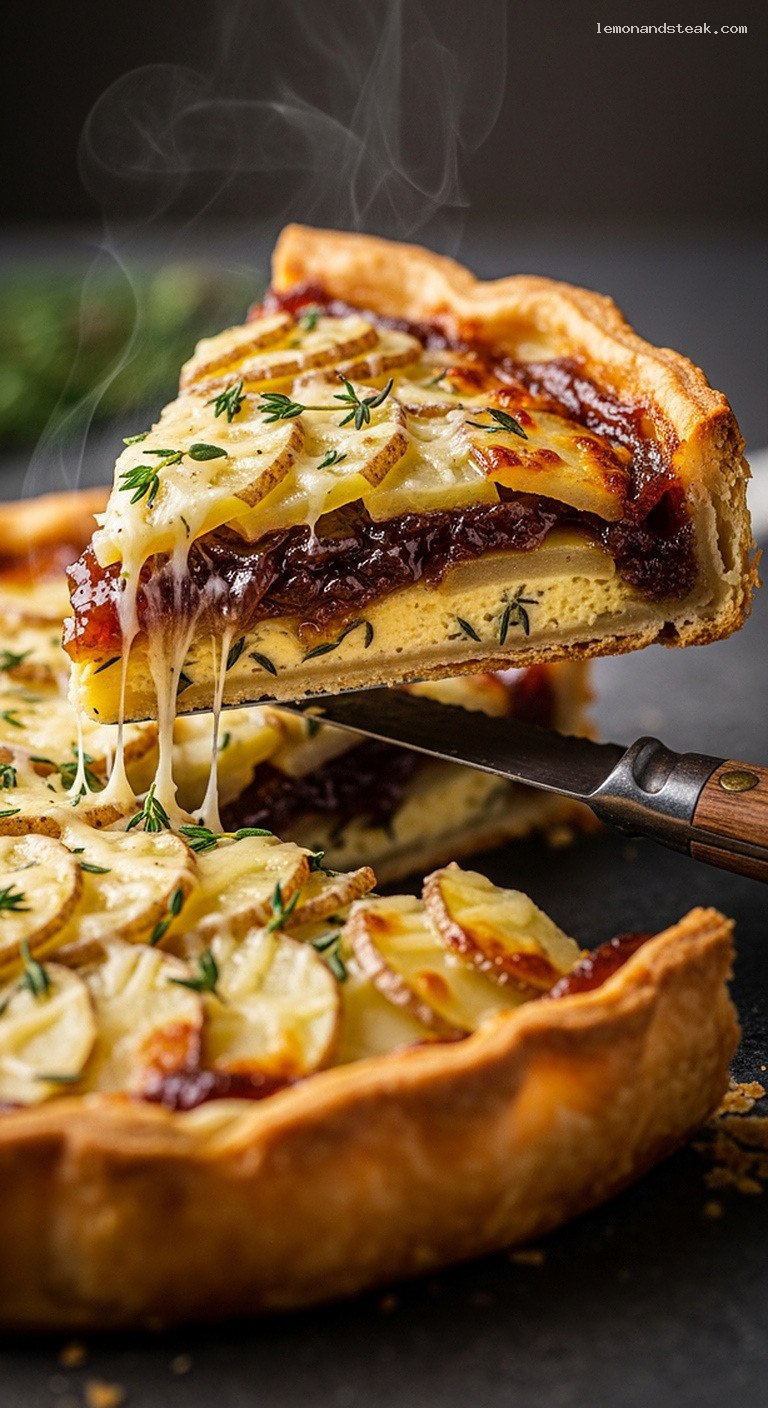
Spread the caramelized onions evenly over the bottom of the par-baked tart crust, all the way to the edges. Sprinkle half of the cheese mixture over the onions.
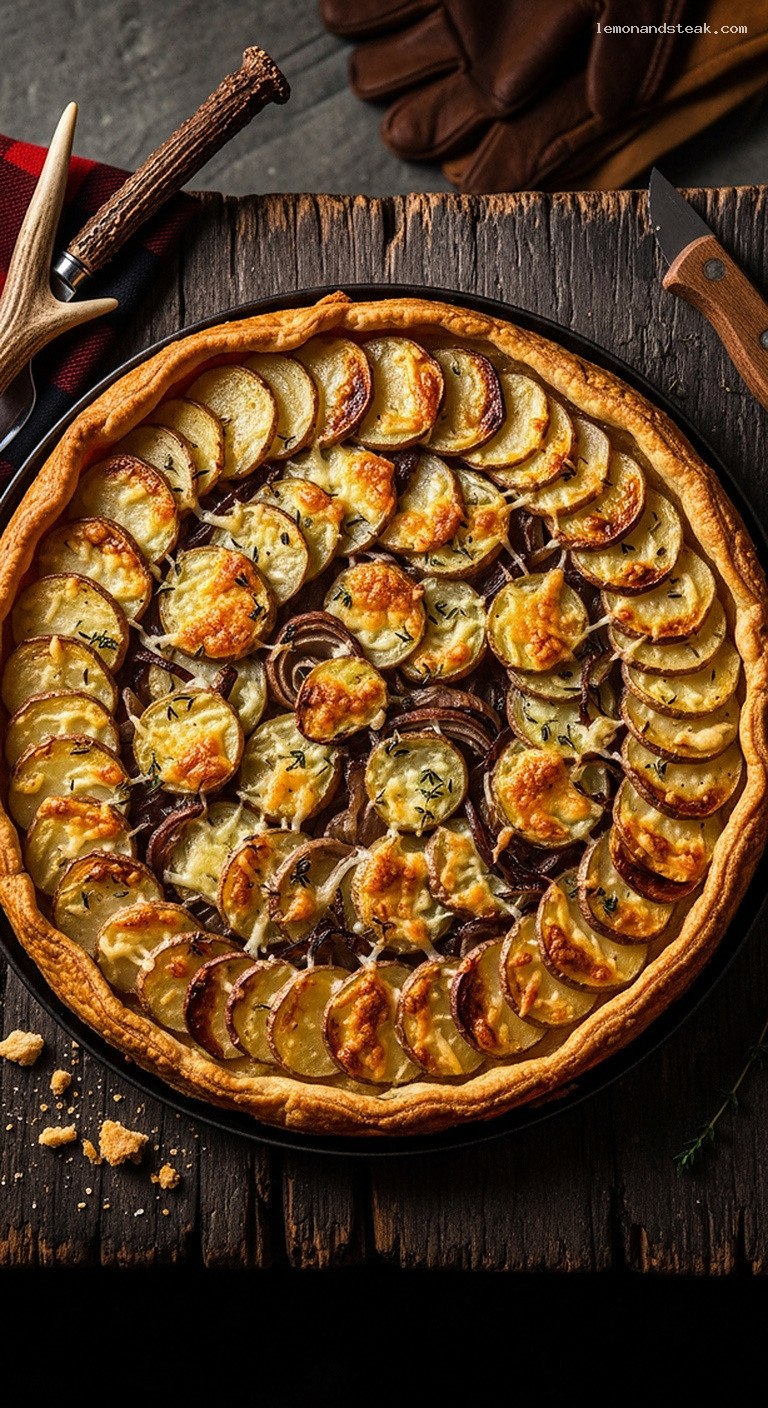
Arrange the blanched potato slices on top in slightly overlapping circles or shingled rows, starting from the outer edge and working your way inward. This creates a rustic but beautiful pattern and ensures each bite has potatoes.
Slowly pour the custard over the potatoes, aiming mostly for the gaps and edges rather than directly on top of the highest slices, so you do not disturb your pattern too much. Give the pan a gentle tap on the counter to help the custard settle and release any air bubbles. Scatter the remaining cheese evenly over the top and drizzle with about 1 tablespoon olive oil. If you like, sprinkle a few extra thyme leaves over the surface.
Step 6: Bake Until Golden and Set
Return the assembled tart (still on its baking sheet) to the oven, now at 375°F (190°C). Bake for 30–35 minutes, until the custard is set (it should jiggle slightly in the center but not slosh), the potatoes are tender when pierced with the tip of a knife, and the top is golden with some deeper brown spots from the cheese.
If the crust or top seems to be browning too quickly before the center is set, loosely tent the tart with foil for the last 10 minutes of baking. Rotate the pan once during baking for even color.
Step 7: Cool, Garnish, and Serve
Remove the tart from the oven and place on a wire rack. Let it cool for at least 15–20 minutes. This short rest allows the custard to finish setting and makes slicing much cleaner.
When ready to serve, carefully remove the outer ring of the tart pan. Slide the tart onto a serving board or leave it on the base for easier handling. Garnish with a few fresh thyme sprigs or extra thyme leaves, and a light sprinkle of flaky sea salt if desired.
Slice into 6–8 wedges. Serve warm or at room temperature, ideally with a simple green salad with a tangy vinaigrette to balance the richness.
Pro Tips
- Do not rush the onions. Keep the heat medium-low and give them time. Truly caramelized onions are deep golden, very soft, and slightly jammy, not just lightly browned.
- Keep everything cold for a flaky crust. Cold butter and well-chilled dough help create distinct layers and prevent shrinking while baking.
- Slice the potatoes evenly and thinly. Aim for about 1/8 inch (3 mm) thick. Thicker slices may stay firm in the center.
- Dry the potatoes thoroughly after blanching. Patting them dry prevents excess moisture from seeping into the crust and custard.
- Let the tart rest before cutting. A short cooling time keeps the custard from running and helps the layers hold together for tidy slices.
Variations
- Free-form galette style: Instead of a tart pan, roll the dough into a rough circle, spread the onions in the center, add cheese, potatoes, and custard (use slightly less custard), then fold the edges over for a rustic galette. Bake on a lined sheet until golden and set.
- Smoky bacon twist: Cook 4–6 slices of chopped bacon until crisp. Drain and add to the caramelized onions or sprinkle between the onion and potato layers for a heartier, smoky version.
- Cheese swap: Use sharp white cheddar or Comté instead of Gruyère, or crumble a little goat cheese on top after baking for a tangy accent against the sweet onions.
Storage & Make-Ahead
The tart can be cooled completely, covered, and stored in the refrigerator for up to 3 days. Reheat slices in a 350°F (175°C) oven for 10–15 minutes, or until warmed through and the crust has re-crisped. Avoid microwaving if you can, as it softens the crust.
For make-ahead prep, you can make the pastry dough up to 2 days in advance and keep it chilled, or freeze it for up to 2 months (thaw overnight in the fridge before using). The caramelized onions can also be made up to 3 days ahead and refrigerated in an airtight container. On the day you plan to serve, roll the dough, blind-bake the crust, assemble, and bake.
Nutrition (per serving)
Approximate values for 1 of 8 slices: about 430 calories; 28 g fat; 32 g carbohydrates; 3 g fiber; 10 g protein; 600–700 mg sodium. Actual values will vary based on brands and exact quantities used.
Leave a Reply