
Quick Recipe Version (TL;DR)
Quick Ingredients
- 2 tbsp olive oil
- 1 medium yellow onion, finely chopped
- 1 red bell pepper, diced
- 3 garlic cloves, minced
- 1 tsp ground cumin
- 1 tsp smoked paprika
- 1/2 tsp ground coriander
- 1/4–1/2 tsp red pepper flakes
- 1/2 tsp kosher salt, plus more to taste
- 2 tbsp tomato paste
- 1 can (14.5 oz / 400 g) crushed tomatoes
- 1/2 cup vegetable or chicken broth
- 1/3 cup smooth, natural peanut butter (unsweetened)
- 1 tsp sugar or honey (optional)
- 4–6 large eggs
- 1/4 cup chopped fresh cilantro or parsley
- 2 tbsp roasted peanuts, roughly chopped
- 1/4 cup crumbled feta (optional)
- Warm crusty bread or pita, for serving
Do This
- 1. Prep onion, bell pepper, and garlic; crack 4–6 eggs into small cups. Heat 2 tbsp olive oil in a 10–12 inch skillet with lid over medium heat.
- 2. Sauté onion and red pepper with 1/2 tsp salt until soft and lightly golden, 7–8 minutes. Stir in garlic for 30 seconds.
- 3. Add cumin, smoked paprika, coriander, and red pepper flakes; cook 30 seconds. Stir in tomato paste and cook 2–3 minutes.
- 4. Pour in crushed tomatoes and broth; bring to a gentle simmer. Whisk peanut butter with a ladle of hot sauce, then stir back in. Add sugar or honey if needed and simmer 8–10 minutes until thick but saucy.
- 5. Reduce heat to low. Make 4–6 wells in the sauce and gently slide an egg into each. Lightly season eggs with salt and pepper.
- 6. Cover and cook on low 6–9 minutes, until whites are set and yolks are as runny or firm as you like.
- 7. Remove from heat. Top with cilantro or parsley, chopped peanuts, and feta. Serve hot straight from the pan with warm bread.
Why You’ll Love This Recipe
- Classic shakshuka gets a twist from creamy peanut butter, which adds body, richness, and a subtle nutty depth.
- The gently spiced tomato-peanut sauce is comforting yet lively, perfect for breakfast, brunch, or a simple dinner.
- Everything cooks in one pan, and the eggs poach directly in the sauce for easy prep and minimal cleanup.
- Highly flexible: adjust the heat, add greens or beans, and choose your favorite garnishes and bread.
Grocery List
- Produce: 1 medium yellow onion, 1 red bell pepper, 3 garlic cloves, fresh cilantro and/or parsley, lemon or lime (optional, for serving).
- Dairy: 4–6 large eggs, 1/4 cup feta cheese (optional), 2–3 tbsp milk or cream (optional, for extra richness).
- Pantry: Olive oil, kosher salt, black pepper, ground cumin, smoked paprika, ground coriander, red pepper flakes, tomato paste, 1 can (14.5 oz / 400 g) crushed tomatoes, 1/2 cup vegetable or chicken broth, 1/3 cup natural smooth peanut butter (unsweetened), 1 tsp sugar or honey (optional), roasted peanuts, crusty bread or pita.
Full Ingredients
Peanut-Tomato Shakshuka Base
- 2 tbsp olive oil
- 1 medium yellow onion, finely chopped (about 1 cup)
- 1 red bell pepper, seeded and diced (about 1 cup)
- 3 garlic cloves, minced
- 1 tsp ground cumin
- 1 tsp smoked paprika
- 1/2 tsp ground coriander
- 1/4–1/2 tsp red pepper flakes (adjust to taste)
- 1/2 tsp kosher salt, plus more to taste
- 2 tbsp tomato paste
- 1 can (14.5 oz / 400 g) crushed or finely diced tomatoes
- 1/2 cup vegetable or chicken broth (or water in a pinch)
- 1/3 cup smooth, natural peanut butter, unsweetened and preferably unsalted
- 1 tsp sugar or honey (optional, to soften the tomato acidity)
Eggs and Finish
- 4–6 large eggs, depending on appetite and pan size
- 2–3 tbsp milk or heavy cream (optional, swirled in at the end for extra silkiness)
- Freshly ground black pepper, to taste
Garnishes and Serving
- 1/4 cup fresh cilantro leaves, roughly chopped (or flat-leaf parsley)
- 2 tbsp roasted peanuts, roughly chopped
- 1/4 cup crumbled feta cheese (optional but recommended)
- Lemon or lime wedges, for squeezing over the top (optional)
- Warm crusty bread, baguette slices, or pita for dipping and scooping
Step-by-Step Instructions
Step 1: Prep your ingredients and pan
Set out a wide, heavy skillet (10–12 inches) with a tight-fitting lid; cast iron or enameled cast iron works especially well because it holds heat evenly.
Finely chop the onion, dice the red bell pepper, and mince the garlic. Roughly chop the cilantro or parsley and roasted peanuts, and crumble the feta if using.
Crack 4–6 eggs into small cups or ramekins (one egg per cup). This makes it much easier to slide them gently into the sauce later without breaking the yolks.
Place the skillet over medium heat (about 300–325°F / 150–165°C if you are using an electric skillet or can measure the surface temperature) and let it preheat for 2–3 minutes before adding any ingredients. This helps the vegetables sauté evenly without sticking.
Step 2: Sauté the onion and pepper
Add 2 tbsp olive oil to the preheated skillet. When the oil is shimmering but not smoking, add the chopped onion and diced red bell pepper along with 1/2 tsp kosher salt. Stir to coat the vegetables in oil and distribute the salt.
Cook, stirring occasionally, until the onion is translucent and the peppers are softened with a few golden edges, about 7–8 minutes.
If the vegetables start to brown too quickly, lower the heat slightly; you want a steady sizzle, not aggressive frying.
Stir in the minced garlic and cook just until fragrant, 30–60 seconds. Do not let the garlic brown, as it can turn bitter.
Step 3: Bloom the spices and tomato paste
Sprinkle the cumin, smoked paprika, ground coriander, and red pepper flakes over the sautéed vegetables. Stir constantly for about 30 seconds to toast the spices in the hot oil.
Blooming the spices this way deepens their flavor and infuses the oil, which will carry that flavor throughout the sauce.
Add 2 tbsp tomato paste and cook, stirring frequently, for 2–3 minutes. The paste should darken slightly in color and smell sweet and rich rather than raw and sharp. This step concentrates the tomato flavor and builds a deeper base for the shakshuka.
Step 4: Build and enrich the peanut-tomato sauce
Pour in the crushed tomatoes and 1/2 cup broth, stirring to combine and scraping up any browned bits from the bottom of the pan. Bring the mixture to a gentle simmer over medium heat. Once it begins to bubble, reduce the heat slightly to maintain a low, steady simmer (tiny bubbles at the surface), which should be around 185–195°F / 85–90°C if you check with a thermometer.
In a small bowl, add the 1/3 cup peanut butter. Ladle in about 1/4 cup of the hot tomato mixture and whisk until the peanut butter loosens and becomes smooth. Repeat with another 1/4 cup of hot sauce, whisking until you have a silky, pourable peanut-tomato mixture with no lumps.
Stir this back into the skillet until fully combined. Add the optional 1 tsp sugar or honey if your tomatoes are very tangy.
Let the sauce simmer, uncovered, for 8–10 minutes, stirring occasionally, until it has thickened but is still quite saucy. You want it thick enough to hold little wells for the eggs, but not so thick that it becomes pasty. Taste and adjust with more salt or red pepper flakes if needed. If using, swirl in 2–3 tbsp milk or cream for extra silkiness.
Step 5: Make wells and add the eggs
Once the sauce has thickened to a rich, spoonable consistency, reduce the heat to low. Use the back of a large spoon to create 4–6 little wells in the sauce, spacing them evenly around the pan. Try to push the sauce aside in each spot so that the bottom of the skillet is exposed; this helps the egg whites set quickly.
Working one at a time, gently pour an egg from its cup into each well, aiming to keep the yolk centered. If necessary, nudge a bit of sauce around the egg whites to contain them, but avoid covering the yolks. Lightly season the tops of the eggs with a pinch of salt and a few grinds of black pepper.
Step 6: Poach the eggs in the sauce
Cover the skillet with a tight-fitting lid and keep the heat on low. Let the eggs cook in the gently simmering sauce until the whites are just set and the yolks are cooked to your liking.
For runny yolks, this usually takes about 6–7 minutes; for medium-set yolks, 7–8 minutes; and for mostly firm yolks, 8–9 minutes. Try not to lift the lid too often, as this releases the gentle steam that is poaching the eggs.
If you want to check doneness without disturbing the eggs too much, use a spoon to very lightly tap the whites near the yolk; they should feel firm, and the surface of the yolk should be slightly opaque but still soft if you want it runny. When done, remove the pan from the heat and let it sit, covered or partially covered, for 1–2 minutes to allow the heat to even out.
Step 7: Garnish and serve
Uncover the skillet. Scatter the chopped cilantro or parsley over the surface, followed by the chopped roasted peanuts and crumbled feta, if using.
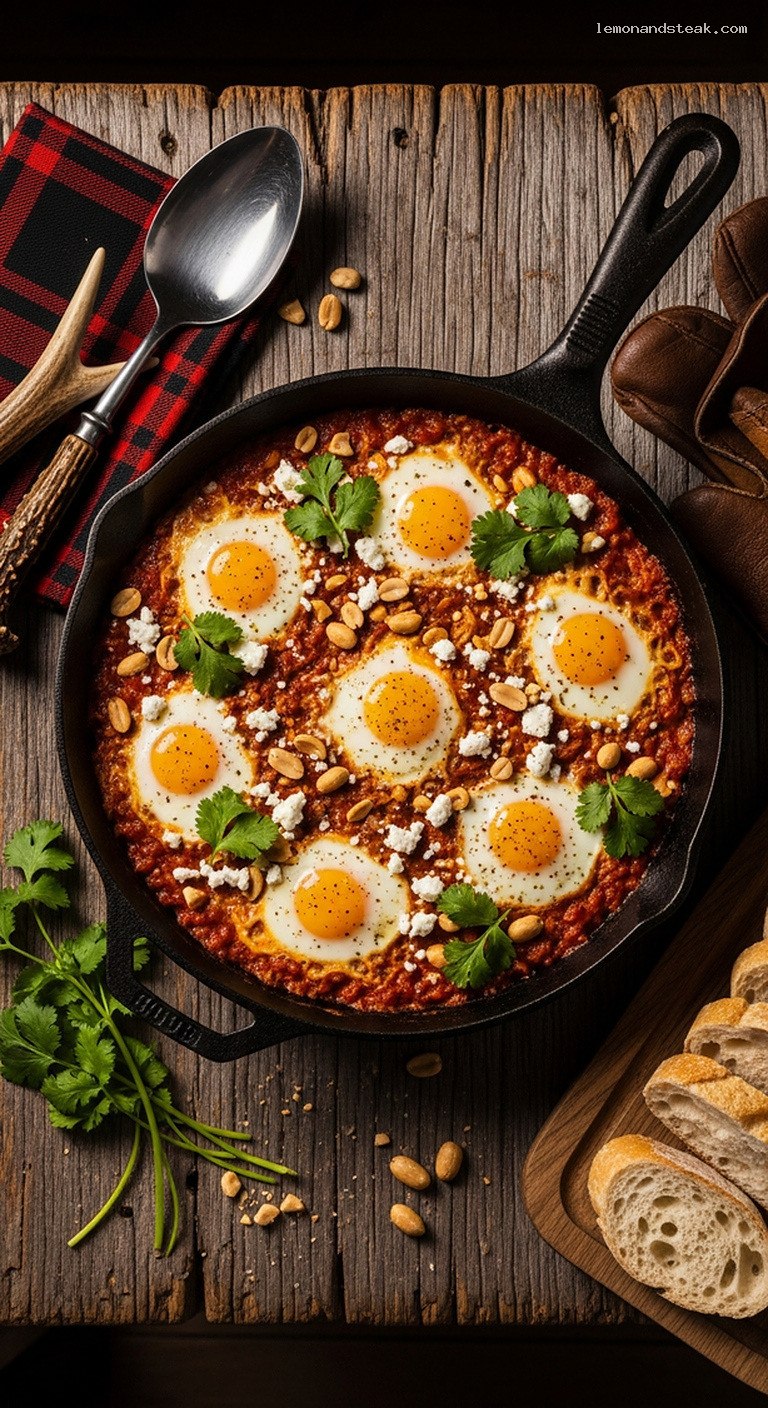
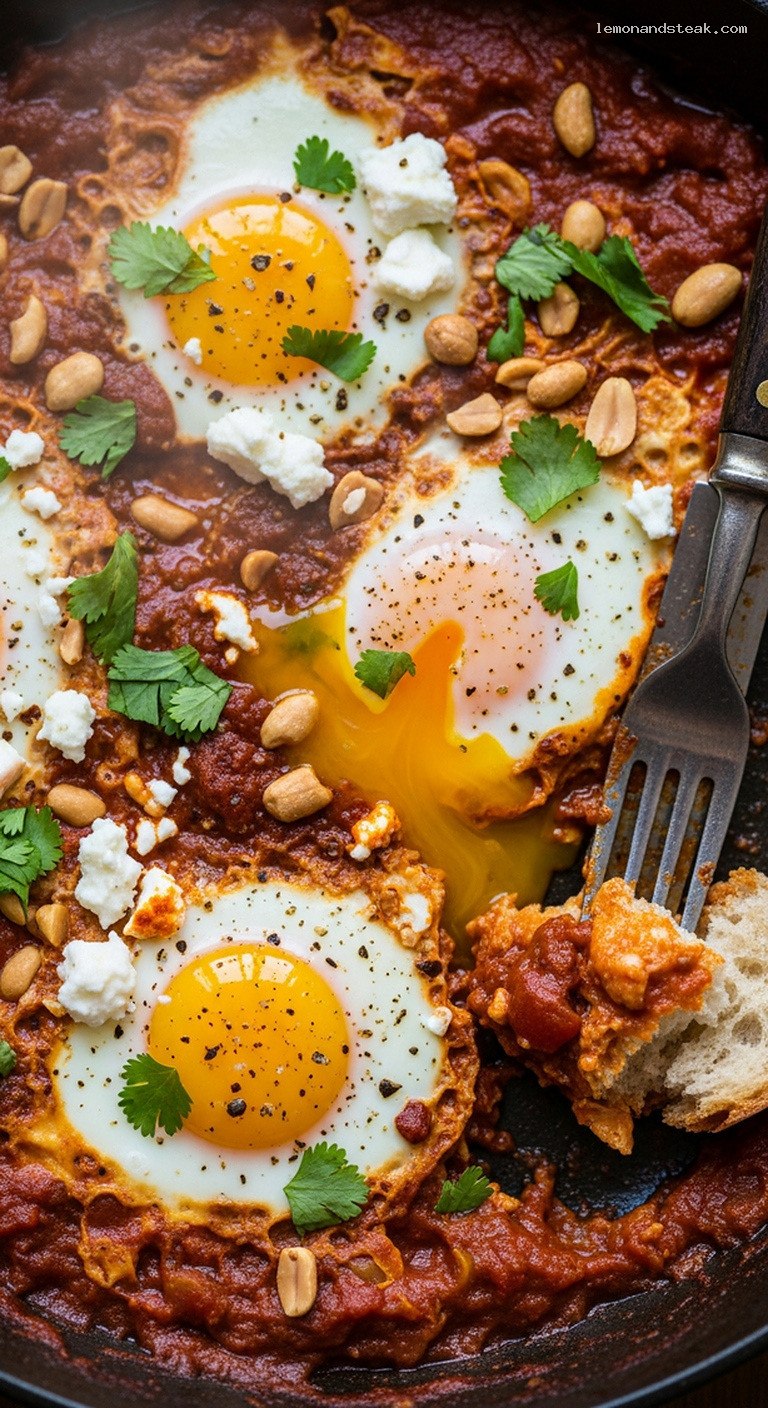
The bright green herbs, creamy white feta, and golden peanuts should contrast beautifully with the deep red-orange peanut-tomato sauce and the glistening eggs.
Serve the shakshuka straight from the pan at the table. Offer lemon or lime wedges for squeezing over individual portions if you like a hint of brightness.
Scoop eggs and sauce into shallow bowls, making sure everyone gets plenty of the nutty tomato base and at least one egg. Serve immediately with warm crusty bread, baguette, or pita for dipping, or over a bed of steamed rice or couscous for a heartier meal.
Pro Tips
- Use natural peanut butter: Choose a smooth, unsweetened peanut butter made only from peanuts (and possibly salt). Sweetened or flavored versions can make the sauce taste dessert-like instead of savory.
- Prevent peanut butter lumps: Always loosen and whisk the peanut butter with hot sauce in a separate bowl before adding it to the pan. This step keeps the sauce silky and evenly nutty.
- Control the heat for the eggs: Once the eggs go in, low heat and a tight lid are essential. If the sauce boils vigorously, the eggs can toughen and cook unevenly.
- Adjust sauce thickness: If the sauce seems too thick before adding the eggs, stir in a splash or two of broth or water. If it is too thin, simmer for a few extra minutes to reduce.
- Pre-warm your bread: Slip bread or pita into a 300°F / 150°C oven for 5–7 minutes while the eggs cook. Warm bread makes the dish feel especially cozy and satisfying.
Variations
- Hearty bean version: Stir in 1 cup drained and rinsed chickpeas or white beans during Step 4 to make the sauce extra filling and boost the protein, perfect for a dinner shakshuka.
- Green and leafy: Add 2–3 cups baby spinach or chopped kale to the sauce during the last 3–4 minutes of simmering in Step 4. Let the greens wilt into the peanut-tomato base before adding the eggs.
- Spicier lodge-style shakshuka: Increase the red pepper flakes to 3/4–1 tsp, and add 1–2 tsp harissa paste with the tomato paste in Step 3 for a smokier, bolder kick.
Storage & Make-Ahead
For best texture, cook the eggs fresh when you plan to serve. However, the peanut-tomato base itself stores very well.
You can make the sauce through the end of Step 4, let it cool to room temperature, and refrigerate it in an airtight container for up to 3 days. Reheat gently in a skillet over medium-low heat (aim for a gentle simmer around 185–195°F / 85–90°C), then proceed with Steps 5–7 to add and poach the eggs.
If you have leftovers with eggs already cooked, transfer them (sauce and eggs together) to a lidded container and refrigerate for up to 2 days. Reheat gently on the stovetop over low heat or in a 300°F / 150°C oven until warmed through; keep in mind the yolks will be more set after reheating.
This dish does not freeze well due to the eggs and the peanut-enriched sauce, which can separate when thawed.
Nutrition (per serving)
Approximate values per serving (1 of 4 servings, using 6 eggs and including feta but not bread): about 370 calories, 18 g protein, 28 g fat, 13 g carbohydrates, 4 g fiber, and 650 mg sodium.
These numbers are estimates and will vary based on brands used, number of eggs per person, and how much bread or other sides you serve alongside.
Leave a Reply