
Quick Recipe Version (TL;DR)
Quick Ingredients
- 1 cup (240 ml) water
- 2 black tea bags (or 2 tsp loose black tea)
- 1 small cinnamon stick (or 1/2 tsp ground)
- 4 green cardamom pods, lightly crushed (or 1/4 tsp ground)
- 3 whole cloves
- 4 black peppercorns
- 1 slice (1/2 inch / 1.25 cm) fresh ginger or 1/4 tsp ground ginger
- 2 cups (480 ml) milk (dairy or unsweetened non-dairy)
- 3 tbsp (48 g) creamy peanut butter
- 2–3 tbsp (24–36 g) brown sugar, honey, or maple syrup
- 1/2 tsp vanilla extract
- Pinch fine salt
Do This
- 1. In a small saucepan, combine water, cinnamon, cardamom, cloves, peppercorns, and ginger. Bring to a gentle simmer over medium heat (about 200°F / 93°C) for 3 minutes.
- 2. Turn off heat, add black tea, cover, and steep 4 minutes. Strain out tea and spices, returning the spiced tea to the pan.
- 3. Add milk, peanut butter, sweetener, vanilla, and salt. Heat over medium-low, whisking, until hot and steamy but not boiling (180–190°F / 82–88°C), 3–5 minutes.
- 4. Blend with an immersion blender or in a countertop blender for 20–30 seconds until frothy and completely smooth.
- 5. Taste and adjust sweetness or peanut butter to preference; reheat briefly if needed.
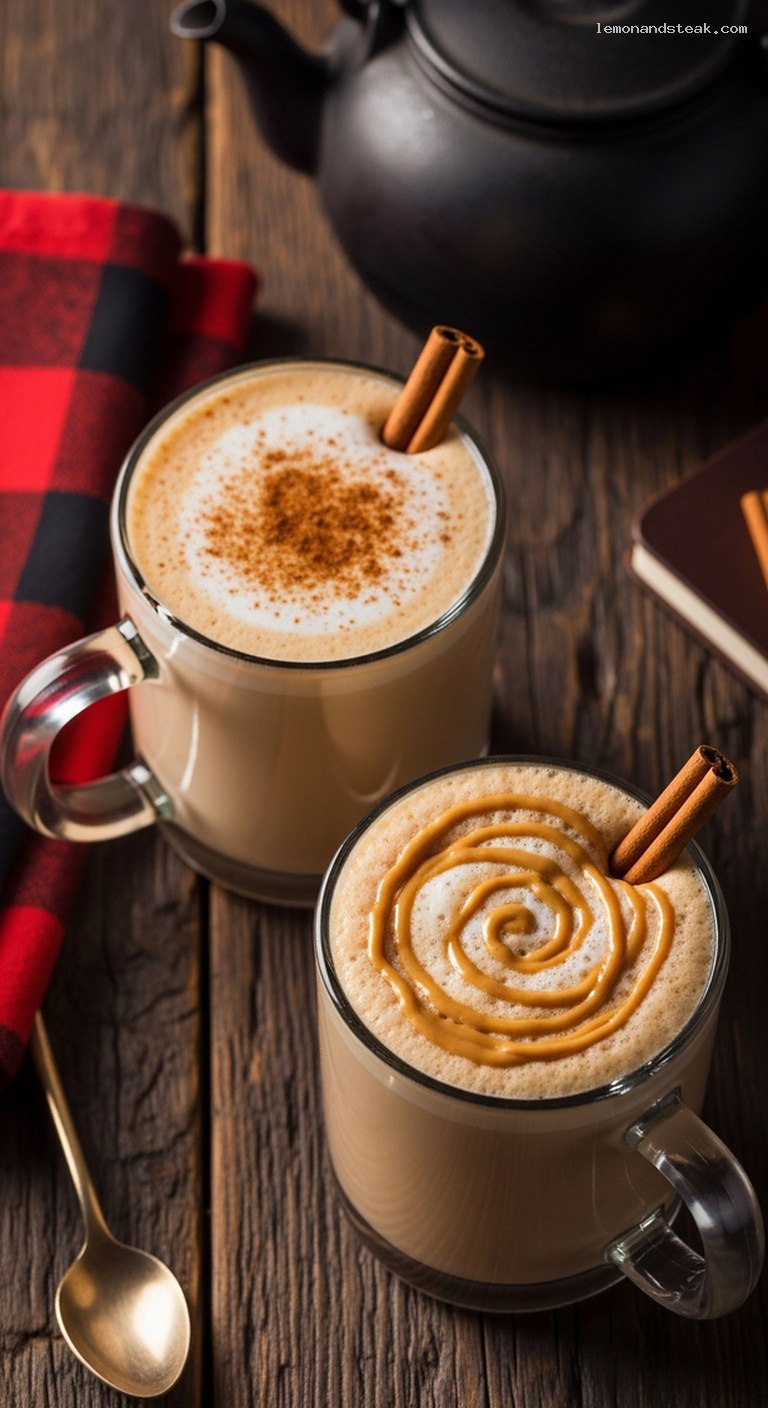
- 6. Pour into warm mugs, spoon foam on top, and dust with a little cinnamon or chai spice.
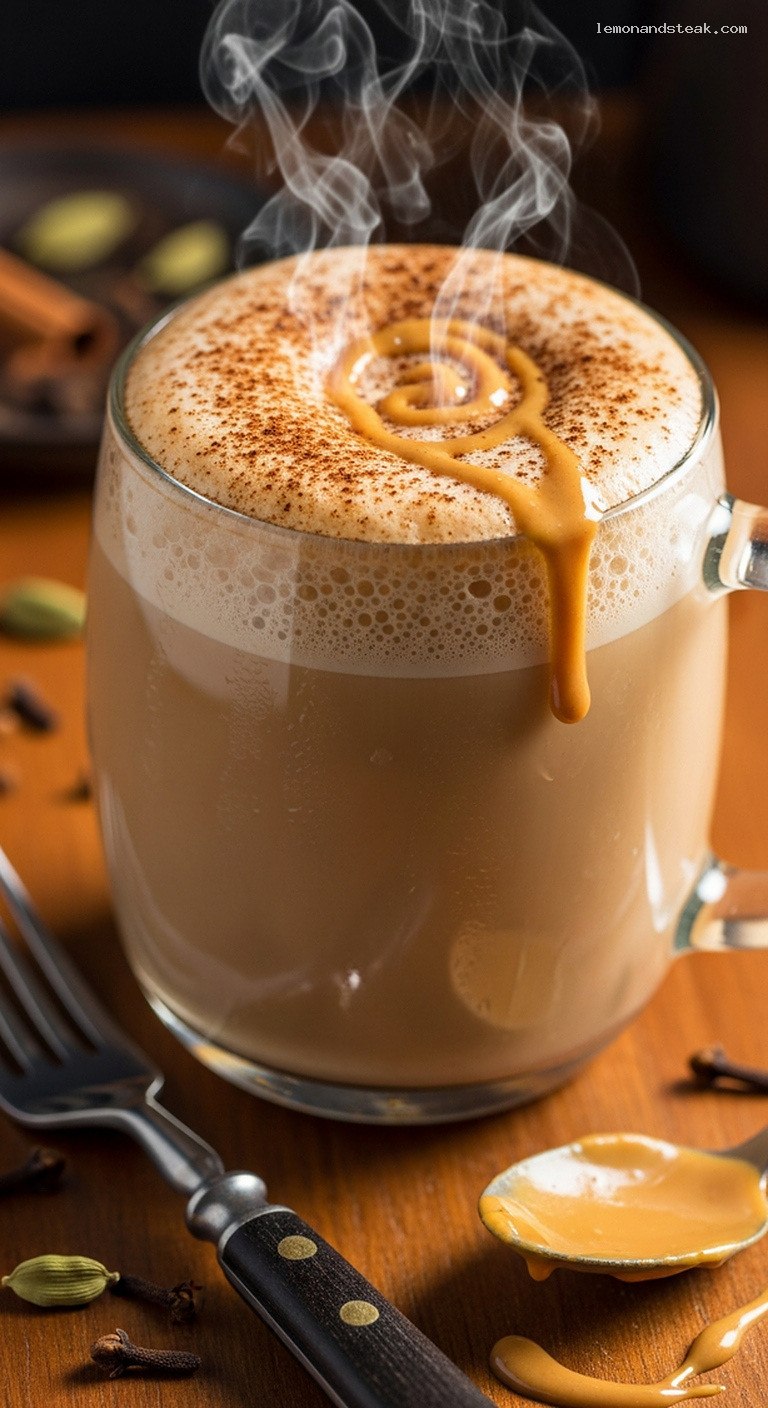
- 7. Optional: drizzle a small swirl of melted peanut butter on top before serving.
Why You’ll Love This Recipe
- It tastes like a cozy chai latte and a peanut butter cookie had a warm, creamy drinkable baby.
- Uses simple pantry staples: black tea, everyday spices, and peanut butter.
- Easily made dairy-free, vegan, or less sweet to suit your preferences.
- Ready in about 15 minutes, perfect for chilly mornings or relaxing evenings.
Grocery List
- Produce: Fresh ginger root (optional but highly recommended).
- Dairy: Whole milk, 2% milk, or half-and-half (or non-dairy alternative such as oat, almond, or soy milk).
- Pantry: Black tea (bags or loose), creamy peanut butter, brown sugar (or honey/maple syrup), cinnamon stick or ground cinnamon, cardamom pods or ground cardamom, whole cloves, black peppercorns, vanilla extract, fine salt, ground ginger if not using fresh.
Full Ingredients
Peanut Butter Chai Latte (for 2 servings)
- 1 cup (240 ml) water
- 2 black tea bags, such as English breakfast or Assam (or 2 tsp / 3 g loose black tea)
- 1 small cinnamon stick (about 3 inches / 7.5 cm), or 1/2 tsp ground cinnamon
- 4 green cardamom pods, lightly crushed, or 1/4 tsp ground cardamom
- 3 whole cloves
- 4 whole black peppercorns
- 1 slice fresh ginger, about 1/2 inch (1.25 cm) thick, or 1/4 tsp ground ginger
- 2 cups (480 ml) milk of choice (whole milk for richest flavor; or unsweetened oat/almond/soy milk)
- 3 tbsp (48 g) creamy peanut butter, unsweetened if possible
- 2–3 tbsp (24–36 g) brown sugar, honey, or maple syrup, to taste
- 1/2 tsp vanilla extract
- 1 small pinch fine salt
Optional Garnishes
- Ground cinnamon or chai spice blend, for dusting
- 1–2 tsp (5–10 g) peanut butter, gently warmed, for drizzling
- Whipped cream or non-dairy topping, for an extra-indulgent version
- Whole cinnamon stick or star anise, for a decorative touch
Optional Chai Spice Mix (Make-Ahead)
This mix is not required, but handy if you make this often.
- 2 tbsp ground cinnamon
- 2 tsp ground cardamom
- 1 1/2 tsp ground ginger
- 1/2 tsp ground cloves
- 1/2 tsp ground black pepper
Stir together and store in an airtight jar. For this recipe, substitute the whole spices and ginger with 1 1/2–2 tsp of this mix added when you heat the water.
Step-by-Step Instructions
Step 1: Gather and prep your ingredients
Measure out all ingredients before you start. Lightly crush the cardamom pods with the side of a knife or the bottom of a mug to crack them open, which helps release their flavor. If using fresh ginger, slice a 1/2-inch (1.25 cm) thick round and slightly smash it to bruise the fibers. If using loose tea, place it in a tea infuser or plan to strain it through a fine-mesh sieve later. Having everything ready makes the cooking process smooth and prevents your tea from over-steeping.
Step 2: Simmer the chai spices
In a small saucepan (1–2 quarts / 1–2 liters), combine the water, cinnamon stick, crushed cardamom pods, whole cloves, black peppercorns, and ginger. Set over medium heat and bring just to a gentle simmer, around 200°F (93°C). You should see small bubbles around the edges but not a rolling boil. Simmer for 3–4 minutes, uncovered, to extract the flavors. Stir once or twice to keep the spices moving through the water. This step builds the deep, warming chai base.
Step 3: Steep the black tea
Turn off the heat. Add the black tea bags (or your tea infuser with loose tea) to the hot spiced water. Cover the pan with a lid and let the tea steep for 4 minutes. This timing gives you strong, robust tea without turning bitter. When time is up, remove the tea bags or infuser. Pour the liquid through a fine-mesh strainer into a heatproof bowl or large measuring cup to remove the whole spices and ginger. Rinse out the saucepan if needed, then return the strained spiced tea to the pan.
Step 4: Add milk, peanut butter, and sweetener
To the strained chai in the saucepan, add the milk, peanut butter, and your chosen sweetener (start with 2 tbsp / 24 g). Add the vanilla extract and a small pinch of fine salt, which enhances the flavors and balances the sweetness. Place the pan over medium-low heat and whisk continuously as the mixture warms. The peanut butter will soften and gradually melt into the hot liquid. Heat until steaming and hot but not boiling, about 180–190°F (82–88°C), 3–5 minutes. Avoid a full boil to prevent the milk from curdling or developing a “cooked” flavor.
Step 5: Blend until silky and frothy
For the creamiest, café-style texture, blend the mixture. Use an immersion blender directly in the saucepan and blend for 20–30 seconds, moving the blender up and down to create foam. Alternatively, carefully transfer the hot liquid to a countertop blender, vent the lid slightly to let steam escape, cover with a kitchen towel, and blend on medium-high for 20–30 seconds. The peanut butter should be fully incorporated, and the latte should look smooth, slightly thickened, and frothy on top.
Step 6: Taste, adjust, and reheat if needed
After blending, taste the latte. If you want more peanut flavor, whisk or blend in an additional 1/2–1 tbsp (8–16 g) peanut butter. If you prefer it sweeter, add 1–2 tsp (4–8 g) more sweetener at a time, tasting as you go. If the latte has cooled slightly during blending or adjusting, return it to low heat and warm gently for 1–2 minutes until steaming again, stirring often. Do not let it boil vigorously. Turn off the heat once it reaches your desired serving temperature.
Step 7: Serve and garnish
Warm two mugs by rinsing them with hot water, then pour in the peanut butter chai latte, dividing the foam evenly between the mugs. If using, top with a small dollop of whipped cream or non-dairy topping. Dust lightly with ground cinnamon or chai spice. For a pretty finishing touch, drizzle a thin swirl of gently warmed peanut butter over the foam and nestle a cinnamon stick along the rim of each mug. Serve immediately while piping hot and fragrant.
Pro Tips
- Choose a strong tea: A robust black tea such as Assam or English breakfast stands up best to the peanut butter and milk; weak tea will taste flat.
- Control sweetness: Start with the lower amount of sweetener and add more only after tasting; peanut butter already adds a natural richness and subtle sweetness.
- Blend for smoothness: Peanut butter can stay slightly grainy if only whisked; blending transforms it into a velvety, café-style drink.
- Watch the temperature: Keep the latte just below boiling (under 190°F / 88°C) to prevent milk from scalding or separating, especially with non-dairy milks.
- Scale it up: This recipe doubles easily; use a larger saucepan and blend in batches if necessary for a crowd-pleasing winter drink.
Variations
- Iced Peanut Butter Chai Latte: Prepare the recipe as written, then cool completely. Pour over a tall glass filled with ice and top with a splash of extra cold milk. For a layered look, chill the latte first so it does not melt the ice too quickly.
- Mocha Peanut Butter Chai: Whisk 1–2 tbsp (6–12 g) unsweetened cocoa powder into the milk and peanut butter mixture in Step 4. Add an extra teaspoon of sweetener to balance the cocoa’s bitterness.
- Vegan and dairy-free: Use creamy natural peanut butter and a rich plant milk such as barista-style oat milk or soy milk. Sweeten with maple syrup or agave and skip the whipped cream or use a non-dairy version.
Storage & Make-Ahead
The peanut butter chai latte is best enjoyed fresh, but you can make a batch in advance:
Cool any leftovers to room temperature, then transfer to a sealed jar or bottle and refrigerate for up to 3 days. The mixture may separate slightly as it sits; shake well or whisk before reheating. To reheat, pour into a saucepan and warm gently over low to medium-low heat, stirring often, until hot and steamy but not boiling. You can also reheat in the microwave in 30-second bursts, stirring between each, until hot. If you like extra foam, give the reheated latte a quick blend with an immersion blender just before serving. The optional chai spice mix can be prepared weeks ahead and stored in an airtight container in a cool, dark place.
Nutrition (per serving)
Approximate values for 1 of 2 servings made with whole milk and 3 tbsp (48 g) peanut butter total, and 2 tbsp (24 g) brown sugar:
Calories: ~340 kcal; Protein: ~12 g; Fat: ~18 g; Saturated fat: ~6 g; Carbohydrates: ~34 g; Sugars: ~27 g; Fiber: ~2 g; Sodium: ~150 mg. These numbers are estimates and will vary based on the exact milk, peanut butter, and sweetener you use.
Leave a Reply