
Quick Recipe Version (TL;DR)
Quick Ingredients
- 1 cup unsalted peanuts
- 2 cups lightly packed fresh basil leaves
- 1/2 cup freshly grated Parmesan cheese
- 2 garlic cloves
- 1 lemon (zest and 3 Tbsp juice)
- 1/2 cup extra-virgin olive oil
- 2–4 Tbsp cold water
- 1 tsp fine sea salt, 1/4 tsp black pepper
- 12 oz dried pasta or 6–8 cups mixed vegetables
- Extra Parmesan, chopped peanuts, and basil for serving
Do This
- 1. Toast peanuts at 350°F (175°C) for 8–10 minutes until fragrant; cool slightly.
- 2. In a food processor, pulse peanuts, garlic, salt, and pepper until finely chopped.
- 3. Add basil, Parmesan, lemon zest, and lemon juice; process to a thick paste.
- 4. With the machine running, stream in olive oil, then add cold water 1 Tbsp at a time until creamy and spoonable. Adjust seasoning.
- 5. Cook pasta in salted boiling water until al dente, reserving 1/2 cup cooking water. (Or cook vegetables until crisp-tender.)
- 6. Toss hot pasta or vegetables with pesto, loosening with pasta water or a splash of warm water as needed.
- 7. Top with extra Parmesan, chopped peanuts, and basil. Serve immediately with lemon wedges.
Why You’ll Love This Recipe
- It is a fun twist on classic pesto, with roasted peanuts adding a deep, toasty flavor and creamy richness.
- Works beautifully on pasta or vegetables, so you can keep it hearty or light depending on your mood.
- Comes together in under 30 minutes with simple, affordable pantry ingredients.
- Makes an excellent make-ahead sauce for busy weeknights or meal prep.
Grocery List
- Produce: Fresh basil, garlic, 1–2 lemons, assorted vegetables (if using: broccoli, green beans, zucchini, bell peppers, cherry tomatoes, carrots, etc.).
- Dairy: Parmesan cheese (block or pre-grated, preferably from the refrigerated section).
- Pantry: Unsalted peanuts, extra-virgin olive oil, dried pasta (any shape), fine sea salt, black pepper.
Full Ingredients
For the Roasted Peanut Pesto
- 1 cup unsalted peanuts (raw or dry-roasted, shelled; about 140 g)
- 2 cups lightly packed fresh basil leaves (about 50 g)
- 1/2 cup freshly grated Parmesan cheese (about 40 g)
- 2 medium garlic cloves, peeled
- 1 teaspoon fine sea salt, plus more to taste
- 1/4 teaspoon freshly ground black pepper
- Zest of 1 medium lemon (about 1 teaspoon packed zest)
- 3 tablespoons freshly squeezed lemon juice (about 1–1 1/2 lemons)
- 1/2 cup extra-virgin olive oil, plus up to 2 tablespoons more as needed
- 2–4 tablespoons cold water, as needed to thin to desired consistency
For Serving with Pasta (Option 1)
- 12 ounces dried pasta (such as spaghetti, linguine, penne, or fusilli)
- 2 tablespoons kosher salt for the pasta water
- 1/4–1/2 cup reserved pasta cooking water
- Extra freshly grated Parmesan cheese, for serving
- 2–3 tablespoons chopped roasted peanuts, for garnish
- Small handful fresh basil leaves, cut into thin ribbons, for garnish
- Optional: Lemon wedges for squeezing over finished bowls
For Serving with Roasted or Sautéed Vegetables (Option 2)
- 6–8 cups mixed vegetables, cut into bite-size pieces (for example: broccoli florets, green beans, zucchini, bell peppers, cherry tomatoes, carrots)
- 1–2 tablespoons olive oil (for roasting or sautéing)
- 1/2 teaspoon fine sea salt, plus more to taste
- 1/4 teaspoon freshly ground black pepper
- 2–3 tablespoons chopped roasted peanuts, for garnish
- Small handful fresh basil leaves, for garnish
Step-by-Step Instructions
Step 1: Toast the peanuts
Preheat your oven to 350°F (175°C). Spread the peanuts in a single, even layer on a baking sheet. Toast in the preheated oven for 8–10 minutes, stirring once halfway through, until they are a shade deeper in color and smell very fragrant and nutty. Watch carefully during the last couple of minutes, as nuts can go from perfect to burnt quickly. Remove from the oven and let them cool for at least 5 minutes so they do not melt the cheese or turn the pesto greasy when processed.
If you prefer to toast on the stovetop, place the peanuts in a dry skillet over medium heat and cook, stirring frequently, for 5–7 minutes until golden and aromatic. Transfer to a plate to cool.
Step 2: Prep the pesto ingredients
While the peanuts cool, prepare the other ingredients. Rinse the basil leaves under cold water and dry them very well in a salad spinner or by patting with a clean kitchen towel; excess water can dull the flavor and texture of the pesto. Grate the Parmesan cheese if you are using a block. Peel the garlic cloves. Finely zest the lemon, avoiding the bitter white pith, then juice it and measure out 3 tablespoons of juice. Having everything ready makes the blending step fast and easy.
Step 3: Pulse the peanuts and aromatics
Add the cooled toasted peanuts to the bowl of a food processor fitted with the metal blade. Add the garlic cloves, 1 teaspoon fine sea salt, and 1/4 teaspoon black pepper. Pulse in short bursts until the peanuts are finely chopped and the mixture looks like coarse sand, with no large pieces remaining. This step helps distribute the garlic and seasoning evenly and gives the pesto its signature toasty, nutty backbone.
Step 4: Build the pesto and adjust the texture
Add the basil leaves, grated Parmesan, lemon zest, and 3 tablespoons lemon juice to the peanut mixture. Process until everything is well combined and forms a thick, slightly chunky paste, stopping once or twice to scrape down the sides of the bowl with a spatula so no leafy bits are left behind. With the machine running, slowly drizzle in 1/2 cup olive oil through the feed tube. Continue processing until the pesto looks creamy and cohesive, with small flecks of basil and peanut still visible.
If the pesto is very thick or looks pasty, add cold water 1 tablespoon at a time, pulsing after each addition, until it reaches a spoonable, saucy consistency that can easily coat pasta or vegetables. Taste and adjust: add a pinch more salt if it tastes flat, more lemon juice for brightness, or a grind of black pepper for gentle heat. Set the pesto aside while you prepare your pasta or vegetables.
Step 5: Cook the pasta or vegetables
For pasta: Bring a large pot (about 4 quarts / 4 liters) of water to a rolling boil. Add 2 tablespoons kosher salt (the water should taste pleasantly salty, like the sea). Add the 12 ounces of pasta and cook according to the package directions until al dente, usually 8–11 minutes depending on the shape. Just before draining, scoop out 1/2 cup of the starchy cooking water and set it aside. Drain the pasta well, then return it to the warm pot and remove the pot from the heat.
For vegetables: Preheat your oven to 425°F (220°C) for roasting. Toss 6–8 cups of chopped vegetables with 1–2 tablespoons olive oil, 1/2 teaspoon salt, and 1/4 teaspoon pepper on a large baking sheet. Spread in a single layer and roast for 15–25 minutes, stirring once, until browned on the edges and crisp-tender. Alternatively, sauté the vegetables in a large skillet over medium-high heat with 1–2 tablespoons oil and a pinch of salt until tender and nicely seared, about 8–10 minutes.
Step 6: Toss with pesto and serve
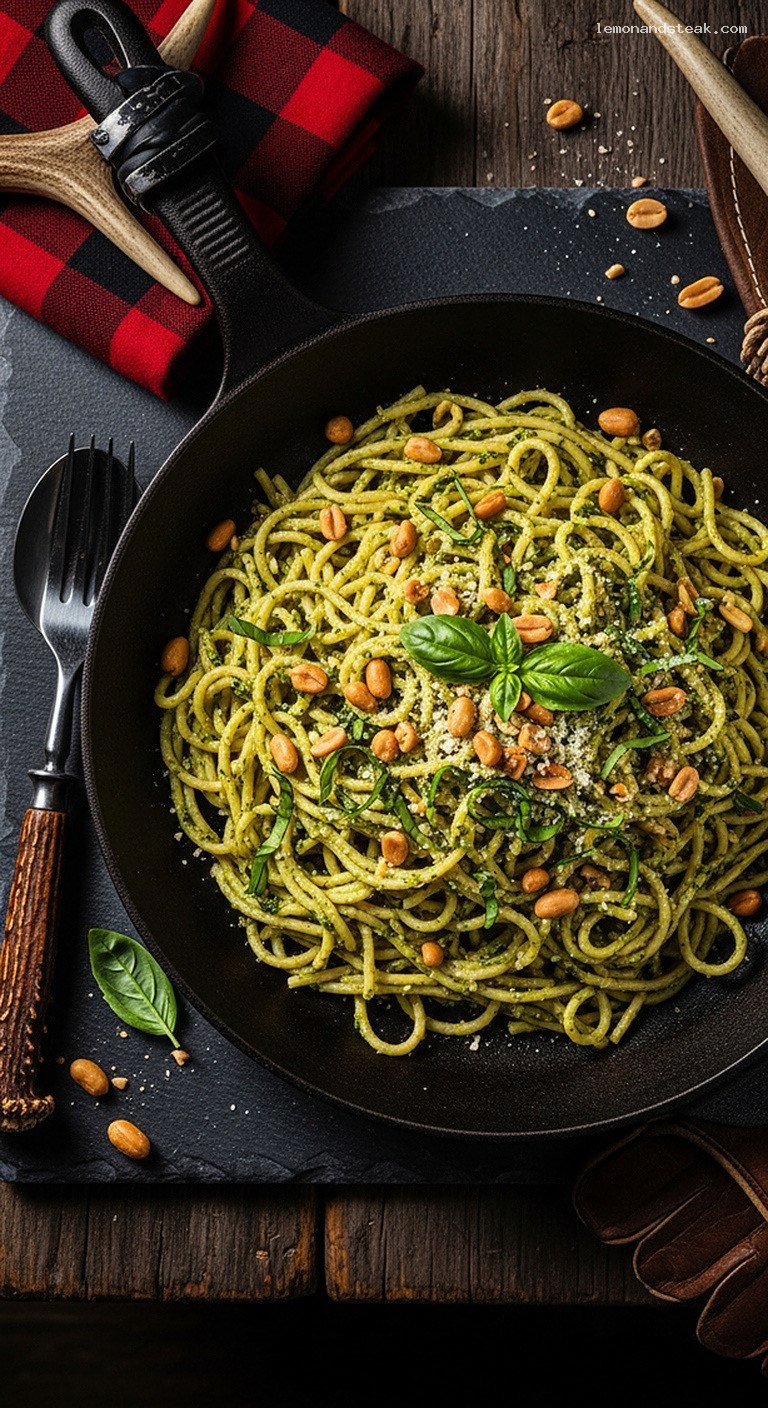
For pasta: Add about 1/2 cup of the peanut pesto to the warm pasta in the pot. Pour in a small splash (2–3 tablespoons) of the reserved pasta cooking water. Toss vigorously with tongs or a large spoon until every strand is coated in a glossy, emerald-speckled sauce, 1–2 minutes. Add more pesto and pasta water as needed to reach your desired sauciness; you will likely use about 3/4–1 cup pesto in total. Taste and adjust with a pinch of salt or squeeze of lemon if needed.
For vegetables: Transfer the hot roasted or sautéed vegetables to a large bowl. Add 1/3–1/2 cup of the peanut pesto and toss gently to coat. If the pesto seems too thick, loosen it with a tablespoon or two of warm water or vegetable broth. Add more pesto to taste.
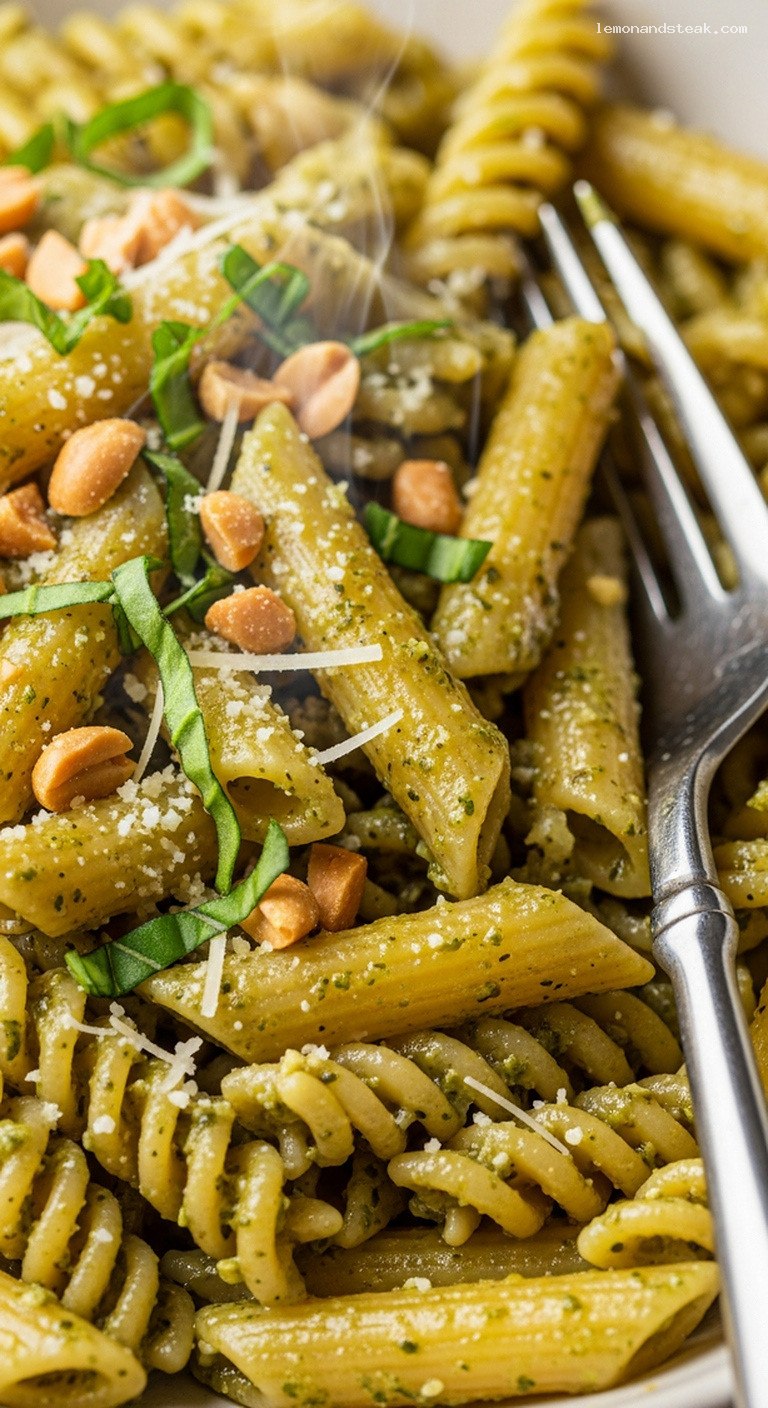
To serve, divide the pasta or vegetables among plates or bowls. Top with extra grated Parmesan, a sprinkle of chopped roasted peanuts for crunch, and fresh basil ribbons. Serve immediately, with lemon wedges on the side for anyone who loves extra brightness.
Pro Tips
- Do not over-toast the peanuts. Golden and fragrant is perfect; dark brown means they will taste bitter in the finished pesto.
- Dry your basil very well. Excess water dilutes flavor and can make the pesto look dull instead of vibrant and glossy.
- Use cold water to adjust thickness. A spoonful or two helps create a lighter, creamier texture without adding more oil.
- Reserve that pasta water. The starch helps the pesto cling to the pasta and creates a silky, restaurant-style sauce.
- Pulse for rustic, blend for smooth. Stop sooner if you like visible pieces of peanut for extra texture; process longer for a smoother, spreadable sauce.
Variations
- Spicy roasted peanut pesto: Add 1/4–1/2 teaspoon red pepper flakes or a small fresh chili to the food processor with the peanuts and garlic for a gentle kick.
- Herb blend pesto: Replace up to half of the basil with flat-leaf parsley or cilantro for a more complex, slightly earthier flavor.
- Vegan version: Swap the Parmesan for 3–4 tablespoons nutritional yeast and a pinch of extra salt. Taste and adjust the lemon juice to keep it bright.
Storage & Make-Ahead
The roasted peanut pesto itself keeps very well. Transfer it to a small jar or airtight container, smooth the surface, and pour a thin layer of olive oil on top to limit air contact. Refrigerate for up to 4–5 days. For longer storage, freeze the pesto (without the oil layer) in small containers or ice cube trays for up to 2–3 months; thaw overnight in the refrigerator or at room temperature for 30–45 minutes, then stir and adjust with a splash of water or lemon juice if needed.
Pasta or vegetables that are already mixed with the pesto are best enjoyed fresh but will keep in an airtight container in the refrigerator for up to 3–4 days. Reheat gently over low heat on the stovetop or in the microwave, adding a spoonful of water to loosen the sauce if it thickens.
Nutrition (per serving)
Approximate values for 1 of 4 servings of pesto-tossed pasta (using all of the pesto and 12 ounces of pasta): about 780 calories; 24 g protein; 52 g total fat; 11 g saturated fat; 62 g carbohydrates; 5 g fiber; 4 g sugars; 650 mg sodium. Nutrition will vary based on the exact pasta shape, brand of Parmesan and peanuts, and how much pesto you use per serving. Vegetable-based servings will generally be lower in carbohydrates and calories.
Leave a Reply