
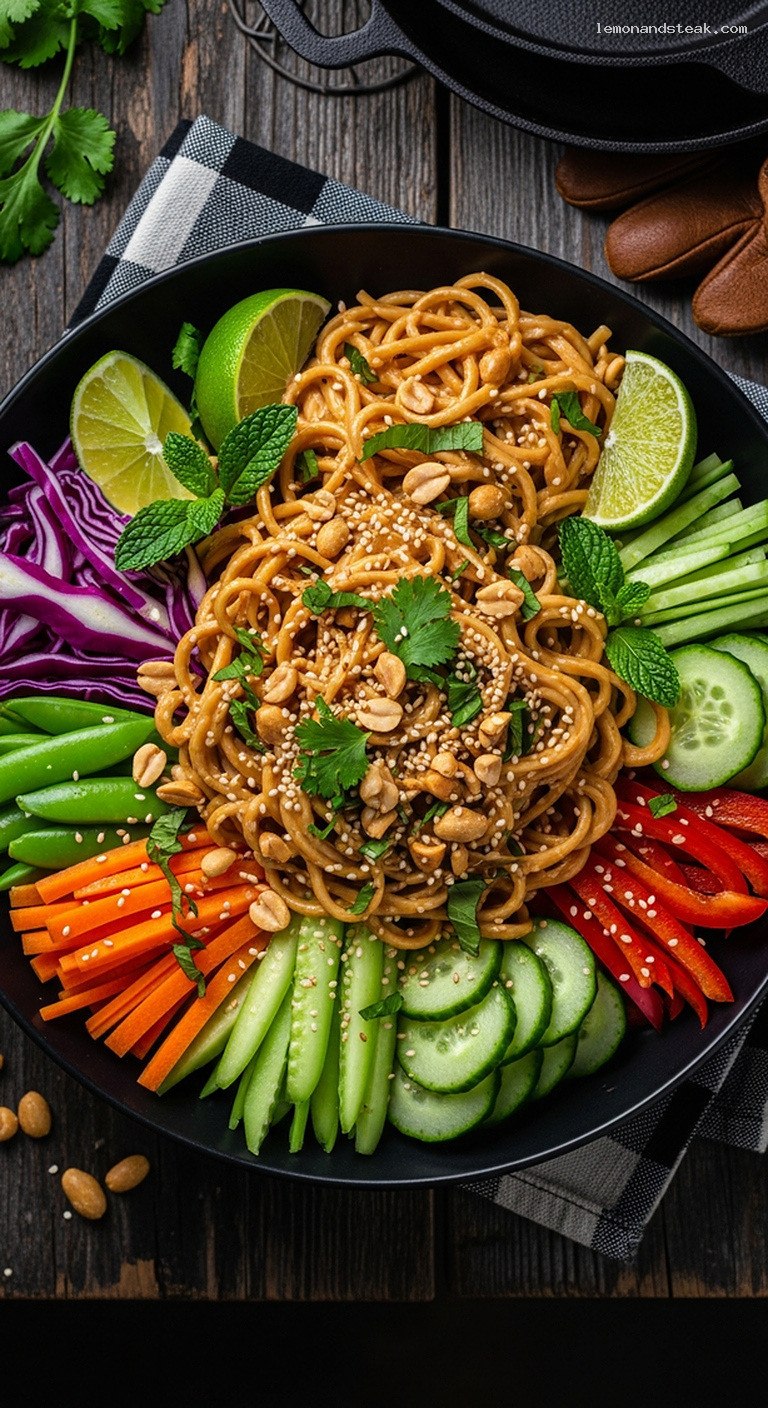
Quick Recipe Version (TL;DR)
Quick Ingredients
- 12 oz (340 g) rice noodles or spaghetti
- 1/2 cup (120 g) creamy peanut butter
- 3 tbsp low-sodium soy sauce
- 2 tbsp fresh lime juice + lime wedges for serving
- 2 tbsp rice vinegar
- 2 tbsp maple syrup or honey
- 1 tbsp toasted sesame oil
- 1 tbsp grated fresh ginger
- 2 garlic cloves, minced
- 1–2 tsp sriracha or chili-garlic sauce
- 6–8 tbsp warm water (to thin sauce)
- 1 cup thinly sliced red cabbage
- 1 medium red bell pepper, thinly sliced
- 1 cup matchstick carrots
- 1 cup halved sugar snap peas
- 1 small cucumber, thinly sliced
- 3 green onions, thinly sliced
- 1/2 cup chopped fresh cilantro
- 1/4 cup fresh mint leaves (optional)
- 1/3 cup roasted peanuts, chopped
- Sesame seeds and extra sriracha (optional)
Do This
- 1. Prep all vegetables and herbs: slice cabbage, bell pepper, carrots, snap peas, cucumber, and green onions; chop cilantro and mint.
- 2. Whisk peanut butter, soy sauce, lime juice, rice vinegar, maple syrup/honey, sesame oil, ginger, garlic, and sriracha. Thin with 6–8 tbsp warm water until pourable.
- 3. Bring a large pot of water to a rolling boil (212°F / 100°C). Cook noodles according to package directions (usually 7–10 minutes) until just tender.
- 4. Drain noodles and rinse briefly under cold water to stop cooking. Shake off excess water.
- 5. Toss warm noodles with about two-thirds of the peanut sauce until evenly coated.
- 6. Add vegetables and herbs, toss gently, then drizzle with remaining sauce. Top with peanuts, sesame seeds, lime wedges, and extra chili. Serve warm or at room temperature.
Why You’ll Love This Recipe
- Big flavors: creamy, tangy-sweet peanut sauce with just enough heat, inspired by Thai takeout favorites.
- Lots of crunch: fresh cabbage, carrots, snap peas, and cucumber keep every bite bright and lively.
- Flexible: great warm, room temperature, or chilled; perfect for meal prep or easy weeknight dinners.
- Customizable: keep it vegetarian or add your favorite protein like tofu, chicken, or shrimp.
Grocery List
- Produce: Red cabbage, red bell pepper, carrots, sugar snap peas, cucumber, green onions, fresh ginger, garlic, cilantro, mint, limes
- Dairy: None
- Pantry: Rice noodles or spaghetti, creamy peanut butter, low-sodium soy sauce (or tamari), unseasoned rice vinegar, maple syrup or honey, toasted sesame oil, sriracha or chili-garlic sauce, roasted peanuts, sesame seeds (optional), chili flakes (optional), salt
Full Ingredients
For the Tangy-Sweet Peanut Sauce
- 1/2 cup (120 g) creamy peanut butter
- 3 tablespoons low-sodium soy sauce (or tamari for gluten-free)
- 2 tablespoons fresh lime juice (from about 1 medium lime), plus more to taste
- 2 tablespoons unseasoned rice vinegar
- 2 tablespoons maple syrup or honey
- 1 tablespoon toasted sesame oil
- 1 tablespoon finely grated fresh ginger
- 2 medium garlic cloves, minced or pressed
- 1 to 2 teaspoons sriracha or chili-garlic sauce, to taste
- 6 to 8 tablespoons warm water (about 90 to 120 ml), to thin to a pourable consistency
For the Noodles & Vegetables
- 12 ounces (340 g) medium-width rice noodles or spaghetti
- 1 cup (about 90 g) very thinly sliced red cabbage
- 1 medium red bell pepper, cored and thinly sliced
- 1 cup (about 100 g) matchstick carrots (from about 2 medium carrots)
- 1 cup (about 90 g) sugar snap peas, strings removed and halved lengthwise
- 1 small seedless cucumber, sliced into thin half-moons (about 1 cup / 120 g)
- 3 green onions, thinly sliced (white and green parts)
- 1/2 cup loosely packed fresh cilantro leaves, roughly chopped
- 1/4 cup loosely packed fresh mint leaves, roughly torn (optional but adds great freshness)
For Serving & Garnish
- 1/3 cup (about 45 g) roasted peanuts, roughly chopped
- 1 tablespoon toasted sesame seeds (optional)
- Lime wedges, for squeezing over individual bowls
- Extra sriracha or chili flakes, to taste
Optional Protein Add-Ins
- 8 ounces (225 g) firm or extra-firm tofu, pressed and pan-seared or baked, cut into bite-size cubes
- or 8 ounces (225 g) cooked chicken, shrimp, or tempeh, sliced or cubed
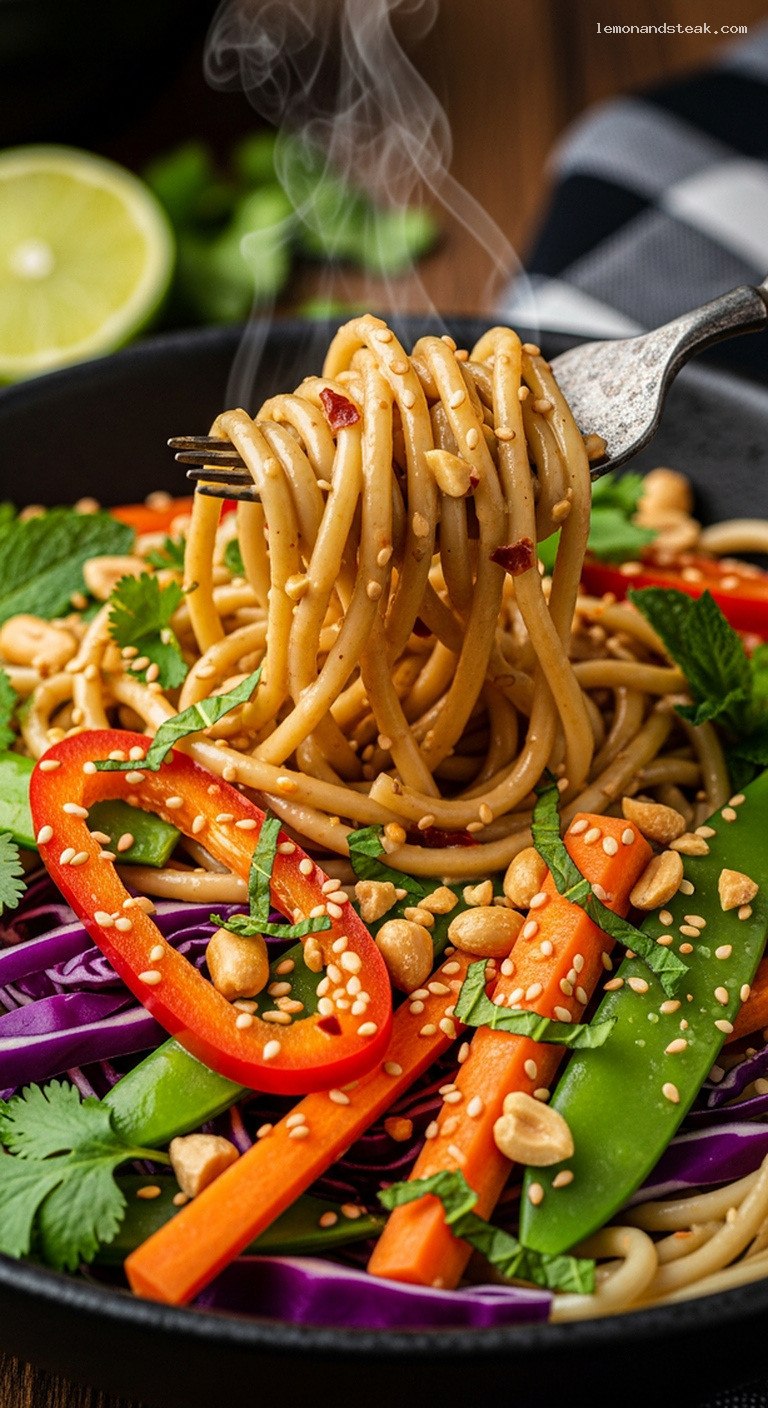
Step-by-Step Instructions
Step 1: Prep the vegetables and herbs
Rinse all produce under cool running water and pat dry. Very thinly slice the red cabbage so it almost looks shredded; this helps it blend into the noodles instead of feeling bulky. Core the red bell pepper, then slice it into thin strips. Peel the carrots if needed and cut them into matchsticks (or use pre-shredded carrots to save time). Trim the ends and strings from the sugar snap peas, then slice them in half lengthwise on the diagonal so they look pretty in the bowl.
Slice the cucumber into thin half-moons. Slice the green onions (both white and green parts). Roughly chop the cilantro leaves and tear the mint leaves if using. Set all the vegetables and herbs aside in a large mixing bowl or on a tray so they are ready to toss with the noodles later.
Step 2: Whisk together the peanut sauce
In a medium bowl, combine the peanut butter, soy sauce, lime juice, rice vinegar, maple syrup or honey, toasted sesame oil, grated ginger, minced garlic, and 1 teaspoon of sriracha or chili-garlic sauce. Whisk until thick and mostly smooth; it will be quite stiff at first.
Add 6 tablespoons of warm water and whisk again. The warmth helps loosen the peanut butter, turning the mixture into a glossy, pourable sauce. If it still seems too thick to coat noodles easily, add up to 2 more tablespoons of warm water, 1 tablespoon at a time, whisking after each addition. Taste and adjust: add more lime for brightness, more sweetener if you prefer it sweeter, or more sriracha for heat. Set aside.
Step 3: Cook the noodles
Fill a large pot with water and bring it to a rolling boil over high heat. The water should reach about 212°F (100°C) at a full boil. Salt the water lightly, then add the noodles. Cook according to the package directions until just tender but still slightly firm in the center (usually 7 to 10 minutes for spaghetti; rice noodles may cook a bit faster).
Stir occasionally to prevent sticking. Once the noodles are cooked to al dente, drain them in a colander. Rinse briefly under cool running water to stop the cooking and remove excess starch, which helps prevent clumping. Shake the colander well to remove as much water as possible.
Step 4: Toss noodles with the peanut sauce
While the noodles are still slightly warm, transfer them to a large mixing bowl. Give the peanut sauce a quick stir, then pour about two-thirds of it over the noodles. Use tongs or two large forks to gently toss until every strand is coated. If the noodles seem a little dry, add more sauce a spoonful at a time until they look glossy and evenly dressed. Reserve the remaining sauce for final drizzling or for people to add at the table.
If you are adding pre-cooked protein (tofu, chicken, shrimp, or tempeh), this is a good moment to fold it into the warm, saucy noodles so it picks up flavor.
Step 5: Fold in the crunchy vegetables and herbs
Add the sliced red cabbage, bell pepper, carrots, snap peas, cucumber, and green onions to the bowl of sauced noodles. Gently toss everything together, lifting from the bottom so the vegetables are well distributed without breaking the noodles. The warmth of the noodles will slightly soften the veggies while still keeping their crunch.
Sprinkle in the chopped cilantro and torn mint (if using), then toss once more just to combine. Taste and adjust the seasoning: add a squeeze of lime, a pinch of salt, or another small spoonful of peanut sauce if you like the noodles more heavily coated.
Step 6: Garnish and serve
Transfer the peanut noodles and vegetables to individual bowls or a large serving platter. Drizzle with any remaining peanut sauce. Sprinkle generously with chopped roasted peanuts and toasted sesame seeds (if using). Arrange lime wedges around the edges so everyone can squeeze more citrus over their bowl.
Finish with a light drizzle of sriracha or a pinch of chili flakes for extra heat, if desired. Serve the bowls slightly warm or at room temperature. This dish is also delicious chilled; if you prefer it cold, cover and refrigerate for 30 to 60 minutes before serving, then loosen with a splash of warm water or a bit more soy sauce if needed.
Pro Tips
- Get the sauce just right. The sauce should be thick enough to cling to noodles but loose enough to drizzle. If it looks pasty, add warm water a tablespoon at a time and whisk until glossy.
- Do not overcook the noodles. Slightly undercooked (al dente) noodles will hold their texture better once tossed with sauce and veggies.
- Keep the crunch. Slice the vegetables thinly but do not cook them; the contrast between tender noodles and crisp veggies makes this bowl special.
- Spice to your comfort level. Start with less sriracha, taste, and add more gradually. You can always pass extra at the table.
- Meal-prep friendly. Store the sauce, vegetables, and noodles separately if you want to meal prep; mix portions together just before eating for the best texture.
Variations
- Protein-packed version: Add pan-seared tofu, shredded rotisserie chicken, sautéed shrimp, or cubed tempeh. Toss with the noodles in Step 4 so the protein absorbs the sauce.
- Extra-veg “noodle” bowl: Replace half the noodles with spiralized zucchini or carrot ribbons for a lighter bowl with even more crunch.
- Gluten-free swap: Use rice noodles and tamari instead of soy sauce, and double-check that your sriracha is gluten-free.
Storage & Make-Ahead
For the best texture, store the components separately. The peanut sauce will keep in an airtight jar in the refrigerator for up to 5 days; it may thicken, so whisk in a tablespoon or two of warm water before using. The sliced vegetables and herbs can be stored in separate containers for 2 to 3 days; place a paper towel in the container to absorb excess moisture.
Cooked and rinsed noodles can be refrigerated for up to 3 days. Toss them with a teaspoon of sesame oil before chilling to help prevent sticking. If you have already tossed everything together, the assembled noodle bowl will keep for 2 to 3 days in the refrigerator. The noodles may absorb some sauce as they sit; refresh leftovers with a splash of soy sauce, lime juice, or warm water, and toss well before serving.
Nutrition (per serving)
Approximate values for 1 of 4 servings (without added protein): about 650 calories; 22 g protein; 80 g carbohydrates; 26 g total fat; 4 g saturated fat; 8 g fiber; 14 g sugar; 900 mg sodium. Actual values will vary based on the exact noodles, peanut butter, and sauces you use, and whether you add optional protein.
Leave a Reply