
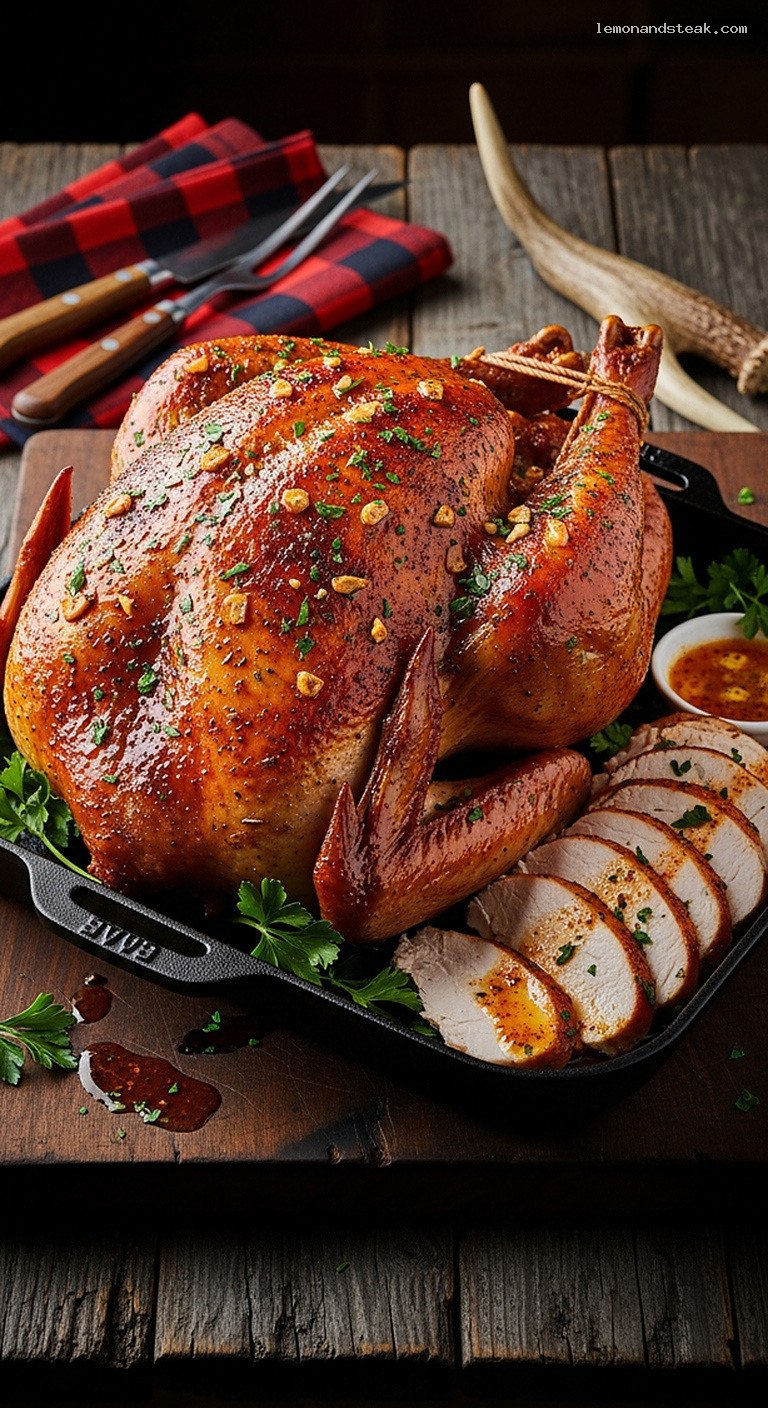
Quick Recipe Version (TL;DR)
Quick Ingredients
- 1 whole turkey (12–14 lb), thawed, giblets removed
- 2 1/2 tbsp kosher salt
- 2 tsp freshly ground black pepper
- 1 cup (2 sticks) unsalted butter, melted
- 2 tbsp sweet paprika
- 2 tsp garlic powder
- 1/4 cup finely chopped fresh parsley, plus extra for garnish
- Optional: 1 small onion (quartered), 1 head garlic (halved), parsley stems for the cavity
Do This
- 1. Heat oven to 425°F (220°C). Pat turkey very dry, remove giblets, and season all over (inside and out) with kosher salt and black pepper.
- 2. In a bowl, whisk melted butter with paprika, garlic powder, and chopped parsley.
- 3. Loosen the skin over the breast with your fingers. Spoon some butter under the skin, then brush or rub the rest all over the turkey.
- 4. Stuff the cavity with the optional onion, garlic, and parsley stems. Tuck wing tips under and tie legs together with kitchen twine.
- 5. Place turkey breast-side up on a rack in a roasting pan. Roast at 425°F (220°C) for 30 minutes to brown the skin.
- 6. Reduce oven to 325°F (165°C) and roast about 2 1/2 more hours (about 13 minutes per pound), basting every 45 minutes, until the breast reaches 160–165°F (71–74°C).
- 7. Tent loosely with foil and rest 30–45 minutes before carving. Garnish with extra parsley and serve.
Why You’ll Love This Recipe
- Simple, familiar flavors: paprika, garlic, parsley, and butter give a classic, crowd-pleasing roast turkey.
- No complicated techniques: you mainly mix a seasoned butter, rub it on, and let the oven do the work.
- Beautiful color: paprika and butter create a deep golden, bronzed skin that looks stunning on the table.
- Juicy meat: basting with rich melted butter keeps the turkey moist from breast to thigh.
Grocery List
- Produce: 1 small onion, 1 head garlic, 1 bunch fresh flat-leaf parsley, optional 1 small lemon
- Dairy: 1 cup (2 sticks) unsalted butter
- Pantry: 1 whole turkey (12–14 lb), kosher salt, freshly ground black pepper, sweet paprika, garlic powder, all-purpose flour (if making gravy), low-sodium chicken or turkey broth (if making gravy)
Full Ingredients
For the Turkey
- 1 whole turkey (12–14 lb), thawed if frozen, giblets and neck removed
- 2 1/2 tbsp kosher salt (or about 1/2 tsp per pound)
- 2 tsp freshly ground black pepper
Paprika-Garlic Parsley Butter
- 1 cup (2 sticks / 225 g) unsalted butter, melted and cooled slightly
- 2 tbsp sweet paprika
- 2 tsp garlic powder
- 1/4 cup finely chopped fresh flat-leaf parsley, plus more for garnish
- 1 tsp fine sea salt (or 1/2 tsp table salt)
- 1/2 tsp freshly ground black pepper
Optional Aromatics for the Cavity
- 1 small yellow onion, peeled and quartered
- 1 head garlic, halved crosswise
- Parsley stems from the bunch used above
- 1 small lemon, halved (optional)
Optional Simple Pan Gravy
- 2 tbsp fat from the pan drippings (or unsalted butter)
- 2 tbsp all-purpose flour
- 2 cups low-sodium chicken or turkey broth
- Salt and freshly ground black pepper, to taste
Step-by-Step Instructions
Step 1: Plan ahead and prepare the turkey
If your turkey is frozen, thaw it in the refrigerator well in advance: allow about 24 hours of thawing time for every 4–5 lb of turkey. For a 12–14 lb bird, that usually means 3–4 days in the fridge. Once thawed, remove the turkey from its packaging. Take out the neck and giblet bag from the cavity (check both the main and neck cavities). Pat the turkey very dry with paper towels, inside and out. A dry surface is key for crisp, browned skin.
Place the turkey breast-side up on a wire rack set inside a sturdy roasting pan. Let it sit at room temperature for about 30 minutes while you prepare the seasoned butter and preheat the oven. This takes the chill off and helps the turkey cook more evenly.
Step 2: Season the turkey with salt and pepper
Sprinkle the kosher salt and black pepper evenly all over the turkey: on the breast, thighs, drumsticks, wings, and inside the cavity. Gently lift the skin over the breast and season directly on the meat as well, if you can reach. This base seasoning ensures the meat is flavorful all the way through, not just on the surface.
If you have time, you can do this step up to 24 hours in advance, leaving the turkey uncovered in the refrigerator. This dry brine helps the skin dry out and crisp better, and the salt has more time to work its way into the meat.
Step 3: Make the paprika-garlic parsley butter
Preheat your oven to 425°F (220°C) with a rack in the lower third position. While it heats, prepare the butter mixture. In a medium bowl, combine the melted butter, sweet paprika, garlic powder, chopped parsley, sea salt, and black pepper. Whisk until the mixture looks even and the paprika is fully dispersed, creating a deep red-orange butter.
If the butter is extremely hot, let it cool for a few minutes so it thickens slightly. You want it pourable but not so hot that it runs off the turkey immediately. This richly seasoned butter is what gives the turkey its warm color, gentle smokiness from the paprika, and familiar garlic-herb aroma.
Step 4: Butter the turkey and add aromatics
Using clean hands or a small spoon, gently loosen the skin over the turkey breast, starting at the cavity opening and working your way up toward the top of the breast. Be careful not to tear the skin. Spoon some of the paprika-garlic parsley butter under the skin on each side, then use your hands on top of the skin to spread it evenly over the breast meat.
Pour or brush the remaining butter all over the outside of the turkey, coating every surface, including the thighs, legs, and wings. If any butter pools in the pan, that is perfect; you will use it for basting later. Stuff the cavity loosely with the onion quarters, garlic halves, parsley stems, and optional lemon halves. Tuck the wing tips under the bird to prevent burning, and tie the legs together with kitchen twine to help the turkey cook evenly and hold its shape.
Step 5: Start with high heat for color
Place the prepared turkey (still breast-side up on the rack in the roasting pan) into the 425°F (220°C) oven. Roast for 30 minutes. This initial blast of high heat helps the skin begin to brown and set, giving you that attractive golden, lightly crisp surface.
Keep an eye on the skin during this stage. If any part looks like it is getting too dark too quickly, you can loosely tent just that area with a small piece of foil, but try to leave most of the turkey uncovered so it can continue to brown.
Step 6: Roast low and slow, basting with butter
After 30 minutes, reduce the oven temperature to 325°F (165°C). Continue roasting the turkey at this lower temperature until it is cooked through. As a guideline, plan on about 13 minutes of total roasting time per pound. For a 12–14 lb turkey, this usually means about 2 1/2 more hours after the initial 30 minutes, for a total of around 3 hours. Every 45 minutes, baste the turkey with the buttery pan juices using a baster or large spoon, focusing on the breast meat to keep it moist.
Begin checking the internal temperature during the last 45–60 minutes of roasting. Insert an instant-read thermometer into the thickest part of the breast (without touching bone) and into the inner thigh. The breast should reach 160–165°F (71–74°C) and the thigh 170–175°F (77–80°C). If the skin is dark enough before the turkey is fully cooked, tent the whole bird loosely with foil and continue roasting until it reaches temperature.
Step 7: Rest, carve, and serve
Once the turkey reaches the proper internal temperatures, carefully remove the roasting pan from the oven. Transfer the turkey to a large cutting board or platter, tent it loosely with foil, and let it rest for 30–45 minutes. Resting allows the juices to redistribute so the meat stays moist when you carve it.
While the turkey rests, you can make a simple pan gravy if you like: skim about 2 tbsp of fat from the drippings into a saucepan, whisk in 2 tbsp flour, and cook for 1–2 minutes. Slowly whisk in 2 cups broth along with some of the defatted drippings, and simmer until thickened. Season with salt and pepper to taste.
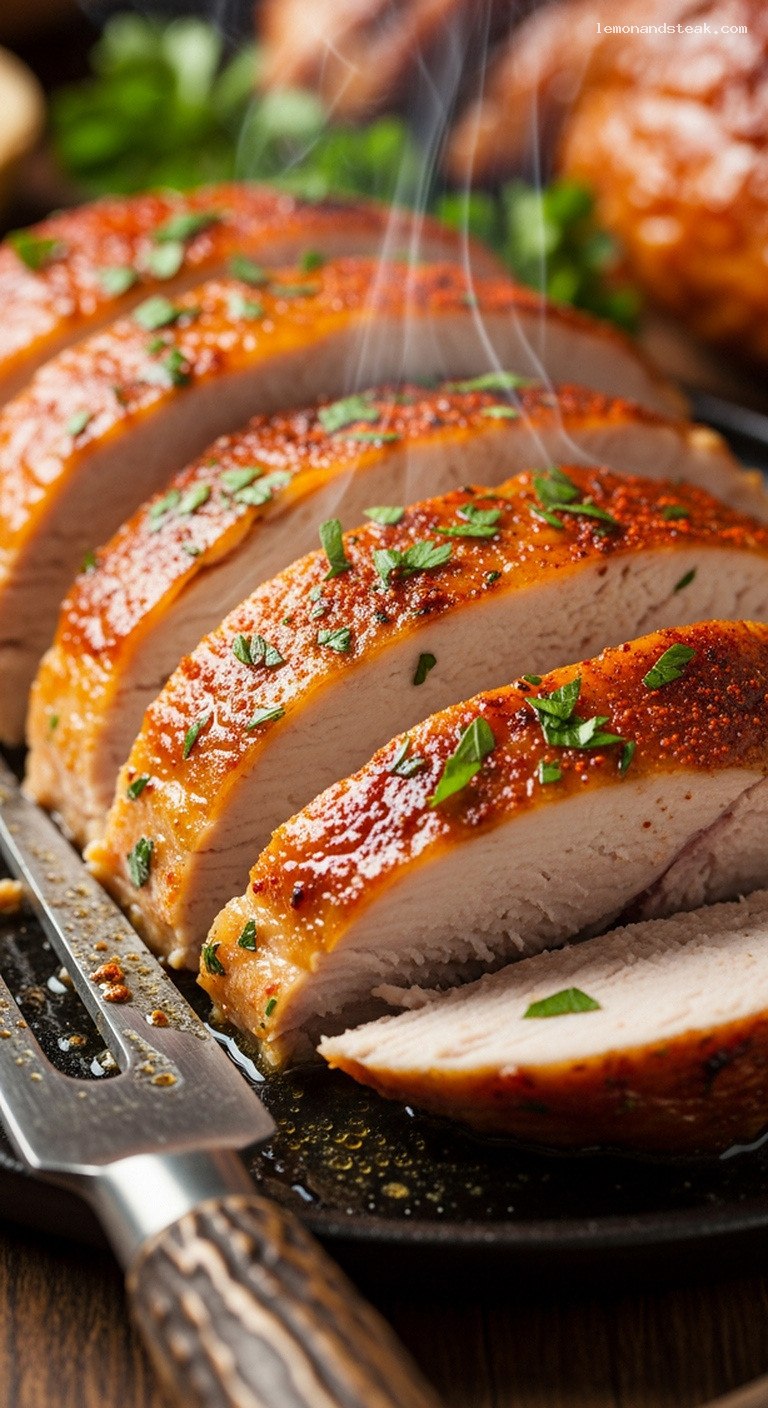
To carve, remove the legs and thighs, then the breasts, slicing the breast meat across the grain into even slices. Arrange the meat on a warm platter, drizzle with a little of the pan juices for shine, and sprinkle with extra chopped parsley for a fresh, bright contrast to the bronzed, paprika-tinted skin. Serve warm.
Pro Tips
- Dry the turkey very well. Any moisture on the skin will turn to steam and prevent it from crisping. Use plenty of paper towels and do not be shy about blotting the cavity, too.
- Let the butter cool slightly. If the melted butter is piping hot, it will slide right off the turkey. Slightly thick, still-liquid butter clings better and browns more evenly.
- Use a thermometer, not time alone. Oven temperatures and turkey shapes vary. The only reliable way to know the turkey is done (and not overcooked) is to check the internal temperature.
- Tent with foil strategically. If the breast is browning faster than the legs, tent just the breast area with foil so the dark meat can catch up without the skin burning.
- Do not skip the rest. Cutting into the turkey right away will cause the juices to spill out onto the board instead of staying in the meat.
Variations
- Smoky paprika twist: Swap half (or all) of the sweet paprika for smoked paprika for a deeper, campfire-like flavor that pairs wonderfully with the buttery richness.
- Garlic-forward version: Increase the garlic powder to 1 tbsp and tuck a few extra garlic cloves under the skin. This creates an even more pronounced garlic aroma while still staying simple.
- Citrus-herb finish: Keep the main seasoning the same, but squeeze fresh lemon over the carved turkey and shower with extra chopped parsley for a brighter, lighter finish.
Storage & Make-Ahead
Store leftover turkey in an airtight container in the refrigerator for up to 3–4 days. For best quality, slice the meat from the carcass before chilling so it cools quickly and evenly. To freeze, wrap portions tightly in foil or freezer bags and freeze for up to 2–3 months. Reheat gently in a covered dish at 300°F (150°C) with a splash of broth or water to keep it moist.
To make ahead, you can season the turkey with salt and pepper up to 24 hours in advance and keep it uncovered in the fridge to dry the skin. You can also prepare the paprika-garlic parsley butter a day ahead and refrigerate it; re-melt gently before using. It is best to roast the turkey the day you plan to serve it, but you can roast it a few hours ahead, carve it, and hold the sliced meat in a covered dish with a bit of broth in a low oven (about 200°F / 95°C) for up to 1 hour.
Nutrition (per serving)
Approximate values per serving (based on 12 servings from a 12–14 lb turkey, including some skin and seasoned butter, without gravy): about 380 calories; 50 g protein; 18 g fat; 7 g saturated fat; 0–2 g carbohydrates; 0 g fiber; 0–1 g sugar; approximately 750–900 mg sodium. Actual values will vary depending on the specific turkey, how much skin and butter are eaten, and any sides or gravy served with the meal.
Leave a Reply