
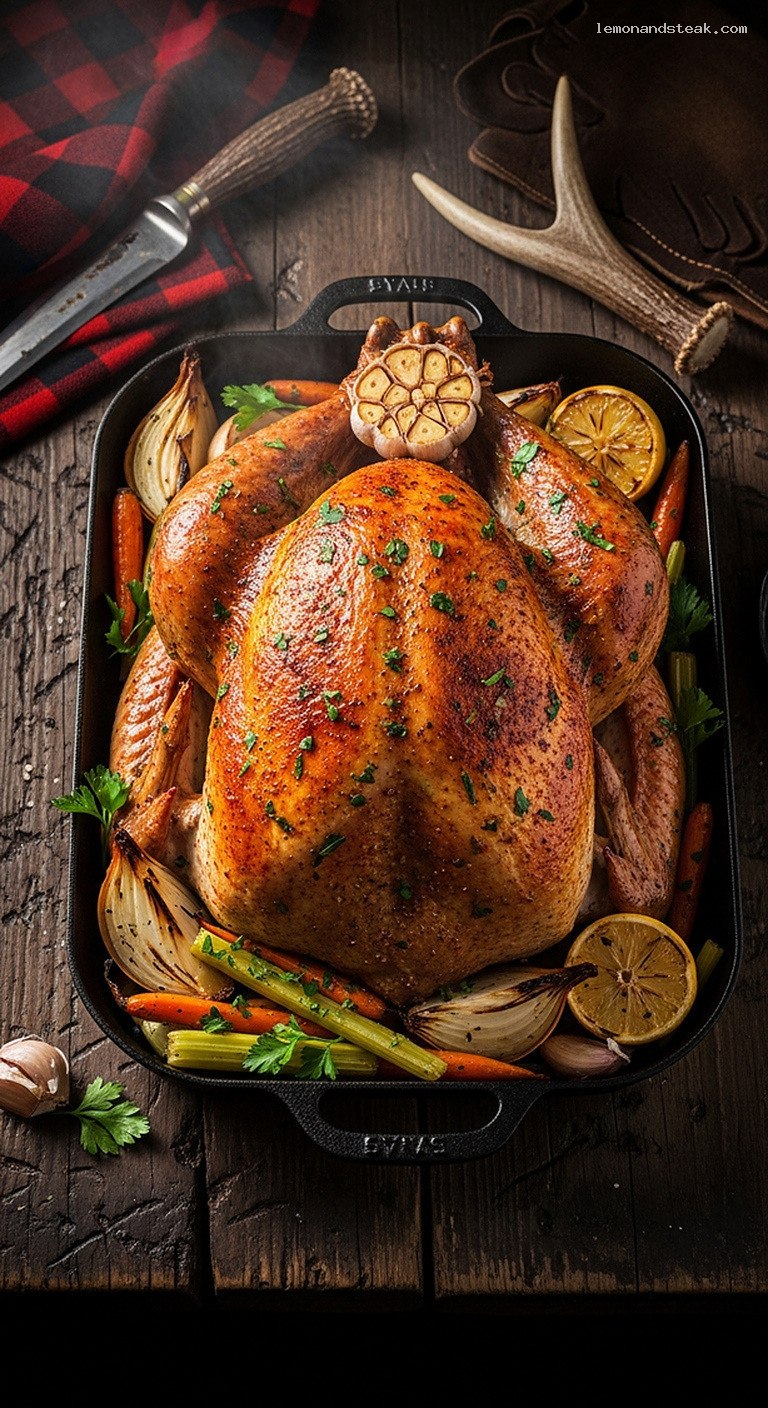
Quick Recipe Version (TL;DR)
Quick Ingredients
- 1 whole turkey (10–12 lb), thawed
- 8 tbsp (1 stick) unsalted butter, softened
- 4 cloves garlic, minced
- 2 tbsp sweet paprika
- 3 tbsp finely chopped fresh parsley
- 4 tsp kosher salt, divided
- 2 tsp freshly ground black pepper, divided
- 1 large onion, 2 carrots, 2 celery stalks
- 1 lemon, 1 small head garlic
- 2 cups low-sodium chicken broth or water
Do This
- 1. Preheat oven to 325°F (165°C). Position rack in the lower third.
- 2. Pat turkey very dry; remove giblets. Season cavity with 1 tsp salt and 1/2 tsp pepper.
- 3. Stir together butter, minced garlic, paprika, parsley, 2 tsp salt, and 1 tsp pepper.
- 4. Loosen skin over breasts and thighs; rub half the butter under the skin and half all over the outside.
- 5. Place onion, carrots, celery, lemon, and halved garlic in pan; set turkey on top. Pour 2 cups broth into pan.
- 6. Roast 3–3 1/2 hours, basting occasionally, until thigh reaches 165°F (74°C). Rest 30 minutes, then carve and serve.
Why You’ll Love This Recipe
- Classic, familiar roast turkey flavor with paprika, garlic, and parsley that appeals to almost everyone.
- Butter under and over the skin keeps the meat juicy and the skin beautifully golden and crisp.
- Simple, straightforward steps that even first-time turkey roasters can follow with confidence.
- Makes a gorgeous centerpiece for holidays, Sunday dinners, or any time you are feeding a crowd.
Grocery List
- Produce: 1 large yellow onion, 2 carrots, 2 celery stalks, 1 lemon, 1 small head garlic, 4 extra garlic cloves, 1 small bunch fresh flat-leaf parsley
- Dairy: 1 stick (8 tbsp) unsalted butter
- Pantry: 1 whole turkey (10–12 lb), kosher salt, freshly ground black pepper, sweet paprika, low-sodium chicken broth (about 4 cups for roasting and gravy), all-purpose flour (for optional gravy), olive oil (optional)
Full Ingredients
For the Turkey & Butter Rub
- 1 whole turkey (10–12 lb), thawed if frozen (see package for thawing time)
- 8 tbsp (1 stick / 113 g) unsalted butter, very soft but not melted
- 4 cloves garlic, finely minced or pressed
- 2 tbsp sweet paprika (Hungarian or Spanish)
- 3 tbsp finely chopped fresh flat-leaf parsley
- 2 tsp kosher salt (for the butter rub)
- 1 tsp freshly ground black pepper (for the butter rub)
- 1 tsp onion powder (optional, for a slightly sweeter savory note)
- 1 tsp finely grated lemon zest (optional, for brightness)
- 1–2 tsp kosher salt (for seasoning the cavity and skin, in addition to the rub)
- 1 tsp freshly ground black pepper (for seasoning the cavity and skin, in addition to the rub)
For the Aromatics & Roasting Pan
- 1 large yellow onion, peeled and cut into thick wedges
- 2 medium carrots, cut into 2-inch chunks
- 2 celery stalks, cut into 2-inch chunks
- 1 small head garlic, halved horizontally (no need to peel)
- 1 lemon, halved
- 2–3 sprigs fresh parsley (use the stems; optional but nice)
- 2 tbsp olive oil (optional, for tossing the pan vegetables)
- 2 cups low-sodium chicken broth or water (plus extra as needed to keep the pan from drying out)
Optional Simple Pan Gravy
- 3 tbsp fat from the roasting pan drippings (or unsalted butter)
- 3 tbsp all-purpose flour
- 2–3 cups combined pan drippings and chicken broth (low-sodium)
- Salt and freshly ground black pepper, to taste
Step-by-Step Instructions
Step 1: Thaw and prep the turkey
If your turkey is frozen, thaw it in the refrigerator in its original wrapping: allow about 24 hours for every 4–5 lb (a 10–12 lb turkey usually needs 2–3 days). When ready to cook, remove the turkey from the fridge 45–60 minutes before roasting so it takes the chill off and cooks more evenly.
Remove the turkey from its packaging in a clean sink. Take out the neck and giblet packet from the cavity (often in the main cavity and/or the neck cavity) and set aside for stock or gravy if you like. Do not rinse the turkey; instead, pat it very dry all over with plenty of paper towels—inside and out. Dry skin is key to a crisp, golden finish.
Season the inside of the main cavity with about 1 tsp kosher salt and 1/2 tsp black pepper. Set the turkey on a rack in a large roasting pan, breast side up. Tuck the wing tips under the body if you can (this helps prevent burning).
Step 2: Preheat the oven and prepare the pan
Preheat your oven to 325°F (165°C) with the rack in the lower third so the turkey sits in the middle of the oven, not too close to the top heating element.
In the roasting pan, scatter the onion wedges, carrot chunks, celery chunks, and the halved head of garlic. Add the lemon halves and a few parsley sprigs. If you like, drizzle the vegetables lightly with olive oil and toss them to coat. These aromatics will flavor the drippings and lift the turkey slightly off the pan, helping heat circulate.
Pour 2 cups low-sodium chicken broth or water into the bottom of the pan. This creates a moist environment in the oven, keeps the pan from burning, and gives you a flavorful base for gravy later.
Step 3: Mix the paprika-parsley-garlic butter
In a medium bowl, combine the softened butter, minced garlic, sweet paprika, chopped parsley, 2 tsp kosher salt, 1 tsp black pepper, onion powder (if using), and lemon zest (if using). Mash everything together with a fork or spatula until you have a smooth, evenly colored compound butter. It should be very spreadable.
Taste a tiny bit (it will be salty and intense, which is good because it will season a large bird). Adjust the seasoning if needed, adding a pinch more salt or paprika for flavor, or more parsley for freshness.
Step 4: Loosen the skin and apply the butter rub
Working carefully so you do not tear the skin, slide your fingers under the skin over one breast from the cavity end, gently separating the skin from the meat. Work your way across the breast and down toward the thigh on each side. Repeat on the other breast. You want a pocket where you can spread butter directly on the meat.
Scoop up about half of the butter mixture and, using your fingers or a small spatula, spread it evenly under the skin over both breasts and as far down onto the thighs as you can reach. Massage the outside of the skin to help distribute it.
Rub the remaining half of the butter mixture all over the outside of the turkey, including the legs and back. Sprinkle the outside with the remaining 1–2 tsp kosher salt and 1/2–1 tsp black pepper, focusing on any spots that look lightly seasoned. Place the lemon halves and a few onion or parsley pieces inside the cavity if there is room. If you like, loosely tie the legs together with kitchen twine for a neater shape.
Step 5: Roast the turkey
Place the prepared turkey (on its rack) over the vegetables and broth in the roasting pan, breast side up. Slide the pan into the preheated 325°F (165°C) oven.
Roast for about 3 to 3 1/2 hours for a 10–12 lb turkey, or roughly 13–15 minutes per pound. Every 45 minutes or so, quickly baste the turkey with the juices from the bottom of the pan, closing the oven door promptly to avoid losing too much heat.
If at any point the skin is browning very quickly (especially on the breast), tent the breast area loosely with a piece of aluminum foil. This will protect it from burning while the rest of the turkey finishes cooking.
Step 6: Check for doneness and rest the turkey
Start checking the internal temperature during the last 30–40 minutes of the estimated cook time. Insert an instant-read thermometer into the thickest part of the thigh, not touching the bone. You are aiming for 165°F (74°C) in the thigh and about 160°F (71°C) in the thickest part of the breast. The temperature will rise a few degrees as the turkey rests.
Once the turkey reaches those temperatures, carefully remove the pan from the oven. Transfer the turkey to a large cutting board or platter, leaving the vegetables and drippings in the pan if you plan to make gravy. Tent the turkey loosely with foil and let it rest for at least 30 minutes (up to 45). Resting allows the juices to redistribute, so the meat stays moist when carved.
Step 7: Make an optional pan gravy and carve
For gravy, strain the pan drippings into a measuring cup. Let the fat separate and rise to the top, then spoon off about 3 tbsp of the fat into a medium saucepan. Discard any remaining excess fat. Whisk 3 tbsp flour into the hot fat and cook over medium heat for 1–2 minutes until smooth and lightly bubbling.
Gradually whisk in 2–3 cups of the remaining drippings and/or chicken broth, stirring constantly to avoid lumps. Simmer for 5–10 minutes until thickened to your liking. Season to taste with salt and pepper.
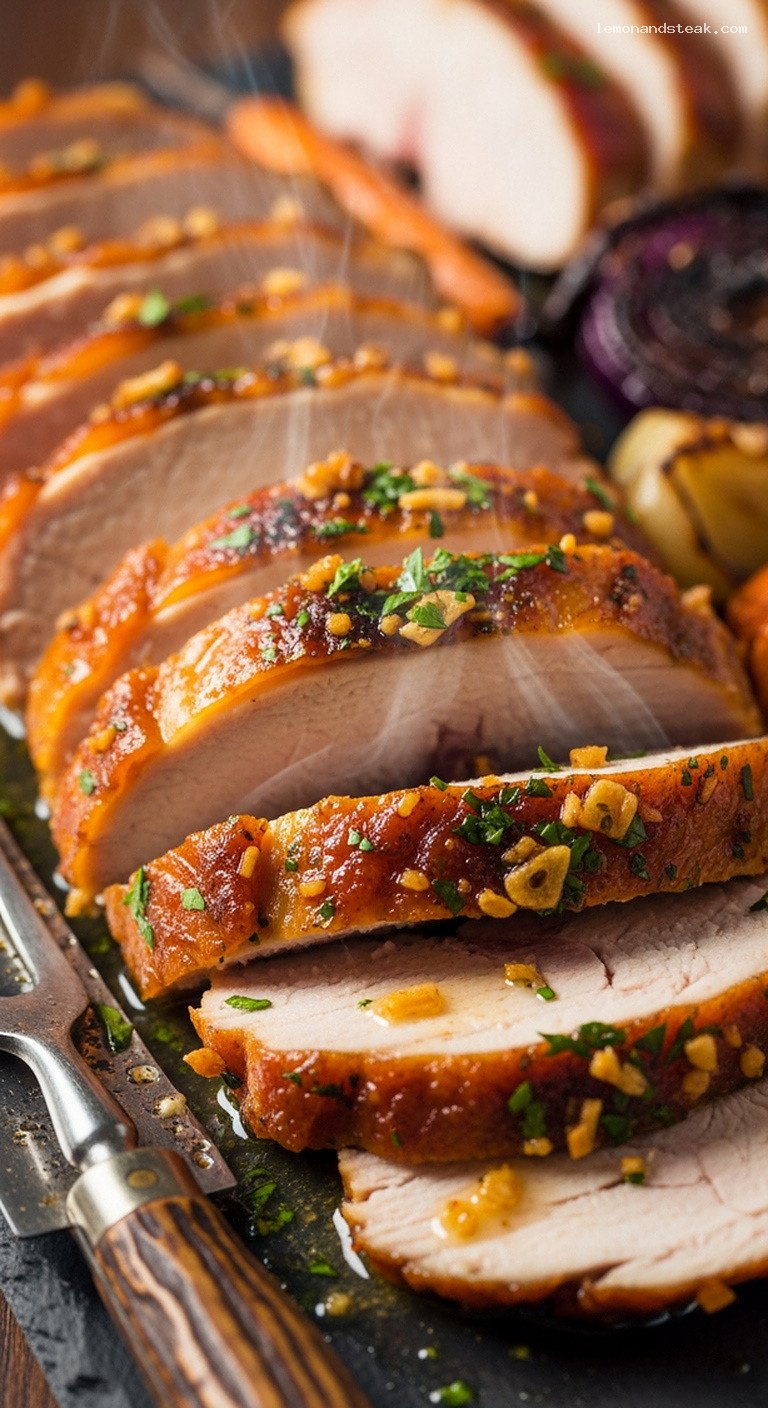
To carve, remove the legs and thighs, then the wings. Slice the breast meat off the bone in large pieces, then cut into slices across the grain. Arrange the meat on a warm platter, drizzle lightly with some of the pan juices or a little gravy to keep it moist, and garnish with a few fresh parsley sprigs if you like. Serve the rest of the gravy on the side.
Pro Tips
- Dry thoroughly for crisp skin: Taking the time to really pat the turkey dry before adding the butter rub makes a big difference in how crisp and golden the skin becomes.
- Use a thermometer, not just time: Oven temperatures vary and turkeys differ in shape. An instant-read thermometer is the most reliable way to get perfectly cooked, juicy meat.
- Do not skip the rest: That 30-minute rest after roasting is essential. Cutting too soon can cause the juices to run out, leaving the meat drier.
- Pre-salt for even more flavor: For extra insurance, lightly salt the turkey (inside and out) 12–24 hours before roasting and leave it uncovered in the fridge. Then apply the butter rub right before cooking.
- Protect the breast: If the breast is browning faster than the legs, tent just the breast area with foil so the dark meat can catch up without burning the skin.
Variations
- Smoky paprika turkey: Replace 1 tbsp of the sweet paprika with smoked paprika. The result is a deeper, smokier flavor that pairs wonderfully with the garlic and butter.
- Extra-herby version: Add 1–2 tbsp finely chopped fresh thyme and/or rosemary to the butter rub along with the parsley for a more traditional herb-roast profile.
- Citrus-garlic twist: Increase the lemon zest to 2 tsp and add the juice of half a lemon to the butter rub. This brightens the flavor and cuts through the richness of the butter.
Storage & Make-Ahead
Leftover turkey should be cooled, then stored in airtight containers in the refrigerator for up to 3–4 days. Slice or shred the meat off the bone before chilling so it cools quickly and is easy to reheat. For longer storage, freeze portions of turkey in freezer-safe bags for up to 2–3 months; remove as much air as possible to prevent freezer burn. Reheat gently in a covered dish with a splash of broth or gravy to keep the meat moist.
The paprika-parsley-garlic butter can be made up to 3 days ahead and kept covered in the refrigerator; let it soften at room temperature before spreading on the turkey. You can also chop the vegetables for the roasting pan a day in advance and store them in the fridge. If you like, pre-salt the turkey 12–24 hours ahead for extra flavor and juiciness.
Nutrition (per serving)
Approximate values for one serving (about 6 oz cooked turkey with skin plus a small amount of butter and pan juices): 480 calories, 60 g protein, 1 g carbohydrates, 24 g fat, 10 g saturated fat, 180 mg cholesterol, 580 mg sodium. Values will vary based on the size of the turkey, how much skin and gravy are consumed, and exact ingredients used. Treat these numbers as a helpful estimate rather than an exact calculation.
Leave a Reply