
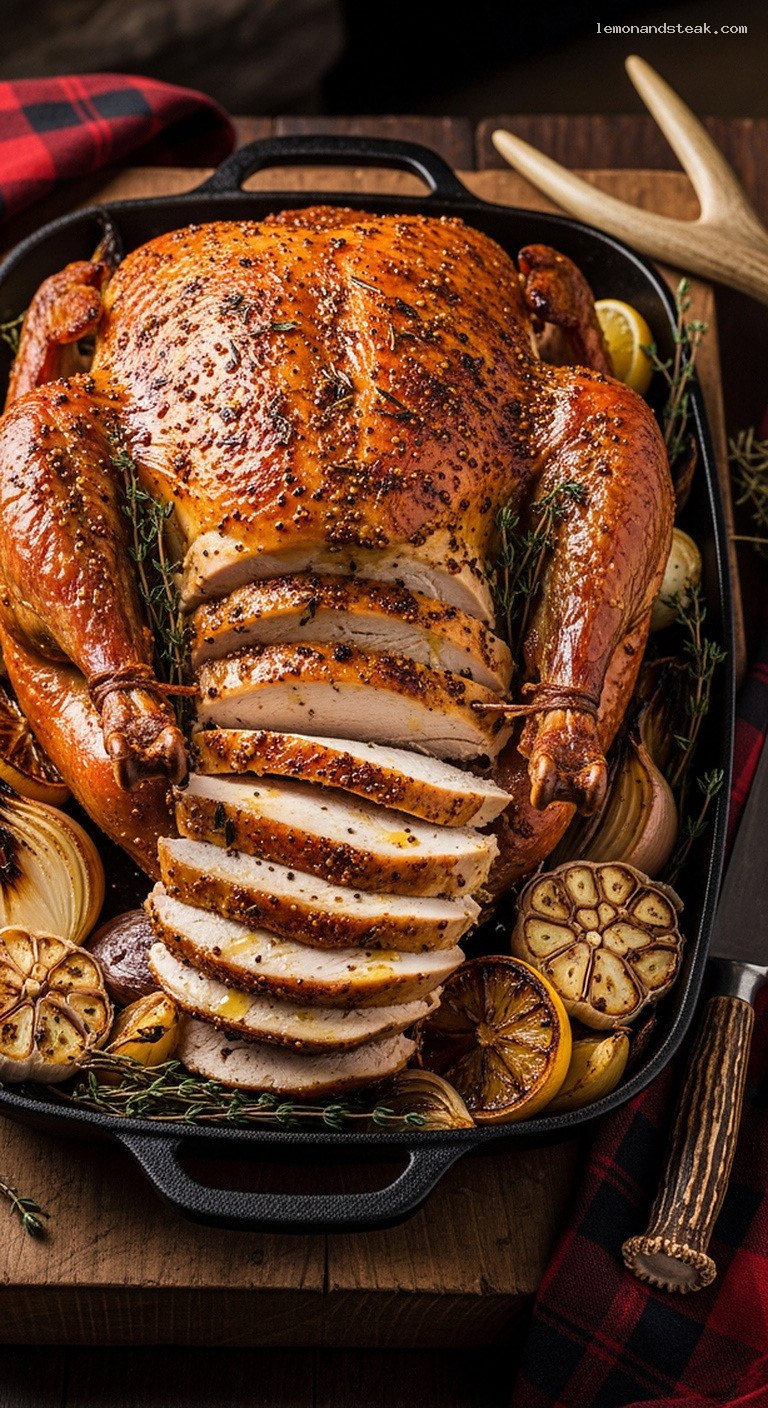
Quick Recipe Version (TL;DR)
Quick Ingredients
- 1 whole turkey, 12–14 lb (5.5–6.5 kg), thawed
- 1 1/2 tbsp kosher salt, 2 tsp black pepper
- 2 tsp paprika, 1 tsp garlic powder, 1 tsp onion powder
- 1 large yellow onion, 1 lemon, 1 head garlic
- 6 sprigs fresh thyme, 4 sprigs fresh rosemary
- 1 cup (225 g) unsalted butter, melted and divided
- 1/4 cup Dijon mustard
- 3 tbsp honey
- 1 tbsp apple cider vinegar
- 2 cups (480 ml) low-sodium chicken or turkey stock
Do This
- 1. Pat turkey dry. (Optional but recommended: dry-brine with the kosher salt 12–24 hours, uncovered in the fridge.)
- 2. Preheat oven to 425°F (220°C). Place onion, lemon, garlic, herbs, and 1 cup stock in a roasting pan; set turkey on a rack over the aromatics.
- 3. Mix pepper, paprika, garlic powder, and onion powder. Brush turkey all over with 3/4 cup melted butter, then season generously with spice mix (inside and out).
- 4. Roast at 425°F (220°C) for 20 minutes, then reduce oven to 325°F (165°C). Roast 1 1/2–2 hours, basting every 30–40 minutes with pan juices and a little reserved butter.
- 5. Whisk remaining 1/4 cup butter with Dijon, honey, vinegar, 1/4 tsp salt, and a pinch of pepper to make the glaze.
- 6. When the turkey is about 20–25°F (10–15°C) below done (around 135–145°F / 57–63°C in the breast), brush all over with the mustard-honey butter. Roast 30–45 minutes more, brushing once more, until skin is deep golden and thickest part of breast reaches 165°F (74°C).
- 7. Rest turkey, loosely tented with foil, for 30–40 minutes before carving. Skim fat from pan juices, add remaining 1 cup stock, and simmer for a simple pan sauce if desired.
Why You’ll Love This Recipe
- The butter and mustard-honey coating create a crisp, deeply golden skin with a subtle sweet-tangy crust instead of an overpowering glaze.
- Simple pantry ingredients and straightforward steps make this special-occasion turkey very doable for home cooks.
- The roasted aromatics and pan juices build rich flavor for easy, no-fuss gravy or pan sauce.
- Flexible timing and clear temperature cues help you avoid dry breast meat and undercooked dark meat.
Grocery List
- Produce: 1 large yellow onion, 1 lemon, 1 head garlic, fresh thyme, fresh rosemary
- Dairy: 1 cup (225 g) unsalted butter
- Pantry: 1 whole turkey (12–14 lb), kosher salt, black pepper, paprika, garlic powder, onion powder, Dijon mustard, honey, apple cider vinegar, low-sodium chicken or turkey stock
Full Ingredients
Turkey & Roasting Pan
- 1 whole turkey, 12–14 lb (5.5–6.5 kg), completely thawed, giblets removed
- 1 1/2 tbsp kosher salt (for seasoning; use up to 2 tbsp if dry-brining)
- 2 tsp freshly ground black pepper
- 2 tsp paprika (sweet or smoked)
- 1 tsp garlic powder
- 1 tsp onion powder
- 1 large yellow onion, peeled and quartered
- 1 lemon, halved
- 1 whole head garlic, halved horizontally
- 6 sprigs fresh thyme
- 4 sprigs fresh rosemary
- 2 cups (480 ml) low-sodium chicken or turkey stock, divided
Butter Rub
- 1 cup (225 g / 2 sticks) unsalted butter, melted and divided
- (From this, reserve 1/4 cup for the mustard-honey glaze; the remaining 3/4 cup is for rubbing and basting.)
Mustard-Honey Butter Glaze
- 1/4 cup Dijon mustard
- 3 tbsp honey
- 1/4 cup melted butter (reserved from above)
- 1 tbsp apple cider vinegar
- 1/2 tsp kosher salt
- 1/4 tsp freshly ground black pepper
Optional Simple Pan Gravy
- All roasted pan juices and browned bits (after skimming fat)
- 1–2 cups (240–480 ml) additional chicken or turkey stock, as needed
- 2–3 tbsp all-purpose flour (for thickening), optional
- Salt and pepper to taste
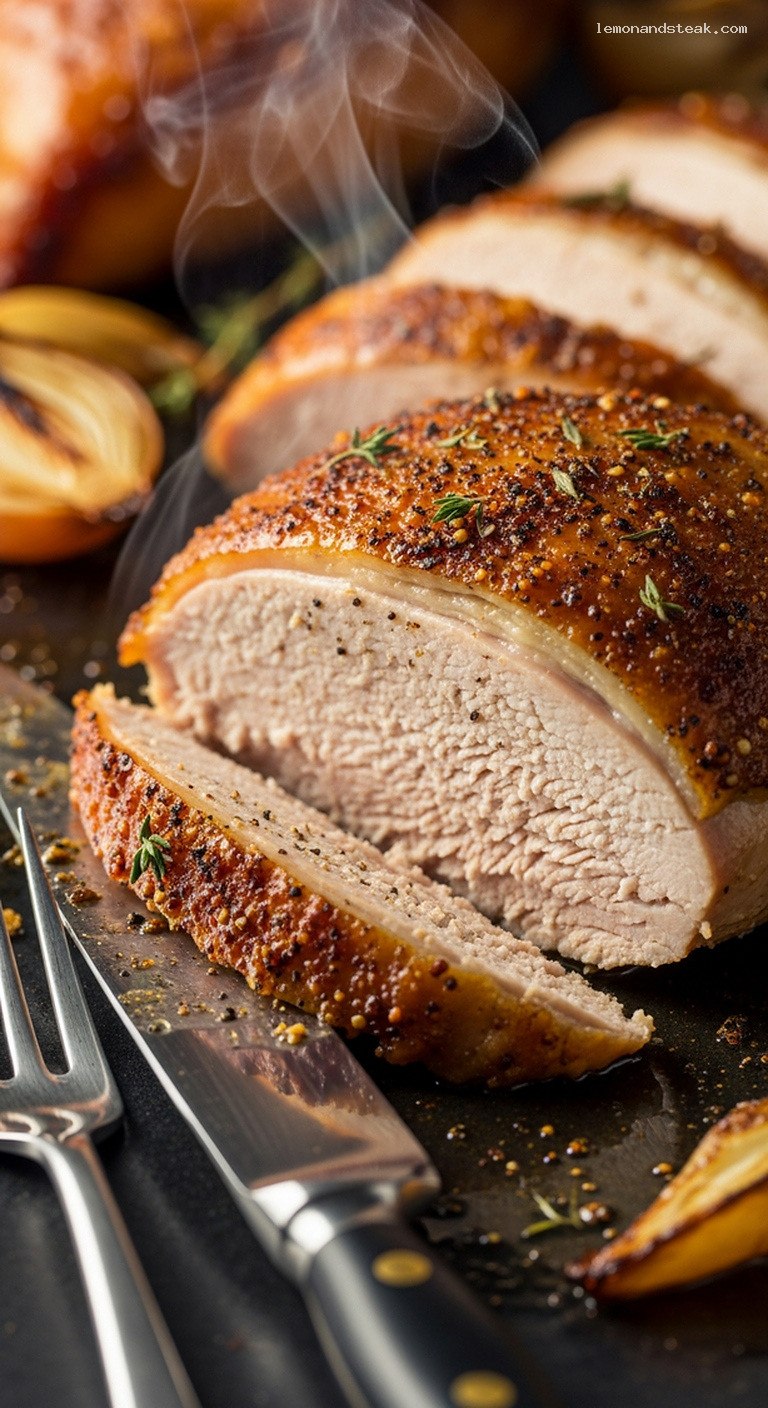
Step-by-Step Instructions
Step 1: Thaw, dry, and (optionally) dry-brine the turkey
Make sure your turkey is fully thawed in the refrigerator (this can take 3–4 days for a 12–14 lb bird). Up to 24 hours before roasting, remove the turkey from its packaging, take out the neck and giblets, and pat the turkey very dry with paper towels, inside and out.
For extra-juicy, well-seasoned meat, dry-brine it: sprinkle up to 2 tbsp kosher salt evenly all over the turkey (including a light sprinkle in the cavity). Place the turkey on a rack set over a rimmed baking sheet, breast side up, and refrigerate uncovered for 12–24 hours. If you do not have the time, simply proceed with the recipe using the 1 1/2 tbsp salt listed; just be sure to season thoroughly.
Step 2: Preheat the oven and set up the roasting pan
About 45–60 minutes before you want to start roasting, remove the turkey from the refrigerator so it can take the chill off. Position a rack in the lower third of your oven and preheat to 425°F (220°C).
Place the quartered onion, halved lemon, and halved head of garlic in the bottom of a large roasting pan. Scatter in the thyme and rosemary sprigs. Pour in 1 cup (240 ml) of the stock. Set a roasting rack over the aromatics. This setup keeps the turkey elevated so the hot air can circulate, while the aromatics and stock create flavorful steam and pan juices.
Step 3: Butter and season the turkey
In a small bowl, combine the black pepper, paprika, garlic powder, and onion powder. If you did not dry-brine, also add the 1 1/2 tbsp kosher salt to this mixture. If you did dry-brine, only add a light pinch of extra salt or none at all, to avoid oversalting.
Place the turkey breast side up on the roasting rack. Tuck the wing tips behind the bird so they do not burn. If desired, loosely tie the legs together with kitchen twine. Brush the turkey all over, including under the skin of the breast if you can gently loosen it, with about 3/4 cup of the melted butter. Use your hands or a spoon to get some butter under the skin over the breast meat; this helps keep it moist.
Sprinkle the spice mixture evenly over the entire turkey, including a small amount inside the cavity. For extra flavor, stuff some of the onion, lemon, garlic pieces, and a few herb sprigs inside the cavity as well. The turkey should now look well-buttered and well-seasoned.
Step 4: Start roasting and baste with butter and pan juices
Place the roasting pan in the preheated 425°F (220°C) oven and roast for 20 minutes. This initial blast of high heat helps set and start browning the skin.
After 20 minutes, reduce the oven temperature to 325°F (165°C) without opening the door. Continue roasting for 1 1/2 to 2 hours, basting every 30–40 minutes. To baste, carefully pull out the oven rack, spoon the buttery pan juices over the breast, legs, and thighs, and add a tablespoon or two of the remaining melted butter if the pan looks dry.
If the pan dries out too much at any point, add a splash more stock or water, about 1/2 cup at a time. The turkey is ready for the glaze in the next step when an instant-read thermometer inserted in the thickest part of the breast reads about 135–145°F (57–63°C).
Step 5: Mix the mustard-honey butter glaze
While the turkey roasts, prepare the glaze that will form the subtle sweet-tangy crust. In a small bowl, whisk together the 1/4 cup Dijon mustard, 3 tbsp honey, 1 tbsp apple cider vinegar, 1/4 cup reserved melted butter, 1/2 tsp kosher salt, and 1/4 tsp black pepper until smooth and emulsified.
Taste a tiny dab. It should be lightly sweet, a bit tangy, and pleasantly mustardy, but not harsh. The flavor will mellow and caramelize in the oven, so it is fine if it tastes a bit bolder than you want the final crust to be. Set the glaze aside at room temperature; it will thicken slightly as it sits, which helps it cling to the skin.
Step 6: Brush on the mustard-honey coating and finish roasting
Once the turkey breast reaches about 135–145°F (57–63°C), pull the roasting pan out just far enough to work safely. Brush the mustard-honey butter generously over the entire turkey, focusing on the breast, drumsticks, and the top of the thighs. You want a thin but even coat; you may not need every last drop, but use most of it so the crust develops nicely.
Return the turkey to the oven and continue roasting at 325°F (165°C) for another 30–45 minutes, basting once halfway through with any glaze that has dripped into the pan and the pan juices. If the skin is browning too quickly in any spot, tent that area loosely with a small piece of foil.
The turkey is done when the thickest part of the breast and the innermost part of the thigh register 165°F (74°C) on an instant-read thermometer and the juices run clear. The skin should be deep golden-brown with a glossy, lightly caramelized sheen from the mustard-honey coating.
Step 7: Rest, carve, and serve with pan juices or gravy
Transfer the turkey to a cutting board or serving platter, tent loosely with foil, and let it rest for 30–40 minutes. This rest is essential: it allows the juices to redistribute, so the slices stay moist instead of running dry.
While the turkey rests, tilt the roasting pan and spoon off most of the clear fat from the top, leaving the darker juices and browned bits. Place the pan over medium heat on the stovetop (or scrape the contents into a saucepan). Add the remaining 1 cup (240 ml) stock and bring to a simmer, scraping up all the browned bits. For a light pan sauce, simmer until slightly reduced and season with salt and pepper to taste. For a thicker gravy, sprinkle in 2–3 tbsp flour, whisking constantly for several minutes, then thin with additional stock as needed.
Carve the turkey by removing the legs and thighs, then the wings, then the breast halves, slicing the breast meat across the grain. Arrange on a warm platter, spoon a little of the glossy pan juices over the top if you like, and serve with extra sauce or gravy on the side. The golden, slightly sticky mustard-honey crust should be visible on each slice of skin.
Pro Tips
- Dry-brine if you can. Even 12 hours of uncovered fridge time with salt makes the meat juicier and seasons it all the way through.
- Use a thermometer, not the clock. Oven temperatures and turkey sizes vary; the turkey is perfectly done when the breast and thigh reach 165°F (74°C).
- Glaze late to avoid burning. Adding the mustard-honey butter only in the last 30–45 minutes lets it caramelize into a gentle crust instead of turning bitter.
- Rotate the pan. If your oven has hot spots, turn the roasting pan 180 degrees halfway through roasting for even browning.
- Do not skip the rest. Resting for at least 30 minutes is the difference between a juice-soaked cutting board and moist slices on your plate.
Variations
- Herb-forward version: Stir 1–2 tbsp finely chopped fresh thyme, rosemary, and parsley into the melted butter before brushing it on the turkey for a more herbal flavor under the sweet-tangy crust.
- Spicier crust: Add 1/2–1 tsp smoked paprika and a pinch of cayenne pepper to the mustard-honey glaze for a gentle kick and deeper color.
- Orange-mustard twist: Substitute 2 tbsp fresh orange juice for half of the honey and add 1 tsp finely grated orange zest to the glaze for a brighter citrus note.
Storage & Make-Ahead
Refrigerate leftover turkey in airtight containers within 2 hours of cooking. It will keep for 3–4 days in the refrigerator. For longer storage, freeze sliced meat (well wrapped) for up to 2 months. Reheat gently, covered, with a splash of stock to keep the meat from drying out. The turkey can be dry-brined up to 24 hours ahead, and you can mix the mustard-honey glaze up to 2 days in advance; store the glaze in the refrigerator and bring it back to room temperature before brushing it on.
Nutrition (per serving)
Approximate values per serving (1/10 of a 12–14 lb turkey, without gravy): about 480 calories, 55 g protein, 24 g fat, 8 g saturated fat, 6 g carbohydrates, 5 g sugar, and 850 mg sodium. Actual values will vary based on the size of your turkey, how much skin and butter you eat, and how much salt you use.
Leave a Reply