
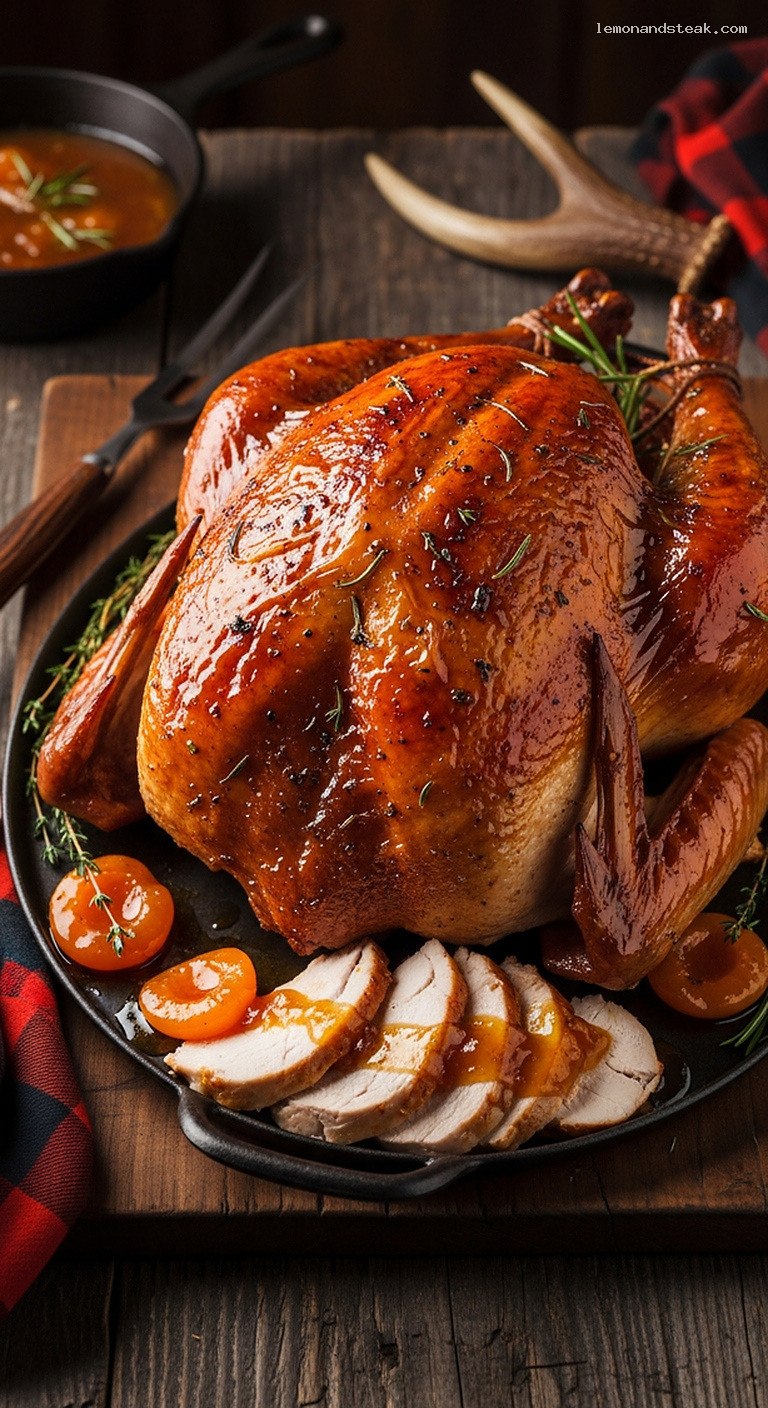
Apricot Brown Sugar Glazed Roast Turkey
Quick Recipe Version (TL;DR)
Quick Ingredients
- 1 whole turkey (12–14 lb), thawed
- 3 tbsp kosher salt, 2 tsp black pepper
- 2 tsp each: garlic powder, onion powder, dried thyme
- 1 tsp dried rosemary
- 1 large onion, 1 orange, 1 head garlic (all cut up, for cavity/pan)
- 8 tbsp unsalted butter (2 tbsp softened, 6 tbsp melted, divided)
- 1 cup apricot preserves
- 1/2 cup packed light brown sugar
- 2 tbsp Dijon mustard
- 2 tbsp apple cider vinegar or orange juice
- 1 cup low-sodium chicken broth or water (for roasting pan)
- Optional: pinch cinnamon, pinch red pepper flakes
Do This
- 1. Preheat oven to 425°F (220°C). Pat turkey dry; remove giblets. Mix salt, pepper, garlic powder, onion powder, thyme, and rosemary.
- 2. Rub 2 tbsp softened butter under the skin over the breasts. Season turkey all over (and inside cavity) with the spice mix.
- 3. Place onion, orange, and garlic in cavity and roasting pan. Set turkey breast-side up on a rack in the pan. Pour 1 cup broth into the pan.
- 4. Brush turkey with 3 tbsp melted butter. Roast at 425°F for 30 minutes.
- 5. Meanwhile, simmer apricot preserves, brown sugar, Dijon, vinegar/juice, remaining 3 tbsp butter, and optional spices 3–5 minutes until syrupy.
- 6. Reduce oven to 325°F (165°C). Brush turkey with glaze every 20 minutes for the last 60–75 minutes, tenting with foil if browning too quickly.
- 7. Roast until thickest part of thigh reaches 175°F (79°C) and breast reaches 165°F (74°C), about 3–3 1/2 hours total. Rest 30 minutes, then carve and serve with pan juices.
Why You’ll Love This Recipe
- Classic holiday roast turkey with a gentle, not-too-sweet apricot and brown sugar glaze.
- Buttery, bronzed skin and tender, juicy meat thanks to simple seasoning and careful roasting.
- Easy, approachable steps that do not require special equipment or advanced skills.
- Beautiful centerpiece-worthy bird with flavors that pair perfectly with all the traditional sides.
Grocery List
- Produce: 1 large onion, 1 orange, 1 head garlic
- Dairy: Unsalted butter (1 cup / 2 sticks is more than enough for recipe and greasing)
- Pantry: Whole turkey (12–14 lb), kosher salt, black pepper, garlic powder, onion powder, dried thyme, dried rosemary, apricot preserves, light brown sugar, Dijon mustard, apple cider vinegar or orange juice, ground cinnamon (optional), red pepper flakes (optional), low-sodium chicken broth, all-purpose flour (if making gravy)
Full Ingredients
For the Roast Turkey
- 1 whole turkey, 12–14 lb, completely thawed if previously frozen
- 3 tbsp kosher salt (use 2 tbsp if using table salt)
- 2 tsp freshly ground black pepper
- 2 tsp garlic powder
- 2 tsp onion powder
- 2 tsp dried thyme
- 1 tsp dried rosemary, crumbled
- 2 tbsp unsalted butter, softened (for under the skin)
- 3 tbsp unsalted butter, melted (for first basting)
- 1 large yellow onion, peeled and cut into wedges
- 1 medium orange, scrubbed and cut into wedges
- 1 head garlic, halved horizontally
- 1 cup low-sodium chicken broth or water (for the roasting pan)
For the Apricot–Brown Sugar Glaze
- 1 cup apricot preserves
- 1/2 cup packed light brown sugar
- 2 tbsp Dijon mustard
- 2 tbsp apple cider vinegar or orange juice
- 3 tbsp unsalted butter
- 1/4 tsp ground cinnamon (optional, for warmth)
- 1/4 tsp red pepper flakes (optional, for a gentle kick)
- Pinch of kosher salt
Optional Simple Pan Gravy
- 3 tbsp fat from turkey drippings (or unsalted butter)
- 3 tbsp all-purpose flour
- 2–3 cups combined turkey drippings and low-sodium chicken broth
- Salt and black pepper, to taste
Step-by-Step Instructions
Step 1: Thaw and Prep the Turkey
If your turkey is frozen, thaw it in the refrigerator for 3–4 days (about 24 hours per 4–5 lb of turkey). Once thawed, remove the packaging, reach into the cavity, and remove the neck and giblet packet (often tucked in the neck cavity). Pat the entire bird very dry with paper towels; dry skin is key for crisp, golden skin.
Set the turkey breast-side up on a wire rack inside a large roasting pan. If you do not have a rack, make a bed of thickly sliced onions or crumpled foil to lift the bird slightly off the bottom of the pan. Let the turkey sit at room temperature for 30 minutes while you prep the seasoning and glaze; this helps it cook more evenly.
Step 2: Season the Turkey and Add Aromatics
In a small bowl, combine the kosher salt, black pepper, garlic powder, onion powder, dried thyme, and dried rosemary. Gently loosen the skin over the turkey breasts by sliding your fingers underneath, being careful not to tear it. Spread the 2 tbsp softened butter in a thin layer directly onto the breast meat under the skin. This helps keep the white meat moist and adds rich flavor.
Sprinkle the seasoning mixture evenly all over the turkey, including inside the cavity and under the loosened skin where possible. Place some onion wedges, orange wedges, and the halved garlic head inside the cavity. Scatter any remaining onion and orange pieces into the bottom of the roasting pan. Pour 1 cup of chicken broth (or water) into the pan to prevent burning and help create flavorful drippings.
Step 3: Start Roasting with a Buttery Base
Preheat your oven to 425°F (220°C). Melt 3 tbsp unsalted butter and brush it all over the turkey skin, especially the breast and legs. This buttery base helps the skin begin to brown beautifully.
Place the turkey, uncovered, on the center rack of the oven. Roast at 425°F for 30 minutes. This initial burst of high heat kickstarts browning and crisps the skin. If your oven tends to smoke, make sure the roasting pan is not overcrowded and that there is a bit of liquid in the bottom.
Step 4: Make the Apricot–Brown Sugar Glaze
While the turkey begins to roast, prepare the glaze. In a small saucepan, combine the apricot preserves, brown sugar, Dijon mustard, apple cider vinegar (or orange juice), 3 tbsp unsalted butter, cinnamon (if using), red pepper flakes (if using), and a pinch of salt.
Set the pan over medium heat and bring the mixture to a gentle simmer, stirring often. Cook for 3–5 minutes until the sugar is dissolved, the butter is melted, and the mixture is glossy and slightly thickened. You want a pourable syrup, not a very thick jam. Remove from the heat. The glaze will thicken a bit more as it cools; if it becomes too thick later, you can warm it with a splash of water or broth to loosen it.
Step 5: Lower the Heat and Continue Roasting
After the first 30 minutes at 425°F, reduce the oven temperature to 325°F (165°C) without opening the door for too long. If the breast or tips of the wings seem to be browning very quickly, lightly tent them with a piece of foil, leaving plenty of room for air to circulate so the skin does not steam.
Continue roasting the turkey at 325°F. As a general guideline, a 12–14 lb turkey will take about 3–3 1/2 hours total. You have already done 30 minutes at high heat, so expect roughly 2 1/2–3 more hours at 325°F. Begin checking the internal temperature with an instant-read thermometer after about 2 hours of roasting at 325°F.
Step 6: Brush on the Apricot–Brown Sugar Glaze
Once the turkey is about 60–75 minutes away from being done (often around the 2 to 2 1/2 hour mark of total roasting time), begin glazing. You want to add the sweet glaze toward the end so the sugars can caramelize without burning.
Warm the glaze gently if it has thickened. Brush a generous layer of glaze over all exposed skin: breast, legs, thighs, and wings. Return the turkey to the oven and roast for 20 minutes. Repeat this glazing process every 20 minutes for 3–4 more applications, using most or all of the glaze. If any spots start to get too dark before the turkey is cooked through, tent those areas loosely with foil.
Step 7: Check Doneness, Rest, and Carve
To check for doneness, insert an instant-read thermometer into the thickest part of the thigh, avoiding the bone. The thigh should reach 175°F (79°C), and the thickest part of the breast should reach at least 165°F (74°C). When the turkey is done, carefully remove it from the oven.
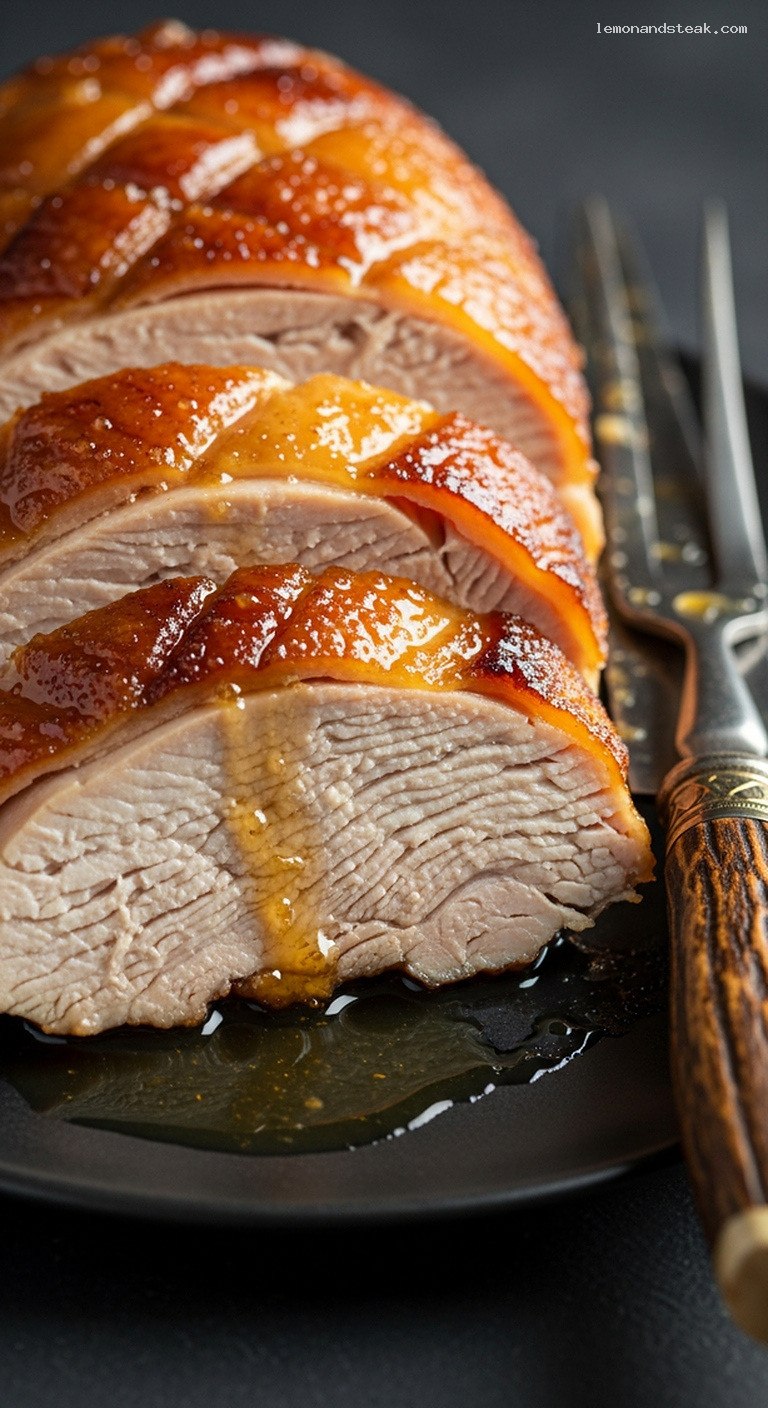
Transfer the turkey to a cutting board or platter, tent loosely with foil, and let it rest for at least 30 minutes. Resting allows the juices to redistribute so the meat stays moist and tender when you carve it. While the turkey rests, skim the fat from the pan drippings and, if you like, use them to make a simple gravy (see below). Carve the turkey into slices, arranging the meat on a warm platter and spooning a bit of the glossy apricot-brown sugar pan juices over the top if desired.
Step 8: Make a Simple Pan Gravy (Optional)
Pour the pan drippings through a fine-mesh strainer into a measuring cup. Let the fat rise to the top, then skim off 3 tbsp and add to a medium saucepan (or use 3 tbsp butter). Discard any remaining excess fat and reserve the flavorful juices.
Whisk 3 tbsp flour into the hot fat over medium heat. Cook, whisking constantly, for 2–3 minutes until the roux is golden and smells slightly nutty. Slowly whisk in 2 cups of the reserved juices and/or chicken broth, stirring to prevent lumps. Bring to a simmer and cook until thickened, 5–7 minutes. Add more liquid if you prefer a thinner gravy. Season to taste with salt and pepper. Serve warm alongside the carved turkey.
Pro Tips
- Dry the skin very well. Moisture on the skin turns to steam and prevents crisping. Pat the turkey thoroughly with paper towels before seasoning and basting.
- Use a thermometer, not just time. Ovens vary. Rely on internal temperature (175°F thigh, 165°F breast) rather than the clock to avoid under- or overcooking.
- Glaze late to prevent burning. Apply the apricot-brown sugar glaze only during the last 60–75 minutes of roasting so the sugars caramelize into a soft, shiny coating instead of scorching.
- Tent, do not wrap. If the skin gets dark too fast, loosely tent with foil. Wrapping tightly steams the skin and makes it rubbery.
- Let it rest. A 30-minute rest is non-negotiable for juicy meat and easy carving, especially for a large bird.
Variations
- Spiced Apricot Turkey: Add 1 tsp smoked paprika and 1/2 tsp ground cumin to the glaze for a more complex, smoky-sweet flavor profile.
- Citrus-Herb Apricot Glaze: Stir 1 tbsp fresh chopped rosemary and 1 tbsp finely grated orange zest into the glaze at the end of cooking for a brighter, more aromatic finish.
- Turkey Breast Only: Use a 5–7 lb bone-in turkey breast and roast at 350°F (175°C) for 1 3/4–2 1/2 hours, glazing during the last 30–40 minutes. Perfect for smaller gatherings.
Storage & Make-Ahead
You can season the turkey up to 24 hours in advance. After rubbing with butter and the spice mixture, place the turkey uncovered in the refrigerator; this dry brining time helps the skin dry out and the seasoning penetrate. The apricot–brown sugar glaze can be made up to 3 days ahead and stored in an airtight container in the refrigerator; gently rewarm before brushing on the turkey.
Leftover turkey keeps well in the refrigerator for 3–4 days. Wrap slices tightly or store in an airtight container with a bit of pan juice or broth to keep them moist. Reheat gently in a covered dish at 300°F (150°C) until warmed through, or warm in a skillet with a splash of broth. Cooked turkey can also be frozen for up to 3 months; thaw overnight in the refrigerator before reheating.
Nutrition (per serving)
Approximate values for 1 serving (about 6 oz cooked turkey with skin and a bit of glaze, based on 12 servings from a 12–14 lb turkey):
Calories: ~460 kcal; Protein: ~48 g; Fat: ~19 g; Saturated Fat: ~7 g; Carbohydrates: ~20 g; Sugars: ~18 g; Fiber: 0 g; Sodium: ~890 mg (will vary based on salt used and how much skin/glaze is eaten).
Leave a Reply