

Quick Recipe Version (TL;DR)
Quick Ingredients
- 1 whole turkey (12 to 14 lb), thawed
- 1 1/2 tbsp kosher salt
- 1 tsp freshly ground black pepper
- 8 tbsp unsalted butter, very soft
- 2 tbsp sweet paprika, plus 1 tsp for basting
- 2 tbsp dried onion flakes (dried minced onion)
- 2 tbsp dried parsley
- 1/2 tsp garlic powder (optional)
- 1 medium onion, 1 lemon, 2 ribs celery, 1 carrot
- 4 garlic cloves, 2 bay leaves (all optional but recommended)
- 1 cup low-sodium chicken broth or water
- 2 tbsp unsalted butter, melted (for basting)
Do This
- 1. Heat oven to 450°F (230°C). Pat turkey very dry; remove giblets.
- 2. Mix soft butter, 2 tbsp paprika, onion flakes, parsley, and garlic powder.
- 3. Season turkey cavity and skin with salt and pepper; stuff cavity with onion, lemon, celery, carrot, garlic, and bay leaves.
- 4. Gently loosen breast and leg skin; spread most paprika butter under skin, then rub remaining all over outside.
- 5. Set turkey on rack in roasting pan with 1 cup broth or water. Roast 30 minutes at 450°F.
- 6. Reduce oven to 325°F (165°C) and roast 2 to 2 1/2 hours more, until thigh reaches 165°F. Tent with foil if browning too fast.
- 7. Stir 2 tbsp melted butter with 1 tsp paprika; brush over turkey for the last 15 minutes. Rest 30 minutes before carving.
Why You’ll Love This Recipe
- Classic, cozy Sunday-dinner flavor from simple pantry spices: paprika, onion flakes, parsley, and plenty of butter.
- Foolproof, step-by-step method that keeps the turkey juicy with crisp, bronzed skin.
- No fussy ingredients or techniques, just straightforward roasting that lets the turkey shine.
- Perfect base recipe: delicious as-is, and easy to dress up with your favorite sides and gravy.
Grocery List
- Produce: 1 medium yellow onion, 1 lemon, 2 ribs celery, 1 large carrot, 4 garlic cloves (optional), 2 bay leaves (optional)
- Dairy: 10 tablespoons unsalted butter
- Pantry: 1 whole turkey (12 to 14 lb), kosher salt, black pepper, sweet paprika, dried onion flakes (dried minced onion), dried parsley, garlic powder (optional), low-sodium chicken broth or water
Full Ingredients
Turkey
- 1 whole turkey (12 to 14 pounds), thawed if frozen (thaw in the fridge 3 to 4 days ahead)
- 1 1/2 tablespoons kosher salt
- 1 teaspoon freshly ground black pepper
- 1 medium yellow onion, quartered
- 1 medium lemon, halved (optional but adds brightness)
- 2 ribs celery, cut into 3-inch pieces
- 1 large carrot, cut into chunks
- 4 garlic cloves, lightly crushed (optional)
- 2 bay leaves (optional)
Paprika-Butter Rub
- 8 tablespoons (1 stick) unsalted butter, very soft (room temperature)
- 2 tablespoons sweet paprika
- 2 tablespoons dried onion flakes (dried minced onion)
- 2 tablespoons dried parsley
- 1/2 teaspoon garlic powder (optional, for a hint of extra savoriness)
For the Pan & Basting
- 1 cup low-sodium chicken broth or water
- 2 tablespoons unsalted butter, melted
- 1 teaspoon sweet paprika (for final color, optional)
Step-by-Step Instructions
Step 1: Thaw and prep the turkey
If your turkey is frozen, thaw it in the refrigerator in its original packaging for about 24 hours per 4 to 5 pounds of turkey (3 to 4 days for a 12 to 14 pound bird). When you are ready to cook, remove the turkey from the fridge 30 to 45 minutes before roasting to take off the chill; this helps it cook more evenly.
Remove the turkey from its packaging in a clean sink. Reach into the cavity and pull out the neck and giblet packet (often tucked in the neck cavity). You can save these for stock or gravy if you like. Pat the turkey very dry inside and out with plenty of paper towels. Dry skin is key to crisp, golden skin later.
Step 2: Preheat the oven and make the paprika butter
Position an oven rack in the lower third of your oven so the turkey will sit centered. Preheat the oven to 450°F (230°C).
In a medium bowl, combine the 8 tablespoons very soft butter, 2 tablespoons sweet paprika, 2 tablespoons dried onion flakes, 2 tablespoons dried parsley, and 1/2 teaspoon garlic powder (if using). Mash together with a fork or spatula until the mixture is evenly colored and the seasonings are well distributed. You should have a soft, spreadable red-orange herb butter that smells savory and slightly sweet from the paprika and onion.
Step 3: Season the turkey inside and out
Sprinkle about one-third of the 1 1/2 tablespoons kosher salt and a pinch of the black pepper inside the turkey cavity. Rub it around with your fingers so it lightly coats the inside.
Stuff the cavity loosely with the onion quarters, lemon halves, celery pieces, carrot chunks, garlic cloves, and bay leaves, if using. Do not pack it too tightly; air should still be able to circulate for even cooking.
Sprinkle the remaining salt and black pepper all over the outside of the turkey, including the back, legs, and wings. Gently press it into the skin so it sticks. Tuck the wing tips under the turkey to prevent them from burning, and tie the legs together with kitchen twine if you have it (this helps the bird cook more evenly and look neater).
Step 4: Rub paprika butter under and over the skin
Gently loosen the skin over the turkey breasts by sliding your fingers under the skin at the cavity end and slowly working your hand toward the top of the bird. Take your time so you do not tear the skin. You can also gently loosen the skin over the tops of the drumsticks if you are comfortable.
Using your hand or a small spatula, spread about half of the paprika butter under the skin, directly onto the breast meat (and over the tops of the drumsticks if loosened). Smooth the skin back down over the meat to distribute the butter evenly. This step keeps the breast meat moist and deeply flavored.
Rub the remaining paprika butter all over the outside of the turkey: breast, legs, thighs, and back. Try to coat it in an even layer. The paprika will give the skin a beautiful deep golden-red color as it roasts, while the onion flakes and parsley add texture and classic Sunday-dinner aroma.
Step 5: Set up the roasting pan and start roasting hot
Place a sturdy roasting rack in a large roasting pan. Pour the 1 cup chicken broth or water into the bottom of the pan; this keeps drippings from burning and gives you flavorful juices for basting or gravy.
Set the buttered turkey breast-side up on the rack. Slide the pan into the preheated 450°F (230°C) oven and roast for 30 minutes. This initial blast of high heat helps set and crisp the skin, locking in moisture.
After 30 minutes, without removing the turkey from the oven for too long, reduce the oven temperature to 325°F (165°C). You do not need to open the door for long; just enough time to turn the dial and let the temperature come down as the roast continues.
Step 6: Roast low and slow, baste, and check doneness
Continue roasting the turkey at 325°F (165°C) for about 2 to 2 1/2 hours, or until the thickest part of the thigh registers 165°F (74°C) on an instant-read thermometer and the thickest part of the breast reaches about 160°F (71°C). As a rough guide, total roasting time (including the initial high-heat phase) is usually 13 to 15 minutes per pound for an unstuffed turkey, but always trust your thermometer over the clock.
Halfway through roasting, carefully rotate the pan front to back for even browning. If the breast or wing tips start to get too dark before the meat is done, lightly tent those areas with a piece of foil.
In the last 15 to 20 minutes of roasting, stir the 2 tablespoons melted butter with the 1 teaspoon paprika. Brush this mixture generously over the turkey skin for a glossy, deep color and an extra hit of buttery paprika flavor. Let it finish roasting until it reaches the target temperatures.
Step 7: Rest, carve, and serve
When the turkey is done, carefully transfer it to a large cutting board or serving platter. Tilt it gently over the pan first so some of the juices run back into the roasting pan. Tent the turkey loosely with foil and let it rest for at least 30 minutes. Resting is crucial; it allows the juices to redistribute so the meat stays moist when carved.
While the turkey rests, you can skim and use the pan juices to make a simple gravy, or simply spoon some over sliced turkey at the table.
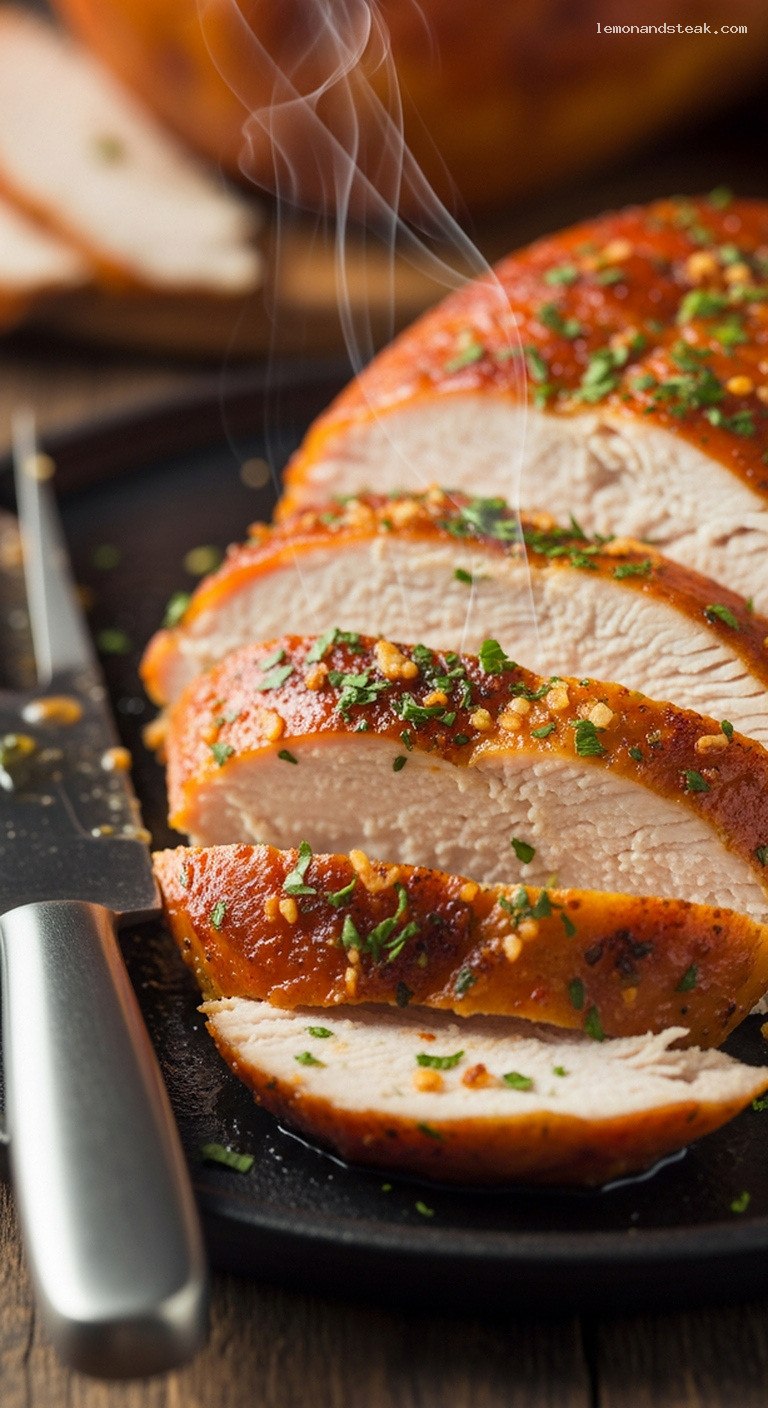
To carve, remove the legs and thighs first, then the wings, then slice the breast meat across the grain into thick, juicy slices. Arrange the meat on a warm platter, spoon a little of the buttery pan juice over the top, and sprinkle with a bit of extra dried or fresh parsley if you like. Serve with your favorite Sunday sides.
Pro Tips
- Dry the skin really well. The drier the skin before you add the paprika butter, the crisper and more evenly browned it will become in the oven.
- Soften the butter fully. The paprika-onion-parsley butter should be as soft as possible (but not melted) so it slips easily under the skin without tearing it.
- Use a thermometer, not just time. Every oven runs a little differently and turkeys vary. An instant-read thermometer is your best friend for juicy meat and food safety.
- Tent strategically. If the breast browns too quickly, cover just that area with foil instead of wrapping the whole bird, so the legs can keep catching up.
- Do not skip the rest. That 30-minute resting time feels long when you are hungry, but it makes a world of difference in tenderness and juiciness.
Variations
- Smoky paprika twist: Swap half of the sweet paprika for smoked paprika for a gentle, woodsy flavor that still feels classic but a bit more rustic.
- Garlic-forward version: Increase the garlic powder in the paprika butter to 1 teaspoon and add extra crushed garlic cloves to the cavity for a more garlicky, savory profile.
- Herbier Sunday roast: Add 1 teaspoon dried thyme and 1 teaspoon dried rosemary to the paprika butter along with the parsley for a more herb-heavy, traditional roast flavor.
Storage & Make-Ahead
Let leftover turkey cool until just slightly warm, then transfer it to airtight containers within 2 hours of roasting. Store in the refrigerator for up to 4 days. For best results, slice breast meat and remove dark meat from the bones before chilling; this makes reheating more even and convenient.
To freeze, pack cooled turkey in freezer-safe bags or containers, pressing out excess air. Label and freeze for up to 3 months. Thaw overnight in the refrigerator before reheating. Reheat gently in a covered dish with a splash of broth at 300°F (150°C) until warmed through, or cover and microwave on medium power so the meat does not dry out.
You can also make the paprika butter up to 3 days ahead. Store it in the refrigerator, then bring it back to room temperature until soft before rubbing it under and over the turkey skin.
Nutrition (per serving)
Approximate values per serving (assuming 10 servings, including some skin and butter, but not including gravy or sides): about 520 calories, 40 g protein, 35 g fat, 12 g saturated fat, 2 g carbohydrates, 1 g fiber, 0 g added sugar, and around 1150 mg sodium. These numbers are estimates and will vary based on the exact size of your turkey, how much skin and butter each person eats, and the specific brands you use.
Leave a Reply