
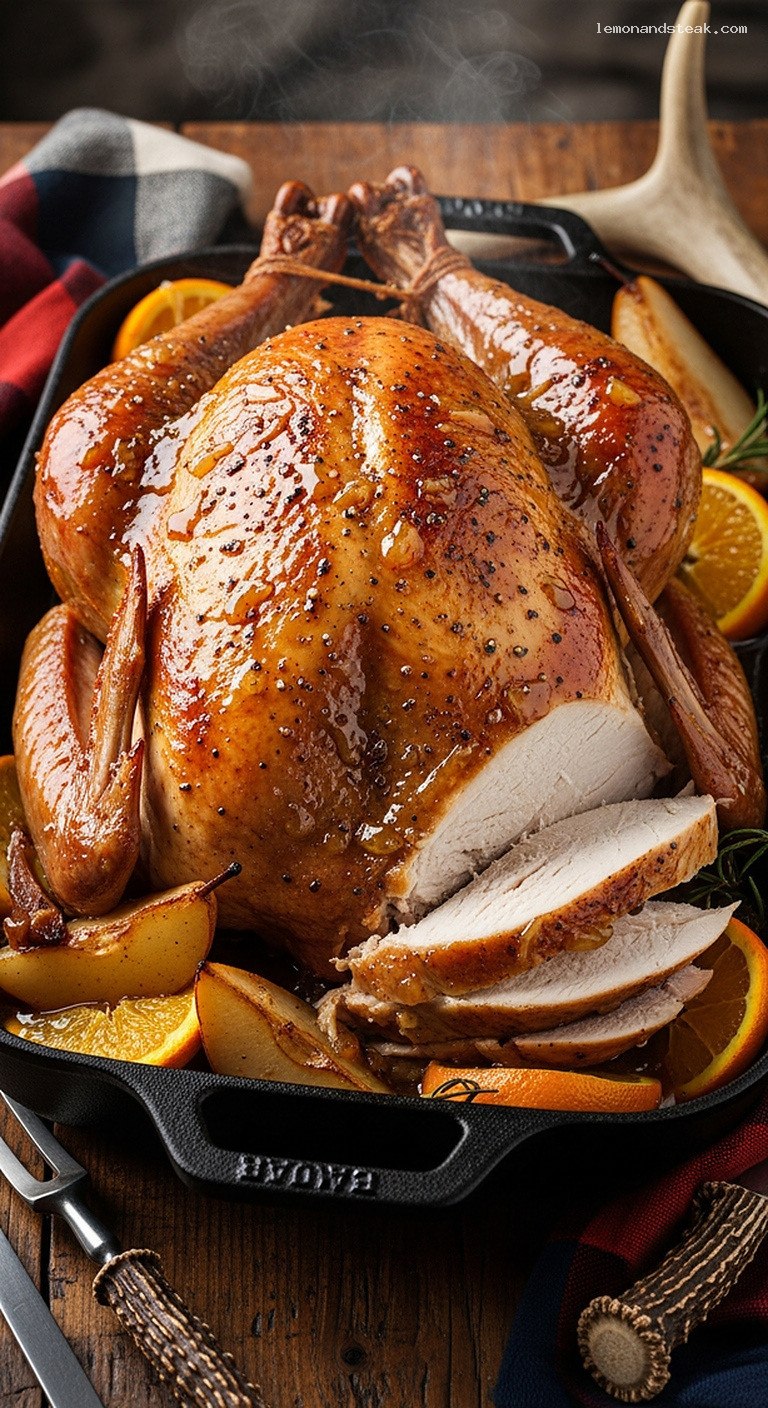
Quick Recipe Version (TL;DR)
Quick Ingredients
- 1 whole turkey (12–14 lb), thawed
- 2 1/2 tbsp kosher salt, 1 1/2 tsp black pepper
- 1 tsp garlic powder, 1 tsp onion powder
- 3 tbsp unsalted butter, softened (for rubbing turkey)
- 1 small onion (quartered), 1 orange (quartered), fresh thyme and rosemary
- 1 cup low-sodium chicken or turkey broth
- 1 cup pear preserves
- 1/2 cup unsalted butter (for glaze)
- 2 tbsp apple cider vinegar, 1 tsp Dijon mustard
- 1/2 tsp ground cinnamon, 1/4 tsp ground ginger, pinch ground cloves
- Extra black pepper and kosher salt to taste
- Chopped fresh parsley for serving (optional)
Do This
- 1) Pat turkey dry, remove giblets, season all over with salt, pepper, garlic powder, and onion powder. Stuff cavity with onion, orange, and herbs; rub skin with 3 tbsp softened butter.
- 2) Preheat oven to 425°F (220°C). Place turkey breast-side up on a rack in a roasting pan. Pour 1 cup broth into the pan.
- 3) Make glaze: melt 1/2 cup butter, whisk in pear preserves, vinegar, Dijon, cinnamon, ginger, cloves, salt, and pepper. Keep warm over very low heat.
- 4) Roast turkey at 425°F for 20–30 minutes until lightly golden.
- 5) Reduce oven to 325°F (165°C). Brush turkey with some pear glaze. Continue roasting 2 1/2–3 hours more, basting every 30 minutes with glaze and pan juices, until internal temp reaches 160–165°F (71–74°C) in the breast.
- 6) Rest turkey, loosely tented with foil, 30 minutes. Brush with remaining warm glaze, garnish, carve, and serve.
Why You’ll Love This Recipe
- Gentle, fruit-forward flavor from spiced pear preserves that feels cozy and homestyle, not overly fancy.
- Butter-rich basting keeps the turkey moist with burnished, golden-brown skin and a glossy glaze.
- Simple pantry ingredients and straightforward steps that fit right into a family holiday routine.
- Built-in flexibility: make the glaze ahead, adjust sweetness, and scale timing for different turkey sizes.
Grocery List
- Produce: 1 small yellow onion, 1 orange, 1 ripe pear (optional, for garnish), fresh thyme, fresh rosemary, fresh parsley (optional)
- Dairy: 3 tbsp unsalted butter (for the turkey) + 1/2 cup unsalted butter (for the glaze)
- Pantry: 1 whole turkey (12–14 lb), 1 cup pear preserves, kosher salt, black pepper, garlic powder, onion powder, ground cinnamon, ground ginger, ground cloves, Dijon mustard, apple cider vinegar, 1 cup low-sodium chicken or turkey broth
Full Ingredients
For the Turkey
- 1 whole turkey (12–14 lb), fully thawed if previously frozen, giblets and neck removed
- 2 1/2 tbsp kosher salt (use 1 3/4 tbsp if using Morton’s, which is saltier than Diamond Crystal)
- 1 1/2 tsp freshly ground black pepper
- 1 tsp garlic powder
- 1 tsp onion powder
- 3 tbsp unsalted butter, softened or very soft (for rubbing over the skin)
- 1 small yellow onion, peeled and quartered
- 1 orange, scrubbed and quartered (no need to peel)
- 4 sprigs fresh thyme
- 4 sprigs fresh rosemary
- 1 cup low-sodium chicken or turkey broth (for the roasting pan)
For the Buttered Pear Basting Glaze
- 1/2 cup unsalted butter (1 stick, 113 g)
- 1 cup pear preserves (spiced or plain; if spiced, you can slightly reduce the added spices below)
- 2 tbsp apple cider vinegar (or fresh lemon juice)
- 1 tsp Dijon mustard
- 1/2 tsp ground cinnamon
- 1/4 tsp ground ginger
- 1/8 tsp ground cloves (a generous pinch; too much will overpower the pear)
- 1/4 tsp kosher salt
- 1/4 tsp freshly ground black pepper
For Serving and Optional Garnish
- 1 ripe pear, cored and thinly sliced (optional, for roasting or garnishing the platter)
- 1–2 tbsp chopped fresh parsley (optional)
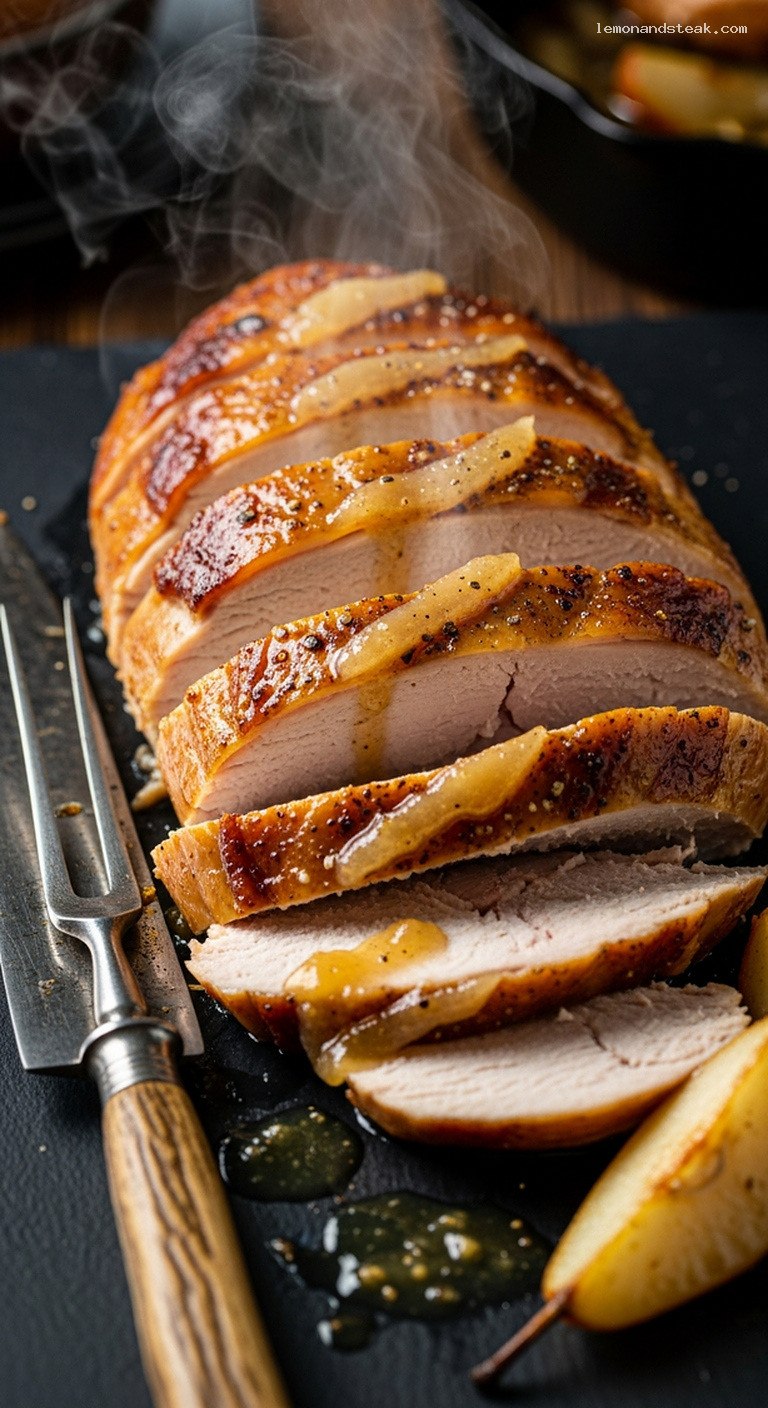
Step-by-Step Instructions
Step 1: Make Sure the Turkey Is Thawed and Prepped
If your turkey is frozen, allow plenty of time for it to thaw in the refrigerator: about 24 hours for every 4 pounds (so 3–4 days for a 12–14 lb bird). When you are ready to cook, remove the turkey from the fridge 45–60 minutes before roasting to take the chill off. Pull out the neck and giblet bag from the main cavity (and sometimes from the neck cavity), and save them for stock or gravy if you like.
Pat the turkey very dry with paper towels, inside and out. Dry skin is key to a deep golden, slightly crisp finish. Place the turkey breast-side up on a rack set in a large roasting pan. Tuck the wing tips underneath the body so they do not burn. If you like a tidy look, loosely tie the legs together with kitchen twine, but it is optional.
Step 2: Season the Turkey and Set Up the Roasting Pan
In a small bowl, combine the kosher salt, black pepper, garlic powder, and onion powder. Sprinkle this mixture evenly all over the turkey, including a little inside the cavity. Use your hands to spread it out and make sure all areas are seasoned.
Rub the softened 3 tbsp of butter all over the turkey’s skin, especially the breast and drumsticks. This first layer of plain butter helps the skin brown before the sweet pear glaze goes on. Stuff the cavity loosely with the quartered onion, orange, and the sprigs of thyme and rosemary. Do not pack it tightly; you want air to circulate for even cooking.
Pour 1 cup of broth into the bottom of the roasting pan. This creates moisture in the oven and starts a flavorful base for any drippings or gravy. If you are using fresh pear slices as garnish, you can tuck a few around the edges of the pan so they roast in the juices.
Step 3: Mix the Buttered Pear Basting Glaze
Preheat your oven to 425°F (220°C) with a rack in the lower-middle position. While the oven heats, make the glaze. In a small saucepan over low heat, melt 1/2 cup unsalted butter. Whisk in the pear preserves until smooth and loosened. Add the apple cider vinegar and Dijon mustard, whisking to combine; this helps balance the sweetness and keeps the glaze from separating.
Stir in the ground cinnamon, ground ginger, ground cloves, kosher salt, and black pepper. Taste a small dab (careful, it will be hot). It should taste buttery, gently sweet, lightly spiced, and just tangy enough to cut through the richness. Adjust with a pinch more salt or vinegar if needed. Keep the glaze warm over the lowest heat setting or turn off the heat and cover; you will use it several times for basting.
Step 4: Start the Roast with High Heat
Place the seasoned turkey, uncovered, in the preheated 425°F (220°C) oven. Roast for 20–30 minutes, until the skin turns a light golden color and begins to tighten. This initial blast of high heat helps set the skin and jump-starts browning without the sugars from the pear glaze, which can burn if added too early.
Keep an eye on the turkey during this stage. If any spots (usually the wingtips or the very top of the breast) darken too quickly, you can loosely lay a small piece of foil over just that area. You will do a more general foil tent later if needed, but for now, you are mainly looking for that pale-to-medium golden color, not dark brown.
Step 5: Lower the Heat and Baste with Pear Glaze
After that first 20–30 minutes, reduce the oven temperature to 325°F (165°C). Remove the turkey from the oven briefly and place it on the stovetop or a heat-safe surface. Give the buttered pear glaze a quick stir and brush a generous layer all over the turkey, focusing on the breast and drumsticks. Use a ladle or spoon to drizzle a little glaze into the legs and any crevices you can reach.
Return the turkey to the oven and continue roasting at 325°F (165°C), basting every 30 minutes with more pear glaze and a spoonful of pan juices. Rotate the pan halfway through cooking for even browning. If the skin reaches a deep golden color before the turkey is done, tent it loosely with foil (do not wrap it tightly) to prevent burning while it finishes cooking.
As a rough guide, total cook time at 325°F after the initial high-heat stage is usually 2 1/2 to 3 hours for a 12–14 lb turkey (about 13–15 minutes per pound overall). Begin checking the internal temperature after about 2 1/2 hours of total cooking time. Insert an instant-read thermometer into the thickest part of the breast and the inner thigh, without touching bone. The turkey is done when the breast registers 160–165°F (71–74°C) and the thigh is 170°F (77°C). Remember that the temperature will rise a few degrees as it rests.
Step 6: Rest the Turkey
Once the turkey has reached the target temperature, carefully lift it (using sturdy spatulas or carving forks) onto a large cutting board or serving platter. Tent it loosely with foil and let it rest for at least 30 minutes. This rest time allows the juices to redistribute so that the meat slices up moist instead of dry.
While the turkey rests, you can strain the pan drippings, skim off excess fat, and turn them into a simple gravy, or simply keep them warm as a jus to spoon over slices. Keep any remaining pear glaze warm for a final glossy coat just before carving.
Step 7: Finish with Glaze, Carve, and Serve
Right before carving, warm the remaining pear glaze if it has thickened too much; you can loosen it with a splash of broth or water if needed. Brush a final light layer of glaze over the rested turkey so the skin glows and looks slightly sticky and glossy, with a gentle sheen from the butter and preserves.
If you roasted pear slices in the pan, arrange them around the turkey or on the serving platter. Sprinkle chopped fresh parsley over the top for a bit of color. Carve the turkey: remove the legs and thighs, separate the drumsticks, then slice the breast meat across the grain into thick, homestyle slices. Serve with extra glaze or pan juices on the side. Each plate will have juicy turkey with a soft, fruit-forward, buttery pear note that feels comforting and familiar, rather than overly sweet or fancy.
Pro Tips
- Salt ahead if you can: For even better flavor, season the turkey with salt and spices up to 24 hours in advance and refrigerate it uncovered. This dry brine improves tenderness and helps the skin crisp.
- Watch the glaze color: Sugar in the pear preserves can darken quickly. Once the bird is a deep golden brown, keep it loosely tented with foil and concentrate glaze on less-browned spots.
- Temperature beats time: Oven calibration, pan type, and turkey shape all affect cook time. Always rely on an instant-read thermometer instead of just the clock.
- Adjust sweetness: If you prefer a more savory turkey, use only 3/4 cup pear preserves and add an extra 1 tbsp vinegar to keep things balanced.
- Use the drippings: The mix of buttery pear glaze and savory turkey juices makes a fantastic base for gravy. Just be mindful of salt; taste before adding more.
Variations
- Smoky pear variation: Add 1/2 tsp smoked paprika and a pinch of cayenne to the glaze for a gentle smoky warmth that still stays in the homestyle comfort zone.
- Herb-forward pear turkey: Stir 1–2 tbsp finely chopped fresh thyme and rosemary into the glaze right before the final basting for a more herbal aroma.
- Chicken or turkey breast only: Use the same glaze and method on a whole bone-in turkey breast or 2 whole chickens. Roast at 375°F (190°C) and reduce total cooking time to about 60–90 minutes, depending on size.
Storage & Make-Ahead
You can make the buttered pear glaze up to 3 days ahead. Store it in an airtight container in the refrigerator, then rewarm gently in a saucepan over low heat, thinning with a splash of water or broth if needed. Leftover turkey keeps well: cool completely, then store in airtight containers in the refrigerator for up to 4 days, or freeze for up to 3 months. For best results, slice the turkey before storing and spoon a little of the reserved glaze or pan juices over the top to keep it moist. Reheat gently, covered, in a 300°F (150°C) oven until warmed through, or in the microwave at 50–60% power so the meat does not dry out. The pear notes tend to mellow nicely as the flavors rest, making leftovers especially cozy in sandwiches or casseroles.
Nutrition (per serving)
Approximate values per serving (about 6 oz cooked turkey with skin and some glaze): 430 calories; 20 g total fat; 9 g saturated fat; 9 g carbohydrates; 0.5 g fiber; 17 g sugars; 36 g protein; 880 mg sodium. Actual values will vary based on the portion of white vs. dark meat, how much skin is eaten, and how much glaze and drippings you serve with each portion.
Leave a Reply