
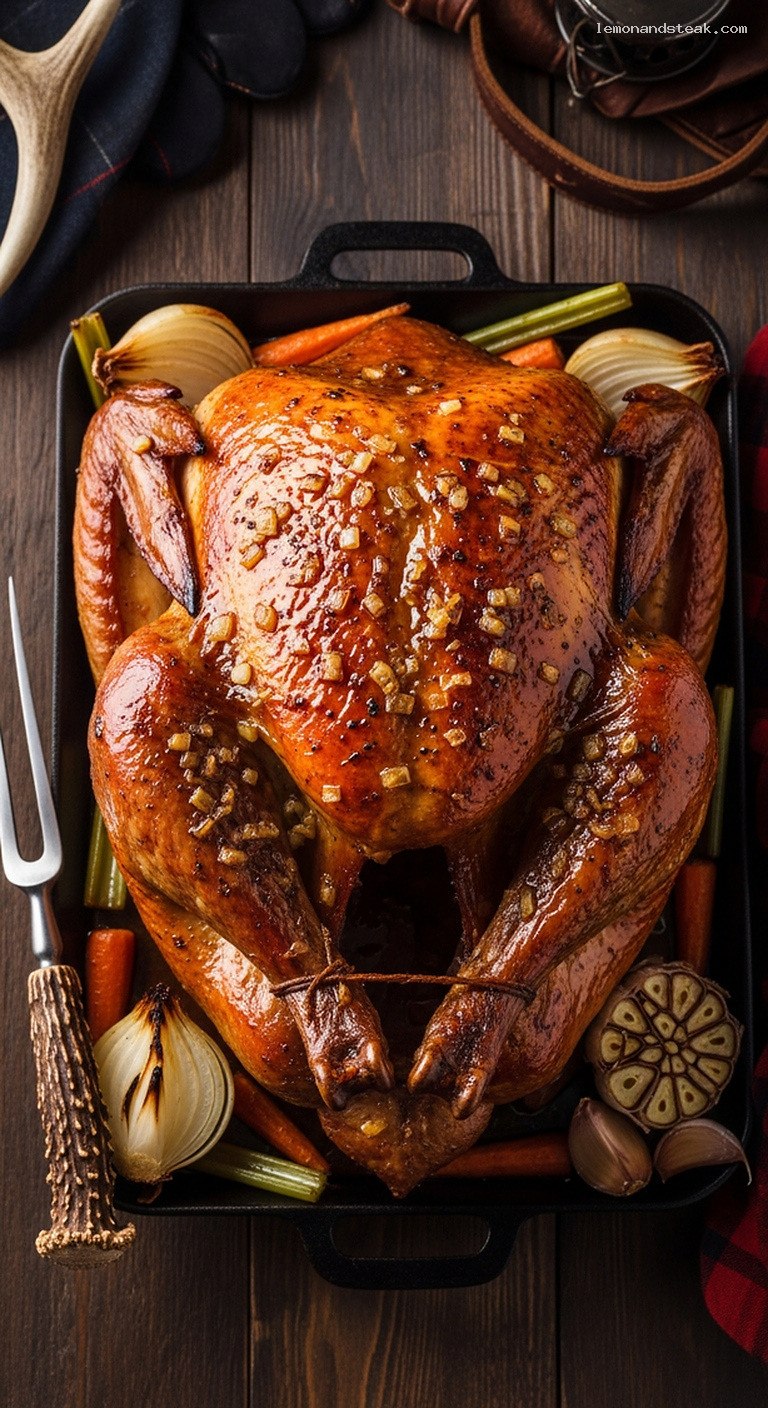
Quick Recipe Version (TL;DR)
Quick Ingredients
- 1 whole turkey (12–14 lb / 5.4–6.3 kg), thawed if frozen
- 1/4 cup kosher salt (Morton; use 1/3 cup if using Diamond Crystal)
- 2 tsp dried thyme + 1 1/2 tsp freshly ground black pepper
- 3 medium yellow onions (2 for roasting bed, 1 finely minced for glaze)
- 1/2 cup (1 stick / 113 g) unsalted butter
- 3/4 cup pure maple syrup
- 2 tbsp apple cider vinegar + 1 tsp Dijon mustard
- 2 carrots, 2 celery stalks, 1 head garlic, 1 firm apple (optional)
- 4 sprigs fresh thyme, 2 sprigs fresh rosemary, 2 bay leaves
- 3 cups low-sodium chicken or turkey broth (divided)
- 1 cup dry white wine or extra broth
- 2–3 tbsp all-purpose flour (for optional pan sauce)
Do This
- 1. Dry-brine turkey: Pat dry. Mix salt, dried thyme, and pepper. Rub all over turkey (including a little under the skin and inside cavity). Refrigerate uncovered 12–24 hours.
- 2. Bring turkey out 1 hour before roasting. Preheat oven to 425°F (220°C). Pat turkey dry again.
- 3. Make maple-butter onion glaze: Cook finely minced onion in butter until soft and lightly golden, then simmer with maple syrup, cider vinegar, Dijon, thyme, salt, and pepper until syrupy.
- 4. Build roasting pan: Scatter sliced onions, carrots, celery, garlic, apple, and herbs in a large roasting pan. Pour in 2 cups broth and the wine. Set turkey on a rack over aromatics, tuck wings, and tie legs.
- 5. Roast at 425°F (220°C) for 30 minutes to brown. Reduce oven to 325°F (165°C). Brush turkey with a thin layer of glaze.
- 6. Continue roasting, brushing with more glaze every 30 minutes, adding broth as needed. Tent loosely with foil if skin threatens to burn. Roast until breast is 160°F (71°C) and thigh is 165°F (74°C), about 2 1/2–3 more hours.
- 7. Rest turkey 30–45 minutes before carving. Meanwhile, make a simple pan sauce from the drippings, broth, and a little flour if desired.
Why You’ll Love This Recipe
- The maple-butter onion glaze caramelizes into a glossy, gently sweet coating without hiding the classic roast turkey flavor.
- Dry-brining keeps the meat deeply seasoned, moist, and tender from the inside out.
- The roasting bed of onions, carrots, celery, and herbs builds a naturally rich base for a quick pan sauce or gravy.
- The method is straightforward and forgiving, with detailed guidance so home cooks can roast a show-stopping turkey confidently.
Grocery List
- Produce: 3 medium yellow onions, 2 carrots, 2 celery stalks, 1 head garlic, 1 firm apple (optional), fresh thyme, fresh rosemary
- Dairy: Unsalted butter
- Pantry: Whole turkey (12–14 lb), kosher salt, black pepper, dried thyme, pure maple syrup, apple cider vinegar, Dijon mustard, bay leaves, low-sodium chicken or turkey broth, dry white wine (or extra broth), all-purpose flour (for sauce)
Full Ingredients
Turkey & Dry Brine
- 1 whole turkey, 12–14 lb (5.4–6.3 kg), thawed if frozen (giblets and neck removed)
- 1/4 cup kosher salt if using Morton brand, or 1/3 cup if using Diamond Crystal
- 2 tsp dried thyme
- 1 1/2 tsp freshly ground black pepper
Maple-Butter Onion Glaze
- 1/2 cup (1 stick / 113 g) unsalted butter
- 1 large yellow onion, very finely minced (about 1 cup packed)
- 3/4 cup pure maple syrup
- 2 tbsp apple cider vinegar
- 1 tsp Dijon mustard
- 1 tsp fresh thyme leaves (or 1/2 tsp dried thyme)
- 1/2 tsp kosher salt
- 1/2 tsp freshly ground black pepper
Roasting Pan Aromatics & Liquid
- 2 medium yellow onions, peeled and cut into thick wedges or 1/2-inch slices
- 2 medium carrots, cut into large chunks
- 2 celery stalks, cut into large chunks
- 1 head garlic, halved horizontally (no need to peel cloves)
- 1 firm apple, quartered and cored (optional but lovely with the maple)
- 4 fresh thyme sprigs
- 2 fresh rosemary sprigs
- 2 bay leaves
- 2 cups low-sodium chicken or turkey broth for the pan, plus up to 1 cup more as needed to prevent scorching
- 1 cup dry white wine (or substitute with an additional 1 cup broth)
Optional Simple Pan Sauce
- Roasting pan drippings (from above)
- 2–3 tbsp fat skimmed from the drippings (or unsalted butter)
- 2–3 tbsp all-purpose flour
- 1 1/2–2 cups low-sodium chicken or turkey broth (plus any defatted drippings)
- Salt and freshly ground black pepper, to taste
- Optional: 1–2 tsp maple syrup from the glaze pot, to taste
Step-by-Step Instructions
Step 1: Dry-brine the turkey for juicy, seasoned meat
Pat the thawed turkey very dry with paper towels, inside and out. Remove and reserve the neck and giblets for stock or gravy if desired.
In a small bowl, mix the kosher salt, dried thyme, and black pepper. Sprinkle a little of the mixture inside the cavity. Gently loosen the skin over the breasts and upper thighs by sliding your fingers between the skin and meat, being careful not to tear it. Rub a small amount of the salt mixture directly onto the meat under the skin.
Use the remaining mixture to season the entire outside of the turkey evenly, including the back. Place the turkey breast-side up on a wire rack set inside a rimmed baking sheet or roasting pan. Refrigerate uncovered for at least 12 hours and up to 24 hours. This dry brine seasons the meat throughout and helps the skin crisp beautifully.
Step 2: Bring turkey to room temp and make the maple-butter onion glaze
About 1 hour before you plan to roast, remove the turkey from the refrigerator so the chill can come off. Pat away any moisture that has risen to the surface with paper towels, but do not rinse off the seasoning. Let it sit at cool room temperature while you prepare the glaze and the roasting pan.
Preheat your oven to 425°F (220°C) with a rack positioned in the lower third.
To make the glaze, melt the butter in a medium saucepan over medium heat. Add the finely minced onion and cook, stirring often, until the onion is very soft and lightly golden at the edges, about 6–8 minutes. You want it sweet and mellow, not browned or crispy.
Stir in the thyme leaves, maple syrup, apple cider vinegar, Dijon mustard, salt, and pepper. Bring to a gentle simmer and cook for 5–8 minutes, stirring occasionally, until the glaze slightly thickens and looks glossy. It should be pourable but syrupy. Remove from heat and set aside, keeping it warm over the lowest possible heat or covered so it does not firm up.
Step 3: Build a flavorful roasting bed and prepare the turkey
In a large roasting pan, scatter the onion wedges, carrot chunks, celery, halved garlic head, and apple quarters (if using). Tuck in the thyme sprigs, rosemary sprigs, and bay leaves. Pour 2 cups of broth and the white wine (or additional broth) into the pan. This aromatic bed will perfume the turkey and become the base of your pan sauce.
Set a roasting rack over the vegetables and place the turkey on the rack, breast-side up. Tuck the wing tips behind the turkey’s shoulders so they do not burn. If you like, tie the legs together with kitchen twine for a neater look and more even cooking.
At this point, do not apply the maple glaze yet; the high initial heat would burn the sugars. If the skin looks very dry, you can lightly brush the turkey with a tablespoon or two of neutral oil or melted butter to encourage even browning in the first stage.
Step 4: Start roasting hot to set the skin
Place the roasting pan in the preheated 425°F (220°C) oven. Roast the turkey for 30 minutes. This blast of high heat helps set and start browning the skin, so it turns beautifully golden later.
While the turkey roasts, rewarm the maple-butter onion glaze if needed so it is fluid. After 30 minutes, carefully slide the oven rack out and check the pan. If the vegetables look dry, add a splash more broth or water to keep them from burning.
After the initial 30 minutes, reduce the oven temperature to 325°F (165°C) for the remainder of the cooking time.
Step 5: Glaze, baste, and roast until perfectly done
Once you lower the oven to 325°F (165°C), brush the turkey all over with a thin, even layer of the warm maple-butter onion glaze, including the legs and wings. You want a light coat at first so it does not scorch.
Continue roasting at 325°F (165°C), basting the turkey with more glaze every 30 minutes. Each time you open the oven, work quickly to keep the temperature steady: slide the rack out, brush on glaze, and check the pan liquid. Add more broth in 1/2-cup amounts as needed to prevent the bottom from drying out or the vegetables from burning.
Roasting time will vary with turkey size and your oven, but plan for a total of about 13–15 minutes per pound, including the initial 30 minutes at high heat. For a 12–14 lb turkey, this is usually about 3–3 1/2 hours total. Start checking internal temperature after about 2 1/2 hours.
Insert an instant-read thermometer into the thickest part of the breast (without touching bone) and the innermost part of the thigh. The breast should reach 160°F (71°C) and the thigh 165°F (74°C). The temperature will rise a few degrees as the turkey rests.
If at any point the skin is browning too quickly, tent the turkey loosely with foil. For a final glossy finish, you can apply a slightly thicker coat of glaze for the last 15–20 minutes of roasting after tenting.
Step 6: Rest the turkey and make a simple pan sauce
When the turkey reaches the proper temperature, carefully transfer it to a large cutting board or serving platter. Loosely tent with foil and let it rest for 30–45 minutes. Resting allows the juices to redistribute so the slices stay moist.
While the turkey rests, pour the contents of the roasting pan through a fine-mesh strainer into a fat separator or large heatproof measuring cup. Press on the vegetables to extract as much flavorful liquid as possible, then discard the solids. Let the fat rise to the top, then spoon or pour off 2–3 tablespoons into a saucepan (or use butter to make up the difference). Skim off and discard (or save) the remaining excess fat.
Place the saucepan with the 2–3 tablespoons fat over medium heat. Whisk in an equal amount (2–3 tablespoons) of flour. Cook, whisking constantly, for 1–2 minutes to form a smooth, bubbling roux. Slowly whisk in 1 1/2 to 2 cups of the reserved, defatted pan juices and/or additional broth, a little at a time, until smooth. Simmer for 3–5 minutes until thickened to your liking. Season to taste with salt, pepper, and, if you want to echo the glaze, 1–2 teaspoons of the maple glaze.
Step 7: Carve and serve
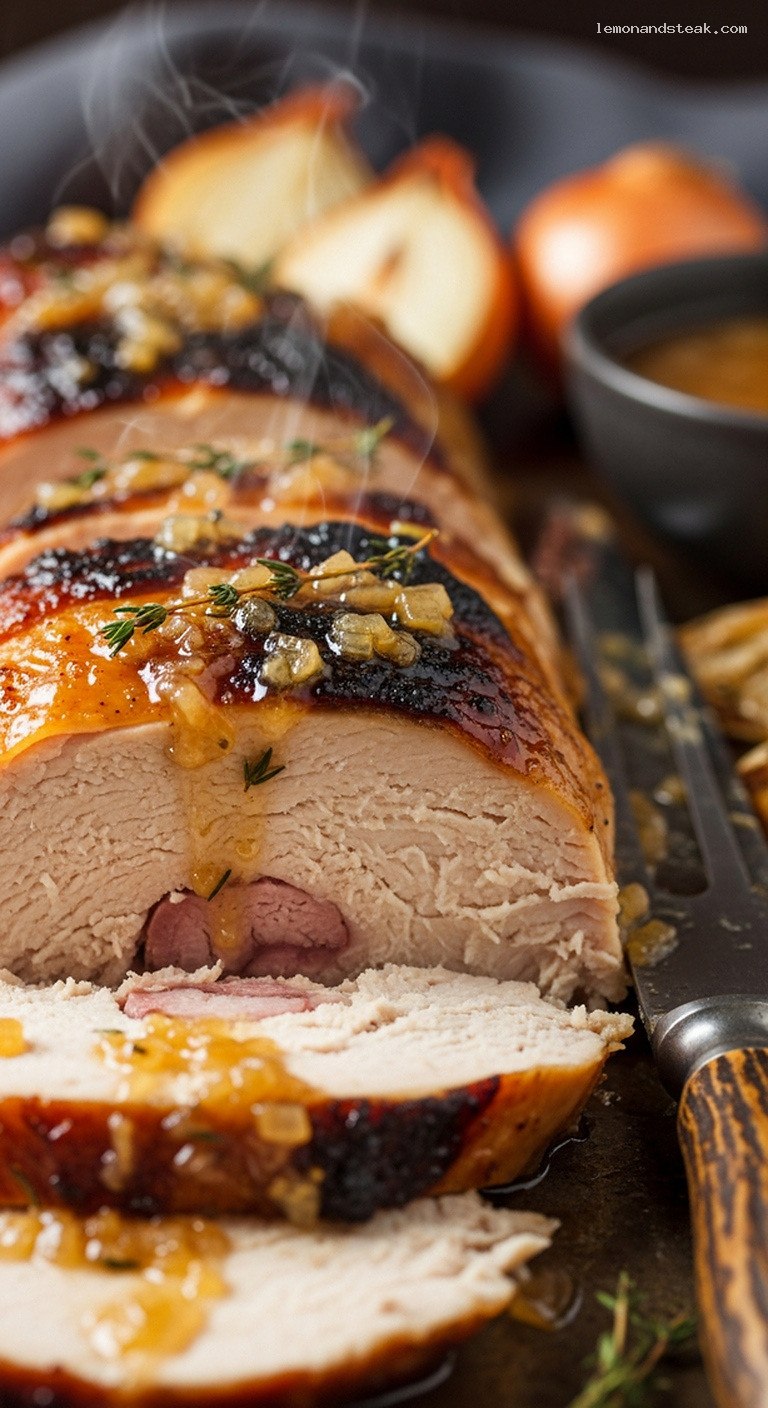
To carve, remove the legs by cutting through the skin between the leg and breast, then through the joint. Separate drumsticks and thighs. Next, slice along one side of the breastbone to remove each whole breast half, then slice crosswise into thick, even slices. Arrange the meat on a warm platter, keeping the skin facing up so you can see the caramelized maple-butter onion glaze.
Serve the turkey with the warm pan sauce on the side. You will see the glaze has turned into a thin, burnished coating on the skin, with tiny, sweet flecks of softened onion, giving every bite a cozy, homey flavor that still tastes like classic roast turkey first and foremost.
Pro Tips
- Brine ahead for best results: Aim for at least 12 hours of dry-brining and up to 24. The longer time leads to deeper seasoning and juicier meat.
- Keep the glaze gentle, not thick: If the glaze reduces too far and becomes very thick, thin it with a tablespoon or two of water or broth. A thinner glaze brushes on more evenly and is less likely to burn.
- Use a thermometer, not the clock: Ovens vary. Start checking temperatures earlier than you think; you can always cook longer, but you cannot undo overcooking.
- Watch the pan liquids: If the vegetables in the roasting pan seem to be browning too deeply, add more broth or water. They should caramelize slightly, not burn.
- Dry skin equals crisp skin: Pat the turkey very dry before it goes into the oven. Surface moisture steams the skin instead of allowing it to crisp and take on that caramelized glaze.
Variations
- Smoky maple-chile turkey: Add 1–2 tsp smoked paprika and 1/2–1 tsp ground chipotle or ancho chile to the glaze for a gently smoky, lightly spicy twist. Sprinkle 1 tsp smoked paprika into the dry brine as well.
- Herb-forward version: Increase the fresh thyme in the glaze to 2 tsp and add 1–2 tsp finely chopped fresh rosemary. Stuff extra thyme and rosemary inside the cavity along with the aromatics for a more deeply herbal aroma.
- Spatchcocked (butterflied) turkey: For faster, more even cooking, ask your butcher to remove the backbone, or do it at home. Lay the turkey flat on the rack over the vegetables and follow the same glaze schedule, roasting at 425°F (220°C) for 20 minutes, then at 350°F (175°C) until done (usually 1 1/2–2 hours for a 12–14 lb turkey).
Storage & Make-Ahead
The dry brine can be applied up to 24 hours in advance (and up to 36–48 hours if you slightly reduce the salt), making the big day easier. The maple-butter onion glaze can be prepared 2–3 days ahead; cool, cover, and refrigerate, then gently rewarm over low heat to loosen before brushing on the turkey.
Leftover turkey keeps well in an airtight container in the refrigerator for up to 4 days. For longer storage, portion the meat into freezer-safe bags or containers and freeze for up to 2 months. Reheat gently, covered, with a splash of broth to keep the meat from drying out. The pan sauce can be refrigerated for 3–4 days or frozen for up to 2 months; reheat over low heat, thinning with broth as needed.
Nutrition (per serving)
Approximate values per serving (for 12 servings, white and dark meat combined, without pan sauce): about 320 calories, 36 g protein, 12 g fat, 10 g carbohydrates, 0 g fiber, 8 g sugars, and 720 mg sodium. Using more or less glaze, eating mostly white or dark meat, and how much skin is consumed will all change the numbers, as will the amount of sauce served.
Leave a Reply