

Quick Recipe Version (TL;DR)
Quick Ingredients
- 1 whole turkey (12–14 lb / 5.5–6.5 kg), thawed
- 2 1/2 tsp kosher salt (plus more for cavity)
- 1 1/2 tsp freshly ground black pepper
- 1 cup (225 g) unsalted butter, softened
- 1 large yellow onion, very finely grated or minced (divided)
- 6 cloves garlic, minced
- 2 tbsp fresh thyme leaves, chopped
- 2 tbsp fresh sage leaves, chopped
- 2 tbsp olive oil
- 3 carrots, cut into chunks
- 3 celery stalks, cut into chunks
- 2 bay leaves
- 4 cups (1 L) low-sodium chicken stock, divided
- 3 tbsp all-purpose flour (for optional gravy)
Do This
- 1. Preheat oven to 325°F (165°C). Pat turkey dry, remove giblets, and season cavity with salt and pepper.
- 2. Mix softened butter with grated onion (reserve 2 tbsp), garlic, thyme, sage, 2 tsp salt, and 1 tsp pepper.
- 3. Loosen turkey skin over breasts and legs; spread half the onion-garlic butter under the skin and the rest over the outside.
- 4. Place carrots, celery, bay leaves, and reserved onion in roasting pan. Set turkey on top, drizzle with olive oil, and pour 2 cups chicken stock into pan.
- 5. Roast 3–3 1/2 hours, basting every 30 minutes with warm chicken stock and pan juices, until thigh reaches 165°F (74°C).
- 6. Rest turkey 30 minutes before carving. For gravy, skim fat, whisk 3 tbsp fat with 3 tbsp flour, then whisk in 2–3 cups defatted pan juices and simmer until thickened.
Why You’ll Love This Recipe
- It tastes like your favorite chicken soup turned into a show-stopping roast turkey: cozy, savory, and deeply comforting.
- The onion-garlic herb butter keeps the meat juicy and flavorful from the inside out.
- Gentle basting with chicken stock creates rich, soup-like drippings perfect for a silky gravy.
- The method is straightforward and forgiving, ideal for home cooks hosting a holiday or special Sunday dinner.
Grocery List
- Produce: 1 large yellow onion, 6 cloves garlic, 3 carrots, 3 celery stalks, fresh thyme, fresh sage, 2 bay leaves, 1 lemon (optional, for cavity)
- Dairy: 1 cup (225 g) unsalted butter
- Pantry: 1 whole turkey (12–14 lb), kosher salt, black pepper, olive oil, low-sodium chicken stock (at least 4 cups / 1 L), all-purpose flour (for gravy)
Full Ingredients
For the Turkey
- 1 whole turkey (12–14 lb / 5.5–6.5 kg), thawed if frozen
- 2 1/2 tsp kosher salt, plus extra for the cavity
- 1 1/2 tsp freshly ground black pepper, plus extra for the cavity
- 2 tbsp olive oil
- 1 lemon, halved (optional, to stuff in the cavity)
Onion-Garlic Herb Butter
- 1 cup (225 g) unsalted butter, very soft (room temperature)
- 1 large yellow onion, very finely grated or minced (about 1 cup total), divided
- 6 cloves garlic, minced
- 2 tbsp fresh thyme leaves, finely chopped (or 2 tsp dried)
- 2 tbsp fresh sage leaves, finely chopped (or 2 tsp dried)
- 2 tsp kosher salt
- 1 tsp freshly ground black pepper
Roasting Pan & Basting Broth
- 3 carrots, peeled and cut into 2–3 inch chunks
- 3 celery stalks, cut into 2–3 inch chunks
- 2 bay leaves
- 4 cups (1 L) low-sodium chicken stock, divided
Simple Pan Gravy (Optional but Recommended)
- 3 tbsp fat from pan drippings (or unsalted butter)
- 3 tbsp all-purpose flour
- 2–3 cups (480–720 ml) defatted pan juices and/or additional chicken stock
- Salt and pepper, to taste
Step-by-Step Instructions
Step 1: Prep the Turkey and Oven
Remove the turkey from the refrigerator 45–60 minutes before roasting so it can lose its chill slightly; this helps it cook more evenly. Preheat your oven to 325°F (165°C) with the rack in the lower third so the turkey sits roughly in the center of the oven.
Take the turkey out of its packaging, remove the neck and giblets from the cavity (save them for stock or gravy if you like), and thoroughly pat the turkey dry with paper towels, inside and out. Season the cavity generously with kosher salt and a few grinds of black pepper. If using, stuff the cavity with the lemon halves. Set the turkey breast-side up on a rack in a large roasting pan.
Step 2: Make the Onion-Garlic Herb Butter
In a medium bowl, combine the softened butter, minced garlic, chopped thyme, chopped sage, 2 tsp kosher salt, and 1 tsp black pepper. Grate or very finely mince the onion. Measure out about 1 cup. Stir most of the onion (about 7/8 cup) into the butter mixture, reserving roughly 2 tbsp of the grated onion for the roasting pan.
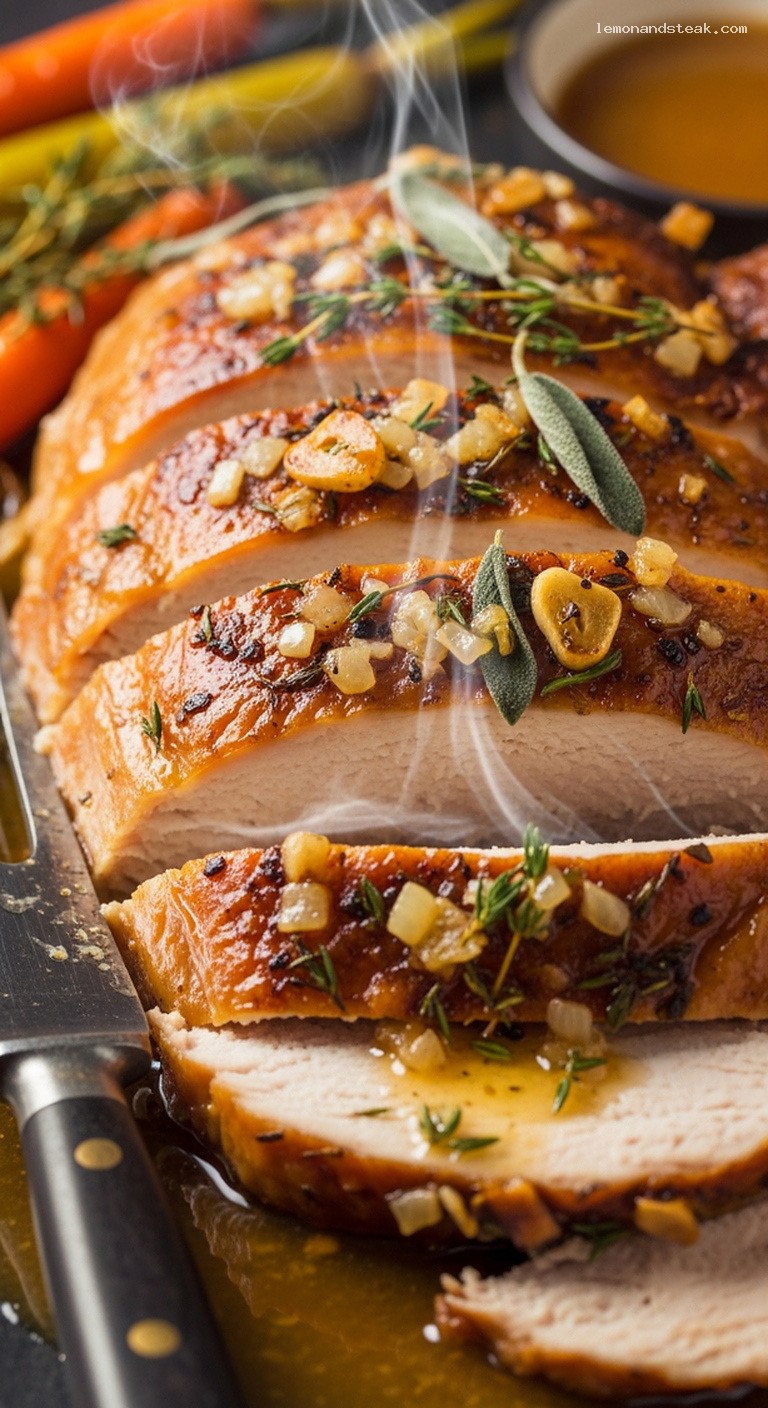
Mix until everything is evenly distributed. You should have a thick, fragrant, spreadable butter flecked with herbs and tiny bits of onion and garlic. This will melt during roasting and baste the turkey from the inside out, giving it a cozy, soup-like flavor profile.
Step 3: Butter and Season the Turkey
Gently slide your fingers under the skin over the turkey breasts, starting at the cavity opening, and carefully separate the skin from the meat, working your way up toward the neck. Do the same over the tops of the thighs if you can reach them without tearing the skin. Take your time; the goal is to create pockets for the flavored butter.
Scoop about half of the onion-garlic herb butter and push it under the loosened skin, spreading it as evenly as possible over both breasts (and thighs if accessible). Use your hands on top of the skin to massage and distribute the butter. Spread the remaining butter all over the outside of the turkey, focusing on the breast, legs, and thighs. Drizzle the olive oil over the turkey and rub it in to coat; this encourages a burnished, golden skin.
Step 4: Build the Soup-Inspired Roasting Bed
Scatter the carrot chunks, celery pieces, reserved grated onion, and bay leaves in the bottom of the roasting pan. Think of this as the base of a classic chicken soup: onions, carrots, celery, and bay leaves. As the turkey roasts, its juices will drip down and mingle with these vegetables and the stock, creating a rich, broth-like base.
Pour 2 cups (480 ml) of the chicken stock into the roasting pan, avoiding pouring directly on the turkey so you do not wash off the butter. The liquid should come up about 1/2 inch in the bottom of the pan. This helps keep the drippings from burning and provides flavorful basting liquid. Slide the turkey, breast-side up on its rack, over the vegetables.
Step 5: Roast and Baste with Chicken Stock
Transfer the roasting pan to the oven and roast at 325°F (165°C) for about 3 to 3 1/2 hours, or until the thickest part of the thigh registers 165°F (74°C) and the thickest part of the breast reaches 160°F (71°C) on an instant-read thermometer. As a guideline, plan for about 13–15 minutes per pound, but always trust your thermometer over the clock.
Every 30 minutes, open the oven, quickly baste the turkey with the pan juices, and, if needed, stir in a little warm chicken stock (from the remaining 2 cups) to keep 1/4–1/2 inch of liquid in the bottom of the pan. Warming the stock on the stovetop or in the microwave before basting keeps the oven temperature more stable. This regular basting with stock and drippings gives the turkey a familiar, soup-inspired warmth and keeps the meat moist.
If the breast skin is browning too quickly before the turkey is done, loosely tent just the breast area with aluminum foil and continue roasting until fully cooked.
Step 6: Rest and Carve the Turkey
Once the turkey reaches 165°F (74°C) in the thigh and about 160°F (71°C) in the breast, carefully remove the roasting pan from the oven. Lift the turkey (still on its rack, if possible) onto a cutting board or platter and tent it loosely with foil. Let it rest for at least 30 minutes. This rest allows the juices to redistribute, so the meat stays moist when carved.
While the turkey rests, tilt the roasting pan and carefully spoon or pour the drippings into a fat separator or a heat-safe bowl. Let the fat rise to the top. When ready to serve, carve the turkey: remove the legs and thighs, separate drumsticks from thighs, slice the breast meat across the grain, and arrange everything on a warm platter. Spoon a bit of the warm pan juices over the meat if you are not making gravy, for extra succulence.
Step 7: Make the Simple Pan Gravy
Skim off 3 tbsp of the fat from the separated drippings and add it to a medium saucepan (if you do not have enough, add butter to make up the difference). Heat over medium heat until the fat is hot but not smoking. Sprinkle in the flour and whisk steadily for 1–2 minutes, until the mixture becomes a smooth, bubbling paste (a roux) that smells slightly nutty but not burnt.
Gradually whisk in 2 cups (480 ml) of the defatted drippings and/or additional chicken stock, whisking constantly to avoid lumps. Bring to a gentle simmer and cook for 4–6 minutes, until the gravy thickens to your desired consistency. If it is too thick, whisk in more stock a little at a time. Taste and season with salt and pepper as needed. The flavor should echo a rich, homemade chicken soup—savory, oniony, and deeply comforting. Serve the gravy hot alongside the carved turkey.
Pro Tips
- Dry the turkey well: The drier the skin before you apply the butter, the better it will crisp and brown in the oven.
- Optional overnight air-dry: For extra-crisp skin, refrigerate the uncovered, buttered turkey on a rack for 12–24 hours, then roast as directed.
- Warm your basting stock: Heating the chicken stock before basting keeps the oven temperature steady and helps the turkey cook more evenly.
- Use a thermometer: Ovens vary. An instant-read thermometer is the most reliable way to avoid dry meat or undercooked poultry.
- Do not skip the rest: A full 30-minute rest is key to juicy slices, especially for the breast meat.
Variations
- Lemon and Herb Upgrade: Add the finely grated zest of 1 lemon to the onion-garlic butter and tuck extra lemon slices into the cavity for a brighter, fresher flavor.
- Smoky Paprika Twist: Stir 1–2 tsp smoked paprika into the herb butter for a deeper color and a subtle smoky note that pairs beautifully with the chicken-stock basting.
- Herb-Only Version: If you prefer a milder onion flavor, cut the grated onion in half and increase the herbs by an extra tablespoon each of thyme and sage.
Storage & Make-Ahead
Store leftover turkey in airtight containers in the refrigerator for up to 4 days. For best quality, slice leftover meat off the bone and refrigerate it with a little gravy or pan juices to keep it moist. Reheat gently in a covered baking dish at 300°F (150°C) until warmed through, adding a splash of chicken stock if needed. Gravy can be cooled, stored in an airtight container, and refrigerated for up to 3 days; reheat gently on the stovetop, thinning with a bit of stock or water if it thickens too much. The onion-garlic herb butter can be made up to 2 days ahead and kept covered in the refrigerator; bring it to room temperature before spreading on the turkey.
Nutrition (per serving)
Approximate values per serving (about 6 oz cooked turkey with skin plus a modest amount of gravy): 430 calories; 27 g protein; 26 g fat; 9 g saturated fat; 8 g carbohydrates; 0 g fiber; 2 g sugar; 880 mg sodium. Actual values will vary based on the size of the turkey, how much skin and gravy are eaten, and the exact amount of salt used.
Leave a Reply