
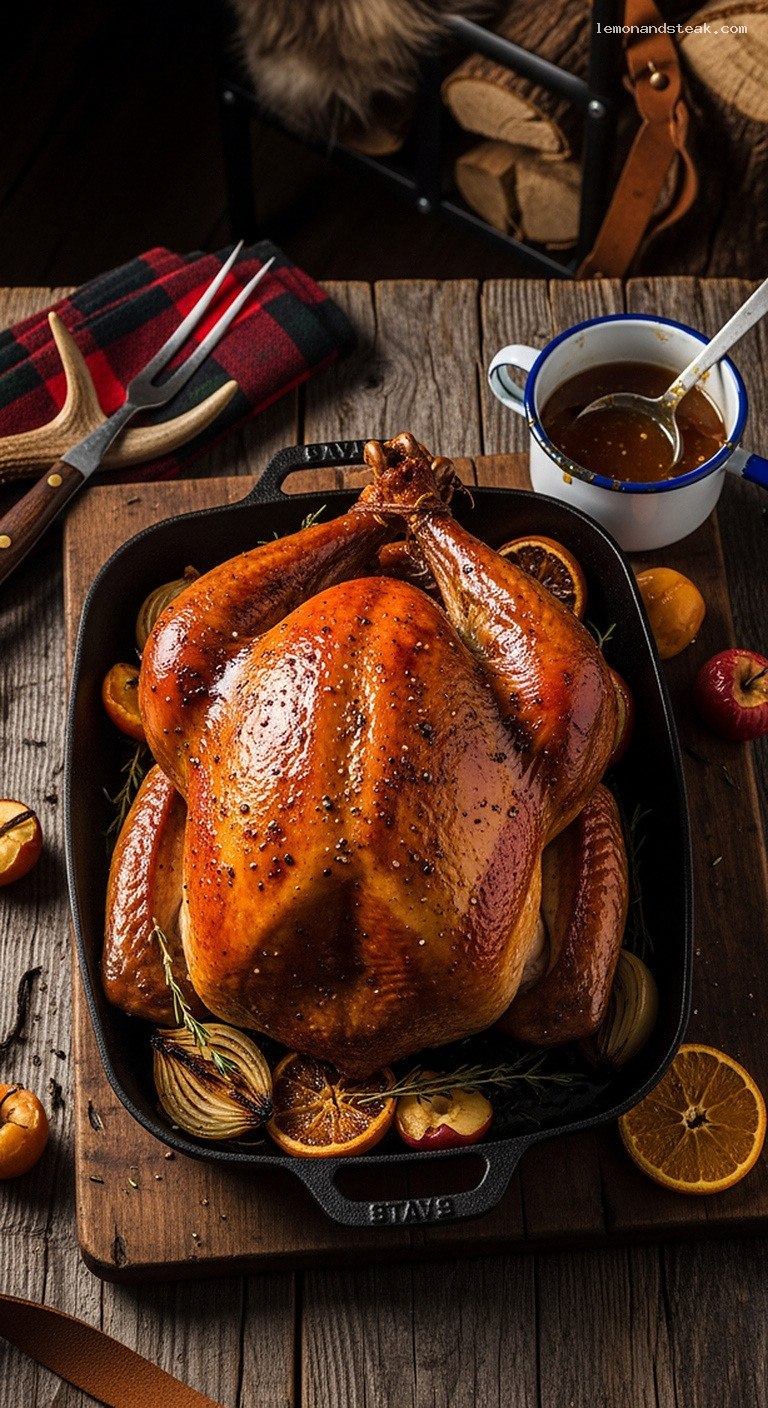
Quick Recipe Version (TL;DR)
Quick Ingredients
- 1 whole turkey (10–12 lb / 4.5–5.5 kg), thawed
- 2 tbsp kosher salt, 2 tsp black pepper
- 1 onion, 1 orange, 1 apple, 1 head garlic
- 6–8 fresh herb sprigs (thyme, rosemary) + 2 bay leaves
- 1 cup apricot preserves
- 8 tbsp (1 stick) unsalted butter, melted (divided)
- 2 tbsp apple cider vinegar or lemon juice
- 1 tbsp Dijon mustard (optional)
- 2–3 cups low-sodium chicken or turkey stock (for pan and gravy)
- 1/4 cup all-purpose flour (for optional gravy)
Do This
- 1. Pat turkey dry, remove giblets, and season inside and out with salt and pepper. Stuff cavity with onion, orange, apple, garlic, and herbs.
- 2. Place turkey on a rack in a roasting pan with 1 cup stock in the bottom. Tuck wings under, tie legs, and roast at 425°F (220°C) for 20 minutes.
- 3. Reduce oven to 325°F (165°C). Stir 4 tbsp melted butter into 1/2 cup stock and baste turkey. Continue roasting.
- 4. Make glaze: gently warm apricot preserves with 4 tbsp melted butter, vinegar, and Dijon until pourable.
- 5. After about 1 1/2 hours of total roasting, brush turkey all over with glaze. Repeat glazing every 25–30 minutes.
- 6. Roast until breast is 160°F (71°C) and thigh is 175°F (80°C), about 3–3 1/2 hours total. Tent with foil if browning too fast.
- 7. Rest turkey 30 minutes. Meanwhile, make a simple gravy from pan drippings, stock, and flour. Carve and serve with extra warm apricot glaze if desired.
Why You’ll Love This Recipe
- Classic roast turkey meets a glossy, gently caramelized apricot-butter glaze for sweet, homestyle flavor.
- Step-by-step timing and temperatures keep even first-time turkey roasters relaxed and confident.
- The glaze makes the skin beautifully golden and shiny while keeping the meat moist and tender.
- Simple aromatics and an easy pan gravy turn one turkey into a complete, holiday-worthy centerpiece.
Grocery List
- Produce: 1 onion, 1 orange, 1 apple, 1 head garlic, fresh thyme, fresh rosemary, optional fresh parsley (for garnish)
- Dairy: 1 cup (2 sticks) unsalted butter
- Pantry: 1 whole turkey (10–12 lb), apricot preserves, kosher salt, black pepper, apple cider vinegar or lemon juice, Dijon mustard, bay leaves, low-sodium chicken or turkey stock, all-purpose flour, optional sugar or honey (to adjust glaze sweetness)
Full Ingredients
Turkey & Aromatics
- 1 whole turkey, 10–12 lb (4.5–5.5 kg), thawed if frozen
- 2 tablespoons kosher salt (use 1 1/2 tablespoons if using fine table salt)
- 2 teaspoons freshly ground black pepper
- 1 medium yellow onion, peeled and quartered
- 1 medium orange, scrubbed and quartered
- 1 small firm apple (such as Granny Smith), cored and quartered
- 1 whole head garlic, halved horizontally
- 4 sprigs fresh thyme
- 4 sprigs fresh rosemary
- 2 bay leaves
- 1–2 tablespoons neutral oil or softened butter (for rubbing on the turkey, optional if skin is very dry)
- 1 cup low-sodium chicken or turkey stock (for the roasting pan, plus more as needed)
Apricot Butter Glaze
- 1 cup apricot preserves
- 4 tablespoons unsalted butter, melted
- 2 tablespoons apple cider vinegar or freshly squeezed lemon juice
- 1 tablespoon Dijon mustard (optional, for a subtle savory tang)
- 1/4 teaspoon ground cinnamon or allspice (optional, warm background flavor)
- Pinch of kosher salt, to taste
Basting Butter
- 4 tablespoons unsalted butter, melted
- 1/2 cup low-sodium chicken or turkey stock
Optional Simple Pan Gravy
- Pan drippings and browned bits from the roasting pan
- 2 tablespoons unsalted butter (only if drippings are very lean)
- 1/4 cup all-purpose flour
- 2–2 1/2 cups low-sodium chicken or turkey stock (warm)
- Salt and freshly ground black pepper, to taste
Step-by-Step Instructions
Step 1: Prep and Season the Turkey
If your turkey is frozen, thaw it in the refrigerator for 3–4 days before roasting (about 24 hours for every 4–5 lb / 1.8–2.3 kg). When ready to cook, remove the turkey from the fridge and let it sit at room temperature for 30–45 minutes to take off the chill.
Remove the neck and giblets from the cavity (check both the main cavity and the neck cavity). Pat the turkey very dry with paper towels, including inside the cavity; dry skin is key to crisp, golden roasting. Sprinkle the kosher salt and black pepper all over the turkey: on the outside, in the cavity, and lightly under the breast skin if you can gently loosen it with your fingers. If you have time, you can refrigerate the seasoned turkey uncovered for up to 24 hours for extra-crisp skin, but you can also roast it right away.
Step 2: Stuff with Aromatics and Set Up the Roasting Pan
Preheat your oven to 425°F (220°C) with a rack in the lower-middle position. Place a sturdy roasting rack inside a large roasting pan. Scatter any extra onion, orange, apple, and garlic pieces (that do not fit in the cavity) into the bottom of the pan.
Stuff the turkey cavity loosely with the onion, orange, apple, garlic, thyme, rosemary, and bay leaves. Do not pack it tightly; air should still circulate. Tuck the wing tips under the body so they do not burn. If you like, tie the legs together with kitchen twine for a neater shape. If your turkey skin looks very dry, rub it lightly with 1–2 tablespoons of oil or softened butter. Pour 1 cup of stock into the bottom of the pan to prevent burning and start building flavorful drippings.
Step 3: Start Roasting at High Heat
Place the turkey breast-side up on the rack in the pan. Slide the pan into the preheated 425°F (220°C) oven and roast for 20 minutes. This initial high-heat blast helps start browning and crisps the skin, especially on the breast.
While the turkey begins to roast, keep an eye on the pan. If the bottom looks too dry or the drippings start to scorch, add another 1/2 cup of stock or water. After 20 minutes, reduce the oven temperature to 325°F (165°C) without opening the door for too long, to keep the heat steady.
Step 4: Mix the Basting Butter and Continue Roasting
In a small bowl or measuring cup, stir together the melted 4 tablespoons of butter and 1/2 cup stock. After you lower the oven temperature to 325°F (165°C), carefully pull the turkey out just far enough to access it (or briefly remove it to the stovetop, closing the oven door to minimize heat loss).
Brush or spoon some of the butter-stock mixture over the breast, legs, and wings. Return the turkey to the oven and continue roasting at 325°F (165°C). Baste with the butter mixture once more after about 30–40 minutes, then let the turkey roast without constant opening of the oven; this helps it cook evenly.
Step 5: Make the Apricot Butter Glaze
While the turkey roasts, prepare the glaze. In a small saucepan over low heat, combine the apricot preserves, 4 tablespoons melted butter, apple cider vinegar (or lemon juice), Dijon mustard (if using), cinnamon or allspice (if using), and a pinch of salt. Warm gently, stirring, until the preserves loosen and everything forms a smooth, glossy glaze. Do not boil; just heat until pourable.
Taste and adjust: add a splash more vinegar or lemon juice if you prefer more tang, or a teaspoon of sugar or honey if you would like it slightly sweeter. Keep the glaze warm on the lowest heat, or reheat gently before brushing it onto the turkey so it spreads easily.
Step 6: Glaze and Finish Roasting the Turkey
After the turkey has roasted for about 1 1/2 hours total, begin checking the internal temperature with an instant-read thermometer, inserting it into the thickest part of the breast and the inner thigh without touching bone. At this point, the turkey will be partially cooked and the skin lightly golden.
Brush a generous layer of warm apricot glaze over the entire turkey: breast, legs, and wings. Return it to the 325°F (165°C) oven and continue roasting, glazing every 25–30 minutes. If any part of the turkey (often the breast) is browning too quickly, tent that section loosely with foil. Add more stock or water to the pan as needed to keep the drippings from burning.
For a 10–12 lb (4.5–5.5 kg) unstuffed turkey, the total roasting time is usually about 3–3 1/2 hours (including the initial high-heat stage), or roughly 13–15 minutes per pound. The turkey is done when the breast reaches 160°F (71°C) and the thigh reaches 175°F (80°C); the temperature will rise a bit more as it rests. The glaze should be deeply golden and slightly caramelized, giving the skin a shiny, sweet, amber sheen.
Step 7: Rest, Carve, and Make a Simple Pan Gravy
When the turkey reaches proper temperature, carefully transfer it to a large cutting board or platter. Tent it loosely with foil and let it rest for at least 30 minutes. Resting allows the juices to redistribute so the meat slices moist and tender.
While the turkey rests, make the gravy. Carefully pour the pan drippings through a fat separator or into a glass measuring cup. Skim off excess fat, reserving about 2–4 tablespoons. If the drippings are very lean, add up to 2 tablespoons butter to reach that amount of fat. Place the roasting pan (or a saucepan) over medium heat on the stove, add the reserved fat, and whisk in the flour. Cook, whisking constantly, for 1–2 minutes until lightly golden.
Gradually whisk in 2 cups warm stock and any defatted drippings, scraping up browned bits from the pan. Simmer, whisking, until thickened to your liking, 5–8 minutes. If too thick, add a bit more stock. Season with salt and pepper to taste. Strain for an extra-smooth gravy if desired.
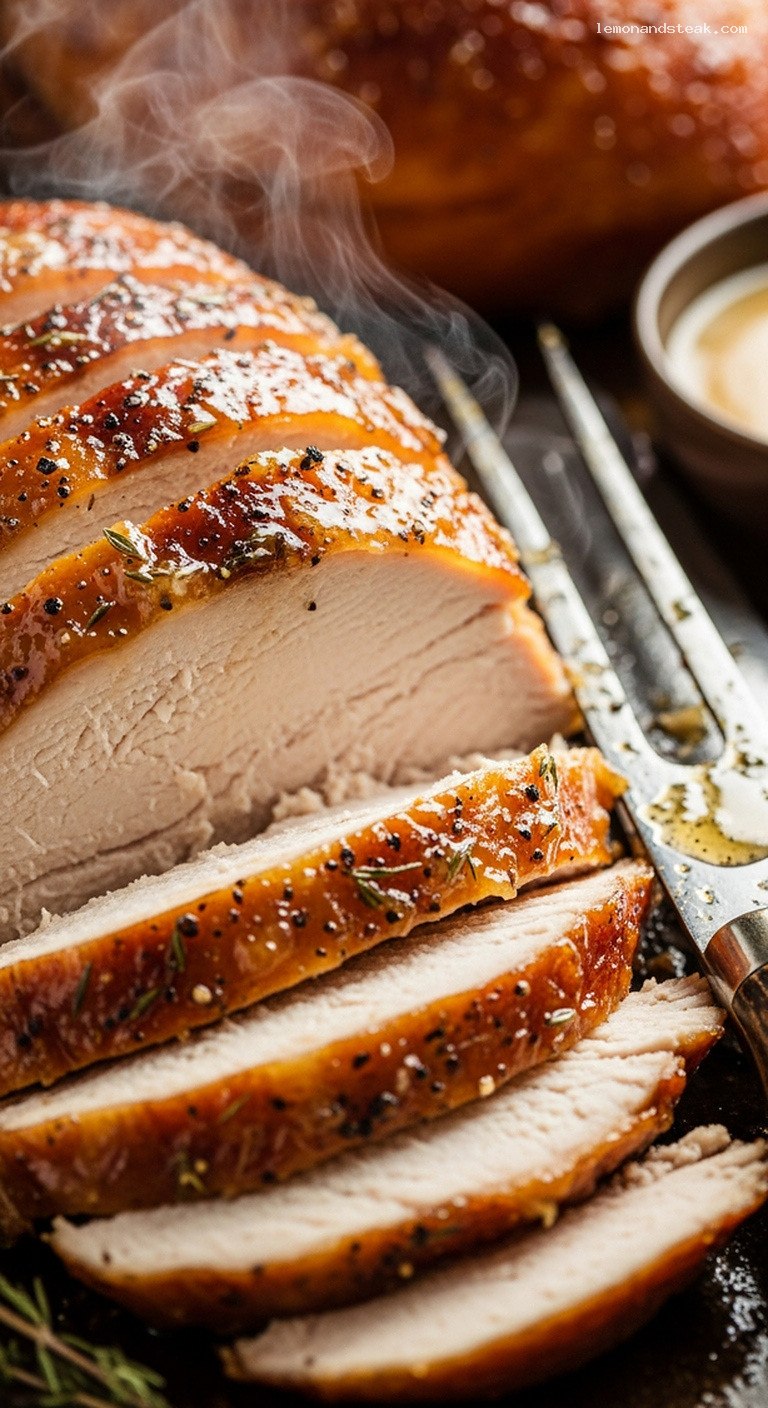
Carve the turkey: remove the legs and thighs, then the breasts, then slice against the grain. Arrange slices on a warm platter. Brush or spoon a little extra warm apricot glaze over the skin for extra shine, and serve with the pan gravy on the side.
Pro Tips
- Dry the turkey very well. Thoroughly drying the skin is one of the biggest secrets to crisp, beautifully browned, glossy skin that holds the apricot glaze without sliding off.
- Use a thermometer, not just time. Ovens vary, and turkeys differ in shape. An instant-read thermometer is the most reliable way to avoid overcooking or undercooking.
- Glaze towards the end. The apricot and butter can burn if applied too early. Starting the glaze in the final 60–90 minutes lets it caramelize gently without scorching.
- Rotate the pan if your oven has hot spots. Turn the roasting pan 180 degrees halfway through cooking for more even browning.
- Let it rest. It is tempting to carve right away, but a good 30 minutes of resting is what makes the meat noticeably juicier and easier to carve cleanly.
Variations
- Spiced Apricot Turkey: Add 1 teaspoon ground ginger and 1/2 teaspoon ground cumin to the apricot glaze for a gently spiced, fragrant twist.
- Herb-Forward Version: Finely chop extra fresh thyme and rosemary and stir 1–2 tablespoons into the glaze for stronger herbal flavor and visible green flecks against the golden skin.
- Apricot-Orange Glaze: Replace half of the vinegar or lemon juice with freshly squeezed orange juice and add 1 teaspoon grated orange zest for a brighter citrus note.
Storage & Make-Ahead
Store leftover turkey tightly covered in the refrigerator for up to 4 days. For best texture, slice the breast meat and remove the leg and thigh meat from the bone before chilling; this makes reheating more even. Reheat gently in a covered baking dish with a splash of stock at 300°F (150°C) until warmed through, or warm individual portions in a covered skillet over low heat.
The apricot glaze can be made up to 3 days in advance. Store it in an airtight container in the refrigerator, then rewarm gently over low heat before brushing it onto the turkey. The gravy can be prepared the day before using store-bought stock, then reheated and enriched with fresh pan drippings on the day you roast.
Nutrition (per serving)
Approximate values for 1/10 of the turkey plus a spoonful of glaze and a small amount of gravy: about 650 calories; 38 g fat; 15 g saturated fat; 12 g carbohydrates; 0 g fiber; 12 g sugar; 55 g protein; 600 mg sodium. Actual values will vary based on the size of your turkey, how much skin and gravy are served, and the specific brands of ingredients used.
Leave a Reply