
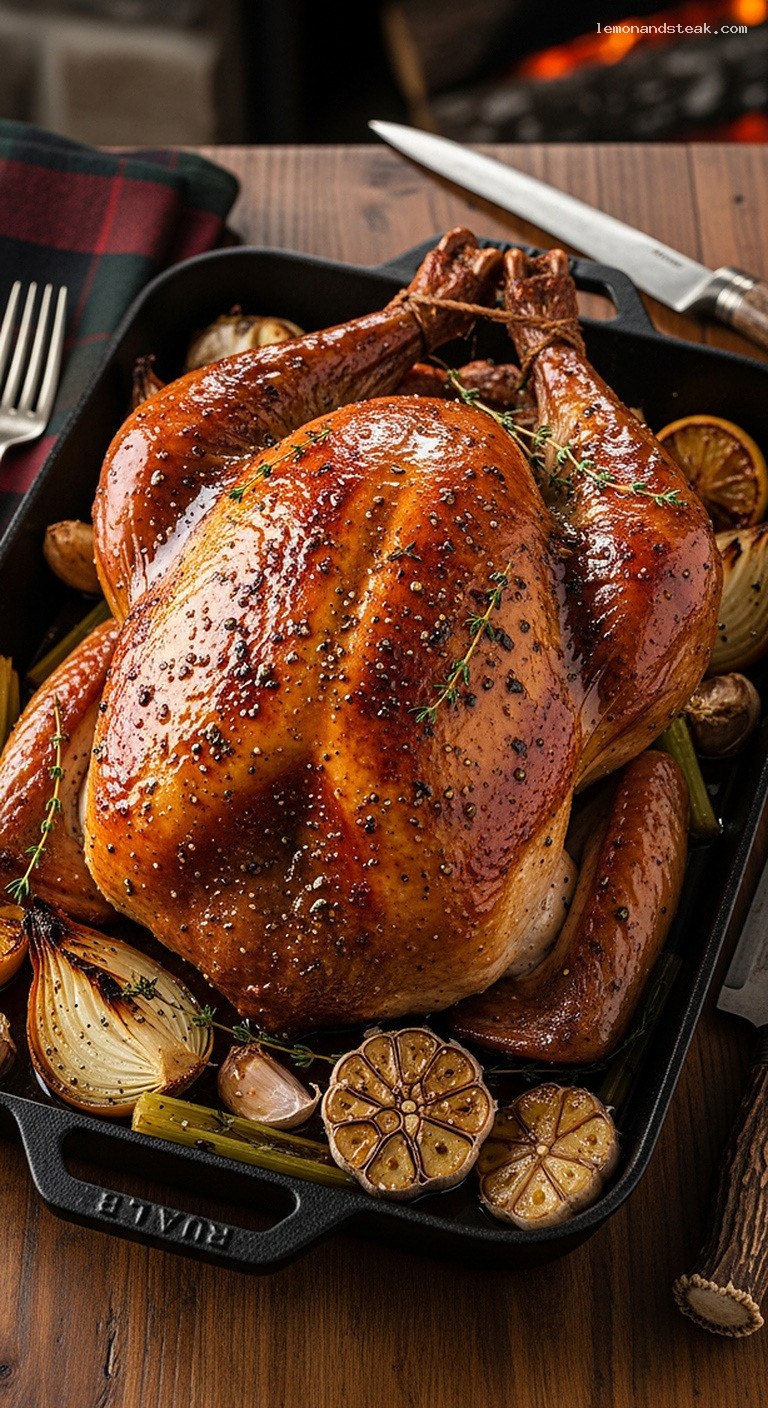
Quick Recipe Version (TL;DR)
Quick Ingredients
- 1 whole turkey (12–14 lb), thawed, giblets removed
- 3 tbsp kosher salt, 2 tsp black pepper, 2 tsp paprika
- 3 large sweet onions (1 finely chopped, 2 sliced)
- 8 tbsp unsalted butter, divided
- 1/2 cup honey
- 3–4 cups low-sodium chicken or turkey broth
- 1 head garlic, 1 lemon, 2 celery stalks, fresh thyme/rosemary
- 2 tbsp apple cider vinegar, 1 tbsp Dijon mustard
- 2–4 tbsp all-purpose flour (for gravy, optional)
Do This
- 1. Pat turkey dry. Rub with salt, pepper, and paprika (under skin where possible). Chill uncovered 12–24 hours.
- 2. For glaze, sauté finely chopped sweet onion in butter until soft. Add honey, 1 cup broth, vinegar, mustard, thyme, salt, and pepper; simmer until syrupy and glossy.
- 3. Heat oven to 425°F (220°C). In a roasting pan, layer sliced onions, garlic, celery, lemon, herbs, and 1 cup broth. Set turkey on a rack over aromatics; rub with softened butter.
- 4. Roast 20 minutes at 425°F, then reduce oven to 325°F (165°C). Roast, basting with pan juices every 30 minutes.
- 5. During the last 60–75 minutes, baste every 20 minutes with warm onion–honey glaze until skin is deep golden, glossy, and internal temp in the thigh reaches 165°F (74°C), about 3–3 1/2 hours total.
- 6. Rest turkey 30–45 minutes. Meanwhile, mash roasted onions into pan drippings, whisk in flour, then broth, and simmer into a silky onion–honey gravy.
Why You’ll Love This Recipe
- Slow roasting keeps the meat incredibly juicy while the skin turns deeply golden and crisp.
- A sweet onion–honey glaze bakes into a shiny, lacquered coating with savory depth.
- Sweet onions roast under the turkey until they almost melt, enriching the drippings for unforgettable gravy.
- Clear, step-by-step instructions make this centerpiece doable even if it is your first whole turkey.
Grocery List
- Produce: 3 large sweet onions, 1 head garlic, 1 lemon, 2 celery stalks, fresh thyme and/or rosemary
- Dairy: Unsalted butter
- Pantry: 1 whole turkey (12–14 lb), kosher salt, black pepper, paprika, honey, 4 cups low-sodium chicken or turkey broth, apple cider vinegar, Dijon mustard, olive oil, crushed red pepper flakes (optional), all-purpose flour
Full Ingredients
For the Dry Brine
- 1 whole turkey (12 to 14 lb / 5.5 to 6.5 kg), thawed if frozen, neck and giblets removed
- 3 tbsp kosher salt (use 2 tbsp if using a fine-grain brand like Morton)
- 2 tsp freshly ground black pepper
- 2 tsp smoked or sweet paprika
- 1 tsp dried thyme or 2 tsp fresh thyme leaves, finely chopped (optional)
For the Sweet Onion–Honey Glaze
- 2 tbsp unsalted butter
- 1 large sweet onion (such as Vidalia), very finely chopped or grated (about 1 cup loosely packed)
- 1/2 cup honey
- 1 cup low-sodium chicken or turkey broth
- 2 tbsp apple cider vinegar
- 1 tbsp Dijon mustard
- 1 tsp kosher salt
- 1/2 tsp freshly ground black pepper
- 1/2 tsp crushed red pepper flakes (optional, for gentle heat)
- 2 sprigs fresh thyme or 1/2 tsp dried thyme
For Roasting the Turkey
- 2 large sweet onions, peeled and cut into 1/2-inch-thick rounds
- 1 head garlic, halved horizontally
- 2 celery stalks, cut into 2-inch pieces
- 1 lemon, quartered
- 4 tbsp unsalted butter, softened (plus more if desired)
- 2 tbsp olive oil
- 6 sprigs fresh thyme and/or rosemary
- 1 cup low-sodium chicken or turkey broth (for the bottom of the pan, plus more as needed)
- Freshly ground black pepper, to taste
For the Onion–Honey Pan Gravy (Optional but Recommended)
- All the pan drippings and roasted onions from the turkey
- 2 tbsp unsalted butter (use only if the drippings are very lean)
- 2 to 4 tbsp all-purpose flour
- 1 to 2 cups low-sodium chicken or turkey broth (as needed to reach desired thickness)
- Salt and freshly ground black pepper, to taste
Step-by-Step Instructions
Step 1: Dry-brine the turkey
At least 12 hours (and up to 24 hours) before roasting, remove the neck and giblets from the turkey. Pat the turkey very dry with paper towels, including the cavity.
In a small bowl, combine the kosher salt, black pepper, paprika, and dried or fresh thyme (if using). Sprinkle this mixture all over the turkey: on the breast, legs, thighs, back, and inside the cavity. Gently loosen the skin over the breasts with your fingers and rub some of the mixture directly onto the meat under the skin as well.
Place the turkey breast-side up on a rimmed baking sheet or in the roasting pan on a rack. Refrigerate uncovered for 12–24 hours. This dry brine seasons the meat deeply and helps the skin roast up crisp.
Step 2: Make the sweet onion–honey glaze
The glaze can be made up to 2 days ahead and kept refrigerated.
In a medium saucepan over medium heat, melt the 2 tbsp butter. Add the finely chopped or grated sweet onion and cook, stirring occasionally, until very soft, translucent, and lightly golden at the edges, 8–10 minutes. You want the onions to almost melt into the butter.
Stir in the honey, 1 cup broth, apple cider vinegar, Dijon mustard, salt, black pepper, crushed red pepper flakes (if using), and thyme sprigs. Bring to a gentle simmer and cook, stirring occasionally, until the mixture is slightly thickened and glossy, 8–12 minutes. It should be syrupy but still brushable.
Fish out the thyme sprigs and discard. Let cool slightly, then transfer to a heatproof bowl or measuring cup. If making ahead, cool completely, cover, and refrigerate. Rewarm gently before using to baste.
Step 3: Prep the roasting pan and aromatics
About 1 hour before you plan to roast, remove the turkey from the refrigerator so it can lose some of its chill. This promotes even cooking.
Preheat your oven to 425°F (220°C) with a rack in the lower third to leave room for the tall bird.
In a large roasting pan, toss the sliced sweet onions, garlic halves, and celery pieces with the olive oil and a pinch of salt and pepper. Spread them out in an even layer to create a bed. Tuck the lemon quarters and herb sprigs among the vegetables.
Pour 1 cup of broth into the bottom of the pan. Set a roasting rack over the vegetables and place the turkey breast-side up on the rack. If the tips of the wings stick out, tuck them under the bird to prevent burning. Pat the skin dry again if it has become damp, then rub the turkey all over with the softened butter, getting some under the breast skin if you like. Season the skin lightly with additional pepper.
Step 4: Start roasting at high heat to brown the skin
Place the roasting pan in the preheated 425°F (220°C) oven. Roast for 20 minutes to start Browning and crisping the skin. This blast of higher heat helps develop color and render some fat.
After 20 minutes, reduce the oven temperature to 325°F (165°C) without opening the oven door if possible. Continue roasting at 325°F for about 60 minutes. During this time, baste the turkey once or twice with the pan juices (use a baster or spoon and drizzle over the breast and legs) to keep the surface moist and encourage even browning.
If the pan looks dry at any point, add another 1/2 to 1 cup of broth or water to keep the onions from scorching. You want a shallow layer of liquid so the onions can slowly cook down and merge with the drippings.
Step 5: Baste with the sweet onion–honey glaze
After the turkey has roasted about 1 hour 20 minutes total (20 minutes at 425°F, about 60 minutes at 325°F), start checking the color. It should be a light golden brown. From this point on, you will build up the glossy glaze.
Warm the sweet onion–honey glaze if needed so it is fluid. Brush a thin layer of glaze over the breast, legs, and thighs, avoiding any very dark spots. Return the turkey to the oven and roast at 325°F (165°C), basting every 20 minutes, alternating between brushing on glaze and spooning over pan juices.
Continue roasting and basting until the turkey skin is a deep golden amber and very glossy, and the thickest part of the thigh (without touching bone) registers 165°F (74°C). The breast should be around 160°F (71°C). This will take roughly 3 to 3 1/2 hours total roasting time for a 12–14 lb bird, but start checking internal temperature after about 2 1/2 hours.
If any part of the turkey is browning too quickly, tent that area loosely with foil while the rest finishes cooking. Each time you baste, use a spoon to stir the onions in the bottom of the pan into the drippings so they continue to soften and nearly melt.
Step 6: Rest the turkey while the onions melt into the drippings
Once the turkey reaches the proper internal temperature, carefully transfer it (on the rack) to a cutting board or platter. Tent loosely with foil and let rest for 30–45 minutes. This rest allows the juices to redistribute so the meat stays moist when carved.
While the turkey rests, place the roasting pan on the stovetop over medium heat (if your pan is not stovetop-safe, scrape the contents into a wide saucepan). Stir and simmer the drippings and roasted onions for 5–10 minutes, scraping up browned bits from the bottom. The sweet onions should be extremely soft and almost dissolving into the liquid, creating a rich, oniony base for gravy.
Step 7: Make the onion–honey gravy
If there is an excessive amount of fat in the pan, spoon off a few tablespoons, leaving enough to cook the flour (2–4 tbsp total fat is ideal). If the drippings are very lean, add 2 tbsp butter.
Over medium heat, sprinkle 2 tbsp flour evenly over the drippings and onions. Stir constantly for 1–2 minutes to form a loose paste, mashing the onions slightly with the back of a spoon so they break down and blend into the roux. For a thicker gravy, use up to 4 tbsp flour.
Slowly whisk in 1 cup broth, scraping the pan as you go. Bring to a simmer and cook, stirring frequently, until the gravy thickens to your liking, 5–10 minutes. Add more broth as needed for a thinner consistency. Taste and season with salt and pepper as needed. If you prefer an ultra-smooth gravy, strain it through a fine-mesh sieve, pressing the onions to extract all their flavor before discarding the solids.
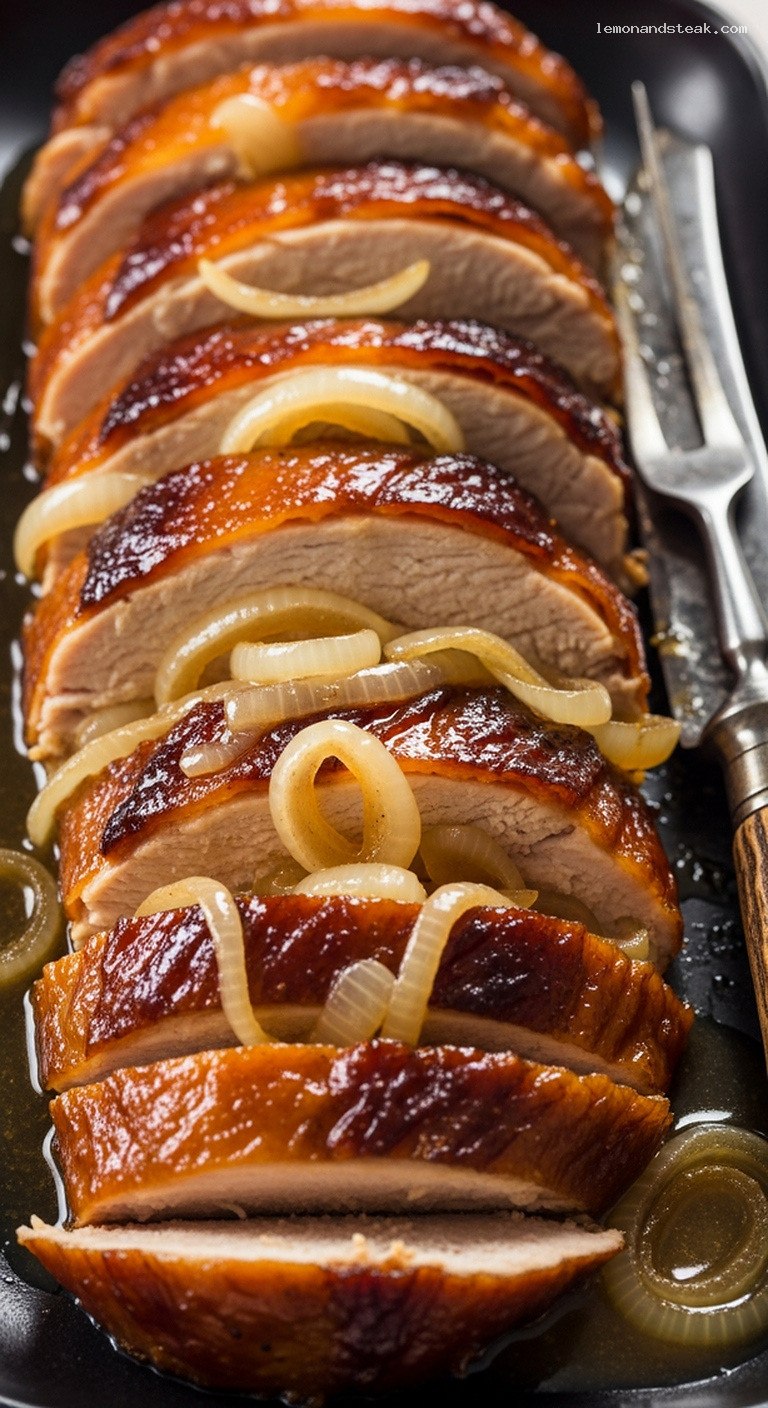
Carve the turkey and serve with the warm sweet onion–honey gravy spooned over slices and alongside the silky, almost-melted onions from the pan.
Pro Tips
- Do not skip the dry brine. Even 12 hours makes a big difference in juiciness and flavor. If you have 24 hours, even better.
- Glaze late, not early. Honey can burn if applied too soon. Start glazing once the turkey is already lightly browned and partially cooked.
- Keep some liquid in the pan. A shallow layer of broth prevents the sweet onions and drippings from scorching and helps them slowly melt into a rich base for gravy.
- Use a thermometer, not just time. Ovens vary. An instant-read thermometer is the most reliable way to avoid under- or overcooking.
- Rest generously. A 30–45 minute rest feels long but keeps the bird much juicier and makes carving easier.
Variations
- Spiced chili–honey version: Increase the crushed red pepper flakes to 1 tsp and add 1 tsp smoked paprika to the glaze for a sweet-smoky heat that pairs beautifully with the onions.
- Citrus-herb glaze: Replace half the broth in the glaze with freshly squeezed orange juice and add extra fresh thyme and rosemary. The flavor is brighter and slightly less sweet.
- Turkey breast only: Use a 6–7 lb bone-in turkey breast. Roast at 425°F (220°C) for 15 minutes, then 325°F (165°C) for about 1 1/2 to 2 hours, glazing during the last 45 minutes. Target an internal temp of 160°F (71°C) in the thickest part.
Storage & Make-Ahead
Leftover turkey keeps well. Cool completely, then store sliced meat in an airtight container in the refrigerator for up to 4 days. For longer storage, freeze tightly wrapped portions for up to 2 months; thaw overnight in the refrigerator before reheating.
The onion–honey gravy can be cooled and refrigerated in a covered container for up to 3 days or frozen for up to 2 months. Rewarm gently on the stovetop, whisking in a splash of broth or water if it has thickened too much.
You can dry-brine the turkey up to 48 hours ahead for maximum flavor. The sweet onion–honey glaze can be prepared 1–2 days in advance and kept refrigerated; reheat gently before brushing onto the turkey.
Nutrition (per serving)
Approximate values for 1 serving (about 4–5 oz roasted turkey with some skin and a generous spoonful of onion–honey gravy), based on 12 servings: about 480 calories, 45 g protein, 26 g fat, 12 g saturated fat, 18 g carbohydrates, 1 g fiber, 15 g sugars, and 780 mg sodium. Actual values will vary depending on the exact size of the turkey, how much skin is eaten, and how much glaze and gravy are used.
Leave a Reply