
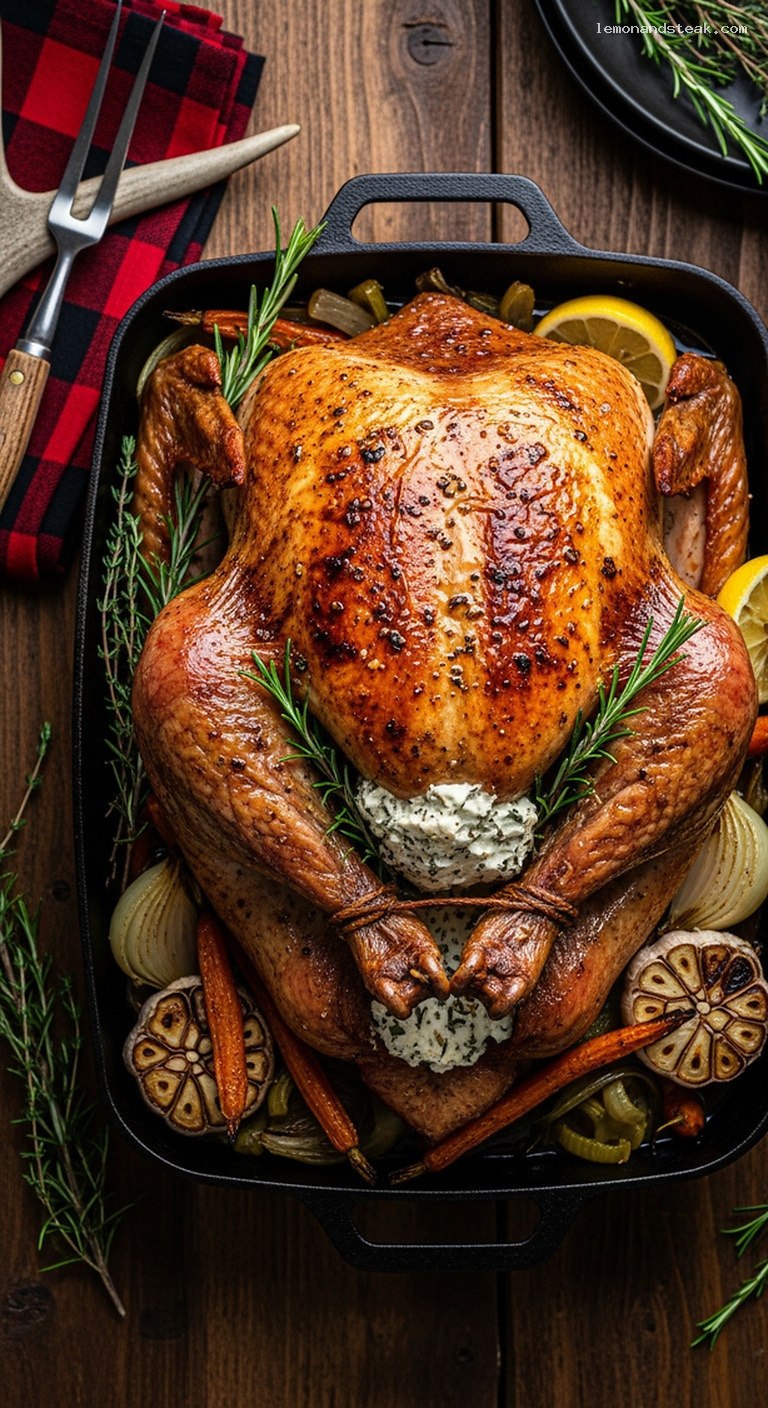
Quick Recipe Version (TL;DR)
Quick Ingredients
- 1 whole turkey (12–14 lb), fully thawed
- 2 tbsp kosher salt (for dry-brining the turkey)
- 2 (8 oz) bricks cream cheese, softened
- 1/2 cup unsalted butter, softened
- 8 cloves garlic, finely minced
- 6 tbsp mixed fresh herbs (rosemary, thyme, parsley), finely chopped
- 1 tbsp lemon zest + 2 tbsp lemon juice
- 2 1/2 tsp kosher salt + 1 1/2 tsp black pepper (for cream cheese + skin)
- 1 large onion, 2 carrots, 2 celery stalks, 1 lemon, 1 head garlic
- 2–3 cups low-sodium chicken or turkey broth
- 4 tbsp butter + 1/4 cup flour (optional, for pan gravy)
Do This
- 1. Pat the thawed turkey dry, remove giblets, and season all over (and inside) with 2 tbsp kosher salt. Chill uncovered 12–24 hours if possible.
- 2. Mix softened cream cheese, butter, garlic, chopped herbs, lemon zest/juice, 1 1/2 tsp salt, and 1 tsp pepper into a thick paste.
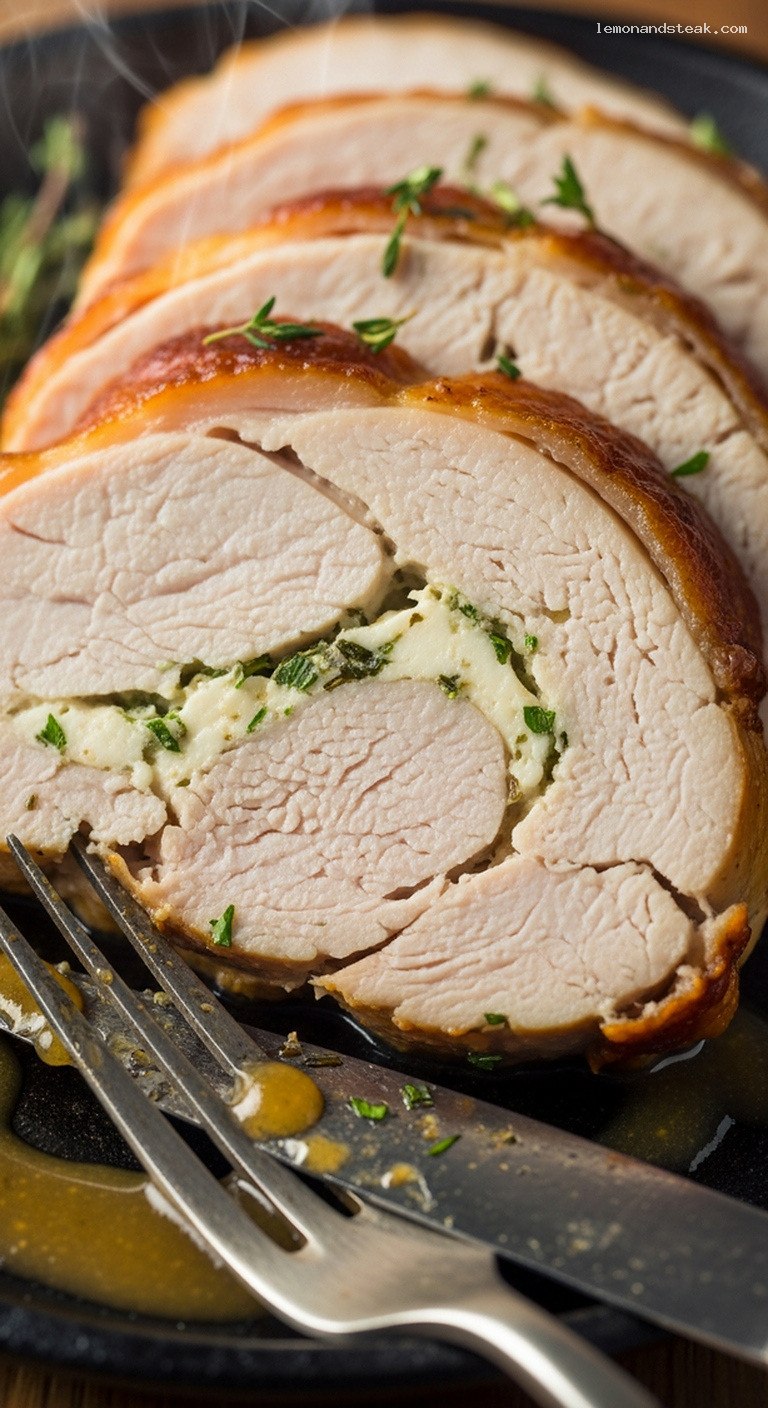
- 3. Loosen skin over breasts and thighs. Spread most of the garlic-herb cream cheese under the skin in an even layer; rub the rest over the outside.
- 4. Stuff the cavity with onion, lemon, garlic, and herb sprigs. Scatter remaining vegetables in a roasting pan with 2 cups broth. Place turkey on a rack over them.
- 5. Roast at 325°F (165°C), breast-side up, 3–3 1/2 hours for a 12–14 lb turkey, basting occasionally, until breast reaches 160°F and thighs 170°F. Tent with foil if browning too quickly.
- 6. Rest 30–45 minutes before carving. Simmer defatted pan drippings with a butter–flour roux and extra broth for gravy, if desired.
Why You’ll Love This Recipe
- The garlic-herb cream cheese under the skin keeps the meat incredibly juicy and flavorful from the inside out.
- Rich, cozy flavors (garlic, butter, fresh herbs) make this turkey feel restaurant-special but still homey and comforting.
- Simple, clear steps and no tricky techniques: ideal for both first-time and experienced turkey roasters.
- Built-in pan gravy option lets you turn those flavorful drippings into a silky sauce with minimal effort.
Grocery List
- Produce: 1 large onion, 2 carrots, 2 celery stalks, 1 head garlic (plus 8 extra cloves), 1 lemon, fresh rosemary, fresh thyme, fresh flat-leaf parsley
- Dairy: 2 (8 oz) bricks cream cheese, unsalted butter
- Pantry: 1 whole turkey (12–14 lb), kosher salt, black pepper, low-sodium chicken or turkey broth, all-purpose flour, olive oil (optional)
Full Ingredients
For the Turkey
- 1 whole turkey (12–14 lb), fully thawed (remove neck and giblet packet)
- 2 tbsp kosher salt (for seasoning/dry-brining the turkey)
- 1 tsp freshly ground black pepper (for the skin)
- 1–2 tbsp olive oil (optional, to help crisp the skin if desired)
Garlic-Herb Cream Cheese Slather
- 2 (8 oz) bricks cream cheese, softened to room temperature
- 1/2 cup (1 stick / 113 g) unsalted butter, softened
- 8 cloves garlic, very finely minced or pressed
- 2 tbsp fresh rosemary leaves, finely chopped
- 2 tbsp fresh thyme leaves, finely chopped
- 2 tbsp fresh flat-leaf parsley, finely chopped
- 1 tbsp finely grated lemon zest (from about 1 lemon)
- 2 tbsp fresh lemon juice
- 1 1/2 tsp kosher salt
- 1/2 tsp freshly ground black pepper
Aromatics & Roasting Pan
- 1 large yellow onion, peeled and quartered
- 2 medium carrots, cut into 2-inch chunks
- 2 celery stalks, cut into 2-inch chunks
- 1 head garlic, halved horizontally
- 1 lemon, quartered
- 4–6 fresh rosemary and/or thyme sprigs
- 2–3 cups low-sodium chicken or turkey broth (start with 2 cups in the pan; reserve the rest for gravy)
Optional Simple Pan Gravy
- 4 tbsp (1/2 stick / 57 g) unsalted butter
- 1/4 cup (30 g) all-purpose flour
- 2–3 cups defatted pan drippings + extra broth as needed (to total 2–3 cups liquid)
- Salt and freshly ground black pepper, to taste
Step-by-Step Instructions
Step 1: Thaw, dry, and season the turkey
If your turkey is frozen, thaw it completely in the refrigerator before cooking (plan about 24 hours per 4–5 lb). Once thawed, remove the turkey from its packaging. Remove the neck and giblet packet from the cavity (often there is a packet in the main cavity and sometimes in the neck cavity) and reserve for stock or discard if you prefer.
Pat the turkey very dry inside and out with paper towels. This is important for crispy skin and for helping the cream cheese adhere. Sprinkle the 2 tbsp kosher salt all over the turkey, including a light sprinkle inside the cavity and under the wings and drumsticks. For the best flavor and juiciness, place the turkey uncovered on a rack set over a sheet pan and refrigerate for 12–24 hours. This dry-brining step is optional but highly recommended. If you are short on time, salt the turkey at least 30 minutes before roasting and keep it in the fridge while you prepare the cream cheese mixture.
Step 2: Make the garlic-herb cream cheese slather
In a medium bowl, combine the softened cream cheese and softened butter. Mash together with a sturdy spatula or wooden spoon until completely smooth and well blended. Add the minced garlic, chopped rosemary, thyme, and parsley, lemon zest, lemon juice, 1 1/2 tsp kosher salt, and 1/2 tsp black pepper. Stir until the mixture is evenly flecked with herbs and fragrant. The mixture should be soft enough to spread, but thick enough to hold its shape.
Taste a tiny bit and adjust seasoning if needed (keeping in mind the turkey is already salted). If your kitchen is cool and the mixture feels too firm to spread, let it sit at room temperature for another 10–15 minutes. You want it pliable so it can slide smoothly under the skin without tearing.
Step 3: Loosen the skin and slather the turkey
Remove the turkey from the refrigerator and let it sit at room temperature for about 30 minutes while you work; this takes the chill off and helps it cook more evenly. Place the turkey breast-side up on a cutting board or in your roasting pan. Starting at the cavity end of the bird, gently slide your fingers between the skin and the meat over one breast, carefully loosening the skin. Work slowly so you do not tear it. Continue up toward the top of the breast and around toward the thighs and drumsticks as far as you can reach. Repeat on the other side. You are creating pockets for the cream cheese mixture.
Scoop up a generous handful of the garlic-herb cream cheese and push it under the skin over one breast. Use your hand on top of the skin to press and spread it into an even layer. Repeat over the other breast, and then as much as possible over the thighs and drumsticks. Aim to use about two-thirds to three-quarters of the mixture under the skin. Spread the remaining mixture over the outside of the turkey in a thin, even layer, focusing on the breast and thighs. If you like, rub a tablespoon or so of olive oil over any exposed skin to encourage browning. Finally, sprinkle the outside with the remaining 1 tsp black pepper.
Step 4: Add aromatics and set up the roasting pan
Preheat your oven to 325°F (165°C) with a rack in the lower-middle position. In a large roasting pan, scatter the onion wedges, carrot chunks, and celery pieces in an even layer. Add the halved head of garlic. Pour 2 cups of chicken or turkey broth into the bottom of the pan; this prevents the drippings from burning and will later become the base of your gravy.
Stuff the turkey cavity loosely with the lemon quarters, garlic halves (if there is space), and a few sprigs of rosemary and thyme. Do not pack tightly; air needs to circulate for even cooking. Tuck the wing tips underneath the turkey so they do not burn. If you wish, tie the legs together loosely with kitchen twine to help the bird hold its shape. Place the turkey breast-side up on a rack set inside the roasting pan over the vegetables, making sure it is elevated above the liquid.
Step 5: Roast the turkey low and steady
Place the roasting pan in the preheated 325°F (165°C) oven. Roast, uncovered, until the thickest part of the breast registers 160°F (71°C) and the thickest part of the thigh registers 170°F (77°C) on an instant-read thermometer. For a 12–14 lb turkey, this typically takes about 3 to 3 1/2 hours, but start checking the temperature after 2 1/2 hours since every oven and bird are different.
About every 45 minutes, carefully baste the turkey by spooning some of the pan juices over the breast and legs. This helps keep the surface moist and distributes the seasoned fat. If the skin is browning too quickly (especially over the breast), tent that area loosely with foil for the remainder of the cooking time. If the pan looks dry at any point, add an additional 1/2–1 cup broth to prevent scorching.
Step 6: Rest, carve, and serve
When the turkey reaches 160°F in the breast and 170°F in the thighs, remove the pan from the oven. Transfer the turkey carefully to a carving board or platter, tilting it over the roasting pan first to let excess juices run into the pan. Tent the turkey loosely with foil and let it rest for 30–45 minutes. Resting allows the juices to redistribute so the meat stays moist when sliced.
While the turkey rests, pour the pan drippings through a fine-mesh strainer into a heatproof bowl or fat separator, pressing gently on the vegetables to extract flavor. Discard the solids. If you are making gravy, let the fat rise to the top and skim it off (or reserve it for the roux). When ready to serve, carve the turkey: remove the legs and thighs, separate drumsticks from thighs, remove the breasts in whole lobes, then slice across the grain. Arrange on a warm platter and spoon some of the warm pan juices or finished gravy over the slices for extra richness.
Step 7: Make a simple pan gravy (optional)
In a medium saucepan over medium heat, melt 4 tbsp butter. Sprinkle in the 1/4 cup flour and whisk constantly for 2–3 minutes until the mixture turns a light golden color and smells toasty; this is your roux. Gradually whisk in 2 cups of the defatted pan drippings and broth mixture, a little at a time, to avoid lumps. Bring to a gentle simmer and cook, stirring often, until thickened to your liking, about 5–8 minutes. If the gravy is too thick, whisk in additional broth; if too thin, continue simmering to reduce.
Taste and season with salt and pepper as needed (remember the turkey and drippings are already seasoned). Keep warm over very low heat, stirring occasionally, until ready to serve. Pour into a gravy boat or small pitcher and serve alongside the carved turkey.
Pro Tips
- Plan for thawing: A large frozen turkey can take several days to thaw in the refrigerator. Allow about 24 hours of fridge time per 4–5 pounds of turkey.
- Dry-brine if you can: Salting the turkey 12–24 hours in advance and leaving it uncovered in the fridge improves flavor, tenderness, and skin crispness.
- Mind your salt: If using a fine salt (or a different brand than Diamond Crystal kosher), reduce the amount slightly to avoid oversalting. The cream cheese mixture is seasoned too.
- Use a thermometer: An instant-read or probe thermometer is the most reliable way to avoid dry turkey. Check both breast and thigh temperatures.
- Tent, do not wrap: Foil should be tented loosely over the turkey when resting or if browning too quickly; tight wrapping will steam the skin and soften it.
Variations
- Citrus-herb turkey: Add the zest of an extra lemon and an orange to the cream cheese mixture. Stuff the cavity with orange wedges as well as lemon for a brighter, more aromatic flavor.
- Garlic-lover’s version: Increase the garlic in the cream cheese to 10–12 cloves and add 1/2 tsp garlic powder to the outside of the turkey before roasting.
- Turkey breast only: Use a 5–7 lb bone-in turkey breast. Halve the cream cheese mixture and roast at 325°F (165°C) for about 2–2 1/2 hours, until it reaches 160°F at the thickest part.
Storage & Make-Ahead
Leftover turkey will keep well in the refrigerator for 3–4 days. Store carved meat in shallow airtight containers, ideally with a little gravy or pan juices to keep it moist. Reheat gently, covered, in a 300°F (150°C) oven or in a skillet with a splash of broth until just warmed through. For longer storage, freeze sliced turkey (and gravy separately) for up to 2–3 months; wrap tightly in foil and place in freezer bags or airtight containers. Thaw overnight in the fridge before reheating.
To make ahead, you can prepare the garlic-herb cream cheese mixture up to 2 days in advance and refrigerate it, tightly covered; bring it to room temperature before using so it spreads easily. You can also salt (dry-brine) the turkey 1–2 days ahead and keep it uncovered in the fridge. Roast the turkey on the day you plan to serve for the best texture and crisp skin.
Nutrition (per serving)
Approximate values for one serving (about 6–7 oz roasted turkey with skin plus a small amount of cream cheese mixture and a bit of gravy): about 650 calories, 48 g protein, 50 g fat, 5 g saturated fat, 3–5 g carbohydrates, 0–1 g fiber, 2 g sugar, and about 850 mg sodium. Actual nutrition will vary based on the exact size of the turkey, how much skin and cream cheese mixture is eaten, and how heavily you season and sauce each portion.
Leave a Reply