
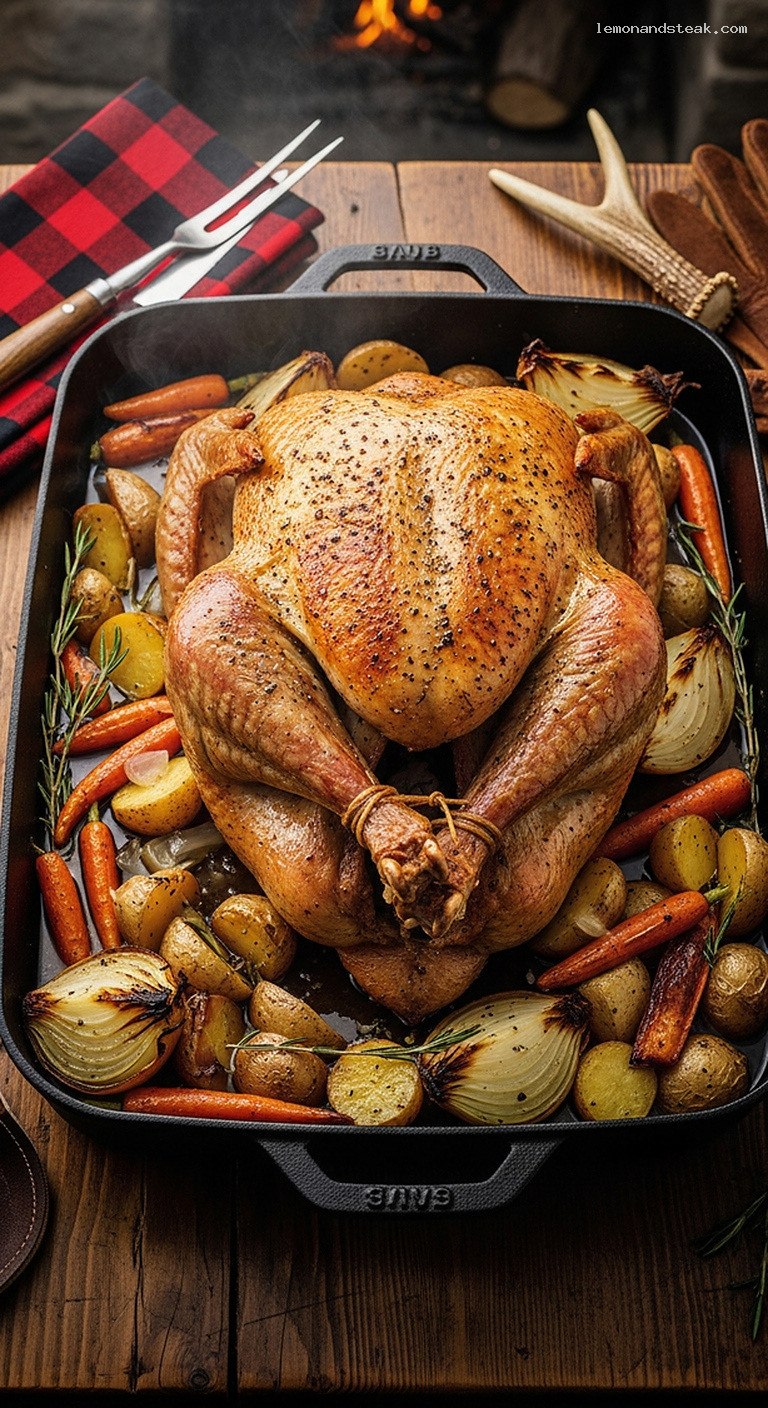
Quick Recipe Version (TL;DR)
Quick Ingredients
- 1 whole turkey (about 12 lb), thawed and giblets removed
- 4 large carrots, 2 lb Yukon Gold potatoes, 2 large yellow onions
- 1 head garlic, 1 lemon, fresh thyme, rosemary, sage
- 4 tbsp unsalted butter, divided
- 4 tbsp olive oil, divided
- 3 1/2 tbsp kosher salt, divided
- 2 1/2 tsp freshly ground black pepper, divided
- 1 1/2 cups low-sodium chicken or turkey broth
- 1/2 cup dry white wine (or extra broth)
Do This
- 1. Preheat oven to 425°F (220°C). Pat turkey dry. Let it sit at room temperature while you prep the vegetables.
- 2. Toss chunked carrots, potatoes, and onions with 2 tbsp olive oil, 1 1/2 tsp salt, 1/2 tsp pepper. Spread in a large roasting pan.
- 3. Season turkey with 2 tbsp salt and 1 1/2 tsp pepper. Stuff cavity with lemon halves, garlic halves, onion pieces, and herb sprigs. Rub skin with 2 tbsp softened butter and 2 tbsp olive oil.
- 4. Place turkey breast-side up directly on top of the vegetables. Pour broth and wine into the pan around the vegetables.
- 5. Roast at 425°F for 30 minutes to brown the skin.
- 6. Reduce oven to 325°F (165°C) and roast 2 hours 45 minutes more, basting every 30–40 minutes, until thigh meat reaches 165°F.
- 7. Transfer turkey to a board, rest 30 minutes. Toss vegetables in pan drippings, roast 10–15 minutes more if needed, then serve carved turkey with the vegetables and pan juices.
Why You’ll Love This Recipe
- It is a full cozy meal in one pan: juicy roast turkey plus tender carrots, onions, and potatoes bathed in flavorful drippings.
- Simple, classic seasoning and straightforward steps make this approachable, even if it is your first time roasting a turkey.
- The vegetables soak up the buttery pan juices, so you get a built-in comfort-food side dish with no extra pots.
- Leftovers reheat beautifully and are perfect for sandwiches, hash, or easy next-day dinners.
Grocery List
- Produce: Carrots, Yukon Gold potatoes, yellow onions, garlic, lemon, fresh thyme, fresh rosemary, fresh sage
- Dairy: Unsalted butter
- Pantry: Whole turkey (about 12 lb), olive oil, kosher salt, black pepper, low-sodium chicken or turkey broth, dry white wine (optional), all-purpose flour or cornstarch (optional, for thickening pan juices)
Full Ingredients
For the Turkey
- 1 whole turkey, about 12 lb, fully thawed, giblets and neck removed
- 2 tbsp kosher salt (for the turkey skin and cavity)
- 1 1/2 tsp freshly ground black pepper
- 2 tbsp unsalted butter, softened
- 2 tbsp olive oil
- 1 lemon, halved
- 1 small yellow onion, quartered
- 1 head garlic, halved crosswise
- 4 sprigs fresh thyme
- 3 sprigs fresh rosemary
- 3 sprigs fresh sage
- Kitchen twine for tying the legs (optional but helpful)
For the Vegetables
- 4 large carrots (about 1 1/2 lb), peeled and cut into 2-inch chunks on a slight diagonal
- 2 lb Yukon Gold potatoes, cut into 1 1/2-inch chunks
- 2 large yellow onions, peeled and cut into thick wedges
- 2 tbsp olive oil
- 1 1/2 tsp kosher salt
- 1/2 tsp freshly ground black pepper
For the Pan Drippings and Optional Pan Sauce
- 1 1/2 cups low-sodium chicken or turkey broth
- 1/2 cup dry white wine (or use more broth)
- 2 tbsp unsalted butter (to finish the vegetables and juices)
- 1 tbsp all-purpose flour or cornstarch (optional, for lightly thickening pan juices)
- 1–2 tbsp chopped fresh herbs (thyme, rosemary, or parsley), for garnish
Step-by-Step Instructions
Step 1: Prep and Dry the Turkey
If your turkey is frozen, thaw it completely in the refrigerator before starting (about 3 days for a 12 lb bird). When you are ready to cook, remove the turkey from the fridge, take out the giblets and neck from the cavity, and discard or save for stock.
Pat the turkey very dry all over with paper towels, including inside the cavity. Dry skin is key to good browning. Let the turkey sit at room temperature for about 30 minutes while you prepare the vegetables; this takes the chill off and helps it cook more evenly.
Step 2: Prep the Vegetable Bed
Preheat your oven to 425°F (220°C) with a rack in the lower third of the oven.
In a large roasting pan, add the carrot chunks, potato chunks, and onion wedges. Drizzle with 2 tbsp olive oil, then sprinkle with 1 1/2 tsp kosher salt and 1/2 tsp black pepper. Toss well with your hands so every piece is lightly coated and seasoned.
Spread the vegetables into an even layer. This will be the flavorful bed that catches the turkey drippings and turns into a ready-made side dish.
Step 3: Season and Stuff the Turkey
In a small bowl, mix the 2 tbsp softened butter with the 2 tbsp olive oil. Rub this mixture all over the turkey skin, including the legs and wings. Gently loosen the skin over the breast meat with your fingers and smear a little of the butter mixture directly on the meat if you can.
Sprinkle the turkey (outside and just inside the cavity) with 2 tbsp kosher salt and 1 1/2 tsp black pepper, pressing it in so it adheres.
Stuff the cavity loosely with the lemon halves, garlic halves, quarter of an onion, and the herb sprigs (thyme, rosemary, sage). Do not pack it tightly; air needs to circulate for even cooking. If you like, tuck the wing tips under the body and tie the legs together with kitchen twine for a neat shape.
Step 4: Arrange the Turkey Over the Vegetables
Place the seasoned turkey breast-side up directly on top of the vegetables in the roasting pan. Nestling the bird into the vegetables allows the drippings to run down and baste the carrots, onions, and potatoes as everything cooks.
Pour the 1 1/2 cups broth and 1/2 cup white wine (or extra broth) into the pan around the vegetables, avoiding pouring directly over the turkey so you do not wash off the seasoning. The liquid should come partway up the vegetables but not submerge them fully.
Step 5: Start with High-Heat Roasting
Transfer the roasting pan to the oven and roast at 425°F (220°C) for 30 minutes. This initial blast of high heat helps the skin start to turn golden and crisp.
During this time, you do not need to baste or open the oven. Let the heat work on browning the skin and jump-starting the cooking of the vegetables underneath.
Step 6: Reduce Heat and Roast Until Juicy and Tender
After 30 minutes, reduce the oven temperature to 325°F (165°C). Carefully baste the turkey with some of the pan juices, and gently stir the vegetables so they are coated in the drippings and cooking liquid.
Continue roasting at 325°F for about 2 hours 45 minutes more, basting every 30–40 minutes and stirring the vegetables once or twice so they cook evenly and soak up the drippings. If the pan ever looks dry, add another 1/2 cup of broth or water.
Check the turkey for doneness starting around the 2-hour mark. Insert an instant-read thermometer into the thickest part of the thigh, avoiding the bone. The turkey is done when the thigh registers 165°F (74°C) and the juices run mostly clear. If the skin is browning too quickly at any point, tent the breast loosely with foil.
Step 7: Rest the Turkey and Finish the Vegetables
Once the turkey is cooked, carefully lift it out of the pan and transfer it to a large cutting board or platter. Tent loosely with foil and let it rest for at least 30 minutes. Resting allows the juices to redistribute so the meat stays moist when carved.
While the turkey rests, toss the vegetables in the rich pan drippings so they are well coated. If they are not yet deeply tender and caramelized, return the roasting pan to the oven and roast the vegetables at 325°F (165°C) for another 10–15 minutes, stirring once, until the edges are golden and the potatoes are completely tender when pierced with a knife.
When the vegetables are done, dot them with the remaining 2 tbsp butter and sprinkle with chopped fresh herbs. Toss to melt the butter and coat everything in a glossy, savory sheen.
Step 8: Make a Simple Pan Sauce (Optional) and Serve
If you would like a lightly thickened pan sauce, push the vegetables to one side of the pan and carefully spoon off most of the clear fat from the surface, leaving the flavorful juices behind. Pour the juices into a small saucepan.
Bring the juices to a simmer over medium heat. In a small bowl, whisk 1 tbsp flour or cornstarch with 2 tbsp cold water until smooth. Whisk this slurry into the simmering juices and cook for 2–3 minutes, until slightly thickened. Taste and adjust seasoning with salt and pepper if needed.
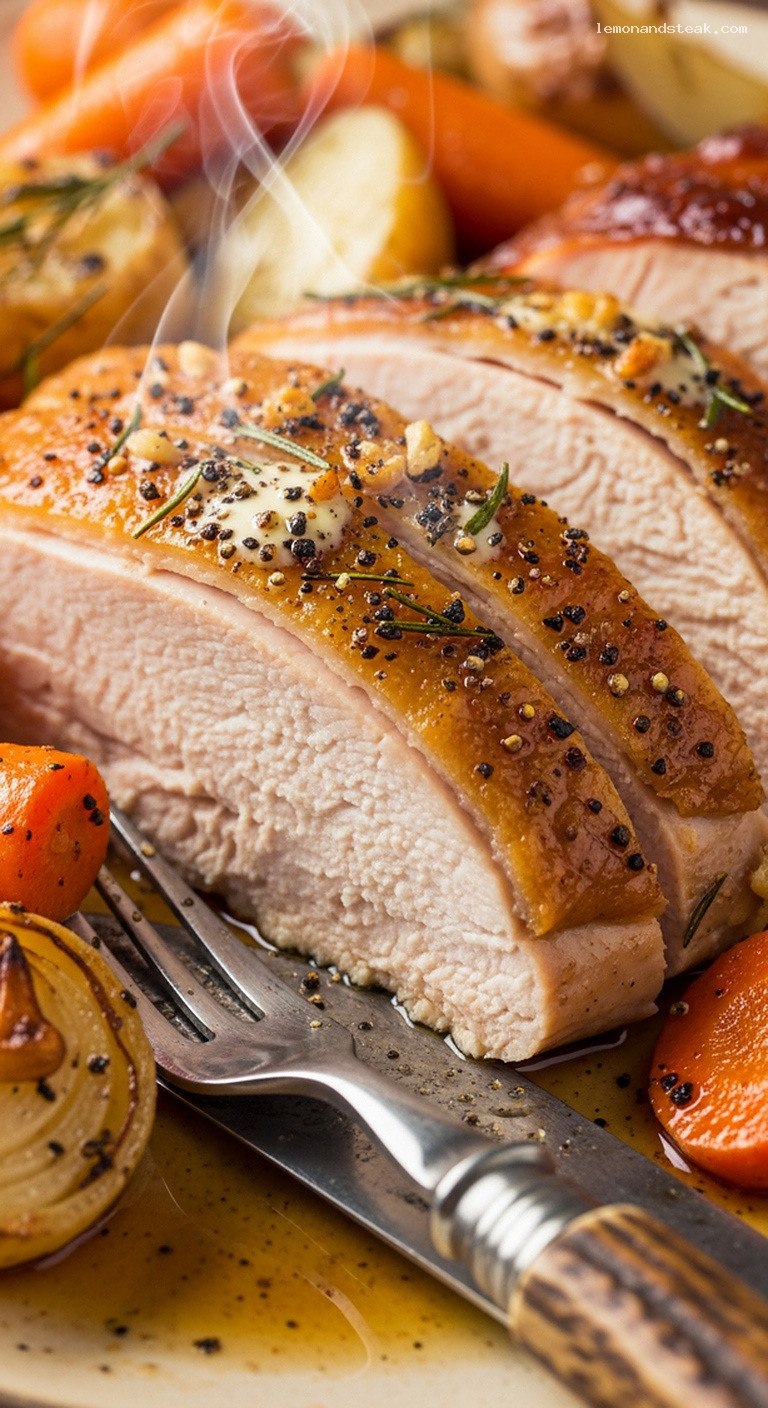
Carve the rested turkey, serving slices of white and dark meat alongside generous spoonfuls of the carrots, onions, and potatoes. Spoon the pan sauce or the plain drippings over everything and garnish with a few extra herb leaves if you like. Serve warm and enjoy that built-in comfort-food side dish.
Pro Tips
- Use a thermometer, not the clock. Times are a guideline; the turkey is perfectly cooked when the thigh hits 165°F, even if that happens a little earlier or later than expected.
- Dry the skin well. The more thoroughly you dry the turkey before seasoning, the better your chances of crisp, golden skin.
- Rotate the pan. If your oven has hot spots, turn the roasting pan front-to-back halfway through cooking so the turkey browns evenly.
- Optional dry brine. For even more flavorful meat, salt the turkey (using the same 2 tbsp kosher salt) up to 24 hours in advance and refrigerate it uncovered. Pat dry again before adding the butter and oil.
- Give it time to rest. Do not rush the resting period; 30 minutes of rest makes a big difference in how juicy the slices are.
Variations
- Garlic & Herb Butter Turkey: Mix 4 minced garlic cloves and 2 tbsp chopped fresh herbs into the softened butter and rub it under the skin over the breast meat for a stronger herb flavor.
- Smoky Paprika Twist: Add 2 tsp smoked paprika and 1 tsp dried thyme to the salt and pepper rub for a deeper, slightly smoky flavor and a more mahogany-colored skin.
- Lemon-Pepper Roast: Add the zest of 1 lemon to the butter mixture and increase black pepper to 2 tsp for a brighter, citrusy turkey with extra peppery kick.
Storage & Make-Ahead
Store leftover turkey and vegetables in airtight containers in the refrigerator for up to 3–4 days. For longer storage, freeze sliced turkey and vegetables (with a bit of the pan juices) for up to 3 months; thaw overnight in the fridge before reheating.
To reheat, place turkey slices and vegetables in a baking dish, sprinkle with a few tablespoons of broth or water, cover tightly with foil, and warm in a 325°F (165°C) oven for 20–25 minutes, or until hot. You can prep the vegetables (peel and cut) up to 1 day ahead and refrigerate them in a sealed container. The turkey can also be seasoned and stuffed with aromatics up to 12 hours ahead; keep it refrigerated, then let it sit at room temperature for about 30 minutes before roasting.
Nutrition (per serving)
Approximate values for 1 serving (about 1/10 of the turkey plus a generous scoop of vegetables and a spoonful of pan juices): 650 calories, 45 g protein, 30 g fat, 45 g carbohydrates, 5 g fiber, 150 mg cholesterol, and 750 mg sodium. Actual values will vary based on the exact size of your turkey, how much skin is eaten, and how much pan juice you add at the table.
Leave a Reply