
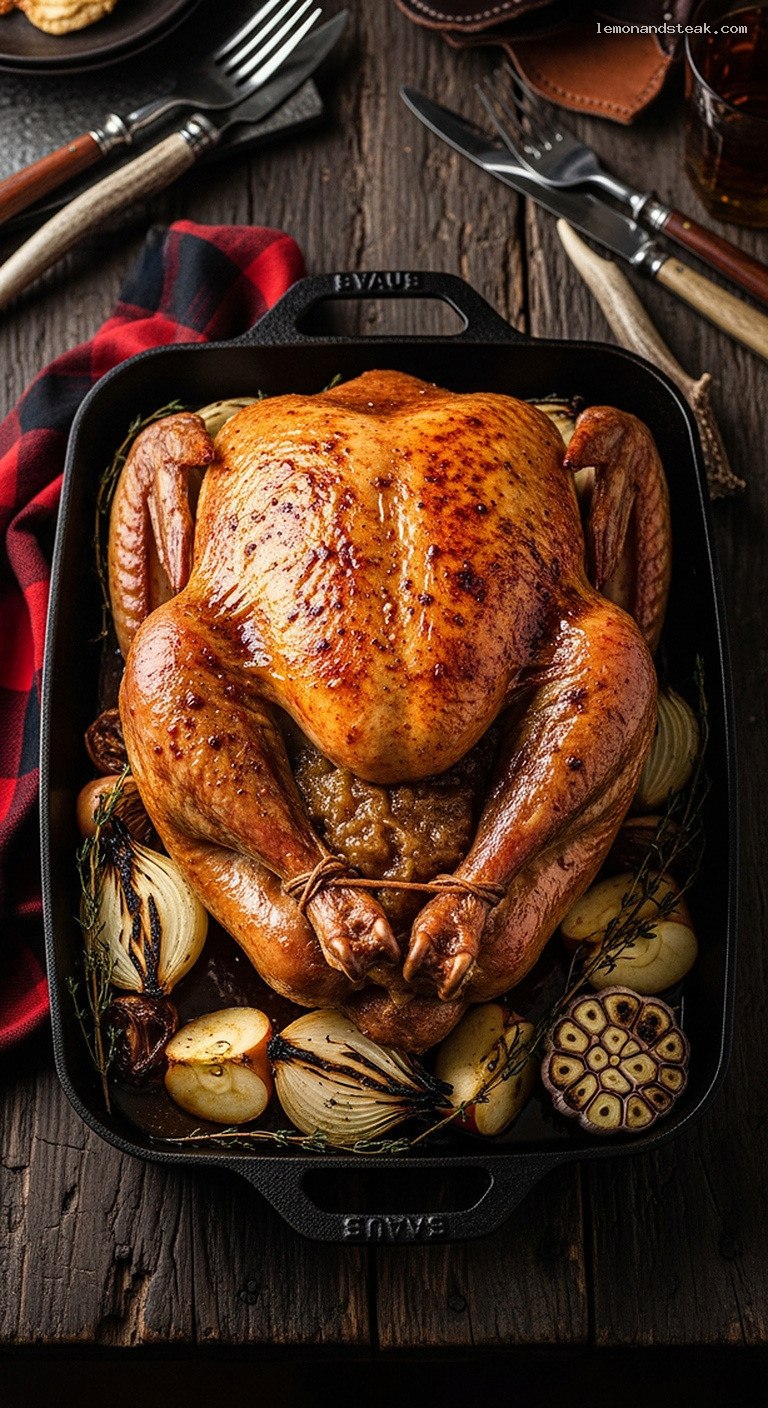
Apple Butter Basted Roast Turkey
Quick Recipe Version (TL;DR)
Quick Ingredients
- 1 whole turkey (12–14 lb), thawed if frozen
- 1 tablespoon kosher salt (for dry brine)
- 2 teaspoons freshly ground black pepper
- 1 cup apple butter
- 8 tablespoons (1 cup) unsalted butter, melted and divided
- 1 teaspoon ground cinnamon
- 1 teaspoon smoked paprika
- 2 teaspoons garlic powder
- 2 teaspoons dried thyme or 1 tablespoon fresh thyme leaves
- 1 onion, 1 apple, and 1 head garlic, cut for roasting aromatics
- 1–2 cups low-sodium chicken or turkey broth (for the pan and gravy)
Do This
- 1. Pat the turkey dry, remove giblets, and dry brine with kosher salt in the fridge for 12–24 hours (or at least 1 hour).
- 2. Preheat oven to 325°F (163°C). Stuff the cavity with the onion, apple, garlic, and herbs if using; tie legs loosely.
- 3. Mix apple butter, 6 tablespoons melted butter, cinnamon, smoked paprika, garlic powder, thyme, salt, and pepper into a smooth glaze.
- 4. Brush turkey all over with remaining 2 tablespoons melted butter, then add a first light layer of the apple butter glaze.
- 5. Roast at 325°F (163°C) for 3 hours 15 minutes–3 hours 45 minutes, basting with more glaze every 30 minutes and adding broth to the pan as needed.
- 6. When the thickest part of the breast and thigh reach 165°F (74°C), remove turkey, tent with foil, and rest 30–45 minutes.
- 7. While turkey rests, make a simple pan gravy with the drippings and broth. Carve and serve with extra warm apple butter glaze if desired.
Why You’ll Love This Recipe
- Apple butter and real butter create a glossy, lightly spiced glaze that tastes special but cozy and familiar.
- The turkey stays juicy thanks to gentle roasting, regular basting, and an optional dry brine.
- Simple pantry spices give a warm, autumnal flavor without overwhelming the natural taste of the turkey.
- Everything happens in one roasting pan, with easy drippings for a rich, apple-scented gravy.
Grocery List
- Produce: 1 onion, 1 apple, 1 head garlic, 1 lemon (optional), fresh thyme and/or sage (optional for cavity and garnish).
- Dairy: Unsalted butter (at least 1 cup / 2 sticks).
- Pantry: Whole turkey (12–14 lb), apple butter, kosher salt, black pepper, garlic powder, smoked paprika, ground cinnamon, dried thyme (if not using fresh), low-sodium chicken or turkey broth, all-purpose flour (for gravy, optional).
Full Ingredients
For the Turkey
- 1 whole turkey (12–14 lb), thawed if frozen
- 1 tablespoon kosher salt (for dry brining the skin)
- 2 teaspoons freshly ground black pepper, divided
- 1 onion, peeled and quartered
- 1 firm apple (such as Honeycrisp or Gala), quartered
- 1 head garlic, halved crosswise
- 1 small lemon, quartered (optional, adds brightness)
- 4–6 sprigs fresh thyme and/or sage (optional, for cavity)
- 1–2 cups low-sodium chicken or turkey broth (for the roasting pan and gravy)
For the Apple Butter Glaze
- 1 cup apple butter (about 260 g)
- 8 tablespoons (1 cup) unsalted butter, melted and divided
- 1 teaspoon ground cinnamon
- 1 teaspoon smoked paprika
- 2 teaspoons garlic powder
- 2 teaspoons dried thyme or 1 tablespoon fresh thyme leaves, finely chopped
- 1 teaspoon kosher salt (reduce to 1/2 teaspoon if using salted butter)
- 1 teaspoon freshly ground black pepper
For the Pan Gravy (Optional but Recommended)
- Pan drippings (from roasting pan, fat separated if possible)
- 2–3 cups low-sodium chicken or turkey broth (including what was added to the pan during roasting)
- 3 tablespoons all-purpose flour
- Salt and pepper to taste
- 1–2 tablespoons additional apple butter (optional, for a hint of sweetness)
Step-by-Step Instructions
Step 1: Prep and Dry Brine the Turkey
If your turkey is frozen, thaw it completely in the refrigerator before starting (about 3 days for a 12–14 lb turkey). When ready to prep, remove the turkey from its packaging in a clean sink. Remove the neck and giblet packet from the cavity (check both the main cavity and the neck cavity) and set them aside for stock or gravy if desired.
Pat the turkey very dry, inside and out, with paper towels. This is key for crisp skin. Sprinkle 1 tablespoon kosher salt evenly over the entire surface of the turkey, including under the wings and around the legs. Place the turkey breast-side up on a rack set in a roasting pan or on a rimmed baking sheet.
Refrigerate uncovered for at least 1 hour and up to 24 hours. This dry brine seasons the meat and helps the skin brown and crisp. If you are short on time, even 1 hour helps, but 12–24 hours is ideal.
Step 2: Bring to Room Temperature and Preheat the Oven
About 1 hour before you plan to start roasting, remove the turkey from the refrigerator so it can take the chill off. Letting the turkey sit at room temperature for 45–60 minutes helps it cook more evenly.
Adjust an oven rack to the lower third of the oven. Preheat the oven to 325°F (163°C). If you have not already placed the turkey in a roasting pan, set it breast-side up on a sturdy roasting rack inside a large roasting pan.
Step 3: Make the Apple Butter Glaze
In a medium bowl, combine the apple butter, 6 tablespoons of the melted butter, ground cinnamon, smoked paprika, garlic powder, dried or fresh thyme, 1 teaspoon kosher salt, and 1 teaspoon black pepper. Whisk until the mixture is completely smooth, glossy, and pourable. If your apple butter is very thick and hard to whisk, warm it gently in the microwave for 15–20 seconds or over low heat on the stove first.
Set aside the remaining 2 tablespoons melted butter in a separate small bowl. You will use this to coat the turkey before adding the glaze, which helps the skin start crisping right away.
Step 4: Stuff the Cavity and Season the Turkey
Pat the turkey dry again if any moisture has pooled on the surface while it rested. Tuck the wing tips behind the turkey’s back so they do not burn. Stuff the main cavity loosely with the quartered onion, quartered apple, halved garlic head, and lemon quarters and herb sprigs if using. Do not pack the cavity tightly; air needs to circulate so the turkey cooks evenly.
Tie the legs loosely together with kitchen twine, or tuck them into the skin flap if your turkey has one. Brush or rub the entire surface of the turkey with the reserved 2 tablespoons melted butter. This will help the skin take on color immediately in the oven. If you like extra pepper, sprinkle a little more freshly ground black pepper over the skin now.
Step 5: Apply the First Layer of Apple Butter Glaze
Using a pastry brush or spoon, spread a light, even layer of the apple butter glaze over the entire turkey, including the legs and as much of the sides as you can easily reach. At this stage, aim for a thin coat; you will add more glaze during roasting. A thick layer too early can darken too quickly.
Pour 1 cup of broth into the bottom of the roasting pan. This helps prevent burning and creates steamy, moist heat around the turkey. It will also become the flavorful base of your pan drippings and gravy.
Step 6: Roast and Baste with Apple Butter Glaze
Place the turkey in the preheated 325°F (163°C) oven, breast-side up. Roast for 45 minutes without opening the oven. After 45 minutes, open the oven and quickly brush another thin layer of the apple butter glaze all over the turkey. If the pan looks dry, add another 1/2 cup broth to the bottom.
Continue roasting, basting with more glaze every 30 minutes. Rotate the pan once or twice during cooking if your oven has hot spots. If any part of the turkey (usually the breast or wing tips) starts browning too quickly, tent that area loosely with a piece of foil to prevent burning while the rest of the bird finishes cooking.
For a 12–14 lb turkey, the total roasting time at 325°F (163°C) will typically be 3 hours 15 minutes to 3 hours 45 minutes. Start checking the internal temperature after about 2 hours 30 minutes of roasting. Insert an instant-read thermometer into the thickest part of the breast and the inner thigh, avoiding the bone. The turkey is done when both the breast and thigh reach 165°F (74°C).
Step 7: Rest, Make Gravy, and Carve
When the turkey reaches 165°F (74°C), carefully lift the roasting pan from the oven. Transfer the turkey to a cutting board or platter, tent it loosely with foil, and let it rest for 30–45 minutes. This rest allows the juices to redistribute so the meat stays moist when sliced.
While the turkey rests, tilt the roasting pan and spoon off most of the excess fat, leaving a few tablespoons in the pan. Place the pan over medium heat on the stovetop (use two burners if needed). Sprinkle 3 tablespoons flour into the drippings and whisk constantly for 1–2 minutes to form a smooth paste. Slowly pour in 1–2 cups broth, whisking to avoid lumps, and scrape up all the caramelized bits from the bottom of the pan. Simmer until the gravy thickens, 5–8 minutes, adding more broth for a thinner gravy or reducing longer for a thicker one. Season to taste with salt and pepper, and whisk in 1–2 tablespoons apple butter if you want a hint of sweetness and extra apple flavor.
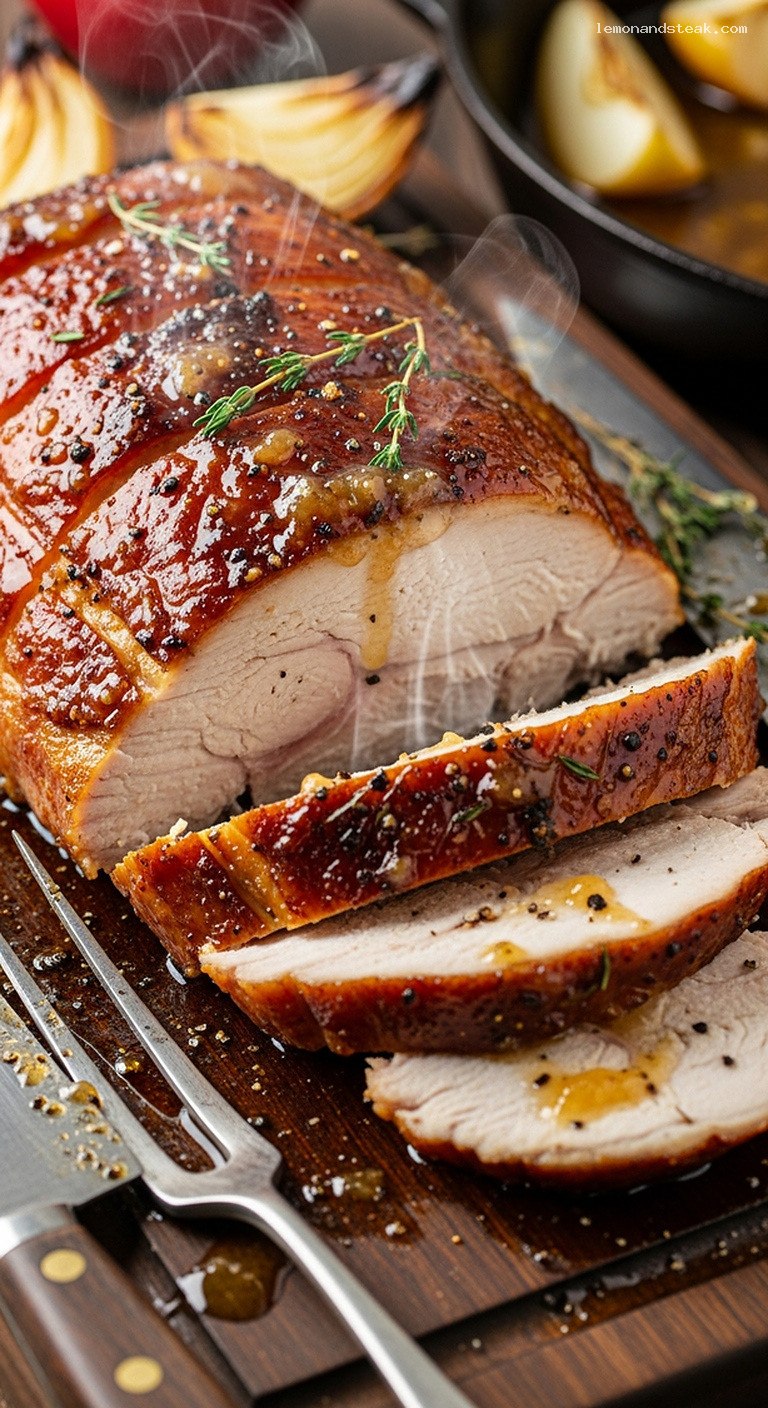
To carve, remove the legs and thighs, then the wings, and finally slice the breast meat across the grain. Arrange slices on a warm platter, spoon a little of the apple butter pan juices over the top if desired, and serve with the warm gravy on the side.
Pro Tips
- Dry brine for flavor and crisp skin: Even a short dry brine improves seasoning and browning; 12–24 hours uncovered in the fridge is ideal.
- Keep the glaze thin early on: Apply light coats of apple butter glaze at the beginning and build up gradually. Thick glaze too early can scorch due to the natural sugars.
- Use a thermometer, not just time: Every turkey cooks a little differently. Rely on internal temperature (165°F / 74°C) in both breast and thigh for perfect doneness.
- Tent, do not tightly wrap: When resting the turkey, tent with foil instead of sealing it. This keeps it hot while preserving the crisp, lacquered skin.
- Warm the glaze for easier brushing: If the apple butter glaze gets thick, warm it gently so it stays smooth and easy to brush over the turkey.
Variations
- Spicy Maple-Apple Turkey: Add 2 tablespoons pure maple syrup and 1/2–1 teaspoon cayenne pepper to the apple butter glaze for a sweet-heat kick.
- Herb-Forward Turkey: Increase fresh thyme to 2 tablespoons and add 1 tablespoon finely chopped fresh sage or rosemary to the glaze for a more savory, aromatic profile.
- Turkey Breast Only: Use a 5–7 lb bone-in turkey breast. Roast at 325°F (163°C) for about 2 hours–2 hours 30 minutes, glazing every 20–30 minutes, until the thickest part of the breast reaches 165°F (74°C).
Storage & Make-Ahead
Leftover turkey keeps well in an airtight container in the refrigerator for 3–4 days. For longer storage, freeze sliced turkey and a bit of gravy together in freezer-safe containers or bags for up to 2–3 months; thaw overnight in the refrigerator before reheating.
To reheat, place the turkey slices in a baking dish with a splash of broth or gravy, cover tightly with foil, and warm at 300°F (150°C) for 15–25 minutes, just until heated through. Avoid high heat, which can dry the meat.
You can dry brine the turkey up to 2 days ahead and keep it uncovered in the refrigerator. The apple butter glaze can be made 3 days in advance and refrigerated in a jar; gently rewarm before brushing onto the turkey. Gravy can be made ahead and reheated with a splash of broth just before serving.
Nutrition (per serving)
Approximate values per serving (based on 12 servings, including some skin and glaze but not gravy): about 520 calories; 33 g fat; 8 g saturated fat; 18 g carbohydrates; 3 g fiber; 13 g sugar (mostly from apple butter); 38 g protein; 820 mg sodium. Actual values will vary based on the exact size of the turkey, how much skin is eaten, and how much glaze and pan drippings are consumed.
Leave a Reply