
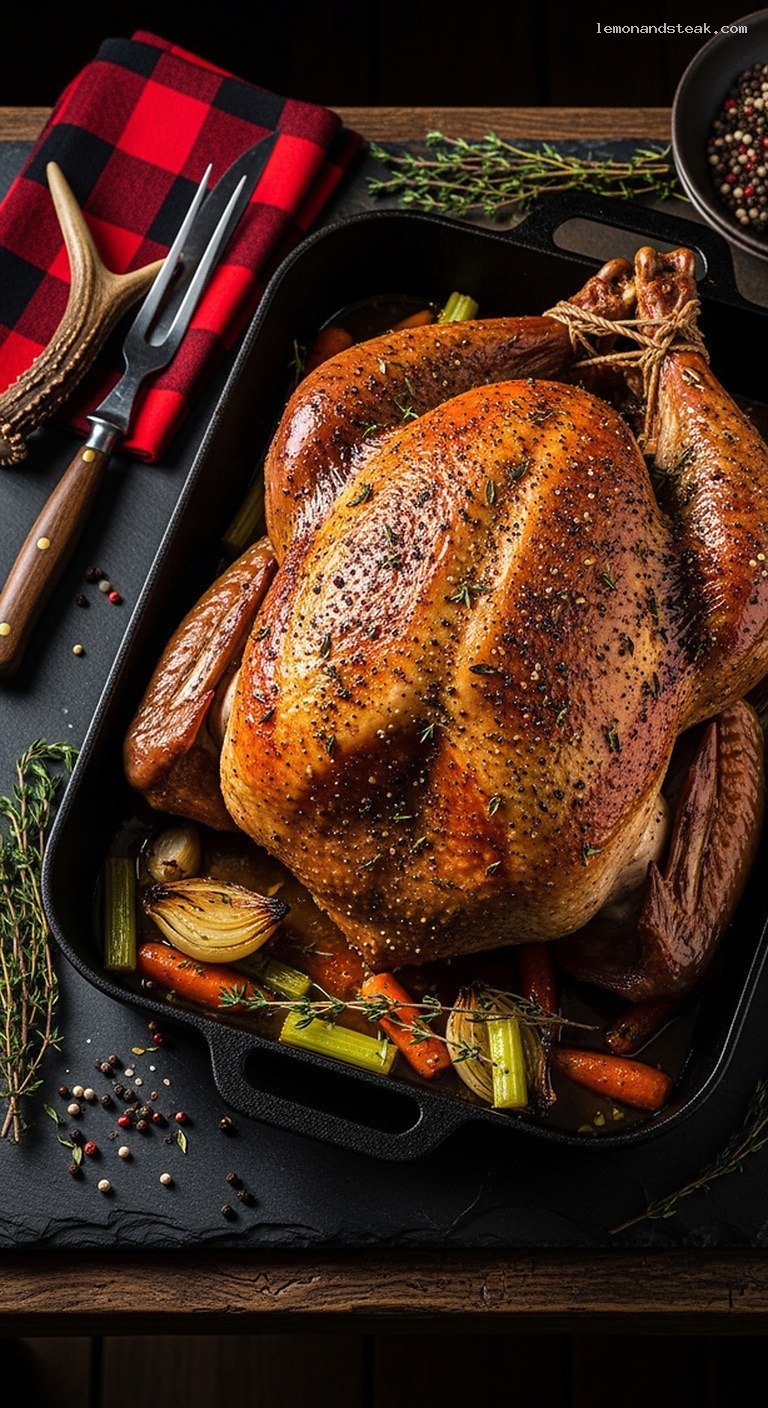
Quick Recipe Version (TL;DR)
Quick Ingredients
- 1 whole turkey, 12–14 lb (5.5–6.5 kg), thawed
- 2 qt (8 cups / 1.9 L) buttermilk
- 4 cups (1 L) cold water
- 1/2 cup kosher salt (Diamond Crystal; or 1/4 cup Morton)
- 1/4 cup granulated sugar
- 8–10 sprigs fresh thyme, divided
- 10 cloves garlic, smashed and divided
- 2 tbsp whole black peppercorns, plus 2 tbsp coarsely cracked black pepper
- 2 bay leaves
- 1/2 cup (1 stick / 113 g) unsalted butter, softened
- 2 tsp paprika
- 2 tsp garlic powder
- 1 tsp onion powder
- 2 tsp kosher salt (for butter rub)
- 1 large onion, 2 carrots, 2 celery stalks
- 1 lemon, halved
- 2 cups (480 ml) low-sodium chicken or turkey broth
- 2 tbsp neutral oil (for rubbing pan and turkey)
Do This
- 1. Make brine: whisk buttermilk, water, 1/2 cup kosher salt, sugar, thyme sprigs, half the garlic, peppercorns, and bay leaves in a large container or brining bag.
- 2. Prep turkey: remove giblets, pat turkey dry, place in brine, fully submerge, and refrigerate 12–24 hours.
- 3. Remove turkey from brine, discard brine, pat very dry, and let stand at room temperature 45–60 minutes while oven preheats to 425°F (220°C).
- 4. Mix softened butter with remaining thyme (chopped), cracked black pepper, garlic powder, onion powder, paprika, and 2 tsp salt. Rub under and over skin. Stuff cavity with lemon, onion chunks, remaining garlic, and celery leaves.
- 5. Arrange onions, carrots, and celery in a roasting pan, set turkey on top, tuck wings, and tie legs. Pour broth into pan. Rub turkey lightly with oil.
- 6. Roast at 425°F (220°C) for 30 minutes, then reduce to 325°F (165°C) and roast 2½–3 hours more, until breast reaches 160°F (71°C) and thighs 175°F (79°C), tenting with foil if browning too fast.
- 7. Rest turkey, loosely tented with foil, 30–45 minutes before carving. Use pan juices for a simple gravy if desired.
Why You’ll Love This Recipe
- Buttermilk brine makes the turkey incredibly tender and juicy, from breast to drumstick.
- The gentle tang from the buttermilk and lemon gives a classic, comforting flavor without tasting “sour.”
- Thyme and cracked black pepper build a cozy roast-chicken-style aroma, just in turkey form.
- Step-by-step guidance and exact temps help you nail a perfectly cooked bird, even if it is your first turkey.
Grocery List
- Produce: 1 large onion, 2 carrots, 2 celery stalks (plus celery leaves if attached), 1 lemon, 1 head garlic (10+ cloves), fresh thyme (1 small bunch)
- Dairy: 2 qt (8 cups / 1.9 L) buttermilk, 1/2 cup (1 stick) unsalted butter
- Pantry: 1 whole turkey (12–14 lb), kosher salt, granulated sugar, whole black peppercorns, freshly ground or cracked black pepper, bay leaves, paprika, garlic powder, onion powder, neutral oil (such as canola or vegetable), low-sodium chicken or turkey broth, all-purpose flour (for optional gravy)
Full Ingredients
Turkey & Buttermilk Brine
- 1 whole turkey, 12–14 lb (5.5–6.5 kg), fully thawed if previously frozen
- 2 qt (8 cups / 1.9 L) buttermilk, well shaken
- 4 cups (1 L) cold water, plus more as needed to fully cover turkey
- 1/2 cup kosher salt, preferably Diamond Crystal (or 1/4 cup Morton kosher salt)
- 1/4 cup granulated sugar
- 6 sprigs fresh thyme
- 6 cloves garlic, smashed
- 2 tbsp whole black peppercorns
- 2 bay leaves
Herb Butter & Seasoning
- 1/2 cup (1 stick / 113 g) unsalted butter, softened to room temperature
- 2 tbsp fresh thyme leaves, finely chopped (from about 4 sprigs)
- 2 tbsp coarsely cracked black pepper (from a pepper mill set coarsely or lightly crushed peppercorns)
- 2 tsp kosher salt
- 2 tsp garlic powder
- 1 tsp onion powder
- 1 tsp paprika (smoked or sweet, your preference)
For the Roasting Pan
- 1 large onion, peeled and cut into thick wedges
- 2 carrots, cut into 2-inch pieces
- 2 celery stalks, cut into 2-inch pieces (reserve leafy tops, if any)
- 1 lemon, halved
- 4 cloves garlic, lightly smashed
- 2 cups (480 ml) low-sodium chicken or turkey broth
- 2 tbsp neutral oil (canola, vegetable, or similar), divided
Optional Simple Pan Gravy
- 3 tbsp fat from turkey drippings (skimmed from the pan; supplement with butter if needed)
- 3 tbsp all-purpose flour
- 2–3 cups (480–720 ml) defatted turkey drippings plus additional low-sodium broth as needed
- Kosher salt and freshly ground black pepper, to taste
Step-by-Step Instructions
Step 1: Prep the Turkey and Plan Ahead
Make sure your turkey is fully thawed; a 12–14 lb (5.5–6.5 kg) bird can take 3–4 days to thaw in the refrigerator. Remove any packaging, along with the neck and giblet packet from the cavity. Pat the turkey dry with paper towels.
Check that you have a large food-safe container or heavy-duty brining bag big enough to hold the turkey and several quarts of liquid. Clear a space in your refrigerator where the container will fit and sit level. This planning step makes the whole process smoother.
Step 2: Make the Buttermilk Brine
In a large bowl or directly in your brining container, whisk together the buttermilk, 4 cups (1 L) cold water, kosher salt, and sugar until the salt and sugar are mostly dissolved. Add the thyme sprigs, smashed garlic cloves, whole peppercorns, and bay leaves. Stir to combine.
Place the turkey breast-side down into the brine. If needed, add a bit more water just until the turkey is mostly submerged, keeping in mind that too much extra water will dilute the brine; add only enough to cover. If using a brining bag, squeeze out excess air and seal tightly. Refrigerate for at least 12 hours and up to 24 hours, turning the turkey halfway through if it is not fully submerged to ensure even brining.
Step 3: Dry the Turkey for Crisp Skin
When you are ready to roast, remove the turkey from the brine and discard the brine (do not reuse). Do not rinse the turkey; instead, use plenty of paper towels to thoroughly pat the skin and cavity as dry as possible. This step is key to achieving golden, crisp skin.
Place the turkey on a rimmed baking sheet or in the roasting pan on a rack, uncovered, and refrigerate for 30–60 minutes if you have time. This short “air-drying” helps dry the skin even more. Then let the turkey stand at room temperature for 45–60 minutes before roasting; starting from room temperature helps it cook more evenly.
Step 4: Make the Thyme and Cracked Pepper Butter
While the turkey comes up to room temperature, preheat your oven to 425°F (220°C) with a rack positioned in the lower third. In a small bowl, combine the softened butter, chopped fresh thyme leaves, coarsely cracked black pepper, kosher salt, garlic powder, onion powder, and paprika. Mash together with a fork until you have a smooth, fragrant herb butter.
Gently loosen the skin over the turkey breast by sliding your fingers under it from the cavity end, being careful not to tear the skin. Work about half of the herb butter under the skin, spreading it as evenly as you can across both breasts. Rub the remaining butter all over the outside of the turkey, including legs and thighs. The buttermilk brine already seasoned the meat, so avoid adding extra salt beyond what is in the butter.
Step 5: Build Flavor in the Roasting Pan
Scatter the onion wedges, carrot pieces, and celery pieces in the bottom of a large roasting pan. Add the lemon halves and the remaining smashed garlic cloves. Drizzle the vegetables with 1 tbsp of the neutral oil and toss to coat lightly. Pour the chicken or turkey broth into the bottom of the pan; this will help keep the drippings from burning and provide flavor for gravy.
Transfer the turkey to the roasting pan, setting it breast-side up on top of the vegetables (on a rack if you are using one). Tuck the wing tips behind the shoulders to prevent burning. Stuff the cavity loosely with the lemon halves (if you prefer, you can use only one half and leave the other in the pan), some onion and celery pieces, and any celery leaves. Tie the legs together with kitchen twine. Rub the turkey lightly with the remaining 1 tbsp oil for extra browning.
Step 6: Roast to Deep Golden and Juicy
Place the turkey in the oven and roast at 425°F (220°C) for 30 minutes to jump-start browning. Then reduce the oven temperature to 325°F (165°C) without opening the door. Continue roasting for another 2½–3 hours, basting occasionally with pan juices if you like, until the thickest part of the breast registers 160°F (71°C) and the inner thigh reaches 175°F (79°C) on an instant-read thermometer.
If at any point the skin is browning too quickly, tent the breast area loosely with aluminum foil. As the turkey nears doneness, start checking the temperature in multiple spots every 15–20 minutes. Rely on temperature rather than total time; a 12 lb bird may be done closer to 2½ hours after reducing the heat, while a 14 lb turkey may need the full 3 hours.
Step 7: Rest, Make Gravy, and Carve
Once the turkey reaches temperature, carefully transfer it to a carving board or platter, tipping any juices from the cavity back into the roasting pan. Tent loosely with foil and let rest for 30–45 minutes. This crucial rest allows the juices to redistribute, keeping the meat moist and tender.
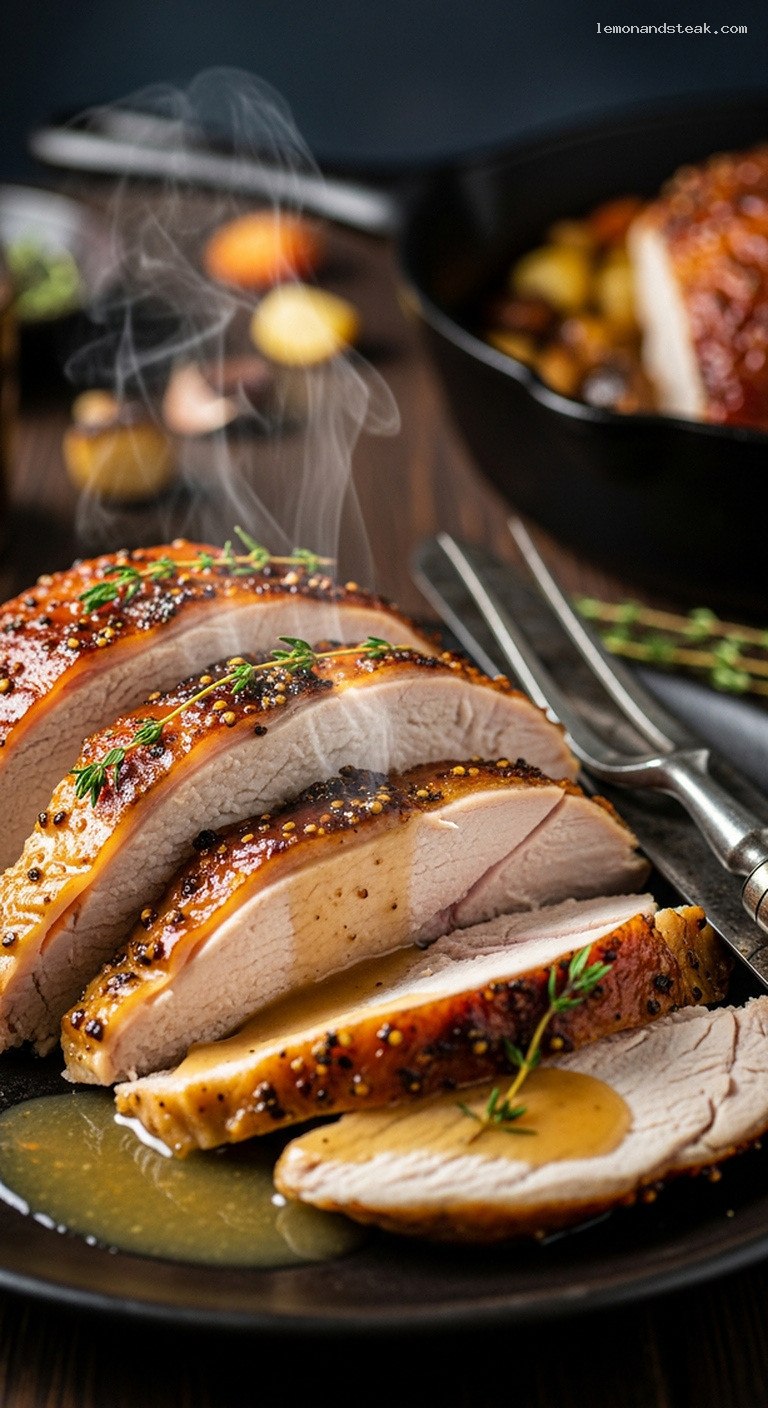
Meanwhile, make a simple gravy if desired. Strain the pan drippings into a fat separator or a bowl. Skim off and measure 3 tbsp of fat and add to a saucepan over medium heat. Whisk in 3 tbsp flour and cook for 1–2 minutes until lightly golden. Gradually whisk in 2–3 cups of the defatted drippings and/or additional broth until smooth. Simmer 5–10 minutes, whisking often, until slightly thickened. Season to taste with salt and black pepper.
To carve, remove the legs and thighs, then the wings. Slice the breast meat off the bone in large lobes and cut across the grain into thick slices. Serve the turkey warm with the thyme-and-pepper scented gravy and any roasted vegetables from the pan.
Pro Tips
- Mind the salt: Because the buttermilk brine is well salted, avoid adding extra salt beyond what is listed in the herb butter and gravy, or the turkey can become too salty.
- Use a thermometer, not the clock: Oven temperatures and turkey sizes vary, so an instant-read thermometer is your best friend for juicy, safe turkey.
- Air-dry if you can: Even 30–60 minutes uncovered in the fridge after brining helps the skin dry out for better browning and crispness.
- Crack the pepper coarsely: Use a pepper mill on a coarse setting or lightly crush whole peppercorns with a rolling pin so the pepper flavor is bold and rustic, not dusty.
- Let it rest: Do not skip the 30–45 minute resting time; if you carve too soon, precious juices will spill out onto the board instead of staying in the meat.
Variations
- Extra-peppery ranch-style turkey: Add 1 tsp dried dill and 1 tsp dried parsley to the herb butter, and increase the cracked black pepper to 3 tbsp for a flavor reminiscent of ranch seasoning.
- Citrus-herb version: Add the zest of 1 lemon and 1 orange to the herb butter and tuck a few extra citrus slices into the cavity and roasting pan for a brighter, more aromatic profile.
- Smoky grill-roasted turkey: Use smoked paprika in the herb butter, and roast the brined turkey on a covered grill or smoker at 325°F (165°C), using a drip pan with broth beneath to catch drippings and add gentle smokiness.
Storage & Make-Ahead
You can brine the turkey up to 24 hours before roasting. After brining, pat dry and keep uncovered in the refrigerator for up to 12 additional hours to dry the skin; just remember to factor that into your schedule. Once roasted, leftover turkey can be cooled, carved off the bone, and stored in airtight containers in the refrigerator for up to 4 days, or frozen for 2–3 months. To reheat, sprinkle slices with a little broth and cover tightly before warming in a 300°F (150°C) oven or gently in a covered skillet until just heated through; avoid high heat to keep the meat from drying out. Gravy can be refrigerated up to 3 days or frozen for 2 months; thin with a splash of broth when reheating if it has thickened too much.
Nutrition (per serving)
Approximate values per serving (about 6 oz / 170 g cooked turkey with some skin and a small amount of gravy): about 380 calories, 55 g protein, 16 g fat, 4 g saturated fat, 2 g carbohydrates, 0 g fiber, 2 g sugar, and around 950 mg sodium. Actual nutrition will vary based on the size of your turkey, how much skin and gravy are eaten, and the exact salt level and drippings used in the gravy.
Leave a Reply